
HVAC financing in Central Florida for eligible projects and terms
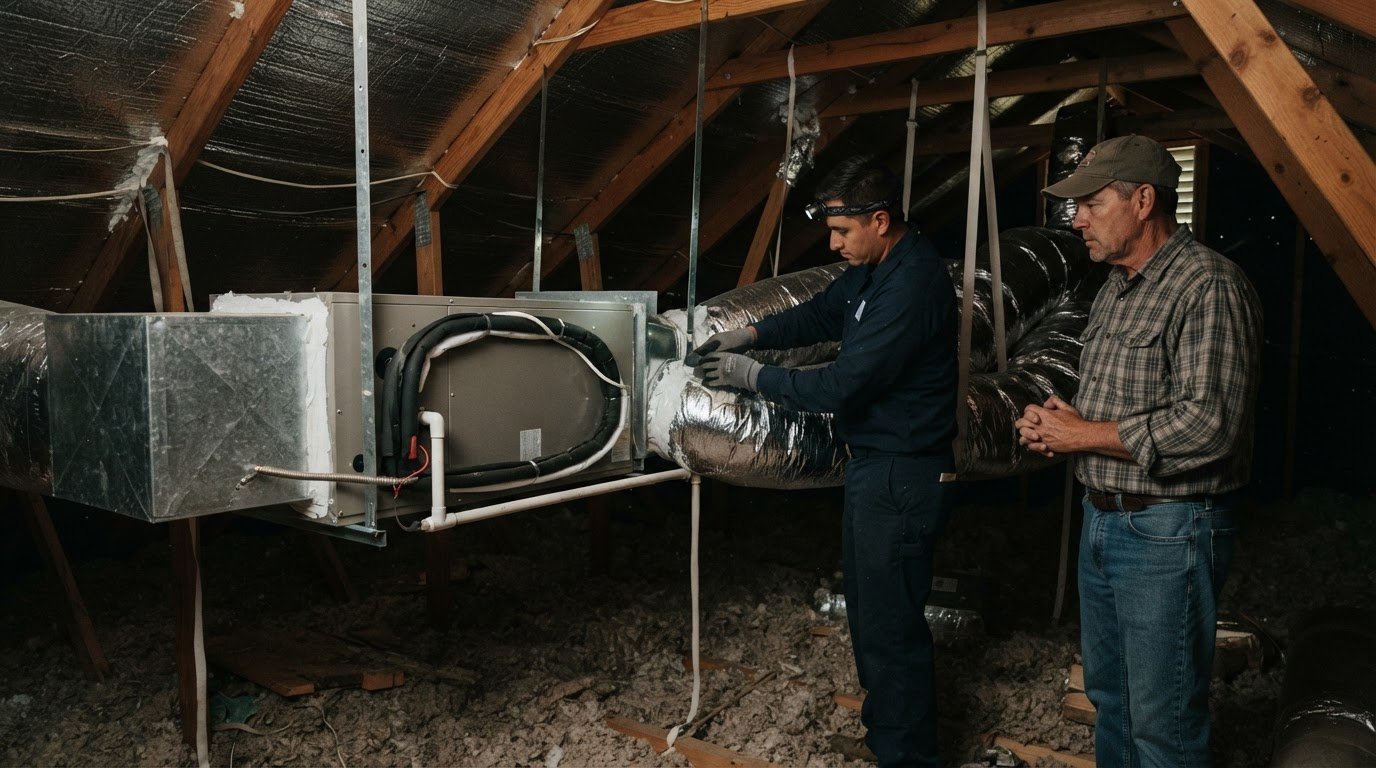
A replacement system isn’t the only HVAC work that may qualify for financing. For HVAC financing in Central Florida, Florida PACE may cover HVAC upgrades, ductwork improvements, indoor air quality enhancements, energy-efficient installations, and high-efficiency heat pumps. PACE terms for HVAC systems can range from 5 to 20 years.
It’s understandable to want a clear picture of what financing covers before committing to a home-comfort project. With PACE, repayment is added to the property tax bill rather than handled like a traditional unsecured loan, according to the Florida PACE Funding Agency. Understand how that repayment structure fits your plans before proceeding.
This guide explains which HVAC projects may qualify, how Florida Residential PACE financing works, and what to consider when reviewing terms and repayment. You’ll also learn how to prepare for a project, from identifying the comfort issue to understanding the recommended work, so you can make an informed decision about your next step.
Key Takeaways
- Potentially eligible projects include HVAC upgrades, ductwork improvements, indoor air quality enhancements, energy-efficient installations, and high-efficiency heat pumps.
- Get a clear equipment recommendation and written project scope before weighing financing options, so you can understand what work the plan would cover.
- Approval, rates, terms, and payment requirements depend on the financing provider and the option you choose.
- PACE repayment is added to the property tax bill, and HVAC terms can range from 5 to 20 years. Understand the repayment structure before committing.
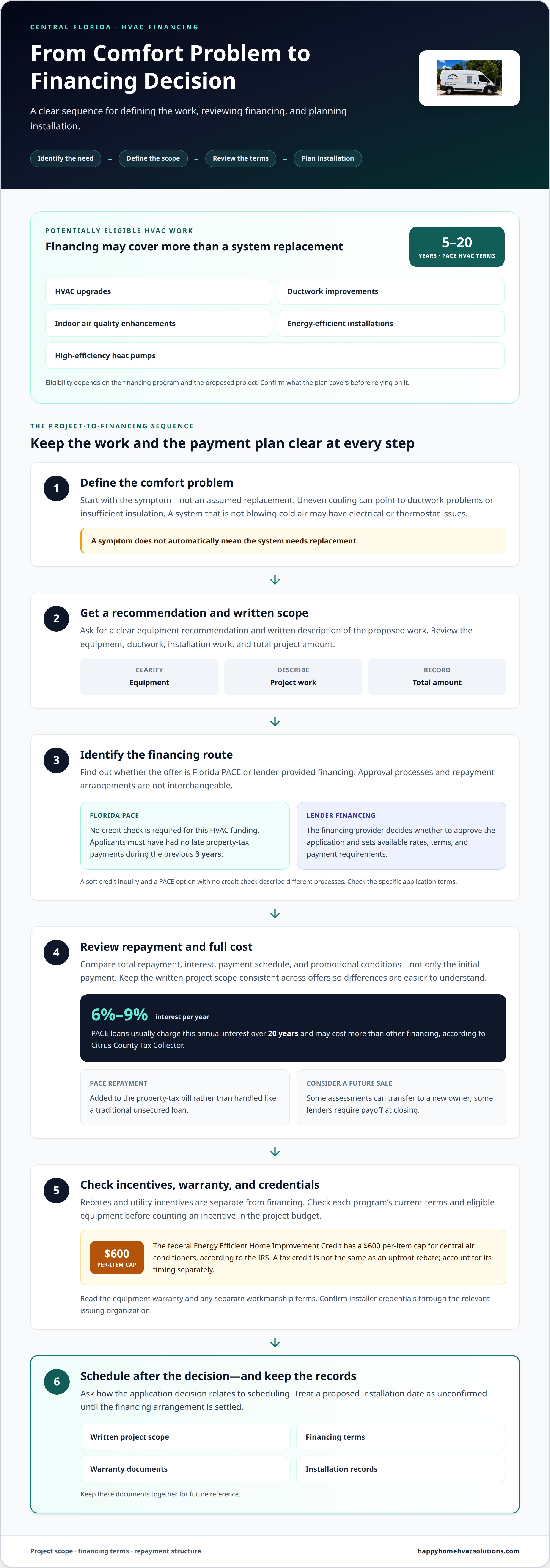
- PACE loans usually charge 6% to 9% interest per year over 20 years and may cost more than other financing, according to Citrus County Tax Collector.
What HVAC projects may qualify for financing?
Potentially eligible work includes HVAC upgrades, ductwork improvements, indoor air quality enhancements, energy-efficient installations, and high-efficiency heat pumps. The project scope matters: replacing an air conditioner differs from correcting airflow problems or upgrading insulation. Start by identifying the comfort issue, then connect the proposed work to that need.
For example, uneven cooling can point to ductwork problems or insufficient insulation. A system that isn’t blowing cold air may have electrical or thermostat issues. Those symptoms don’t automatically mean replacement is needed. A clear assessment helps define the work before you submit a financing application or make installation plans.
Personal loans and credit cards have different repayment arrangements from project financing. A personal loan typically separates borrowing from the contractor’s project, while a credit card follows its own account terms. Compare the total repayment, interest, payment schedule, and promotional conditions, not just the initial payment. HVAC financing in Central Florida may also involve PACE, which uses property-tax-bill repayment.
To apply and compare contractor offers, first get an equipment recommendation and written project scope. Then review each proposal’s equipment, ductwork, installation work, and total project amount alongside the financing terms. Keep the scope consistent when comparing offers. This helps you see whether differences come from the proposed work, the equipment, or the repayment plan.
Installation timing depends on the project sequence and financing approval. Ask how the application decision relates to scheduling, and avoid treating a proposed installation date as confirmed before the financing arrangement is settled. For system selection, consider the home’s comfort needs and whether the scope includes efficiency improvements. A properly planned air conditioner installation should match the agreed equipment and project scope.
Review warranty coverage and installer credentials before signing. Read the equipment warranty and any separate workmanship terms, including what each covers and how claims are handled. Confirm the installer’s credentials through the relevant issuing organization. Keep the written scope, financing terms, warranty documents, and installation records together for future reference.
Rebates and utility incentives are separate from financing, and their eligibility rules can differ. Check each program’s current terms and eligible equipment before counting an incentive toward your project budget. The federal Energy Efficient Home Improvement Credit has a $600 per-item cap for central air conditioners, according to the Internal Revenue Service. A tax credit isn’t the same as an upfront rebate, so account for its timing separately.
Follow a simple sequence: define the comfort problem, review the recommended equipment and scope, submit the financing application, and schedule installation after a decision. Then compare repayment terms and warranty documents before committing. This keeps the project, payment plan, and expected work clear from the start.
Soft credit inquiries and credit approval
Approval depends on the financing route, not just the HVAC project. Financing is subject to approval, and the provider sets available rates, terms, and payment requirements. A soft credit inquiry and a PACE option with no credit check describe different processes. Don’t assume one provider’s application process applies to every plan.
For Florida PACE HVAC funding, a credit check isn’t required. The application still has eligibility conditions: applicants must have no late property-tax payments during the previous 3 years. This distinction matters when an air conditioner replacement is urgent. A route without a credit check still has requirements, and its repayment structure differs from conventional financing.
Before applying, identify whether the arrangement is PACE or lender-provided financing. Then read the application terms for the approval process, payment schedule, and any conditions attached to the offer. If an application names FTL Finance, review the terms for that specific application. Don’t assume its approval criteria or payment requirements match another lender’s.
For lender-based financing, approval isn’t automatic. The financing provider decides whether to approve the application and sets the available terms and payment requirements. A replacement proposal and financing decision are separate: approval for an HVAC project doesn’t establish which equipment or installation work is included. Keep the written project scope with the financing documents.
PACE has a different repayment arrangement: payment is added to the property-tax bill rather than repaid as a traditional unsecured loan. Some assessments can transfer to a new owner when a home is sold, while some lenders require payoff at closing. Consider that connection to the property when evaluating a longer-term decision, especially if a move could affect your plans.
A practical review sequence keeps the decision clear. First, identify the financing type. Next, read its approval and payment terms. Then compare those terms with the HVAC project scope. For a conventional application, focus on the provider’s stated decision and payment requirements. For PACE, also account for property-tax repayment and eligibility conditions. This helps separate credit approval from equipment and installation choices.
Florida PACE also says homeowners do not need a credit check to qualify for this HVAC funding.
Florida PACE identifies air purifiers, ventilators, and filtration systems as indoor air quality enhancements that can reduce allergens and pollutants. It also notes that an HVAC unit not blowing cold air may point to electrical or thermostat malfunctions.
Eligible HVAC and home-comfort projects
Financing eligibility can depend on the work included in the project. Eligible categories include HVAC system upgrades, ductwork improvements, indoor air quality enhancements, energy-efficient installations, and high-efficiency heat pumps. These options address different home needs. A heating upgrade targets temperature control, while ductwork work can address airflow and energy loss.
Indoor air quality work may be part of a broader comfort plan. Air purifiers, ventilators, and filtration systems can reduce allergens and pollutants. For example, a homeowner planning a heating upgrade may also consider ventilation or filtration improvements. Describe each item as a distinct project component, with its purpose clearly stated in the scope.
Bundling home-comfort projects can make sense when they address related problems. A package might combine heating and cooling improvements with ductwork or indoor air quality work. Keep the proposed tasks itemized. This makes it easier to understand what the financing application covers, rather than treating every planned home improvement as automatically eligible.
PACE financing connects the assessment to the property, so home equity matters in its eligibility framework. A homeowner may be approved for PACE financing of up to 20% of existing home equity, subject to a limit tied to the home’s total value. This is not a universal project budget; the property’s value and existing equity affect the available amount.
A PACE assessment differs from ordinary personal borrowing because repayment is tied to the property-tax bill. That connection deserves attention when planning projects that may stay with the home. Consider the full scope and the property’s equity together, especially if you’re combining heating, cooling, ductwork, or air quality upgrades.
An in-home estimate and a financing offer serve different purposes. The estimate describes the equipment and work proposed for the home; the financing offer sets repayment terms. A written, itemized scope gives you a clearer basis for applying and deciding which project elements to include. Don’t treat an estimate as proof of financing approval or a promise of free financing.
Before combining upgrades, connect each item to a comfort concern. Uneven cooling, for example, may point to ductwork problems or insufficient insulation. A heating issue may call for a separate system assessment. Linking each proposed improvement to a specific need helps keep the project focused and its financing scope easier to understand.
Financing rates, terms, and promotional conditions
Compare the full repayment obligation, not just the first monthly payment. The rate, term, promotional conditions, and repayment method all affect the total.
Rates and Promotional Conditions
Citrus County Tax Collector says PACE loans usually charge 6% to 9% annual interest over 20 years and may cost more than other financing. A lower introductory payment doesn’t establish the eventual cost. Read the written offer for its interest rate, promotional period, payment changes, and conditions. Interest spreads payments over time, but doesn’t reduce the amount owed.
Terms and Prepayment Penalties
The term sets how long payments continue. Florida PACE financing terms for HVAC systems can range from 5 to 20 years. A longer term can spread payments over more time, while interest can increase the total paid. Review the agreement for prepayment terms, including whether an early payoff charge applies and how any remaining balance is calculated.
Monthly Payment Terms
Look beyond the monthly payment when assessing an HVAC system or home-comfort upgrade. Compare the payment schedule with the full term and total repayment. A smaller monthly amount can mean a longer obligation. For PACE, repayment appears on the property-tax bill, so consider how that bill fits your household budget.
Promotional conditions can change what you owe after an introductory period. Read when the promotion begins and ends, what payment applies afterward, and whether the offer depends on completing specific steps. Keep the financing offer alongside the project scope. This helps distinguish the equipment and installation work from the lender’s payment conditions.
PACE uses a fixed rate for heating and cooling upgrades, with terms that may extend over time. Its property-tax repayment structure differs from a traditional unsecured loan. Consider that distinction alongside the interest and term, rather than comparing only the first payment. An assessment may also affect the property if ownership changes.
Before accepting an offer, review the rate, term, payment amount, promotional conditions, and early payoff language together. Then compare the total obligation across available arrangements. If a proposal bundles HVAC work with other upgrades, make sure its financing scope matches the listed project components. Clear terms make the commitment easier to understand before signing.
Florida Residential PACE financing for HVAC
Central Florida homeowners can consider PACE or financing arranged through a provider. HVAC contractors may present different options, but approval and terms depend on the financing provider and program.
Central Florida Financing Options
Florida first authorized Property Assessed Clean Energy financing in 2010. Florida PACE HVAC funding requires no upfront costs and no credit check. Instead, the property and project determine eligibility. Applicants must have no late property-tax payments during the previous 3 years. A credit score is therefore not the qualifying measure for this PACE option, though its other eligibility conditions still matter.
PACE can spread payments over time, but its repayment structure deserves careful attention. Florida PACE Funding Agency says repayment is added to the property-tax bill rather than handled like a traditional unsecured loan. This ties the assessment to the property. Review the project scope, payment terms, and property-tax implications together before deciding whether this option fits your plans.
Contractor Financing Availability
Central Florida HVAC contractors may present different financing arrangements. The contractor’s role relates to the project and its scope; the financing provider determines approval, available terms, and payment requirements. A contractor’s participation in a financing program does not establish approval or guarantee a particular rate.
For a sound comparison, match the financing option to the same written work scope. An air conditioner replacement and a heating upgrade are distinct projects, even if both improve home comfort. Separate equipment and installation details from financing terms. This helps show whether the proposed arrangement covers the work you intend to complete.
PACE may suit homeowners who prefer property-tax-bill repayment and meet the program’s eligibility requirements. Provider-based financing is another route, with its own application and lender-set terms. Neither should be judged only by the absence of an upfront payment. Consider the repayment method, total obligation, and how long payments continue before choosing.
Before proceeding, organize the decision around three items: the HVAC work, the financing route, and the property’s repayment obligations. For PACE, account for the property-tax assessment. For another financing option, focus on that provider’s stated approval and payment terms. Keeping these parts distinct makes it easier to understand what the contractor will install and how you’ll pay.
To clarify the HVAC work involved before reviewing financing, explore the available HVAC service options.
Happy Home HVAC Solutions
Happy Home HVAC Solutions helps homeowners connect HVAC concerns with the work their home may need. If an air conditioner needs attention, the team provides AC Repair and AC Installation. Heating & Furnace Services and Insulation Services can address other home-comfort needs.
Before choosing a financing route, clarify the project itself: repair, replacement, or an improvement to heating or insulation. A defined scope helps you understand which work you’re considering alongside the financing terms. Financing approval and repayment are separate from the HVAC work.
If you’re considering an HVAC project in Central Florida, contact Happy Home HVAC Solutions to discuss the work your home needs.
Plan your next step with confidence
Financing can help make a needed home-comfort project easier to plan, but the work itself should guide your decision. Before moving forward, identify the problem you want solved and the project scope that addresses it. Then consider how the proposed payments fit your household plans. For HVAC financing in Central Florida, a clear conversation about the work can help you approach the next decision with confidence.
Happy Home HVAC Solutions provides AC Repair, AC Installation, and Heating & Furnace Services. If you’re weighing a repair against a larger project, or considering a heating concern alongside cooling needs, discuss the work with a team that understands home comfort.
When you’re ready to talk through your HVAC needs, contact Happy Home HVAC Solutions. A clear next step can bring you closer to a more comfortable home.
Frequently Asked Questions
Is HVAC financing approval guaranteed?
No. Financing approval depends on the provider and the option involved. A completed application or contractor estimate isn’t an approval notice. For example, a lender-based plan uses that lender’s decision and terms, while PACE follows property-related eligibility conditions. Treat approval, the HVAC work scope, and installation scheduling as separate steps. Read the actual decision and agreement before relying on financing to cover a project.
Should I apply before my HVAC appointment?
Apply after you know what project you’re considering and before committing to installation dates. A repair visit may identify a different need than expected, while a replacement proposal can clarify the equipment and work involved. If you’re planning an appointment to assess a problem, first gather basic project information, then apply when the scope fits the financing application. Don’t assume approval will arrive before a scheduled appointment.
What HVAC financing interest rates, fees, and loan terms are common?
Rates, fees, and terms vary by financing arrangement, so there isn’t one standard package for every Central Florida homeowner. Compare the annual rate, any fees listed in the agreement, repayment length, and total amount paid. Check how the payment could change after a promotional period, if one applies. For a useful comparison, review offers against the same HVAC project scope instead of comparing monthly payments alone.
Are 0% APR HVAC financing promotions available, and what are the eligibility requirements?
Some financing offers may include a 0% APR promotion, but availability and eligibility depend on the specific offer. Read the promotion’s duration, qualifying conditions, payment schedule, and rate after the promotional period. Confirm how deferred or missed payments are handled in the agreement. An advertised introductory rate doesn’t by itself explain the full repayment obligation, so base your decision on the written terms.
What credit score and income requirements apply to HVAC financing?
There isn’t one credit score or income threshold that applies to every HVAC financing option. For lender-provided financing, the financing provider sets its approval criteria and terms. Florida PACE HVAC funding does not require a credit check, but eligibility still has property-related conditions. For example, homeowners applying for PACE must have no late property-tax payments during the previous 3 years.
What risks, fees, or penalties should homeowners check before signing an HVAC financing agreement?
Review the full repayment amount, interest, fees, promotional terms, and any charge for paying early. Check whether payment goes to a lender or is added to the property-tax bill, since those arrangements affect repayment. For example, a PACE assessment may transfer to a new owner when a property is sold, while some lenders require payoff at closing. Make sure the agreement explains which terms apply.