
Furnace Not Heating in Orlando: Pilot Light and Safety
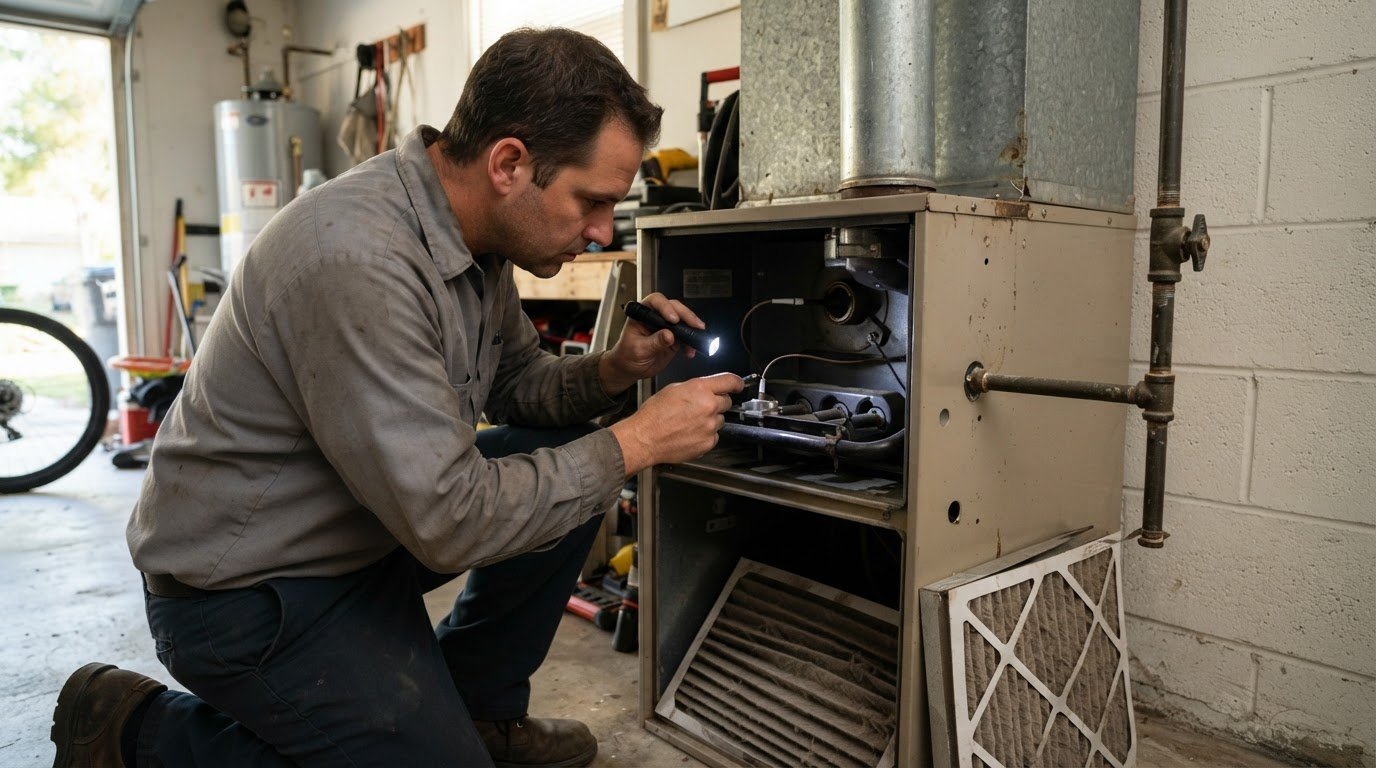
A dirty filter can stop a furnace from heating, but it usually does not directly extinguish a standing pilot light. If your furnace is not heating in Orlando, restricted airflow may cause it to overheat or shut down. A pilot that will not stay lit can point to a separate issue that needs attention.
It is understandable to look for one simple cause when your home feels cold. This guide explains how airflow problems and pilot-light trouble affect heating, which warning signs call for prompt action, and how a professional assesses whether repair or replacement makes more sense.
You will also learn what furnace service across Greater Orlando involves, from tracing the cause of the problem to assessing the system’s condition. Knowing what to look for can help you make a clearer decision about restoring comfort at home.
Key Takeaways
- A dirty filter can restrict airflow and affect furnace operation, but a pilot that goes out may have a different cause.
- Notice whether the pilot stays lit, the furnace cycles repeatedly, or rooms remain cool; these clues help narrow down the problem.
- Gas odors and carbon monoxide alarms call for immediate safety action, not continued furnace operation.
- When weighing repair against replacement, consider the furnace’s age, safety condition, and the scale of the repair.
- Professional furnace service can identify the source of the heating problem and help you choose a practical next step.
What Does It Mean When Your Furnace Pilot Light Is Out?
A furnace pilot light is a small, continuous flame that ignites the main burner. Furnaces made before 2010 are more likely to use a standing pilot, which stays lit 24 hours a day. If that flame is out, the burner may not ignite, leaving the home without furnace heat.
A technician checks whether the pilot is absent, weak, or unable to stay lit. A thermocouple senses the pilot flame and helps control gas flow; one nearing the end of its lifespan may be about 10 years old. Burner residue, a dirty flame sensor, a worn thermocouple, or an ignition fault can also interrupt heating. Each symptom points to a different inspection or repair.
Regular maintenance can uncover problems before cold weather exposes them. A professional can inspect the burner for buildup, clean or assess the flame sensor, and examine the pilot and electrical connections. The technician also evaluates airflow, since a clogged filter can contribute to overheating and shutdowns. A maintenance visit can identify developing issues and help the heating system operate more consistently.
Gas furnaces have an estimated lifespan of 15-25 years, and maintenance can help identify wear as a system ages. For a no-heat call in Orlando, response timing depends on the appointment schedule, location, and symptoms described; there is no single arrival window for every home. An appointment should distinguish a pilot problem from an airflow, thermostat, or electrical fault. The Orlando service area page covers local service information.
Homeowners insurance and home warranties may treat furnace repairs differently. Coverage depends on the contract, the cause of the failure, and exclusions such as equipment wear or maintenance conditions. Review the policy language before assuming that a pilot, burner, or electrical repair is covered.
During an inspection, the technician can check the filter, compare the thermostat setting with the system’s operation, and inspect the breaker and pilot assembly. These checks help distinguish a simple airflow restriction from a failed component. If a breaker trips repeatedly, the electrical issue needs attention rather than repeated resets.
Repair or replacement decisions also matter if an older furnace has recurring faults. The federal 25C tax credit ended for heat pump systems placed in service after December 31, 2025, according to Internal Revenue Service. The federal 25C heat-pump tax credit was worth up to $2,000 before it ended for qualifying systems placed in service after December 31, 2025, according to Internal Revenue Service.
Can a dirty air filter cause a pilot light to go out?
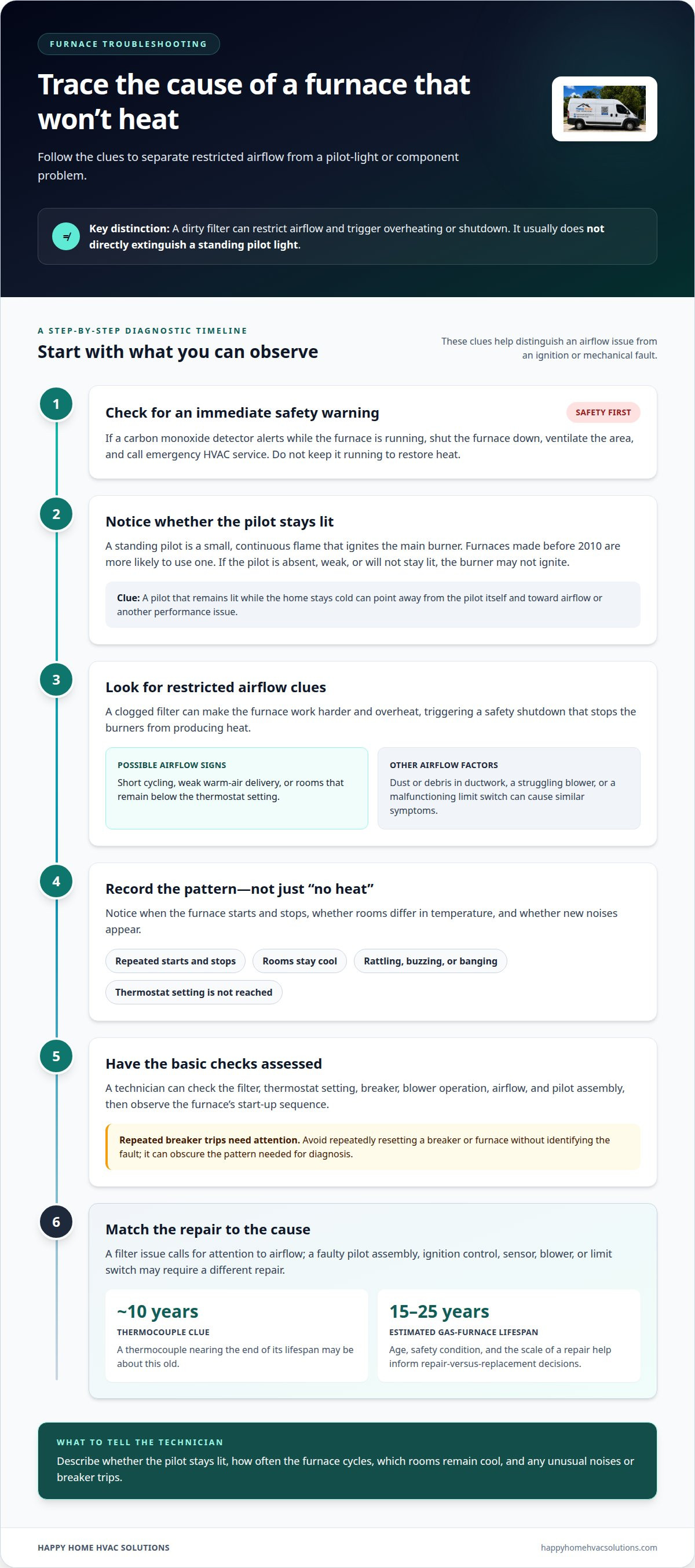
A clogged air filter can restrict airflow, making a furnace work harder and overheat. This can trigger a safety shutdown that stops the burners from producing heat. A dirty filter usually does not extinguish a standing pilot directly, since the pilot and filter serve different functions. For example, the pilot may stay lit while restricted airflow prevents the furnace from delivering warm air. A furnace not heating in Orlando may have an airflow problem even when its pilot remains lit.
Other airflow problems can cause similar symptoms. Dust and debris in ductwork can reduce airflow, while a struggling blower may not move enough warm air through the home. A malfunctioning limit switch can also cause the furnace to run continuously or heat poorly. Short cycling, when the system starts and stops repeatedly, or rooms that remain below the thermostat setting can point to a performance issue. Compare temperatures across rooms to help distinguish uneven air delivery from a system-wide heating fault.
Pilot failure has its own possible causes. A faulty pilot assembly, ignition control, or sensor may prevent ignition or keep the flame from staying lit. A weak or absent pilot can leave the main burner off even when the thermostat calls for heat. Rattling, buzzing, or banging can also signal trouble with internal components. These signs help a technician distinguish an airflow restriction from an ignition or mechanical fault. If your furnace not heating in Orlando is also making a new noise, mention both symptoms when scheduling service.
Before recommending a repair, an HVAC technician can inspect the filter, thermostat setting, breaker, blower operation, and airflow. The technician can observe the furnace’s start-up sequence and assess whether the pilot stays lit. This helps identify whether a clogged filter or another component is involved. Describe symptoms such as repeated cycling, unusual noise, or a thermostat reading that never reaches the selected temperature.
For furnace repair in Orlando, a professional diagnosis matters because the same symptom can have different causes. A filter issue may call for attention to airflow, while a failing sensor, blower, or limit switch requires a different repair. Repeatedly resetting the system without finding the fault can obscure the pattern the technician needs to assess. Explain when the furnace runs, stops, or makes noise to help narrow the inspection.
Regular professional furnace maintenance includes attention to filter condition, airflow, burner operation, and signs of component wear. A maintenance appointment can uncover developing problems before they leave the system running without heat. If the furnace continues cycling or rooms stay cold after the filter and thermostat have been assessed, arrange a professional inspection rather than treating the pilot as the only possible cause.
Furnace carbon monoxide and other safety warning signs
A carbon monoxide detector alert while a furnace is running is a safety emergency. Shut the furnace down, ventilate the area, and call emergency HVAC service. Do not treat an alarm as an ordinary heating fault or keep the system running to restore comfort. A cracked heat exchanger can pose safety risks, including carbon monoxide leaks, so a qualified technician should inspect the furnace before it returns to operation.
A gas odor calls for a different immediate response. Leave the property, then contact the gas utility or call 911. After evacuating for a strong gas odor, call the local gas company and HVAC provider from at least 50 feet away. Don’t operate the thermostat, furnace controls, or electrical switches while inside; leave first and make calls from a safe distance.
A technician should turn off a furnace that is not heating if there is a gas smell, a strange odor, or a carbon monoxide detector alert. These signs may indicate a safety concern, not just a thermostat or filter issue. If the furnace repeatedly trips its circuit breaker, stop resetting it and arrange an inspection for a possible electrical problem.
Some warning signs need attention even without a gas odor or alarm. A system that repeatedly shuts down, runs without heating, or makes rattling, buzzing, or banging sounds may have a component problem. A cracked heat exchanger deserves particular attention because of its potential carbon monoxide risk. Tell the technician exactly what happened and when, such as a new noise during start-up or an alarm while the furnace was running.
- Gas odor: Leave the property and contact the gas utility or 911 from outside.
- Strong gas odor: After evacuating, call the local gas company and HVAC provider from at least 50 feet away.
- Carbon monoxide alarm: Shut down the furnace, ventilate the area, and call emergency HVAC service.
- Repeated breaker trips: Avoid repeated resets and arrange a professional electrical inspection.
During an inspection, a technician can assess whether the furnace should remain off and identify what needs repair before it runs again. A thermostat setting or clogged filter may affect heating performance, but neither explains away a gas smell or carbon monoxide alarm. Treat those warning signs as urgent, not as an efficiency problem. Resume normal furnace use only after the safety concern has been addressed.
Deciding whether to repair or replace a furnace
Age, safety, repair scope, and overall condition shape the repair-or-replacement decision. In Orlando, a furnace that is 15 or more years old may be a replacement candidate. That age is a prompt to assess the whole system, not an automatic instruction to discard a working furnace. A technician considers the fault, the equipment’s condition, and whether another repair is likely to address the heating problem reliably.
The repair estimate can help you compare your options. Replacing a furnace may be worth considering when the repair estimate is close to half the cost of a new system. This comparison puts a major repair in context without making age the only factor. For example, a substantial repair on an older furnace deserves a different discussion from a limited repair on newer equipment.
Safety deserves priority over convenience. Furnace safety mechanisms in systems installed before 1995 may be less reliable. A technician can inspect the controls and heat exchanger, especially when the system has recurring faults or a carbon monoxide concern. If a safety issue is identified, the next decision should account for the condition of the entire furnace, not just the cost of restoring heat.
Efficiency is another part of the comparison. Modern gas furnaces have AFUE ratings between 80% and 97%. AFUE describes how much of the fuel a furnace converts into useful heat. A higher rating indicates a larger share becomes heat rather than being lost during operation. The rating alone doesn’t settle the decision; system condition, repair needs, and compatibility with the home also matter.
During an assessment, a technician can examine:
- Fault and repair scope: Identify the failed component and whether other parts show wear.
- Safety: Inspect relevant safety mechanisms and check for heat-exchanger concerns.
- Air delivery: Review airflow and ductwork for problems that could affect the entire home.
- Replacement fit: Consider whether a new system can serve the home’s heating needs.
These checks help distinguish a repairable part failure from broader furnace problems. For example, poor airflow through ductwork can affect comfort even after a furnace repair. Consider the whole heating system so a replacement decision does not overlook an issue outside the furnace itself.
When an emergency or safety concern makes continued operation inappropriate, restoring heat is not the only priority. The technician’s findings should explain the fault, the safety condition, and the practical differences between repair and replacement. That gives you a clear basis for choosing a reliable next step rather than deciding based on age alone.
Furnace service across Greater Orlando
Furnace service in Greater Orlando needs to account for local weather and travel between communities. Orlando’s winter lows average 48-55°F, yet one January morning reached 38 degrees in 2024. A system may sit unused through warmer stretches, then face a sudden demand for heat when temperatures drop. Reporting the neighborhood and symptoms helps a technician understand the visit’s location and purpose.
Happy Home HVAC Solutions serves Central Florida communities including Orlando, Winter Park, Maitland, Altamonte Springs, and Windermere. Your address helps determine appointment logistics. When you call about a furnace not heating Orlando, describe whether it runs, whether warm air reaches any rooms, and whether the thermostat shows a call for heat. Those details can help distinguish a heating fault from an issue affecting only part of the home.
Which furnace repair companies serve Orlando and offer emergency service? Emergency availability depends on the provider and its current schedule, so confirm whether emergency dispatch is available before relying on it. A gas odor or carbon monoxide alarm requires the safety response described earlier, not a routine appointment request.
December 2022 brought record lows in Central Florida, illustrating why a furnace problem can become urgent during an unusually cold spell. Still, the season alone doesn’t reveal the cause. A technician needs to inspect the system, assess its operation, and identify whether the issue involves ignition, airflow, controls, or another component. A clear diagnosis gives the homeowner a practical basis for deciding what to do next.
Ask for an estimate that explains the diagnosed problem and proposed work. The estimate depends on the fault, parts involved, equipment condition, and scope of the repair. It should clarify whether the recommendation addresses one failed part or a broader system concern. A blower fault and a pilot issue, for example, require different work even if both leave rooms cold.
Before the appointment, note when the problem began, which rooms feel cold, and whether the system makes unusual sounds. Include any recent thermostat changes or repeated shutdowns. These observations help the technician focus the inspection rather than guess from the outdoor temperature. They also help distinguish a brief comfort issue from a furnace that consistently fails to heat.
Service coverage across Greater Orlando includes distinct communities, not just homes near downtown. Use the Central Florida service-area details to see the communities covered. For help with a furnace problem, request heating service and share the address, symptoms, and appointment needs.
Response time depends on the provider’s emergency availability, your location, and the day’s appointment schedule. Confirm the dispatch timing when you call.
Happy Home HVAC Solutions: Heating & Furnace Services
Happy Home HVAC Solutions provides Heating & Furnace Services when a furnace will not heat, cycles repeatedly, or needs a professional assessment. A technician can diagnose the issue and explain whether repair or replacement is the practical next step. This helps you make an informed decision based on the system’s condition and the problem found.
If the concern extends beyond heating, AC Repair, AC Installation, and Insulation Services can address related home-comfort needs. The right service depends on what the inspection finds, such as a furnace fault or inadequate insulation affecting room comfort.
For help with a heating problem, contact Happy Home HVAC Solutions and describe the symptoms you are noticing.
Make your next heating decision with confidence
If your furnace is not heating in Orlando, use the diagnosis to guide your next decision, not just to get through a cold morning. Ask the technician to explain what failed, whether the recommended work addresses the cause, and the condition of the rest of the system. This gives you a practical basis for weighing repair against replacement without relying on one symptom alone.
Happy Home HVAC Solutions provides Heating & Furnace Services, AC Repair, and AC Installation. Share your comfort priorities and any concerns about how the system serves your home. A focused conversation can clarify the recommended next step and keep your decision grounded in the equipment’s actual condition.
When you’re ready to discuss your heating needs, contact Happy Home HVAC Solutions. A clear next step can help you move toward a more comfortable home.
Frequently Asked Questions
What Happens When You Schedule Furnace Repair?
To schedule furnace repair, share your address, symptoms, and any safety warning signs. Happy Home HVAC Solutions serves Orlando, Oviedo, Winter Park, Winter Springs, and Altamonte Springs. Your location helps clarify appointment logistics, and the team can discuss timing when you call. During the visit, a technician evaluates the reported symptoms and identifies the likely fault before recommending work. Describe when the problem began and whether it affects every room to give the inspection a useful starting point.
What's Wrong With Your Furnace?
The cause depends on what the furnace does when it tries to heat. A running blower with cool air, for example, points to a different problem from a system that never starts. Note whether the thermostat calls for heat, whether air moves through the vents, and whether the system stops and starts. These observations do not identify the failed part by themselves, but they help a technician connect the symptom pattern to the right inspection.
When does a furnace still make sense in Florida?
A furnace can make sense when it reliably meets the home’s occasional heating needs and remains in sound condition. Orlando homes average about 200 heating hours per year, and winter lows average 48-55°F. A heat pump can extract usable heat from outdoor air down to about 25-30°F, so homeowners can weigh that option against keeping a working furnace. The choice depends on system condition, home comfort, and how the household uses heat.
Why is my furnace running but not heating?
The furnace may move air without producing or delivering enough heat. A blower can run even when a burner or ignition component is not operating correctly, and restricted airflow can interfere with normal heating. Compare the thermostat setting with the air coming from several vents. If some rooms receive warm air while others stay cool, the pattern may point to air distribution rather than a complete loss of heat production.
What are the signs of a dangerous furnace problem, such as a gas leak or carbon monoxide?
A gas odor, a carbon monoxide detector alert while the furnace runs, or a suspected cracked heat exchanger signals a potential safety problem. A strange odor or repeated breaker trips also deserves prompt attention rather than continued operation. Distinguish these warning signs from ordinary comfort issues, such as one room feeling cooler. If an alarm or gas smell occurs, treat it as a safety matter and follow the emergency steps described above.
How can I check furnace filters, thermostat settings, breakers, and pilot lights?
Check the filter’s condition, compare the thermostat setting with how the furnace operates, and note whether the breaker has tripped. Observe whether the pilot is absent, weak, or fails to stay lit; don’t repeatedly reset a tripping breaker. If you smell gas or a strange odor, leave and contact the gas utility or 911.