
Comparing HVAC Installation Quotes in Oviedo for Total Cost
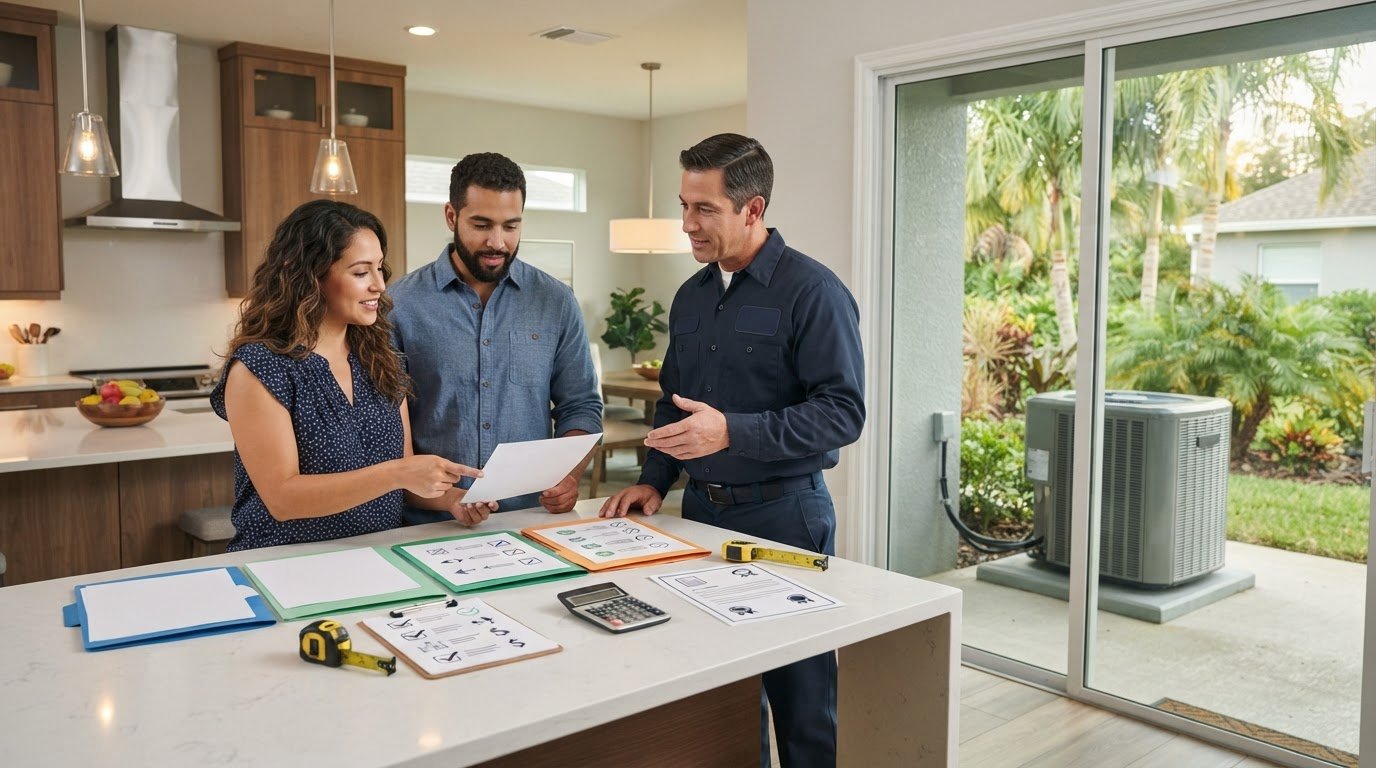
The lowest HVAC quote isn’t always the least expensive choice over time. When comparing HVAC installation quotes in Oviedo, compare at least three proposals by equipment, installation scope, warranty coverage, and included work, not just the bottom-line price.
It’s natural to focus on price when replacing a system, especially when you also want dependable cooling through Central Florida’s heat. A fair comparison can help you understand what you’re paying for and spot important differences before you decide. This guide explains how to compare system size and efficiency, quote inclusions, warranties, contractor credentials, and emergency availability, along with practical ways to manage installation costs. You’ll have a clearer basis for weighing the options and choosing a setup that fits your home and comfort priorities.
Key Takeaways
- Compare system capacity and efficiency alongside the equipment model so quotes reflect a similar solution for your home.
- Look beyond the total: identify which installation tasks, materials, permits, and warranty terms each quote includes.
- Use Florida licensing, relevant refrigerant-handling credentials, and customer feedback as practical ways to assess contractor qualifications.
- Understand what emergency availability means in each proposal and whether it matches your household’s needs.
- Compare several detailed proposals and weigh cost drivers before choosing ways to manage the installation budget.
HVAC installation and energy-efficient equipment
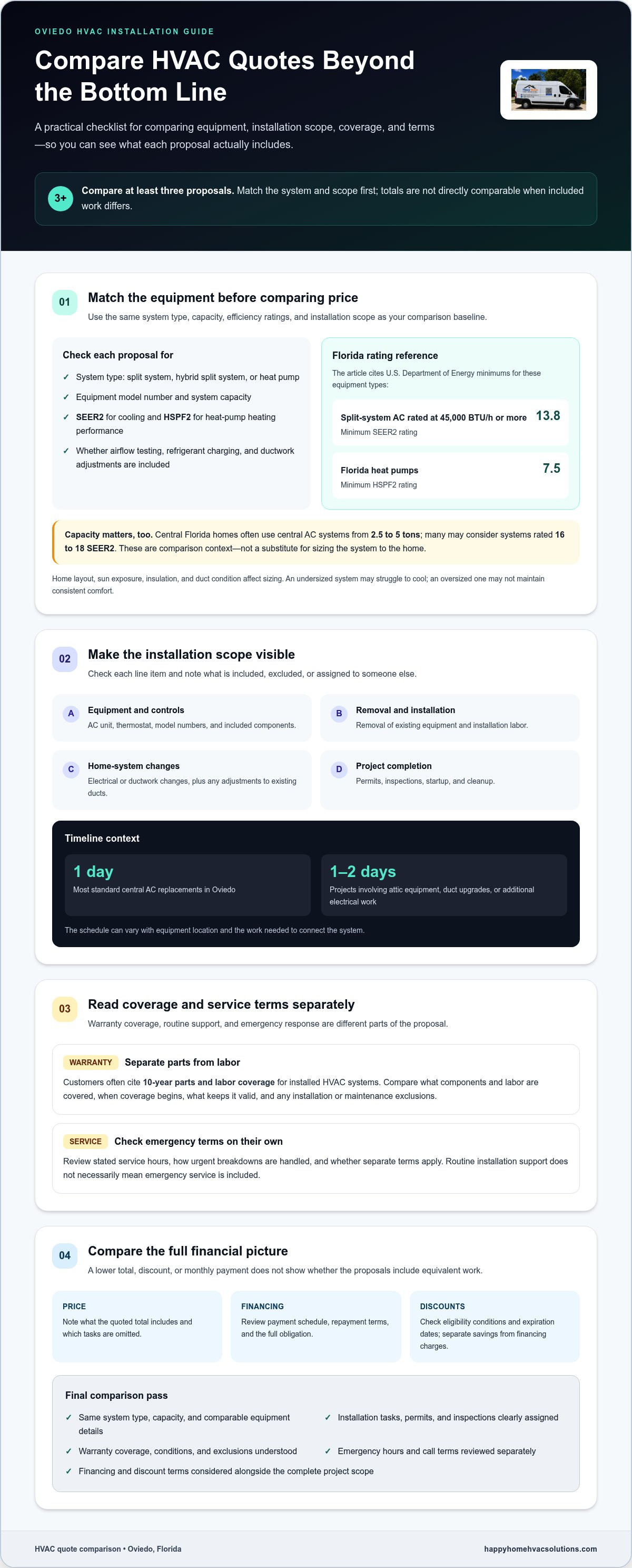
Compare quotes for the same system type, capacity, efficiency ratings, and installation scope. For a replacement in Oviedo, check whether permits and inspections are included and clearly assigned in each proposal.
Watch this overview of how equipment stages and efficiency ratings shape HVAC options:
Installation Timelines and Equipment Models
Most standard central AC replacements in Oviedo take one day. Projects involving attic equipment, duct upgrades, or additional electrical work may take 1-2 days. Compare the proposed system type, such as a split system, hybrid split system, or heat pump. The installation schedule can vary with the equipment location and the work needed to connect it.
Equipment Selection and Efficiency Ratings
Compare efficiency using SEER2 for cooling and HSPF2 for heat pump heating performance. In Florida, new split-system air conditioners rated for 45,000 BTU per hour or more must have a rating of at least 13.8 SEER2, according to the U.S. Department of Energy. Florida heat pumps must meet a minimum rating of 7.5 HSPF2, according to the U.S. Department of Energy. Check that each quote identifies the equipment’s ratings.
Central Florida homes often use central AC systems ranging from 2.5 to 5 tons. Many homes may consider central air systems rated 16 to 18 SEER2. A higher rating can affect equipment selection and energy use, but compare like with like: the same system type, capacity, and installation scope. This makes differences between quotes easier to understand.
System Size and SEER Efficiency
Capacity matters as much as efficiency. An undersized system may struggle to cool your home, while an oversized one may not maintain consistent comfort. Use square footage as one sizing factor, not the whole calculation. Your home’s layout, sun exposure, insulation, and duct condition also affect how the system needs to serve each room.
Ask how the proposed tonnage fits the home rather than choosing by the lowest quote. For example, two proposals might list the same SEER2 rating but different capacities or equipment models. Those aren’t equivalent comparisons. Review the model numbers, capacity, SEER2 rating, and heat pump HSPF2 rating together. Also consider whether the installation includes airflow testing, appropriate refrigerant charging, and adjustments for the existing ductwork. These details help connect equipment ratings to the finished heating and cooling system.
For local information about AC installation in Oviedo, use the city-specific page alongside your quote review. Compare the stated equipment and project scope carefully, then weigh efficiency against the home’s needs and expected use.
Comparing quote inclusions, warranties, and emergency availability
To compare HVAC quotes fairly, match the equipment model, capacity, efficiency, installation tasks, and warranty terms. Then review exclusions, payment terms, and the service availability described in each proposal.
A quote should make the full scope easy to understand. Check whether it lists the AC unit and thermostat, removal of existing equipment, installation labor, electrical or ductwork changes, permits, inspections, startup, and cleanup. If one proposal includes work another omits, their totals aren’t directly comparable. Note the differences before deciding which replacement offers better value.
Quote inclusions and warranty terms
Warranty language deserves a close read. Customers often cite 10-year parts and labor coverage for installed HVAC systems. Compare which components and labor are covered, when coverage begins, and what actions keep it valid. Separate manufacturer parts coverage from labor coverage, since they address different costs. Also note how the quote handles warranty service and any exclusions tied to installation or maintenance.
Service availability is a separate comparison point. A company’s regular appointment schedule may differ from how it handles urgent breakdowns. Review the stated hours and how emergency calls are handled, and check whether separate terms apply. Don’t assume routine installation support includes emergency service. If your household depends on cooling, understanding the distinction helps set expectations before you sign.
Brands, financing, and local service
Equipment brands and model numbers clarify what each quote proposes. Compare matching models where possible. If the models differ, note changes in efficiency ratings, features, and included components. For example, one proposal may include a thermostat while another lists it separately. Compare the complete system, not brand recognition alone.
Financing and discounts can affect the amount due or payment schedule, so read their terms alongside the full project scope. Separate promotional savings from financing charges, and identify eligibility conditions, repayment terms, and expiration dates. A discount changes the price; it doesn’t prove that two proposals include equivalent work. If a quote lists monthly payments, compare the full obligation and equipment with the other proposal’s total.
- Match equipment models and installation tasks.
- Compare warranty coverage and exclusions.
- Review emergency hours and call terms separately.
- Read financing and discount conditions with the full quote.
Local service coverage matters after installation, especially if a system needs follow-up. Compare the described service area and support process for Oviedo, rather than assuming nearby means identical availability. For a clearer picture of the installation scope, review these AC installation details alongside the items in your proposals.
Contractor credentials and Florida licensing
A contractor’s credentials help you assess who will perform the AC replacement and stand behind the work. Match the contractor’s legal business name to the license record, and check that the credential applies to the proposed HVAC work. This helps distinguish a documented qualification from a sales claim or logo on a proposal.
Verifying Florida HVAC contractor licenses
Florida homeowners can search HVAC contractor credentials using the Florida Department of Business and Professional Regulation’s license search tool. Search the name on the estimate and compare the record with the contractor or business named in the agreement. Review the license status and classification, then keep the result with your quote paperwork so you can refer to the same details before signing.
Florida certified HVAC contractors need four years of experience. Consider this requirement as one credential to understand, not a substitute for reviewing the actual license record. If contractors present different license types or business names, compare what each record identifies and whether it relates to the proposed work. For example, a heat pump replacement should be supported by a credential relevant to HVAC work.
Credentials can also help you interpret differences between proposals. If the estimate names a company but the license search shows a different business name, resolve the mismatch before relying on the document. Check that the agreement names the responsible contractor, describes the installation scope, and identifies who will oversee the work. Clear paperwork connects the estimate, license record, and completed job.
Consider the system’s age and condition
Florida central AC systems typically last 10-12 years. Age gives homeowners useful context when deciding whether replacement estimates deserve attention, but it doesn’t determine the choice alone. Compare the system’s performance, repair history, comfort, and condition alongside the proposed replacement. A system nearing the end of its typical lifespan may make replacement planning more relevant, while the quote still needs to match the home’s requirements.
If two contractors recommend different heat pump capacities, the license record won’t explain the sizing difference. It serves a separate purpose: verifying credentials. Assess each proposal’s equipment and scope on their merits, and use Florida’s license search to review the contractor’s recorded credentials.
- Match the estimate’s business name to the state license record.
- Review the license status and classification.
- Compare the proposed work separately from the credential check.
- Use AC age and condition as context, not as the sole replacement test.
Contractor experience, certifications, and customer reviews
A low estimate matters less if the proposed work doesn’t suit Oviedo’s climate or your home’s ductwork. Compare quotes from three contractors, then assess the people, qualifications, and customer feedback behind each proposal. The goal is to understand how each contractor reaches its recommendation, not simply to collect the lowest total.
Evaluate local experience and certifications
Local experience can help a contractor recognize common Central Florida challenges, such as sustained cooling demand and humidity. A useful benchmark when assessing providers is at least five years of experience in the Oviedo area. Ask how the estimate accounts for your home’s layout, existing ductwork, and comfort concerns. A clear explanation should connect those details to the recommended system and work scope.
Refrigerant handling calls for a specific credential. According to the U.S. Environmental Protection Agency, EPA Section 608 certification is required for technicians who handle refrigerants safely. EPA-certified professionals must pass exams on refrigerant recovery and safety. Use the credential as one part of your assessment, alongside the contractor’s experience and the clarity of the written estimate.
FRACCA membership is another factor homeowners may consider when evaluating training and ethical practices. Treat memberships and certifications as supporting information, not a replacement for a detailed proposal. Compare whether each contractor explains the proposed repair or replacement, identifies ductwork concerns, and describes how the completed system should support comfort in Florida’s climate.
Read reviews for useful details
Customer reviews are most helpful when they describe specific interactions. Look for comments about communication, scheduling, explanations of options, and how the contractor handled concerns after installation. Compare patterns across reviews rather than relying on one unusually positive or negative account. A review that explains equipment choices offers more useful detail than a general compliment.
Reviews can also shed light on the estimate process. Note whether customers mention a written scope, clear answers, or changes between the proposal and completed work. These accounts don’t replace technical credentials, but they can give you a fuller picture of how a contractor works with homeowners.
Compare local estimates and warranty commitments
Place each Oviedo estimate side by side. Compare who performs the work, what the proposal says about follow-up, and the parts and labor warranty terms. Check coverage limits, exclusions, registration steps, and how to request service. Different terms can change the practical value of otherwise similar quotes.
- Compare three local contractors’ written recommendations.
- Look for Oviedo-area experience and relevant credentials.
- Read reviews for specific examples of communication and follow-through.
- Compare warranty terms as well as the installation proposal.
Ways to reduce installation costs
To avoid unnecessary costs, compare three detailed quotes with matching scopes of work. A lower total may reflect omitted duct repairs, electrical work, or attic access rather than better value. Ask for separate line items for equipment, labor, removal, permits, inspections, and proposed upgrades. This makes differences clear before you choose.
Compare the full installation scope
Start by matching the system type and comparable capacity in each proposal. Then identify which tasks are essential for your home and which are optional improvements. One quote, for example, may include replacing the thermostat while another reuses the existing one. Comparing line items helps you avoid paying twice or overlooking necessary work.
Ask for a written explanation of each allowance, exclusion, or optional upgrade. Ductwork changes can affect the scope, so compare the stated condition and proposed work. Don’t remove a necessary repair just to lower the initial total. Understand what the repair addresses and whether the other proposals include equivalent work.
Account for attic access and installation conditions
An attic air handler can add installation costs if crews need extra labor to move equipment, work in a confined space, or adapt connections. The scope depends on access, the existing platform, duct arrangement, and electrical requirements. Compare how each estimate describes these conditions rather than assuming all attic installations are alike.
Before accepting a proposal, confirm the equipment location and access plan. If the system is in an attic, check that the quote identifies the air handler and related installation work. Ask for a clear schedule, especially if attic access or additional electrical work could affect the installation. This helps you plan without feeling rushed during summer heat.
Plan timing and choose upgrades carefully
Compare estimates before an AC breakdown forces a quick decision. Planning a replacement gives you time to review equipment, scope, and payment terms. Ask which upgrades affect comfort or AC performance, then prioritize those that address your home’s needs. In Florida’s humidity, insulation improvements may affect heating and cooling demand, but compare them as a separate scope item.
Review discounts and financing terms in writing, including eligibility and repayment conditions. Don’t compare a promotional monthly payment with another quote’s full project total. Use the same equipment scope and payment basis for both, then weigh the stated terms against the included work. A discount doesn’t make proposals equivalent.
- Compare three quotes using the same equipment and scope.
- Separate required installation tasks from optional upgrades.
- Review attic access, ductwork, and electrical work line by line.
- Compare discount and financing terms against the full project scope.
For a project-specific AC installation estimate, review the AC installation service and compare its proposed scope with your priorities.
Happy Home HVAC Solutions: AC Repair
Happy Home HVAC Solutions can help when an AC problem needs repair or your system is due for replacement. If comparing quotes has raised questions about whether repair or installation better fits your home, consider the system’s condition, comfort, and the proposed work scope. Happy Home HVAC Solutions provides AC repair and AC installation, with heating and furnace services and insulation services for related home comfort needs.
The company is LG certified and offers up to a 12-year warranty on many installations. Compare the written equipment and warranty details with your priorities to decide on a practical next step.
Contact Happy Home HVAC Solutions to discuss your AC needs.
Choose the Next Step With Confidence
The right choice is the proposal that suits your home and gives you a clear path forward, not simply the one that looks cheapest at first. Keep your comparison notes, identify your key questions, and use them to guide a focused conversation about comfort and project priorities. A thoughtful approach to comparing HVAC installation quotes in Oviedo can make your decision more manageable.
Happy Home HVAC Solutions provides AC Repair, AC Installation, and Heating & Furnace Services. Whether you’re weighing a repair against a replacement or considering heating needs alongside cooling, the team can help you discuss options for your home in Oviedo, Orlando, Winter Springs, Winter Park, or Altamonte Springs.
Contact Happy Home HVAC Solutions to talk through your HVAC needs and take a confident next step toward year-round comfort.
Frequently Asked Questions
What is the average cost to install a new HVAC system in Oviedo, Florida?
The installed total depends on the equipment, home layout, and work the property needs; pricing is provided after a quote request. A central AC replacement with existing connections differs from a project requiring duct, electrical, or attic work. To assess your budget, compare proposals for the same system type and scope, then separate necessary work from optional upgrades. That gives you a more useful comparison than a market average alone.
How do HVAC installation quotes in Oviedo vary by system type, size, and efficiency?
Quotes differ because split AC systems, heat pumps, and ductless systems require different equipment and installation work. Capacity affects equipment selection, while efficiency ratings can influence upfront cost and energy use. When comparing HVAC installation quotes in Oviedo, first match the proposed system type, capacity, and efficiency rating. Then compare installation tasks and controls to understand what accounts for price differences.
What should an itemized HVAC installation quote include?
A useful itemized quote identifies the equipment model, system capacity, efficiency ratings, and thermostat. It should distinguish equipment and labor from removal, installation materials, electrical or duct modifications, permits and inspections, startup, and cleanup. If one proposal includes a new thermostat and another reuses the existing one, note the difference. Clear line items help you compare scope and spot costs that might otherwise appear later as additions.
Which HVAC contractor licenses and insurance should I verify in Florida?
Match the contractor’s business name and license details against the Florida Department of Business and Professional Regulation’s license search. Review the recorded status and classification for the contractor named in the agreement. Ask for current proof of insurance and confirm that it names the same business. Keep the license record and insurance information with your estimate so the responsible company and proposed work are clear before you sign.
What rebates, tax credits, or utility incentives are available for HVAC installations in Oviedo?
Potential incentives depend on the program, equipment eligibility, installation timing, and household requirements. Don’t subtract a rebate or tax credit from your budget until you’ve reviewed its current terms and confirmed which systems qualify. Utility rebates and tax credits may have different application steps and documentation requirements. Keep the equipment model and installation paperwork, as these details can help establish whether an offer applies.
How do Florida heat, humidity, and home size affect HVAC system sizing and installation cost?
Oviedo’s heat and humidity make cooling capacity and moisture control important, but home size is only one factor in system sizing. Room layout, windows, sun exposure, insulation, and duct condition also affect airflow. For example, a sunny room above a garage may have different cooling needs from a shaded interior room. These conditions influence equipment selection and installation scope, so square footage alone can’t explain a proposal.
What questions should I ask Oviedo HVAC contractors before accepting a quote?
Ask which equipment model and capacity the estimate covers, how the proposed size suits your home, and what installation tasks are included. Clarify who handles permits and inspections, which warranty terms apply, and how changes to the work are documented. For a replacement, ask how the proposal addresses existing ductwork and electrical connections. Request clear written answers so you can compare the same details across every estimate.
What hidden fees, exclusions, or red flags should I watch for in HVAC installation quotes?
Look for vague allowances, optional work presented as essential, and exclusions for removal, permits, electrical adjustments, or duct modifications. A quote listing only the equipment and a total makes later additions harder to spot. Be cautious of verbal promises missing from the written agreement or pressure to approve before you’ve reviewed it. Ask for each change, added task, and related charge to be documented before work begins.