
Benefits of a Programmable Thermostat for Winter Park Homes

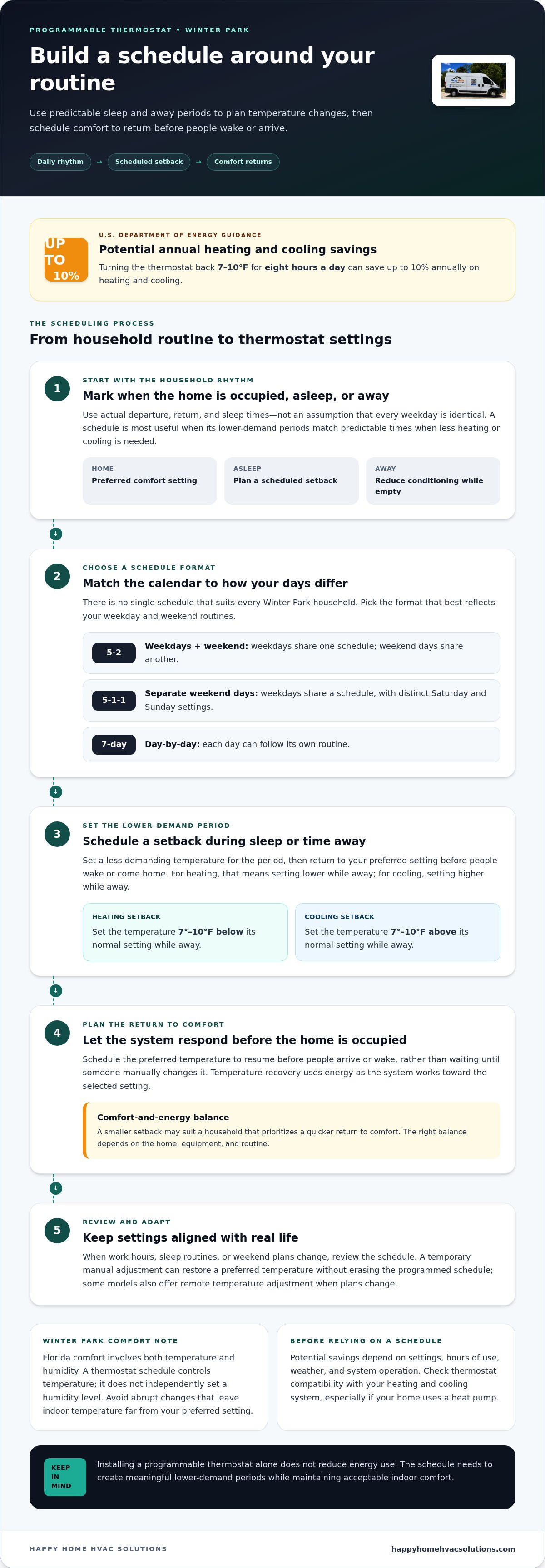
A thermostat can follow your routine instead of heating or cooling an empty home at the same setting all day. The benefits of a programmable thermostat in Winter Park include scheduled temperature adjustments, steadier comfort, and the potential to reduce energy use when you’re asleep or away. According to the U.S. Department of Energy, homeowners can save up to 10% annually on heating and cooling by turning the thermostat back 7-10°F for eight hours a day.
It’s reasonable to want a comfortable home without remembering every adjustment. A programmable thermostat makes that easier by following settings you choose for different times of day. Some models also let you adjust the temperature remotely.
Read on to learn how these thermostats work, how schedules can fit your routine, and when remote control is useful. You’ll also see how timing and system compatibility affect potential savings, helping you decide whether programmed temperature changes make sense for your Winter Park home.
Key Takeaways
- Match a 5-2, 5-1-1, or 7-day schedule to how your household’s weekdays and weekends differ.
- Set temperature changes around sleep and time away to avoid heating or cooling an empty home at the same setting all day.
- The U.S. Department of Energy says turning the thermostat back 7-10°F for eight hours a day can save up to 10% annually on heating and cooling.
- Remote control can help you adjust your home’s temperature when plans change, while savings depend on your schedule and settings.
- Check that a thermostat is compatible with your heating and cooling system, especially if your home uses a heat pump.
What is a Programmable Thermostat?
A programmable thermostat follows temperature settings you choose for different times and days. Its schedule can limit unnecessary heating or cooling while keeping comfort aligned with your household’s routine.
Schedules Built Around Daily Routines
A programmed schedule changes the temperature automatically at times that match your household’s usual activities. A 5-2 schedule separates weekdays from weekends, while a 5-1-1 schedule gives Saturday and Sunday separate settings. A 7-day schedule lets each day follow its own routine.
For Winter Park households, choose the format that reflects when people are home, asleep, or away. A consistent workweek may suit a 5-2 schedule; changing weekend plans may make a 7-day option more practical. There isn’t one recommended schedule for Winter Park’s climate alone: set changes around your routine and comfort, then adjust them when that routine changes.
Energy Savings From Scheduled Adjustments
Scheduled setbacks reduce heating or cooling while the home is empty or residents are asleep. According to the U.S. Department of Energy, homeowners can save up to 10% annually on heating and cooling by turning the thermostat back 7-10°F for eight hours a day.
To program for savings without sacrificing comfort, set a less demanding temperature during regular away or sleep periods, then schedule a return to your preferred setting before people come home or wake. The U.S. Department of Energy recommends setting the thermostat 7°-10°F above or below its normal setting while away. A schedule works best when those periods match your real routine.
Comfort and Static Schedule Limitations
Scheduled settings can prepare your home for predictable changes in occupancy. For example, a thermostat can adjust the temperature before residents wake up or return, rather than waiting for someone to change it manually.
A fixed schedule can fall short when plans change or your routine varies. Some programmable thermostats let you make a temporary adjustment without erasing the schedule, so an unexpected early return doesn’t mean rebuilding it. Review the settings when work hours, sleep routines, or weekend plans change. This keeps the thermostat aligned with how you use your home, rather than an outdated calendar.
Climate-Based Settings for Winter Park
In Florida, indoor comfort involves both temperature and humidity. A thermostat schedule controls temperature, but doesn’t independently set a humidity level. To maintain comfort, align scheduled cooling with when the home is occupied and avoid abrupt changes that leave the indoor temperature far from your preferred setting.
There isn’t a single thermostat schedule that suits every Winter Park home. Consider household routines, comfort preferences, and how the cooling system responds to scheduled changes. For example, set a cooling period before the household returns, then adjust the temperature if the room still feels uncomfortable. Homeowners in Oviedo can also find local HVAC service information relevant to their area.
Reducing heating energy use and utility bills
A programmable thermostat can limit heating and cooling when rooms are empty or residents are asleep. Potential savings depend on how well the schedule fits household routines and how the system responds to temperature changes.
Reducing Use While Away or Asleep
Scheduled setbacks can reduce energy use by changing the temperature during predictable periods when less heating or cooling is needed. For example, a household can choose a different setting for sleeping hours, then return to its preferred setting before waking.
During a workday, an away setting can reduce heating or cooling while the home is empty. Build the schedule around actual departure and return times instead of assuming every weekday is the same. If someone stays home, a manual adjustment can restore the preferred temperature without erasing the programmed schedule.
For a more comfortable return, schedule the preferred temperature to resume before people arrive. This gives the system time to respond instead of waiting for someone to adjust it after coming inside. Temperature recovery uses energy as the system works toward the selected setting, so a smaller setback may suit households that prioritize a quicker return to comfort. The right balance depends on the home, equipment, and routine.
Programmable Thermostat Energy Savings
A programmable thermostat creates potential energy savings by repeating useful temperature changes automatically. The U.S. Department of Energy says homeowners can save up to 10% annually on heating and cooling by turning the thermostat back 7-10°F for eight hours a day. Actual savings depend on the settings, hours of use, weather, and system operation.
Using less household energy can also reduce emissions associated with producing that energy. The amount depends on the energy source serving the home. Installing a thermostat alone doesn’t reduce energy use: the schedule needs to create meaningful periods of lower demand while maintaining acceptable indoor comfort.
Are there local building codes or utility requirements for thermostat installation in Winter Park? Applicable building and electrical requirements govern installation, especially when wiring or HVAC controls change. The installation method should account for those requirements.
Are programmable thermostats eligible for utility rebates or incentives in Winter Park? Eligibility depends on each utility program’s current terms and device criteria. A programmable thermostat alone doesn’t establish eligibility, and incentives can depend on the specific device and program requirements.
During an AC upgrade, the thermostat should work with the new system’s controls and operating needs. A compatible device can follow scheduled settings as intended, while an incompatible one may not control the equipment properly. Review AC installation considerations when planning an equipment change, including how the thermostat will coordinate with the system.
Potential heating and cooling cost savings
A programmable thermostat can affect energy use by adjusting settings to suit household needs. Potential savings depend on the schedule, the HVAC system, and how often heating or cooling runs.
Heating and cooling account for almost half of the energy consumed in an average home. A well-programmed thermostat can deliver estimated annual savings of $180 to $250 when heating and cooling savings are included. That estimate is a guide, not a household-specific calculation: actual results depend on the home’s energy use and temperature settings.
Winter Park’s heating demand is generally intermittent, with heating needed during cooler periods rather than consistently throughout winter. Insulation, comfort preferences, and heating equipment all affect how often a home’s system runs.
Choose a thermostat based on the equipment it will control, not just its screen or smart features. Some models aren’t compatible with heat pumps, so check system compatibility before installation. Remote access or learning functions won’t create useful savings if the thermostat can’t correctly control the HVAC system.
Heat pumps also require attention to auxiliary heating controls. When a thermostat calls for auxiliary heat, the system may use a different mode from its usual heat-pump operation. Choose settings and equipment that coordinate with the specific system, so a schedule doesn’t trigger an unexpected mode or compromise comfort.
Efficiency depends on more than the thermostat. Frequent system cycling can put unnecessary strain on HVAC equipment, while programmed changes may help by limiting temperature fluctuations. A schedule that causes repeated, abrupt adjustments works against that goal. Keep settings aligned with your routine and the system’s response instead of changing the temperature manually throughout the day.
Heating and cooling performance also depend on the equipment’s condition. A thermostat can control a system, but it can’t fix a repair issue or make inefficient equipment perform properly. During an AC upgrade, consider how the new controls will work with the system and its heating needs. That connection matters as much as the device’s features.
Programmable thermostats can work with many heating and cooling systems, but compatibility depends on the specific equipment. Matching the thermostat to your system helps its schedule function as intended and makes potential savings more realistic. Smart features can add convenience, but the basic value still comes from settings that suit your home and routine.
Remote thermostat control
Wi-Fi-enabled thermostats let homeowners manage temperature settings through a smartphone or computer. Remote access can help when plans change, the home is empty, or you want cooling to start before you return.
Adjusting Settings by Phone
A phone-connected thermostat can let you change the temperature while away. For example, if an afternoon appointment delays your return, you can adjust the cooling schedule instead of maintaining the usual setting in an empty house. Some programmable models also let homeowners turn on air conditioning remotely using a phone.
Remote adjustments give you another way to respond when the day differs from your usual routine. You can make a temporary change while keeping the programmed schedule, then return to scheduled settings. This is useful when an unexpected early return means the home needs cooling sooner than usual.
Wi-Fi and Remote Control
A smart programmable thermostat connects to Wi-Fi and uses a smartphone or other smart device for remote temperature management. A basic programmable thermostat follows time-based settings entered on the device. Smart models can combine scheduled operation with remote access, and some also learn routines over time.
Remote control doesn’t replace scheduling. A schedule manages recurring patterns automatically, while a phone or computer lets you respond to changes outside that pattern. For instance, a Winter Park household can keep its regular weekday settings and adjust cooling when residents expect to return earlier. Both functions help align temperature control with actual occupancy.
Using Remote Access Thoughtfully
Remote control can support energy-saving setbacks by making it easier to adjust settings while away. The U.S. Department of Energy recommends setting the thermostat 7°-10°F above or below its normal setting while away from home. Remote access offers a convenient way to make a change when a household’s plans differ from its usual schedule.
Remote control can help restore comfort before you return, but a command doesn’t change how quickly the HVAC system responds. The result depends on the equipment and conditions inside the home. Choose settings that suit your comfort and the system’s operation, rather than repeatedly changing the target temperature throughout the day.
Before choosing a Wi-Fi thermostat, consider how it will connect to the existing HVAC controls. A smart thermostat requires a continuous 24-volt power supply from the HVAC control board. The thermostat must also be compatible with the heating and cooling system it will operate. Those details matter during installation because remote features are useful only when the device can control the equipment properly.
For Winter Park homes, the practical difference is simple: programmable models follow schedules you enter, while smart models add connectivity and may include learning features. Remote control is most useful when plans often change; a programmed schedule may be enough for a consistent routine.
How programmable thermostats work
A programmable thermostat compares the room temperature with your selected setting, then signals the HVAC system to respond. If a room is warmer than the cooling target, for example, the thermostat calls for cooling. A heating setting signals the furnace when warmth is needed. The device manages temperature through these control signals; it doesn’t produce heat or cooling itself.
Homeowners choose the target temperatures and the times they should take effect. The thermostat stores that plan and follows it automatically, switching settings as the day progresses. A 5-2 model separates weekdays from weekends, while a 5-1-1 model gives Saturday and Sunday distinct schedules. A 7-day model allows a different plan for each day.
The schedule operates through a temperature sensor and control logic. The sensor measures the air near the thermostat, and the device compares that reading with the active setting. Some programmable models vary within half a degree. Room location and air movement can affect the reading, so the temperature at the thermostat may not match the temperature in every room.
Some smart models add connected features to this basic process. Wi-Fi-enabled thermostats can let homeowners adjust settings remotely, while some models learn routines over time or respond to room occupancy. Features vary by model. The key distinction is that a basic programmable device follows entered times and settings, while smart functions may add remote access or automatic adjustments.
During an HVAC upgrade, the thermostat must communicate with the replacement equipment. A smart thermostat requires a continuous 24-volt power supply from the HVAC control board. Compatibility also matters for heat pumps, because some thermostat models don’t support them. For a furnace replacement, the controls must likewise match the heating system’s operation. Coordinate thermostat selection with AC installation planning when upgrading cooling equipment.
Thermostat settings can influence energy bills, but the device doesn’t repair equipment or fix uneven temperatures by itself. A schedule controls when the system responds; it can’t correct a blocked airflow path or an equipment fault. Since a typical HVAC system lasts 15 to 20 years, homeowners may encounter several thermostat choices during that period. The practical takeaway: select a compatible device first, then use its schedule or smart features to control the system around household needs.
Happy Home HVAC Solutions: AC Repair
Happy Home HVAC Solutions can help when an air conditioner doesn’t respond as expected to thermostat settings. If scheduled changes fail to start cooling, the room stays uncomfortable, or the system behaves differently after an upgrade, AC Repair can address equipment problems affecting operation. A thermostat controls the system, but it can’t fix an underlying AC fault.
For a planned equipment change, AC Installation can help align the replacement system with its controls. If the concern is heating rather than cooling, Heating & Furnace Services address that part of home comfort. The right next step depends on whether the issue involves the thermostat, air conditioner, or their connection. Contact Happy Home HVAC Solutions to discuss your home’s heating or cooling needs.
Make Your Next HVAC Decision With Confidence
If you’re considering the benefits of a programmable thermostat for your Winter Park home, start by identifying the comfort issues you want to address. Think about whether the concern is inconsistent cooling, an aging system, or heating performance. This helps focus the discussion on the right equipment and controls for your home.
Happy Home HVAC Solutions offers AC Repair when cooling problems need attention, AC Installation for equipment upgrades, and Heating & Furnace Services for heating concerns. Savings depend on household routines, thermostat settings, and HVAC system operation, so a schedule alone can’t promise a particular result.
Bring your comfort goals and any system concerns into the planning process. A clear discussion can help you choose a practical next step without adding features you don’t need. Contact Happy Home HVAC Solutions to discuss your home’s heating or cooling needs, and move forward with greater confidence.
Frequently Asked Questions
What are the benefits of a programmable thermostat in Winter Park, Florida?
The benefits include less hands-on temperature management and settings that reflect when your household is home. If weekend plans vary, for example, a programmed schedule can handle regular patterns while a manual override accommodates an unexpected change without erasing the schedule. This makes temperature control practical without requiring you to remember every adjustment. The greatest benefit depends on whether your routine is predictable or often changes.
How much can a programmable thermostat reduce heating and cooling costs in Winter Park?
The U.S. Department of Energy says homeowners can save up to 10% annually on heating and cooling by turning the thermostat back 7-10°F for eight hours a day. This is a potential saving, not a guaranteed bill reduction. For a useful comparison, look at your own energy use across similar billing periods and consider whether the schedule actually creates those setback hours. Weather, household habits, and HVAC operation also affect the result.
Can a programmable thermostat work with heat pumps and common HVAC systems in Winter Park?
Many programmable thermostats work with a range of HVAC systems, but compatibility depends on the specific thermostat and equipment. Some models aren’t compatible with heat pumps, so confirm that the device supports your system’s heating and cooling controls. For a smart thermostat, the HVAC control board must provide a continuous 24-volt power supply. Matching these requirements helps the thermostat operate the equipment as intended, including its heating modes.
What thermostat schedule is recommended for Winter Park’s climate?
There isn’t one schedule recommended for Winter Park’s climate alone. Choose a 5-2, 5-1-1, or 7-day schedule to match your household’s routine, and set cooling periods around when people are home or expected to return.