
AC Repair in Oviedo: Costs, Estimates and Financing
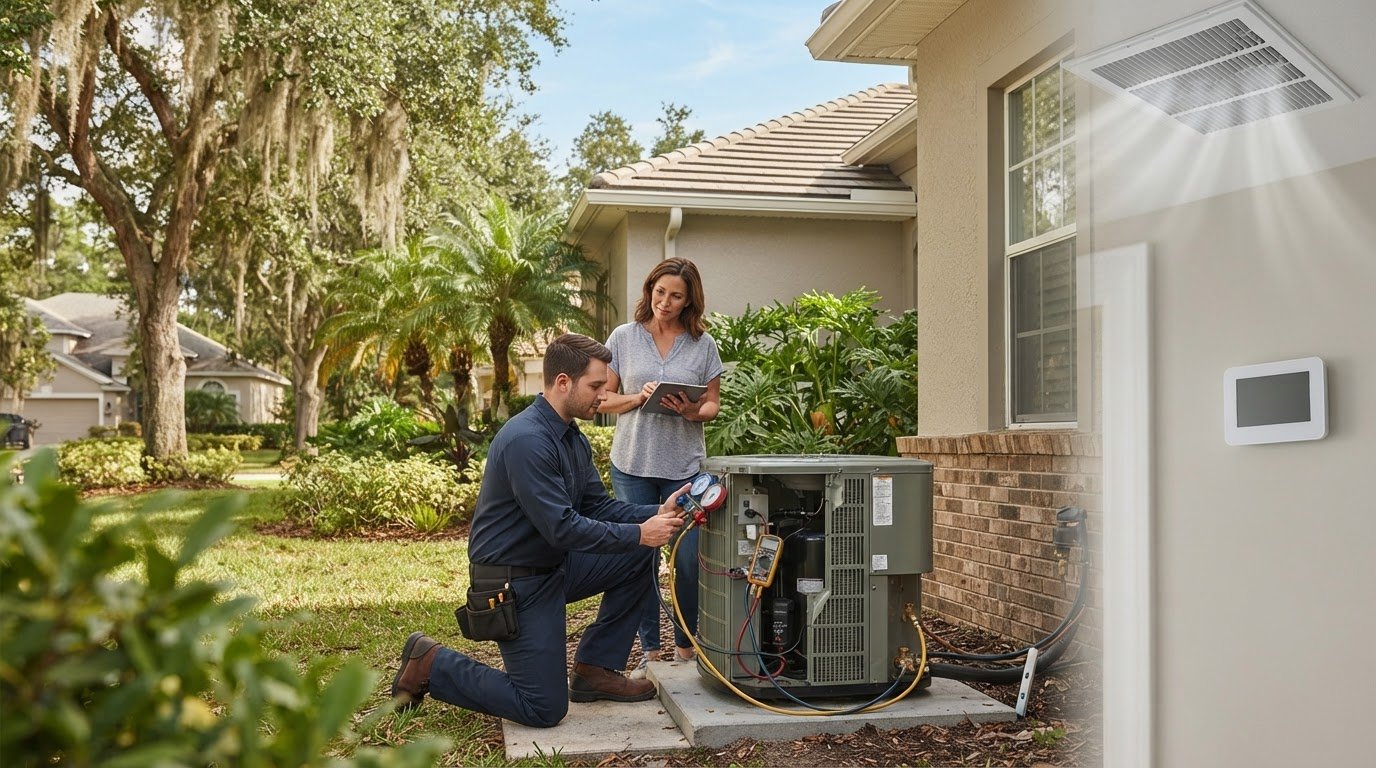
A store-bought AC recharge kit can damage your system if it adds too much refrigerant or the wrong type. For AC repair in Oviedo, refrigerant loss means a technician needs to find and address the leak, not simply top off the system. Thermostat problems can also affect cooling, so the symptom alone may not reveal the cause.
It’s understandable to look for a simple fix when your home won’t cool properly, especially if you’re concerned about repair costs. This guide covers warning signs that need attention, factors that shape a repair estimate, and why refrigerant problems require a different approach from basic thermostat troubleshooting.
You’ll also learn what information can help clarify an estimate and how to decide on your next step. Noting unusual noises, rising energy bills, and uneven airflow helps you describe the problem clearly and make a more informed decision about restoring comfort at home.
Key Takeaways
- Know which cooling problems call for a technician and which basic thermostat checks can help narrow down the issue.
- Understand how the failed part, system condition, and repair work affect an estimate, and what details to review before deciding.
- Recognize why refrigerant loss needs diagnosis rather than a do-it-yourself top-up with a store-bought kit.
- Use noises, drafts, and an unexpectedly high electricity bill as clues that your AC may need attention.
- Learn how technician credentials and the type of work needed can guide your next step.
Need AC Repair or Installation in Oviedo Today?
For AC repair in Oviedo, call an HVAC technician when your system stops cooling, shuts down repeatedly, or can’t maintain the thermostat setting. A complete loss of cooling is different from one warm room. Note which vents are affected, whether the indoor unit is running, and when the problem started. These details help you explain the issue when arranging service.
Emergency and same-day appointments depend on each company’s schedule and dispatch area. Ask about the next available visit and describe the symptoms, the system type, and whether it has stopped completely. For example, a unit that runs without cooling gives the technician a different starting point than one that will not turn on.
For another perspective on how HVAC estimates can differ, watch this video:
When arranging emergency air-conditioning or heating service, describe what stopped working and when. If cooling fails, mention whether the thermostat display is blank, the outdoor unit is silent, or air continues to flow without getting cool. For heating problems, explain whether the system starts and then stops. A clear description helps the technician prepare for the diagnosis.
Oviedo is close to several communities: Winter Springs is 8 minutes west, Casselberry is 15 minutes southwest, Geneva is 12 minutes northeast, and Chuluota is 10 minutes east. The UCF area is 15 minutes south. These locations provide useful context when discussing a dispatch address, but travel time alone does not define a company’s service boundary. Oviedo service-area information can help orient local readers.
AC repair companies in Oviedo, Florida, diagnose cooling failures, identify faulty components, and explain the work needed. To make the first conversation useful, describe the symptoms, any recent changes, and whether the problem affects one room or the whole home.
Service hours are set by each HVAC company, while service areas determine where technicians travel. When arranging a visit, provide the Oviedo address and ask for the available appointment window. For same-day service, explain whether the system has stopped cooling entirely or still runs with reduced airflow.
Before the technician arrives, note when the problem began and any changes in sound, airflow, or thermostat behavior. Don’t open equipment panels or attempt a repair based on a guess. During routine maintenance, an inspection can check for corrosion, wear, and lubrication needs. These checks may reveal developing issues before cooling fails completely.
Pricing, estimates, and financing
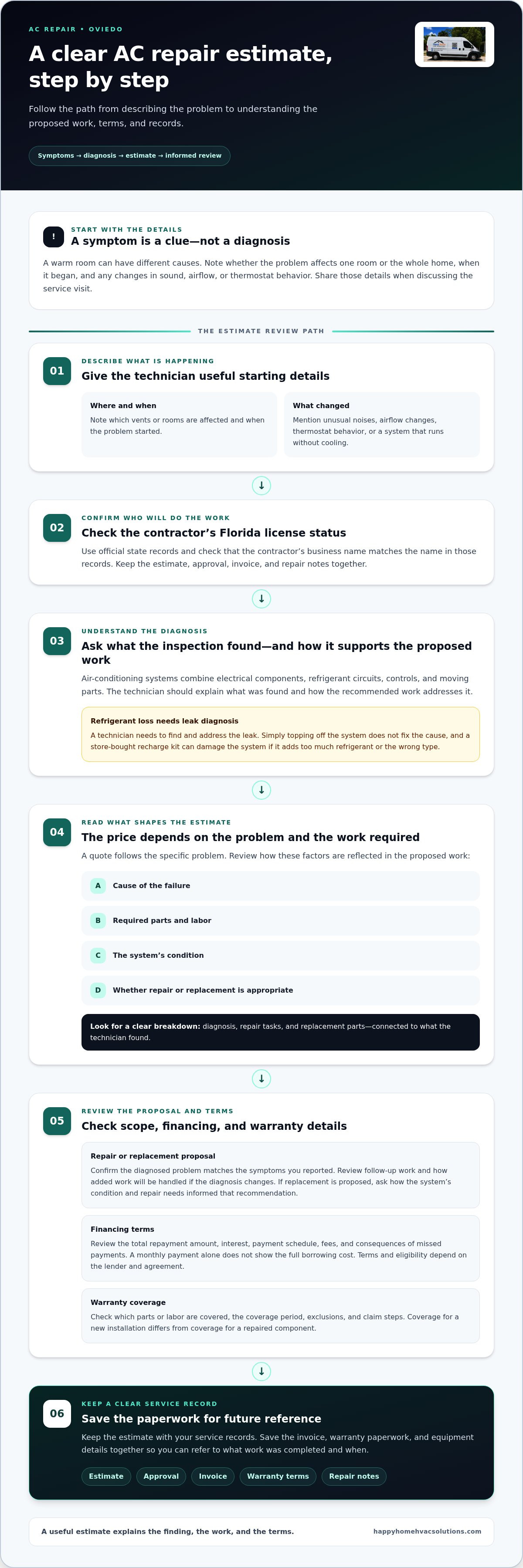
An estimate should connect the diagnosed problem to the proposed work, parts, and any replacement recommendation. In Florida’s warm climate, compare the repair scope and terms, not just the total.
Pricing and Estimates
The price depends on the specific problem and is provided after a quote request. Key cost factors include the cause of the failure, required parts and labor, the system’s condition, and whether repair or replacement is appropriate.
Ask for an estimate that separates the diagnosis, repair tasks, and replacement parts. A failing electrical component and a refrigerant leak, for example, require different work, even if both leave a room warm. A clear estimate explains what the technician found and how each proposed step addresses it.
Before approving work, compare the written scope with the symptoms you reported. Check that the estimate describes the repair, any follow-up work, and how added work will be handled if the diagnosis changes. If replacement is proposed, ask how the system’s condition and repair needs informed that recommendation.
Keep the estimate with your service records. It provides a useful reference if the same problem returns or another repair is needed.
Financing and Warranties
Financing terms depend on the lender and agreement. Before accepting an offer, review the total repayment amount, interest, payment schedule, fees, and consequences of missed payments. A monthly payment alone doesn’t show the full borrowing cost.
Compare the financing terms for a repair with those for a replacement proposal, then consider the work described in each estimate. Don’t assume financing applies to every job. Eligibility and costs depend on the specific terms.
Warranty coverage depends on the written terms. Identify which parts or labor are covered, the coverage period, any exclusions, and the steps for making a claim. A warranty for a new installation differs from coverage for a repaired component, so match the paperwork to the work performed.
Keep the invoice, warranty paperwork, and equipment details together. If a future service call involves a covered part, these records help show what work was completed and when. In Florida’s cooling climate, clear documentation is useful for tracking repairs over time.
Use this short review before approving an estimate:
- Confirm the diagnosed problem matches the reported symptoms.
- Review the repair scope, parts, and any replacement recommendation.
- Compare financing terms by total repayment, not payment size alone.
- Save the invoice and warranty terms with your system records.
HVAC technician credentials
In Florida, check an HVAC contractor’s license status through official state records before scheduling work. Keep the estimate, approval, invoice, and repair notes together. These documents help you understand the agreed work and address any concerns.
Credentials matter because air-conditioning systems combine electrical components, refrigerant circuits, controls, and moving parts. If a technician identifies a broken compressor, for example, ask how testing supports that diagnosis rather than simply accepting a replacement recommendation. The technician should explain what the inspection found and how the proposed work addresses it.
Check that the contractor’s business name matches the name in state licensing records. Then review the written estimate for the company performing the work, the repair scope, parts, and exclusions. If a technician arrives under a different business name, clarify who is responsible for the work and its documentation.
Protect yourself with clear records and informed approval. Before work begins, read the estimate and keep a copy of your authorization. Afterward, save the invoice and warranty paperwork. If the completed repair differs from the agreed scope, compare the work with your records and ask for an explanation in writing.
Use these practical checks when reviewing HVAC services in Oviedo:
- Look up the contractor’s license status in Florida’s official records.
- Match the business name on the records to the estimate and invoice.
- Ask the technician to explain the diagnosis and proposed repair.
- Keep written approval, payment records, and warranty documents together.
Training and credentials can vary by task. Tracing a thermostat fault requires checking controls and wiring, while a refrigerant issue calls for diagnosis of the sealed cooling system. Ask what finding supports the recommendation. A clear explanation should connect the symptom, test result, and proposed solution without relying on unexplained technical terms.
If an estimate recommends replacing a major component, ask what makes repair unsuitable and whether other parts could affect the outcome. A clear answer identifies the evidence and the work included. If the explanation changes, request an updated written scope before approving additional work.
Credentials don’t replace careful communication. Note the technician’s name, visit date, and reported findings on your service paperwork. This record is useful if the same problem returns or another technician needs to review earlier HVAC work.
Thermostats and refrigerant leaks
A thermostat problem and a refrigerant leak can both leave an Oviedo home uncomfortable, but they need different diagnoses. Start with a few simple observations, then share them with customer service or the technician. Don’t open the equipment or add refrigerant based on a guess.
Check the thermostat’s mode and setpoint first. If it’s set to heat during winter, the cooling system won’t respond as expected. For a cooling test, select the cooling mode and choose a setpoint below the room temperature. If the display is blank, check whether its batteries need replacing, if the model uses them. Note any error message before changing settings.
Next, compare the thermostat reading with how the room feels. A sunny wall, nearby lamp, or direct draft can affect the reading. Make sure the thermostat isn’t obstructed and check whether its programmed schedule has changed. If the display responds but the air remains warm, the problem may involve controls, wiring, airflow, or another system component.
Refrigerant circulates through a closed system. A low charge may indicate a leak, so adding refrigerant without finding the cause leaves the underlying problem unresolved. Signs can include weak cooling, longer run times, or ice forming on equipment. Other problems can cause these symptoms, too, so describe what you notice rather than treating them as proof of a leak.
Store-bought refrigerant kits can damage an AC system if they overfill it or introduce the wrong type of refrigerant. Diagnosing a refrigerant problem requires appropriate equipment and system knowledge. Don’t connect a kit or handle refrigerant yourself. Instead, note when cooling declined and whether you noticed ice, unusual sounds, or changes in airflow.
Give the technician a clear sequence of events, including thermostat settings, room temperature changes, and how the system responded. For example, mention whether the indoor fan runs while the air stays warm. That detail can help distinguish a control issue from a cooling-system problem. Keep the thermostat at a comfortable setting while arranging an assessment, and avoid repeated mode changes that make symptoms harder to describe.
After diagnosis, ask what test identified the problem and how the proposed repair addresses it. If the technician finds a leak, ask how its location and cause affect the repair plan. If the thermostat is involved, ask whether the issue lies with its settings, sensor, wiring, or connection to the system. Clear answers help you understand the next step and keep a useful record of the visit.
AC repair warning signs
In Central Florida homes, common air-conditioning problems include weak cooling, faulty controls, restricted airflow, and drainage issues. A system may also struggle when a component wears down or ductwork leaks. Symptoms can narrow the possibilities, but they don’t identify the failed part on their own.
Listen for changes in sound. Clicking or humming while the air conditioner runs may indicate dirt or debris inside the unit, or a loose compressor line. Note when the sound starts, whether it stops with the system, and where it seems loudest. Don’t open the equipment to investigate.
An unusually high electricity bill can signal an air-conditioning problem, especially if your thermostat settings and household routine haven’t changed. Compare the bill with your own previous usage, then note whether the system runs longer or cycles more often. Changes in household use can also affect consumption, so share both the bill change and equipment symptoms with the technician.
Pay attention to drafts from vents, too. They can indicate damaged or poorly connected ductwork, which may make the air conditioner run longer to meet airflow demand. Check whether the draft comes from a supply vent or around a duct connection. If one room feels different from others, mention its location and whether closing doors changes airflow.
Look for a combination of signs rather than relying on one clue. Weak cooling alongside longer run times, for example, suggests the system isn’t meeting the thermostat setting. Ice on equipment, water near the indoor unit, or a burning smell also warrants prompt attention. Turn the system off if you notice a burning smell, then describe it when arranging service.
Before calling, note the thermostat setting, affected rooms, and when the problem occurs. A short phone video can capture an intermittent noise without requiring you to touch the equipment. Share your observations with the technician so the diagnosis can focus on the actual pattern.
A certified technician can inspect the cooling system, test its operation, and explain what the findings mean. Ask which test supports the recommended repair and whether airflow, electrical components, or controls were checked. Clear answers help distinguish a confirmed fault from a symptom that needs further investigation.
Arrange AC repair in Oviedo when poor cooling, unusual noises, persistent drafts, or rising electricity use point to a system problem. Share your notes and ask for the diagnosis before approving work.
Happy Home HVAC Solutions: AC Repair
Happy Home HVAC Solutions provides AC repair for homeowners dealing with weak cooling, unusual equipment noises, or thermostat problems. A technician can diagnose the issue and explain the repair needed. If the system’s condition points toward replacement, AC installation may be the more suitable next step.
Happy Home HVAC Solutions is a licensed HVAC company serving Central Florida and is LG certified. Many installations include warranties of up to 12 years. For repair or installation, share the symptoms you’ve noticed and the system’s recent performance so the conversation can focus on your home’s needs.
Contact Happy Home HVAC Solutions to discuss your AC repair needs in Oviedo.
Make Your Next HVAC Decision With Confidence
Use your observations to start a focused conversation about your system’s condition and what your home needs. For AC repair in Oviedo, explain what changed, when it began, and how the equipment responds. If the system needs more than a repair, discuss whether AC installation makes sense; heating concerns may call for furnace services.
Before requesting an estimate, gather the equipment details and any previous service records. Then compare the proposed work with the symptoms and diagnosis so you can decide what fits your home and priorities. Happy Home HVAC Solutions provides AC repair, AC installation, and heating and furnace services.
For a clear next step, contact Happy Home HVAC Solutions to discuss your HVAC needs. A thoughtful conversation can help you move toward a more comfortable home with confidence.
Frequently Asked Questions
Can I Recharge My AC Myself?
It’s safer not to recharge an air conditioner yourself with a store-bought kit. The wrong refrigerant or an overfilled system can damage equipment, and low refrigerant may signal a leak that needs diagnosis. Instead, note the system model from its equipment label and describe the cooling problem when booking service with Happy Home HVAC Solutions. This information helps the technician identify the system and investigate the cause.
Does Hot Weather Affect How My AC Performs?
Yes. During hot Central Florida weather, an air conditioner may run longer as it removes heat entering through windows, walls, and doors. Sunlit rooms can feel warmer even when the system is operating normally. Close blinds on sunny windows, keep supply vents clear, and note which rooms stay warm. These observations help distinguish uneven heat gain from a system-wide cooling problem.
What Are the Warning Signs My AC Needs Service?
Repeated short starts, water collecting near the indoor unit, or a musty smell from vents are reasons to arrange an inspection. These symptoms may point to control, drainage, or moisture issues. Note whether the problem affects the whole home or one room. If the system trips a breaker more than once, stop resetting it and describe the pattern when arranging service.
Typical AC Repair Costs in Oviedo, FL
Repair costs vary because the diagnosed problem and required work differ from home to home. Parts, labor, system condition, and whether repair or replacement is proposed all shape the estimate. For AC repair Oviedo homeowners trust, the price depends on the case and is provided after a quote request by Happy Home HVAC Solutions. Review the diagnosis and written scope together to understand what the proposed work covers.
Emergency and Same-Day Service in Oviedo
Same-day service depends on dispatch capacity, the appointment schedule, and the time needed to diagnose the problem. Emergency describes the urgency, not a guaranteed arrival time. When requesting service in Oviedo, give the address, explain whether the system has stopped completely, and describe any unusual odor or sound. Those details help the Happy Home HVAC Solutions dispatcher understand the situation and arrange an appropriate visit.
How to Choose a Licensed and Insured AC Repair Contractor in Florida
Compare the contractor’s name in state license records with the business name on the estimate, then request proof of insurance. Check that the written scope identifies the system and proposed work. Before authorizing a repair, ask the technician to explain the diagnosis in plain language. Keep the estimate, approval, and invoice together. Consistent names and records make it easier to track responsibility for the work.
AC Repair Versus Replacement Costs in Oviedo
Compare the complete repair scope with the proposed replacement, rather than judging by the initial amount alone. Consider which components are failing, whether the same problem has returned, and whether replacement includes installation and warranty terms. A repair estimate from Happy Home HVAC Solutions may address one failed part, while replacement involves a whole system. Written scopes make these different outcomes easier to compare.
AC Repair Warranties and Service Guarantees in Oviedo
Warranty coverage depends on the work performed and the written terms. A part warranty, labor coverage, and an installation warranty can cover different things, so identify what applies to your specific repair. Read the coverage period, exclusions, and claim process in the paperwork. Keep the invoice with the warranty document, since the service date and work description help show which terms apply to the job.