
Why Your Furnace Is Not Blowing Hot Air in Sanford
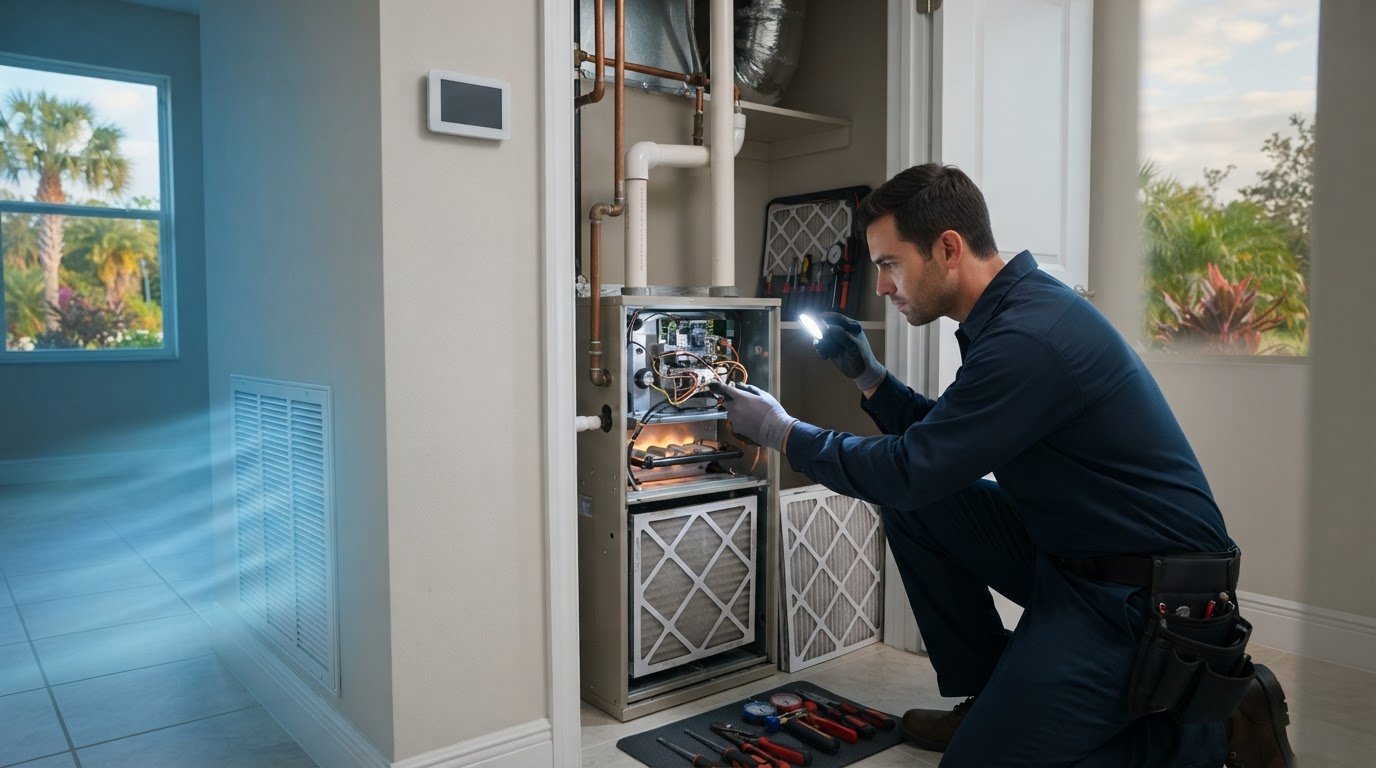
Cold air at startup doesn’t always mean your furnace is broken. A furnace not blowing hot air may just need time to warm up, but if it’s still blowing cold air after 15 minutes with the thermostat set correctly, there’s likely a heating problem to investigate.
It’s frustrating when your heating system fails to perform, especially when you’re counting on your home to feel comfortable. The cause may be a simple setting or airflow issue, but a gas supply problem, ignition fault, or faulty flame sensor can also prevent your equipment from heating properly.
As trusted local HVAC professionals serving Orlando, Oviedo, Winter Springs, Winter Park, and Altamonte Springs, the team at Happy Home HVAC Solutions has put together this guide to help you out. You will learn what to check first, including the thermostat, filter, furnace switch, and fuel supply. You’ll also learn why a furnace may start by blowing cool air, when a brief wait is reasonable, and which signs call for professional attention.
Key Takeaways
- Check the air filter first: a clogged filter can restrict airflow, and replacement is generally needed every 30-90 days depending on filter quality.
- Inspect the furnace switch and breaker, but don’t keep resetting a breaker that trips repeatedly.
- Set the thermostat to Heat, raise the temperature above the room temperature, and use Auto for the fan.
- A gas furnace’s fuel supply, ignition, or flame sensor can prevent it from producing heat; persistent problems call for professional service.
- Routine maintenance can help catch airflow, electrical, and condensate issues before they disrupt heating.
1. Why Is My Furnace Not Blowing Hot Air?
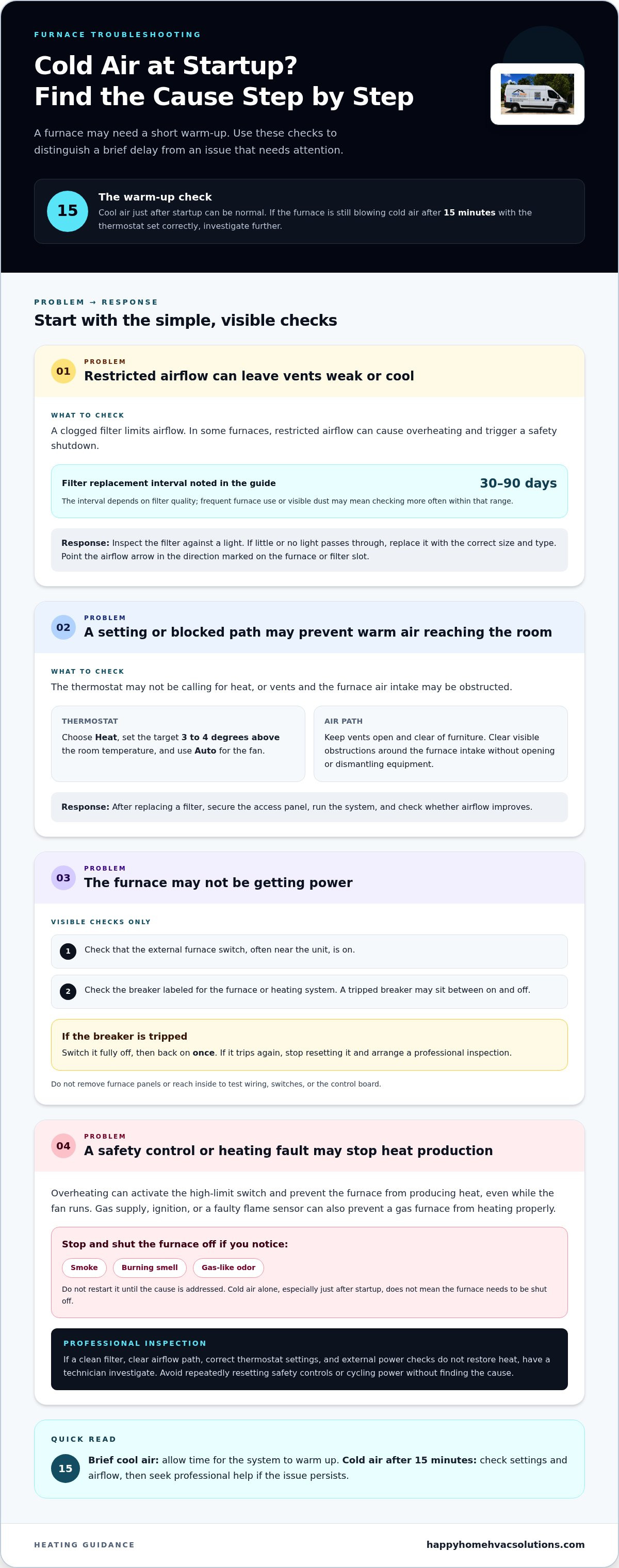
A furnace that starts with cool air may simply need time to warm the air inside its system. If it continues blowing cold air after 15 minutes with the thermostat set correctly, investigate restricted airflow or another heating problem. In Sanford, a dirty filter is a practical first check because it can limit how much air moves through the furnace.
Dust and debris collect on a filter while the system runs. A clogged filter restricts airflow and can weaken the flow from your vents. In some furnaces, restricted airflow can also cause overheating and trigger a safety shutdown. The result may be weak airflow, cool air, or a furnace that stops heating until the cause is addressed.
Check the filter before assuming a major component has failed. Find its access panel, remove the filter, and inspect it against a light. If little or no light passes through, replace it with a filter that matches the furnace’s size and type. Dirty filters generally need replacement every 30-90 days, depending on filter quality. A home with frequent furnace use or visible dust may need more frequent checks within that range.
After installing a replacement filter, make sure its airflow arrow points in the direction marked on the furnace or filter slot. Secure the access panel, run the system, and check whether airflow improves. Keep vents open and clear of furniture so warm air can circulate through the room. Regular filter checks help reduce airflow problems and support better indoor air quality.
A blocked air intake can also restrict airflow into the furnace. Check around the unit and clear visible obstructions without opening or dismantling the equipment. If a clean filter and clear intake don’t restore heat, unusual noises or weak airflow may point to a blower motor issue. An HVAC technician can inspect components that aren’t safe or practical to troubleshoot at home.
When is it better to repair or replace a furnace that is not heating? Repair is a sensible option when a technician identifies a specific fault that can be corrected and the furnace then heats reliably. Consider replacement if problems keep returning or the system still can’t keep the home comfortable after its underlying issues are addressed.
When should I shut off a furnace that is blowing cold air or smells unusual? Turn it off if you notice smoke, a burning smell, or a gas-like odor, and don’t restart it until the cause is addressed. Cold air alone, especially just after startup, doesn’t mean the furnace needs to be shut off.
How do I find a licensed, reputable furnace repair technician in Sanford, Florida? Look for a technician who can provide license details, explain the diagnosis in plain language, and outline the proposed repair before work begins. For local heating information, visit the Sanford service area page.
Does homeowners insurance or a home warranty cover furnace repair in Florida? Coverage depends on the specific policy or warranty terms, including covered causes, exclusions, and maintenance requirements. Review those terms to determine whether the furnace issue qualifies and what steps the contract requires.
2. Furnace switch and circuit breaker checks
If the furnace has power but isn’t sending warm air through the vents, check its external switch and breaker before assuming a major fault. The furnace switch may look like a regular light switch and is often near the unit. If it’s off, the furnace won’t run. Make sure the area is well lit, then check that the switch is on.
Next, find the breaker labeled for the furnace or heating system. A tripped breaker may rest between the on and off positions. If you find one, switch it fully off and then back on once. If it trips again, stop resetting it. A repeatedly tripping breaker on an electric heater can indicate a short circuit that needs inspection by an HVAC technician.
A high-limit switch may also interrupt furnace operation. This safety control responds to overheating, which can result from restricted airflow or a malfunctioning switch. When the control activates, it may prevent the furnace from producing heat, so the vents can blow cool air even while the fan runs.
Think about what happened before the heat stopped. For example, if the furnace ran for a while and then began blowing cool air, overheating could be involved. The high-limit switch may be responding correctly to another issue, or the switch itself may be malfunctioning. Resetting a safety control repeatedly without finding the cause won’t fix the underlying problem.
Limit your checks to visible, external controls. Don’t remove furnace panels or reach inside to test wiring, switches, or the control board. These components need proper diagnosis, and a switch that appears to be the problem may be reacting to another fault. Note whether the breaker trips immediately or only after the furnace has been running; that pattern can help a technician investigate.
If the external switch is on and the breaker stays set, but heat still isn’t coming through, arrange a professional inspection rather than repeatedly cycling the power. A technician can test the high-limit control, check for overheating causes, and assess the electrical system. Heating and furnace service information can help you take the next step when basic switch checks don’t restore heat.
3. Thermostat heat, temperature, and fan settings
A thermostat can make a working furnace seem broken if its mode or setpoint is wrong. Start by checking that the display says Heat, not Cool or Off. Then compare the target temperature with the room temperature. Set it 3 to 4 degrees above the current reading so the thermostat calls for heat. A target below the room temperature won’t prompt the furnace to warm your home.
Check the fan setting next. When Fan is set to On, the blower can run continuously, including between heating cycles. The air may feel cool because the furnace isn’t actively heating it. Switch the fan setting to Auto so the furnace controls when the blower runs and airflow matches heating operation.
Make the thermostat adjustments in sequence. Select Heat, raise the setpoint by 3 to 4 degrees, and switch the fan to Auto. Wait 10 to 15 minutes for the furnace to respond. Check whether the air from a nearby vent becomes warm and whether the indoor temperature begins rising. If basic adjustments don’t restore warm air within that period, the problem may involve a heating component or control rather than the settings.
A blank display, fading screen, or unresponsive buttons may indicate weak thermostat batteries. If your thermostat uses batteries, replace them, then check Heat, the setpoint, and Auto again. Some thermostats require a reset or setup after battery replacement, so follow the on-screen prompts. If the thermostat still behaves erratically, it may need recalibration or replacement.
Thermostat placement can affect its temperature reading. If it’s near a supply vent, direct sunlight, or a heat-producing appliance, the reading may not reflect the rest of the room. The system could stop heating too soon or run longer than expected. Keep the area around the thermostat clear, and compare its display with how the room feels elsewhere.
Correct settings support comfort and efficient operation, but they can’t fix a failed thermostat or furnace control. Don’t open the thermostat or furnace to inspect wiring. If the display works, the settings are correct, and the furnace still won’t respond after 10 to 15 minutes, record what the thermostat shows and whether the blower is running. Those details help an HVAC technician narrow down the fault without guessing.
4. Furnace maintenance and professional service
If basic checks don’t restore warm air, the cause may go beyond thermostat settings or visible controls. In a high-efficiency furnace, a blocked condensate drain line can trigger a safety measure that prevents the burners from igniting. If the furnace stops heating and the drain line appears clogged, don’t dismantle the unit. A technician can inspect the system and clear the line if needed.
Schedule a professional heating check each fall, before cooler weather increases demand. A maintenance visit can address cleaning and lubrication of furnace components. The technician should also inspect and tighten electrical connections, test and calibrate the thermostat, and check furnace operation. For applicable systems, the visit should include cleaning the condensate line.
These checks look beyond the symptom to the parts that affect reliable operation. A blower motor that needs attention can affect airflow, while loose electrical connections can interrupt operation. A newer furnace with an electronic ignition problem needs evaluation and repair by an HVAC professional. Leave internal electrical and ignition work to trained service professionals instead of attempting repairs yourself.
Ductwork can also explain why a furnace runs but rooms don’t receive enough warm air. Leaky ducts may draw cold air into the system and let heated air escape during winter. Leaky ductwork can increase energy costs by up to 30%. A professional inspection can help identify duct leakage, while insulation in areas around ducts can reduce heat escaping through uninsulated spaces.
Annual professional maintenance checkups can help a furnace run smoothly and efficiently. Regular HVAC maintenance can improve efficiency by 5% annually, and a well-maintained furnace can last 15 to 20 years. Those figures describe potential benefits, not a diagnosis for a furnace that has already stopped heating. If airflow, ignition, or electrical issues continue, a technician needs to find and address the underlying fault.
Keep a simple record of each maintenance visit, including the date and any work performed. That history helps identify recurring problems, such as a drain line that clogs again or electrical connections that need further attention. If the furnace is under warranty, check its maintenance requirements before arranging repairs; DIY work may void coverage, and most warranties require routine maintenance and needed repairs by an HVAC professional. A professional HVAC maintenance visit can address system checks before heating problems interrupt comfort.
5. Gas supply, furnace ignition, and flame sensors
A gas furnace needs a reliable fuel supply and a working ignition sequence to produce heat. If the thermostat calls for heating but the furnace doesn’t warm the air, gas supply, ignition, and flame-sensor faults are possible reasons. Most gas furnaces begin blowing noticeably warm air within about 5 to 10 minutes. If the wait is longer and the vents stay cool, note what the furnace does when it starts.
Start with checks you can safely make from outside the unit. For a propane or oil furnace, check the fuel gauge to see whether the tank contains fuel. For a natural gas furnace, check whether its gas valve is open. An extinguished pilot light or closed gas valve can prevent heating. Don’t remove panels or try to adjust internal gas components.
Older gas furnaces may use a pilot light to ignite the burner. If yours has one and it’s out, use the owner’s manual to find the correct reset and relighting procedure for that model. Follow the manual’s directions exactly; some procedures call for waiting five minutes after turning the pilot off, then holding the igniter for 30 seconds until the flame stays lit. If the pilot won’t remain lit or the manual’s steps don’t restore heating, stop troubleshooting and arrange professional repair.
Newer furnaces commonly use electronic ignition instead of a standing pilot. A fault in that system can prevent the burners from lighting, even if the thermostat and blower appear to work. An HVAC professional should evaluate and repair a newer furnace’s electronic ignition. Repeatedly restarting the system won’t fix a failed ignition component and can make the cause harder to identify.
A flame sensor checks whether a burner flame is present. If the sensor fails, the furnace may shut off the burner instead of continuing to heat. Replacing a failing flame sensor isn’t a safe DIY repair and requires professional service. Note whether the burners light briefly and then stop, or never light at all. This observation gives a technician useful information without requiring you to open the furnace.
Keep a clear record of the sequence: whether the furnace clicks, whether a pilot flame is visible through its intended viewing area, and whether warm air arrives within 5 to 10 minutes. If the fuel supply appears available but ignition repeatedly fails, arrange professional heating and furnace service for diagnosis. A technician can inspect the gas supply, ignition components, and flame sensor to identify the fault and complete the needed repair.
Happy Home HVAC Solutions: AC Repair
Happy Home HVAC Solutions provides Heating & Furnace Services when basic checks haven’t restored warm air. If the furnace still won’t heat after you’ve checked its settings, filter, switch, and fuel supply, professional diagnosis can help identify whether the problem involves ignition, electrical controls, airflow, or another component.
A technician can assess the system and recommend a repair based on its condition. If heat loss is related to heat escaping through the home, Insulation Services may help address that separate issue. For furnace concerns in Sanford, contact Happy Home HVAC Solutions to discuss the next step.
Take the Next Step Toward Reliable Home Comfort
If your furnace in Sanford still isn’t blowing hot air, a professional assessment can clarify what needs attention before you decide on repairs. Share when the issue began and whether the system starts or shuts off to help explain the heating problem clearly.
Happy Home HVAC Solutions offers Heating & Furnace Services for heating concerns, along with AC Repair and AC Installation for cooling needs. Choosing a service that matches the problem keeps the next step focused on your home’s comfort.
Contact Happy Home HVAC Solutions today to discuss your heating needs. A clear next step can make it easier to get your home comfortable again.
Frequently Asked Questions
Why Is My Furnace Not Blowing Hot Air?
A furnace may blow cool air because it hasn’t completed its heating startup, airflow is restricted, or a heating component isn’t working. For a furnace not blowing hot air in Sanford, first note whether the system is a gas furnace or a heat pump, since their heating cycles differ. A heat pump’s air may feel only slightly warm when outdoor temperatures are 50 to 60 degrees, but the indoor temperature should steadily rise.
Can a dirty air filter cause my furnace to stop heating?
Yes. A dirty filter can restrict airflow enough to make a furnace overheat and shut down as a safety response. Compare airflow at a nearby vent before and after replacing a visibly clogged filter. If airflow improves but the system still stops heating, note how long it runs before stopping. That pattern can help distinguish a filter issue from another fault.
Should I try to relight my pilot light myself?
Only try relighting a pilot if your older gas furnace has one and you can follow that model’s owner’s manual exactly. Pilot-light locations and relighting steps vary, so don’t guess based on another furnace’s instructions. If the manual is unavailable, the pilot won’t stay lit, or you smell gas, stop troubleshooting and arrange professional help. A newer furnace with electronic ignition needs professional evaluation.
What can I safely try myself before I call a professional?
Keep DIY troubleshooting to visible, external checks: confirm the thermostat is calling for heat, look for a clogged filter, make sure the furnace switch is on, and check that supply vents aren’t blocked. Note what happens after startup, including whether the blower runs and whether heat starts briefly. Don’t remove panels, handle wiring, or repeatedly reset a breaker that trips again.
What should I check first if my HVAC is not blowing hot air?
First identify whether you have a furnace or a heat pump, then check the thermostat’s mode and room-temperature reading. A heat pump can deliver air that feels less hot than furnace air, particularly in mild outdoor weather. Compare the indoor temperature over time instead of judging warmth by touch alone. If it isn’t rising or the system shuts down, record those symptoms for diagnosis.
Why does my furnace run but not heat the house?
A running blower doesn’t prove that the burners are producing heat. The furnace may circulate unheated air because ignition failed, or warm air may escape through leaky ductwork before reaching rooms. If some rooms feel colder than others, note which vents have weak airflow and whether the furnace keeps running. This room-by-room pattern can help identify whether the concern involves heating or air distribution.
Why does my system blow warm for a minute, then turn cold?
Warm air that quickly turns cold may mean the burners start and then shut off while the blower keeps running. A safety control may interrupt heating if the furnace overheats, and a malfunctioning control can also affect operation. Note whether the cycle repeats and whether airflow from the vents seems weak. Avoid restarting the unit repeatedly; a technician can investigate the cause.
Why is my furnace blowing cold air or not blowing hot air?
Cold airflow can result from a startup delay, a fan running between heating cycles, a fuel or ignition problem, or a safety shutdown. Check whether the air warms after startup and whether the home’s temperature changes instead of judging by a brief touch at a vent. In Sanford, Orlando, Oviedo, Winter Springs, Winter Park, and Altamonte Springs, the same symptom can have different causes depending on the system type.