
Water Heater Pressure Relief Valve Leaking: Causes and Fixes
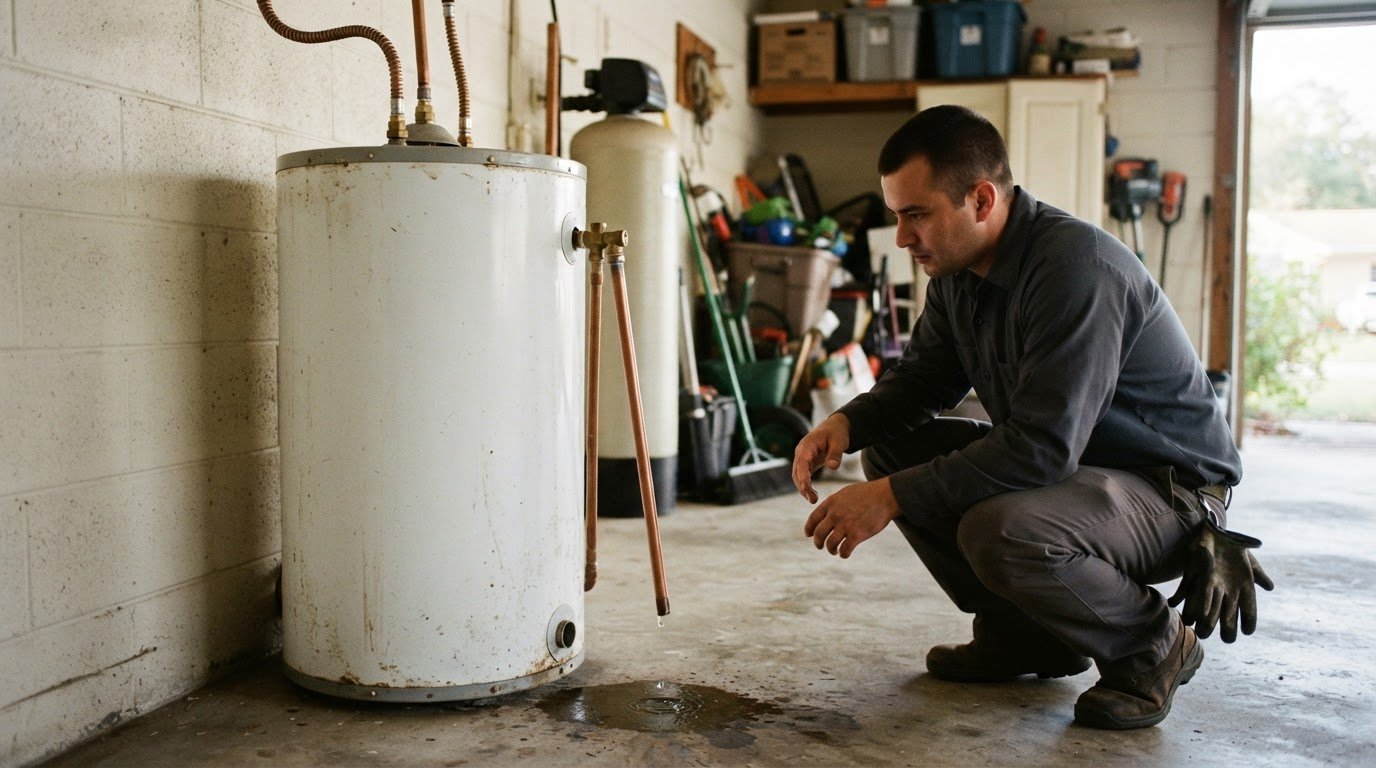
A water heater pressure relief valve leaking continuously isn’t normal, even though the valve may briefly release water when the tank gets too hot or pressure rises too high. It’s designed to open at around 150 psi or approximately 210°F, so persistent dripping can point to excess pressure, overheating, sediment, or a worn valve.
If you’re searching for “water heater pressure relief valve leaking,” the key point is that ongoing discharge should be checked, not ignored. This guide explains what the temperature and pressure (T&P) valve does, what you can safely observe, and when the valve or another part of the system may need attention. You’ll also learn how pressure and thermal expansion can contribute to a leak.
Key Takeaways
- A brief release can be part of the valve’s safety function, but ongoing dripping deserves attention. The leak’s location and when it occurs can help point to the cause.
- Pressure, overheating, sediment, and a worn valve can all contribute to leaking. Understanding the likely cause helps clarify what kind of repair may be needed.
- A leaking valve doesn’t automatically mean the water heater needs replacement. The condition of the tank and the source of the leak are important factors.
- Thermal expansion and household water pressure can affect the valve, so a single pressure reading may not explain the whole problem.
- Don’t cap or remove a leaking relief valve. A professional evaluation can assess the valve and confirm the water heater is operating safely.
What Is a Water Heater T&P Relief Valve?
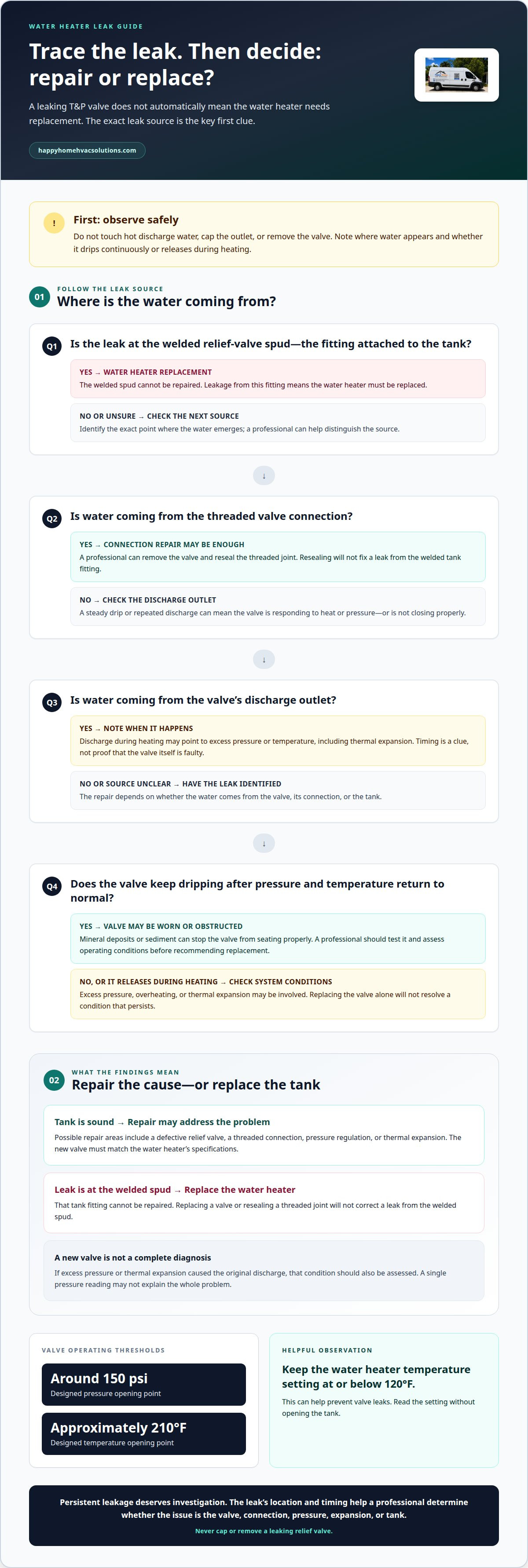
A temperature and pressure (T&P) relief valve is a safety device on a water heater tank. A steady drip or repeated discharge can mean the valve is responding to heat or pressure, or that it is not closing properly.
Relief Valve Purpose
The T&P valve protects the tank by releasing water when temperature or pressure rises beyond safe levels. This outlet helps reduce the risk of excessive heat or pressure building inside a sealed tank.
Look for the valve on the side or top of the water heater, usually with a discharge pipe running downward. If water appears at the pipe, note whether it drips continuously or releases during heating. This pattern can help a technician assess the problem, but hot discharge water can cause burns, so do not touch it.
How the Valve Works
The valve responds to either temperature or pressure, opening automatically when its threshold is exceeded. It is designed to open at around 150 psi or approximately 210°F.
A temperature probe extends into the water near the top of the tank. If it senses a temperature above the valve’s rating, the valve opens and releases very hot water until the temperature falls below its reset point. A brief release and persistent dripping are different clues: a brief release may reflect valve activation, while ongoing leakage needs investigation.
Valve Size and Pressure Rating
The replacement valve must match the water heater’s specifications, including its required size and pressure rating. Its pressure rating should not exceed the heater’s maximum working pressure, because a higher-rated valve could fail to provide the intended protection.
The probe must extend into the top six inches of the water heater. A replacement that does not meet the heater’s specifications or position its probe correctly may not respond as designed. Do not choose a valve by appearance alone. The heater’s label and manufacturer instructions help identify the suitable part.
U.S. requirements depend on the applicable local code and the manufacturer’s installation instructions. The 2025 California Plumbing Code §608.2 calls for approved pressure regulation when static water supply pressure is above 80 PSI.
To check home water pressure, the U.S. Environmental Protection Agency says to attach a pressure gauge to a hose bibb, washing-machine cold-water hookup, or first-floor cold-water faucet. Read the water heater’s temperature setting without opening the tank; keeping it at or below 120°F can help prevent valve leaks. A pressure reading alone doesn’t identify the cause of discharge.
If the valve leaks, note its location and whether water appears during heating, then avoid contact with the discharge. A technician can assess the valve and heater through water heater service.
Repairing the valve versus replacing the water heater
A leaking relief valve does not automatically mean the water heater needs replacement. The right repair depends on whether the leak comes from the valve, its connection, or the tank itself.
Signs the Valve Needs Attention
A valve may need attention if it keeps dripping after pressure and temperature return to normal, or if its body looks worn or damaged. Mineral deposits and sediment can prevent it from seating properly, while a worn valve may leak under normal operating conditions.
Note where the water emerges and whether discharge happens during heating or continues afterward. These observations help distinguish a valve responding to a system condition from one that may no longer close correctly. Do not cap the outlet or remove the valve to stop the leak.
Leaking Valve Connections
Water at the threaded connection may be coming from the joint rather than the valve’s discharge outlet. If the threads are the source, a professional can remove the valve and reseal the connection.
A leak at the welded relief-valve spud, the fitting attached to the tank, is a different problem. The spud cannot be repaired, so leakage there means replacing the water heater. Identifying the exact source matters: resealing a threaded joint will not fix a leak from the tank’s welded fitting.
Relief Valve Replacement
If a professional finds that the relief valve is defective, replacing it can restore the water heater’s safety function. The new valve must match the heater’s specifications, and the cause of the original failure should also be assessed.
For example, installing a new valve will not resolve excessive pressure or thermal expansion if either condition persists. Never cap or remove the valve as a workaround. A professional evaluation can determine whether the problem is limited to the valve or involves the connection, pressure regulation, or expansion control.
Faulty Valve or Excess Pressure and Temperature
A valve that keeps dripping after pressure and temperature return to normal may be worn or obstructed by mineral deposits. Discharge during heating may instead indicate excess pressure or temperature, so timing alone does not prove that the valve is faulty.
A professional should test the valve and assess operating conditions before recommending replacement. If the tank is sound, repair may address a defective valve, threaded connection, pressure regulation, or thermal expansion. If the leak comes from the welded spud, the tank itself needs replacement.
Repair or replacement costs depend on the cause, the parts required, and whether the tank needs replacement; a quote request is needed for pricing. For a persistent leak, water heater service can help identify whether the valve or heater needs attention.
Inspecting the valve and deciding when to call a professional
Start a careful inspection by observing the leak, not by touching the valve. Record where water appears, whether it drips or flows, and whether discharge happens while the water is heating.
What to Observe Safely
From a safe distance, look at the valve body, its connection, and the discharge pipe. Note whether water comes from the pipe outlet, the threaded joint, or the tank around the welded fitting. These locations point to different possible problems and can help a professional focus the inspection.
Also note whether the leak stops or continues after the heater finishes warming water. Discharge during heating may relate to changing pressure or temperature, while continued dripping can indicate a valve that is not seating properly. These clues help, but they do not confirm the cause.
Do not touch hot discharge water, remove the valve, or cap its outlet. If you see a leak, turn off power to an electric heater at its dedicated breaker, or shut off the gas supply valve feeding a gas heater. Keep clear of the discharge pipe while the water heater is hot.
What a Professional Checks
A licensed professional should evaluate a leaking T&P valve, check pressure settings, test the valve, and verify safe operation. The assessment considers whether the valve opens as intended and whether pressure or temperature conditions are causing the discharge.
The professional can compare the leak’s location with the heater’s condition, inspect the valve connection, and assess whether pressure regulation or thermal expansion is contributing. If the valve is defective, replacement may be appropriate; if the connection is leaking, the repair may differ. Testing helps distinguish these cases instead of treating every drip as the same fault.
Ask for a clear explanation of the findings: what was tested, where the leak starts, and what repair addresses its cause. A valve that fails a test calls for a different response than water escaping at a threaded connection. The tank’s condition also matters when weighing repair against replacement.
When to Call for Help
Arrange a professional evaluation if discharge continues, returns repeatedly, or occurs alongside unusually hot water. A valve releasing very hot water may be responding to a temperature problem, so do not handle the pipe or try to stop the flow yourself.
Call promptly if water is leaking around the tank’s welded valve fitting, since that fitting cannot be repaired. Persistent discharge, a suspected valve fault, or uncertainty about the leak’s source also calls for professional testing. A licensed professional can assess pressure, test the valve, and confirm whether the heater is operating safely.
Thermal expansion during water heating
Heating water increases its volume, and a closed plumbing system has limited room to absorb that change. If pressure builds during a heating cycle, the T&P valve may discharge water.
Thermal Expansion and Expansion Tanks
As water warms, thermal expansion makes it take up more space inside the water heater. A thermostat starts and stops heating, but the water’s expansion during that cycle can still affect pressure in the plumbing.
An expansion tank provides space for the extra water volume. It absorbs some expansion and reduces pressure on the relief valve, which can help prevent pressure-related discharge. For example, if a valve releases water mainly while the heater warms a fresh tank, a professional can assess whether expansion is a factor.
The presence of an expansion tank does not prove that it is working correctly or that expansion caused the leak. A professional can assess the tank and plumbing conditions alongside the timing of the discharge. If the relief valve keeps releasing water, replacing it without addressing thermal expansion may leave the underlying pressure condition unresolved.
Thermal Expansion in Closed Systems
In a closed plumbing system, expanding water cannot move back toward the supply, so pressure may rise as the heater warms it. Without an expansion tank, that pressure can cause the T&P valve to discharge water.
For example, discharge may occur during heating and stop when the cycle ends. That timing can make thermal expansion one possibility, but it is not a diagnosis. A single high household water-pressure reading also cannot explain by itself why the water heater’s relief valve is discharging.
Pressure changes depend on the whole system, not just one reading taken at one moment. A professional can assess pressure conditions and whether an expansion tank is present and functioning as intended. This helps distinguish expansion-related discharge from a worn valve or another pressure issue.
If discharge recurs during heating, note when it starts and stops without touching the hot outlet. Share that pattern during the inspection. It gives the professional a useful reference when assessing the heating cycle, pressure behavior, and expansion control. The right response depends on identifying what is causing the valve to open.
Excessive tank pressure and thermostat problems
High incoming water pressure or a malfunctioning thermostat can cause a T&P valve to discharge. This is a safety response, so replacing the valve alone may not correct the condition that caused it to open.
High supply pressure can push water heater pressure beyond the valve’s opening point. The 2025 California Plumbing Code §608.2 calls for approved pressure regulation when static water supply pressure is above 80 PSI. That provision applies to California; pressure readings elsewhere still need interpretation within the applicable local requirements.
A single high household water-pressure reading cannot, by itself, explain why a relief valve is discharging. The timing of the leak, the heater’s temperature, and pressure behavior during heating all matter. A professional assessment can help distinguish high incoming pressure from other causes, including thermal expansion or a defective valve.
Thermostat problems pose a different risk. A malfunctioning thermostat can let the water heater overheat, increasing tank pressure and prompting the relief valve to open. If the water seems unusually hot, especially alongside repeated discharge, stop using the heater and arrange an evaluation. Do not touch water from the discharge pipe.
The temperature setting is another factor. Keeping a water heater’s setting at or below 120°F can help prevent relief valve leaks. If water temperature seems inconsistent or hotter than expected, don’t raise the setting or adjust internal components to troubleshoot a leak. A technician can assess thermostat operation and verify the heater’s safe functioning.
Pressure and temperature can interact, but their clues differ. Discharge during heating may coincide with thermal expansion or a thermostat issue. Discharge associated with high incoming pressure makes pressure regulation an area to assess. Neither timing nor one pressure reading identifies the fault on its own, so valve testing and pressure checks help establish the cause.
A sound repair addresses the condition behind the discharge. If a technician finds high supply pressure, pressure regulation may be needed; if the thermostat is malfunctioning, the heating controls need assessment. A defective relief valve may need replacement, but installing a new valve without investigating pressure or overheating can leave the problem unresolved.
Note whether discharge occurs during heating, whether water seems unusually hot, and whether the leak continues afterward. Share those observations with the technician rather than attempting to test the valve yourself. For recurring discharge or suspected overheating, arrange water heater service so the pressure, thermostat, and valve can be assessed together.
Happy Home HVAC Solutions: Water Heater Services
Happy Home HVAC Solutions provides water heater services for homeowners dealing with a leaking relief valve, unusual discharge, or suspected heating problems. An evaluation can help identify whether the issue lies with the water heater and whether repair or replacement may be appropriate.
Share when the leak occurs, where water appears, and whether the water seems unusually hot. These details help guide the assessment. If the leak comes from plumbing connections or requires general plumbing work beyond the water heater service, a plumber may be the appropriate professional.
For help assessing a water heater concern, contact Happy Home HVAC Solutions about Water Heater Services.
Move Forward With a Clear Plan for Your Home
A water heater pressure relief valve that keeps leaking calls for a clear next step, not guesswork. Use your observations to explain the concern and focus attention on the water heater’s condition. A professional evaluation can help determine the repair needed to restore confidence in your home’s hot water.
Happy Home HVAC Solutions also offers AC Repair, AC Installation, and Heating & Furnace Services to support comfort across key home systems. For a water heater concern, keep the conversation focused on the heater and the help you need.
Contact Happy Home HVAC Solutions to discuss your water heater service needs and take the next step with confidence.
Frequently Asked Questions
Is a Leaking Relief Valve Normal?
A brief release can occur when the valve responds to excessive temperature or pressure, but ongoing dripping should not be treated as normal. Note whether water appears during a heating cycle, after water use, or continuously. Discharge that stops after the heater finishes warming water offers a different diagnostic clue from a leak that continues unchanged. Do not touch the outlet; hot discharge can burn.
Could a Worn-Out or Dirty Relief Valve Be the Problem?
Yes. Sediment or mineral deposits can keep the valve from seating fully, while a worn valve may leak even when the system is operating normally. A persistent small drip after conditions settle can fit either situation, but it does not confirm which one applies. A professional can test the valve and inspect its condition before deciding whether replacement is appropriate.
Does It Matter if the Relief Valve Drips Sometimes or Constantly?
Yes. Intermittent dripping may coincide with a heating cycle, while constant dripping suggests the valve is not closing or a pressure condition remains. Track when the drip begins and ends, and whether it changes after heating stops. This timeline helps a technician interpret the symptom alongside valve testing and pressure checks. Do not block the outlet to stop either pattern.
What Do Water Pressure and Temperature Tests Tell the Plumber?
Pressure tests can show whether incoming or system pressure may be contributing to discharge, while temperature checks can help identify overheating. The U.S. Environmental Protection Agency describes checking home pressure with a gauge attached to a hose bibb, washing-machine cold-water hookup, or first-floor cold-water faucet. One reading alone cannot explain a relief-valve leak, so a plumber considers test results alongside heating-cycle timing and valve operation.
Why is a water heater temperature and pressure relief valve leaking?
Common causes include excess pressure, overheating, thermal expansion, sediment that prevents proper seating, or a worn valve. A malfunctioning thermostat can overheat the water, while high incoming pressure can force the valve open. The point where water emerges matters too: discharge from the outlet differs from leakage at a threaded connection or the tank fitting. A professional assessment helps distinguish these causes.
How to replace a leaking water heater pressure relief valve step by step?
Have a qualified professional replace the valve, since it protects against unsafe pressure and temperature. The work involves making the heater safe to service, confirming the replacement matches the heater’s specifications, fitting it correctly, and testing safe operation afterward. The cause of the original leak should also be assessed, because a new valve will not correct ongoing overheating or excessive pressure. Never remove the valve as a temporary fix.
Can a leaking water heater relief valve be capped or plugged?
No. Do not cap, plug, or remove the relief valve, even if the drip seems minor. Blocking its outlet prevents the valve from releasing water when temperature or pressure exceeds safe levels. Keep clear of hot water at the discharge pipe and arrange an evaluation to find out why it is releasing water. If the leak persists or the water seems unusually hot, treat it as a safety concern.
When does a leaking water heater relief valve require an expansion tank or pressure-reducing valve?
An expansion tank may be needed when water expands during heating in a closed plumbing system and pressure rises. A pressure-reducing valve may be appropriate when incoming supply pressure is excessive. These address different conditions, so one does not automatically replace the other. A professional assesses pressure behavior, system setup, and discharge timing; a single pressure reading cannot determine the remedy.