
Water Heater Leaking from Bottom in Sanford, FL: 2026
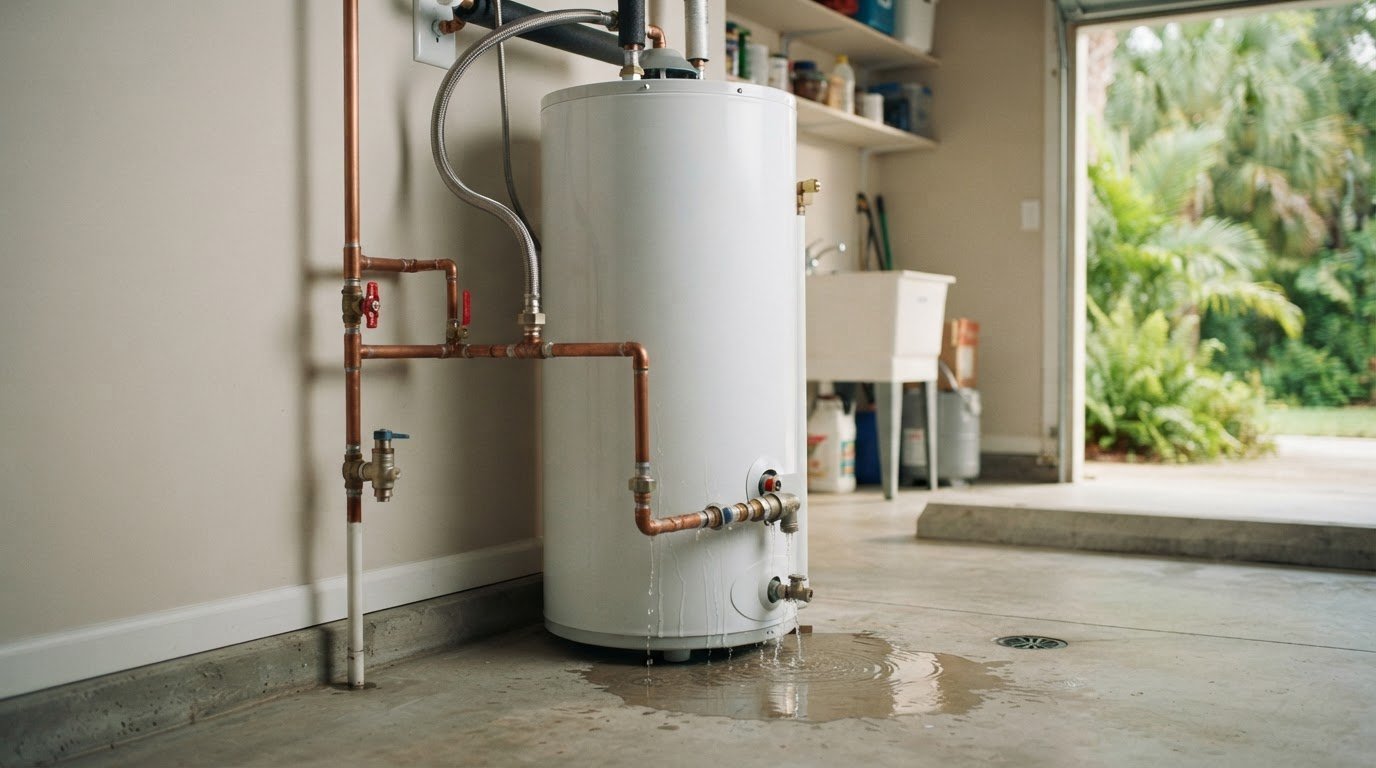
What if water at the base of your water heater points to a connection issue, not a failed tank? A puddle is unsettling when floors or belongings may be at risk. If you’re searching for a water heater leaking from bottom Sanford FL, the water’s location is a useful clue, but it doesn’t confirm the source.
Take a leak seriously, but don’t try to diagnose it or attempt an unsafe repair yourself. A few sensible first steps can help limit water damage while keeping you and your home safe, especially if you’re worried about losing hot water.
This guide explains what to do first, what may be causing the leak, and what a technician may inspect to determine whether repair or replacement makes sense. You’ll also learn which factors can shape that decision. Happy Home HVAC Solutions is a family-owned, licensed Central Florida company that provides water heater services for homeowners in Sanford, Orlando, and nearby communities.
Key Takeaways
- If your water heater is leaking from the bottom in Sanford, FL, the puddle’s location alone can’t reveal the source or confirm tank failure.
- Water may run down the unit or nearby pipes before pooling, so the leak could come from the tank, a valve, a fitting, or a relief discharge.
- Age, overall condition, previous issues, leak location, and parts availability can all shape whether repair or replacement is more practical.
- Keep clear of wet equipment, limit nearby water damage from a safe distance, and use a shutoff only if it’s accessible and identifiable.
- A professional assessment can help pinpoint the leak and explain practical next steps for your water heater.
Water Heater Leaking from the Bottom in Sanford, FL: What the Puddle Can Tell You
Finding water around your water heater can be alarming, especially if it’s near stored belongings or finished flooring. Look from a safe distance rather than reaching behind or beneath the unit. A small, unchanged damp area still needs attention, but it may not require the same immediate response as water that’s actively dripping or spreading. Either way, the puddle is a clue, not a diagnosis.
Pooled water signals a leak or overflow concern, not a confirmed cause. Water can run down the heater’s outer surface or follow nearby piping before collecting at the base. The spot where you see water may not be where it started. A basic overview of water heater components and operation can provide context, but an inspection is needed to identify the source. If you have a water heater leaking from bottom Sanford FL, first consider whether the water is spreading and whether anyone could be at risk.
Which warning signs make a water heater leak more urgent?
Watch for a puddle that grows quickly, a steady drip, or water moving toward electrical equipment. Don’t touch wet parts of the heater, wiring, or nearby appliances, and don’t step into standing water to investigate. Keep children and pets away. If you smell gas, leave the home and contact appropriate emergency help from a safe location. Don’t stay inside to inspect the heater.
A small damp patch that remains the same size is different from a spreading puddle, but it shouldn’t be ignored. If water is approaching an outlet or electrical equipment, treat the area as unsafe even if the leak seems slow. Keep your distance and arrange professional water heater service rather than trying to locate the source by handling the unit.
What details should homeowners observe?
Without approaching a wet or unsafe area, note when you first noticed the water and whether it’s spreading. If the area is safe to access, record whether water returns after it has been wiped up. Don’t wipe water near electrical components or touch wet equipment. These observations can help a technician understand whether the leak is intermittent or ongoing.
Also note any change in hot-water performance, such as water that no longer seems as hot as usual. You can describe that change without testing or touching the heater’s controls. If it’s safe, take a photo from a distance that shows the puddle and the heater’s base. Include nearby pipes if possible, but don’t move items or approach the unit for a closer shot.
Happy Home HVAC Solutions provides water heater service in Sanford and Orlando. When arranging an assessment, share what you observed, including how quickly the water appeared and any change in hot water. Clear details can help the technician assess the situation and explain practical next steps.
Why Is Water Coming from the Bottom of a Water Heater?
A puddle beneath a heater can have more than one explanation. Water may escape from a component higher on the unit, follow the tank’s surface or a nearby pipe, and only become visible at floor level. The wettest spot isn’t necessarily the point of origin. For a water heater leaking from bottom Sanford FL, identifying the source matters because a tank leak and a connection leak can call for different next steps.
A tank-body leak comes through the heater itself; water from a connection begins at a fitting, valve, or pipe attached to it. You can’t always tell the difference from the puddle alone. A technician traces where moisture first appears and checks the relevant components rather than assuming the tank has failed. From a safe distance, note whether visible moisture seems to be higher on the unit, near a connection, or directly at the tank body. Don’t handle wet equipment to investigate.
- Tank body or seam: Seepage that appears to come through the tank wall or a seam may point to a problem with the tank itself.
- Drain valve: Moisture around the valve near the lower part of the heater makes that area one possible inspection point.
- Fittings or nearby piping: A connection above the base may leak, with water tracking downward before it pools.
- Relief discharge: Water near the discharge route or its termination may warrant checking the relief components and where the water is coming from.
Could the tank itself be leaking?
A tank-body leak originates through the tank material or a seam, while water at an attached fitting originates outside the tank wall. Visible corrosion or persistent seepage from the body deserves professional assessment, but neither the puddle’s position nor a homeowner’s first impression proves the tank has failed. A technician can trace the moisture and assess the heater’s condition before recommending repair or replacement.
Could a valve, fitting, or nearby pipe be responsible?
Yes. A drip at an upper inlet or outlet connection can travel along piping or the heater’s exterior and gather below, making the base look like the source. A technician may also inspect the drain-valve area and the temperature-and-pressure relief discharge as possible origins. Don’t tighten fittings, cap a discharge, or remove safety components. Those steps can create additional risks or obscure the source.
If inspection shows that the tank itself is compromised, replacement may be part of the discussion. If the water originates at a connection or valve, the technician can explain repair options based on the findings. For homeowners considering a new unit, ENERGY STAR water heaters offers information about efficient models, including heat pump options. Let the leak source guide the decision, not the puddle alone.
Happy Home HVAC Solutions provides water heater service to help Sanford homeowners identify the source and understand practical next steps.
Repair or Replace a Leaking Water Heater? How to Weigh the Options
A puddle alone can’t tell you whether repair or replacement is right. The decision starts with locating the source: a replaceable valve or connection is different from a leak through the tank body. A technician can inspect the heater and explain what the findings mean for your options. If you’re weighing what to do about a water heater leaking from bottom Sanford FL, use the inspection results, not the puddle’s location, as your guide.
| Inspection finding | Possible repair scope | Replacement considerations |
|---|---|---|
| Leak traced to a valve, fitting, or connection | Assess and address the affected component | Consider the unit’s overall condition and repair history |
| Leak appears to come through the tank body or seam | Technician determines whether a repair is appropriate | Discuss replacement if the tank is compromised |
| Recurring leaks or broader deterioration | Review the issue and prior repair findings | Compare the condition of the existing unit with replacement planning needs |
Several factors inform the recommendation: the heater’s age and condition, the specific leak source, previous problems, and whether suitable parts are available. The scope of the repair matters too. A single component issue on an otherwise serviceable unit presents a different decision from evidence of a tank-body leak or multiple ongoing concerns. An inspection establishes which situation applies.
When might repair be considered?
Repair may be considered if inspection traces the water to a repairable valve, fitting, or connection and the rest of the heater is in suitable condition. The technician can explain the component involved, the proposed work, and relevant concerns from the unit’s history. A repair recommendation isn’t based on where the puddle formed, and no repair can be assumed to prevent future leaks.
When might replacement be considered?
Replacement may enter the discussion if the inspection confirms a leak through the tank body, finds recurring problems, or reveals significant deterioration. The recommendation should account for the unit’s overall condition rather than rely on a universal age cutoff. If replacement is considered, the existing setup and installation requirements help shape the plan.
Planning a new unit involves more than choosing a model. The technician may consider the current equipment, available space, connections, and installation requirements. For a related overview of those planning details, see this Lake Mary water heater installation guide. Its installation discussion can help you understand the factors that may come up.
Ask for a clear explanation of what was inspected, where the leak originates, and why repair or replacement is being recommended. That gives you a practical basis for deciding without treating every leak beneath a heater as proof that the entire unit must be replaced.

What to Do Safely Before Water Heater Service in Sanford
If you find water at the heater’s base, focus on personal safety first. Limit damage only if you can do so without entering an unsafe area. This checklist can help you prepare for water heater service, but it isn’t a substitute for diagnosis or repair. If you have a water heater leaking from bottom Sanford FL, don’t try to identify the source by touching wet equipment or opening the unit.
- Keep clear of hazards. Keep children and pets away from the heater and any standing water. Don’t touch the unit, cords, switches, nearby appliances, or other wet electrical equipment. If you smell gas, leave the area and seek appropriate emergency assistance from a safe location.
- Use a shutoff only if it’s safe. If a shutoff is clearly identifiable and accessible from a dry, safe position, you may use it. Don’t reach across water, handle wet equipment, or operate a control you can’t confidently identify. Leave the area if conditions feel unsafe.
- Limit nearby damage cautiously. Move belongings only if you can do so without stepping into standing water or approaching wet equipment. For a minor drip, place a towel or container only from a safe, dry position. Don’t put yourself in the leak’s path to protect items.
- Observe without taking the unit apart. Note whether water is still appearing and where it seems to collect, but don’t open panels, drain the tank, or handle hot discharge water. A professional needs to inspect the actual source.
How can you reduce immediate water-damage risk?
Prioritize a safe distance over saving belongings. If a box or rug can be moved without walking through water or touching the heater, relocate it. A container may catch a minor drip only when you can set it down from a dry, safe spot. Don’t remove covers or attempt a temporary fix; these actions can expose you to electrical, hot-water, or equipment hazards.
What information helps a service professional assess the leak?
From a safe spot, gather details that help explain what’s happening. Share the heater type if you know it, when you noticed water, whether it keeps appearing, and any changes in hot-water supply. Mention visible corrosion or previous leak episodes, but don’t approach the unit to check for them. Sanford homeowners can find local service information on the Sanford service-area page.
A photo taken from a safe distance can show the puddle’s position and surrounding area. You can also note whether the water seemed to increase after a particular time or household activity, without testing the heater or deliberately running hot water. These observations are useful context, not proof of the cause.
For professional water heater service, schedule a water heater assessment with Happy Home HVAC Solutions. Share your observations and allow the technician to determine the source and discuss practical next steps.
Get Professional Water Heater Service for a Bottom Leak in Sanford
A professional assessment can turn an uncertain puddle into a clear next step. Water at the base doesn’t reveal whether the tank, a valve, or a connection is responsible, so a repair-versus-replacement recommendation should follow an inspection. Happy Home HVAC Solutions provides water heater services for homeowners who need help assessing a leak and understanding their options.
Before the visit, describe what you’ve observed: where water collects, when you noticed it, whether it’s still appearing, and any changes in hot-water supply. If you have a photo taken from a safe distance, it may help show the surrounding area. Don’t approach or handle wet equipment to gather more details. Your safety comes first, and you don’t need to diagnose the problem yourself.
What should homeowners expect during a water heater assessment?
The technician will assess the leak location and may examine accessible connections, the visible condition of the unit, and relevant equipment details. The goal is to determine where water is coming from before discussing possible work. Recommendations depend on what the inspection reveals, the unit’s condition, and whether the issue appears to involve a component or the tank itself.
You can discuss the findings and practical next steps, including whether repair or replacement is worth considering. A clear explanation should connect the recommendation to the observed source and condition of the heater, rather than treating any puddle beneath it as an automatic replacement verdict. The exact work depends on the assessment, so don’t assume the leak’s cause or outcome before the equipment has been evaluated.
How can Sanford homeowners take the next step?
When you arrange service, share the heater type if you know it, when you noticed the leak, and whether water continues to appear. Mention past leak episodes, visible corrosion you’ve already noticed, or changes in hot-water performance. You can also share a photo taken safely. These details help frame the concern, but they don’t replace an on-site assessment.
If the water is spreading or you can’t safely approach the unit, stay clear and explain that when requesting service. Don’t open panels, handle wet components, or try to stop the leak with an improvised fix. A calm, accurate description is more useful than taking risks to gather extra information.
If you have a water heater leaking from bottom Sanford FL, let a professional assess the source and explain your options. Contact Happy Home HVAC Solutions for water heater service in Sanford. Share what you’ve observed to take the next step toward a clear plan for your home.
Make Your Next Step a Clear One
A leak can disrupt your home, but it doesn’t have to leave you guessing about what to do next. If you’re facing a water heater leaking from bottom Sanford FL, choose a safe, informed next step instead of attempting a repair without knowing the source. A professional assessment can help you understand your unit’s condition and make a practical decision for your household.
Happy Home HVAC Solutions is a family-owned and operated, licensed Central Florida business that offers water heater services. The company serves Sanford and nearby communities, including Orlando, Oviedo, Winter Springs, Winter Park, and Altamonte Springs.
When you’re ready to discuss your water heater, contact Happy Home HVAC Solutions about water heater service. Share what you’ve observed and any photos taken safely from a distance. A professional assessment can help you understand the situation and decide what to do next.
Frequently Asked Questions
Can a water heater leak from the bottom only when it is heating?
Yes, a leak may become noticeable during a heating cycle, but that timing alone doesn’t identify the cause. Changes in temperature and pressure can make a small seep at a component more apparent, or water may simply be easier to spot then. Note whether you see moisture during heating, afterward, or at other times. Don’t run the heater deliberately to test it; share the pattern with a technician.
Is a water heater leaking from the bottom safe to keep using?
Don’t assume it’s safe to keep operating a leaking unit. Water near electrical parts or a spreading puddle raises safety concerns, and the source may not be visible. If you can’t identify a safe, accessible shutoff, stay clear rather than handling wet equipment. A gas odor is a reason to leave the area and seek appropriate emergency assistance. Have the heater assessed before deciding whether to use it again.
What happens if you leave a leaking water heater on?
Water may continue escaping and reach flooring, nearby belongings, or equipment, increasing the chance of damage. If the leak worsens, the amount of water can grow, and a continuing leak may leave the household without dependable hot water. Water near electrical components can also create a hazard. Don’t wait for the heater to stop working before arranging an assessment, especially if the wet area is expanding.
Can condensation look like a water heater leak?
Yes, condensation can form on a cool surface and drip down, making the floor beneath a heater look wet. It may appear as a fine film or scattered droplets rather than a steady stream, but appearance alone can’t confirm condensation. If moisture keeps returning, spreads, or appears around a connection or the tank body, have the source assessed. Don’t touch wet equipment to check where the water begins.
Can a leaking water heater damage floors or walls?
Yes. Water that spreads or remains unnoticed can soak flooring, baseboards, or nearby wall materials, leading to stains, swelling, or other moisture damage. The risk depends on how much water escapes, where it travels, and how long surfaces stay wet. Keep people away from standing water, and don’t move items if reaching them would put you near wet equipment. A prompt assessment can help address the leak source.
Does homeowners insurance cover a water heater leak in Sanford, FL?
Coverage depends on your policy and the circumstances of the leak, so there isn’t a reliable yes-or-no answer for every Sanford home. Your insurer can explain how your policy treats the cause of the leak and any resulting damage. If water has affected the home, document what you can safely, keep relevant records, and contact your insurer for guidance. Don’t assume the heater’s repair or replacement is covered.