
Spray Foam vs. Fiberglass in Orlando: Which Insulation Fits
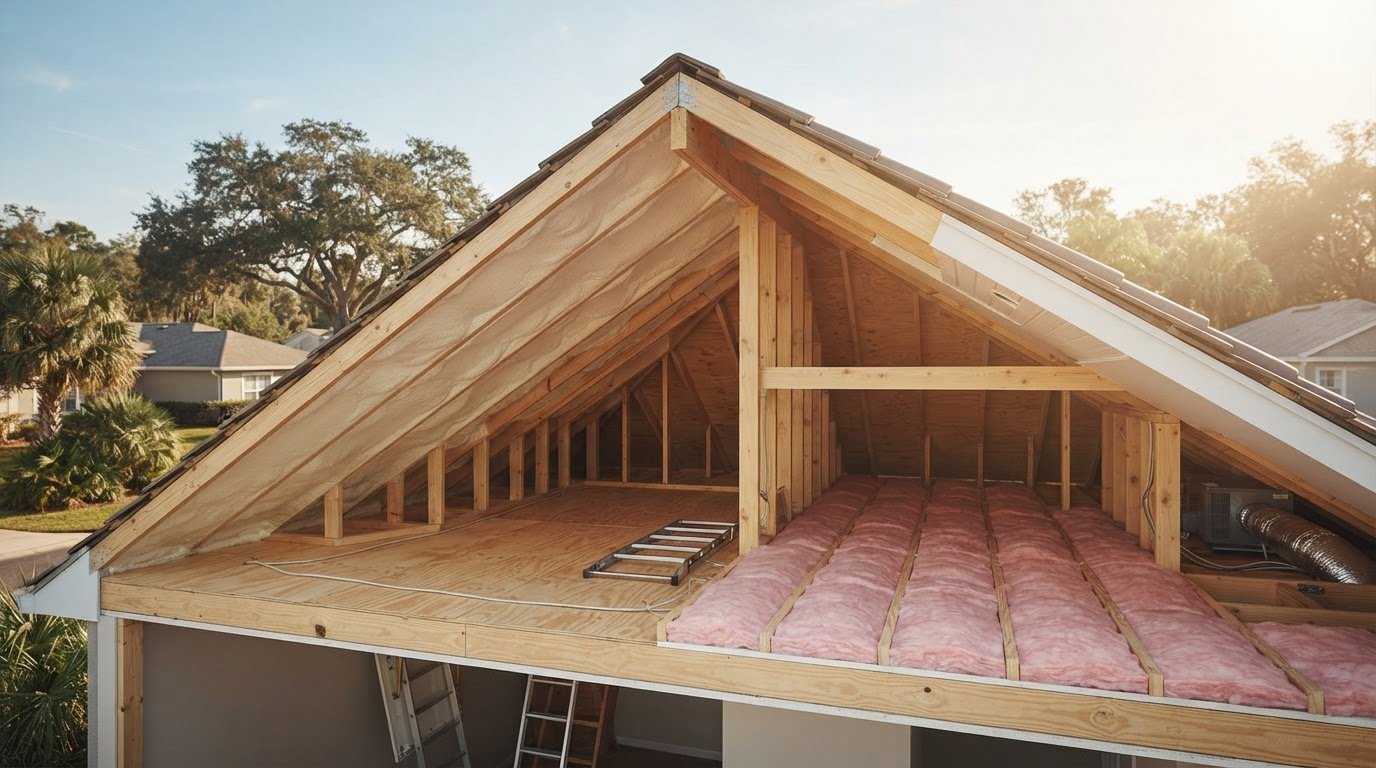
Fiberglass can be an efficient choice in an Orlando home when it’s installed well and kept dry, while spray foam adds air sealing that can help limit drafts and heat gain. For many attics, the target is R-30 to R-38, depending on the zone, so choosing between spray foam insulation and fiberglass in Orlando means looking beyond material alone. Air leaks can account for up to 40% of a home’s energy loss, which makes sealing gaps an important part of the decision.
It’s understandable to wonder whether spray foam makes a big enough difference in Florida’s heat and humidity to justify choosing it over fiberglass. The right fit depends on where the insulation will go, how well the space needs to be air-sealed, and how the material will hold up in local conditions. This guide compares fiberglass’s energy efficiency with spray foam’s air-sealing benefits, explains open-cell and closed-cell foam, and outlines what to consider for durability and Central Florida insulation needs.
Key Takeaways
- Compare insulation by both R-value per inch and how well it fits the space, not just by material name.
- Open-cell and closed-cell foam serve different needs, including sound dampening and added rigidity.
- Fiberglass can remain effective for years when it stays dry and undisturbed, while Florida humidity can affect its lifespan.
- Use the insulation’s location and exposure to moisture to guide your choice for a Central Florida home.
- Look beyond the insulation itself: air leaks and uneven coverage can influence how comfortable your home feels.
Does spray foam really make that big a difference in Florida?
Spray foam expands into gaps and can limit air leaks; fiberglass slows heat flow but does not seal air pathways on its own. Neither material fixes a roof leak. Spray foam installation also requires following application and re-entry instructions.
| Insulation option | Air sealing | Attic heat | Moisture considerations |
|---|---|---|---|
| Fiberglass | Does not seal gaps by itself | Slows heat transfer through covered areas | Repair water leaks before insulating |
| Spray foam | Expands into spaces and seals many gaps | Combines insulation with air sealing | Does not replace roof-leak repairs |
Central Florida attics can reach 130°F or higher on a July afternoon. Heat enters living areas through the ceiling, while air leaks let conditioned air escape. Up to 40% of a home's energy loss is attributed to air leaks, making gaps around attic penetrations, framing, and access points important to address. Spray foam can cover irregular spaces while insulating; fiberglass needs gaps and edges handled separately for comparable air control.
Spray foam's R-value and air-sealing properties are stated to cut energy bills by 15% or more. That difference depends on whether leakage is a major source of the home's cooling load. In Oviedo homes, an attic inspection can identify visible gaps, uneven coverage, and roof leaks before insulation choices are made.
Fiberglass Air Leak and Moisture Control
Fiberglass is insulation, not an air barrier, so air can move through openings around batts or loose-fill coverage. Spray foam expands into many gaps, creating a more continuous air seal. Neither material should cover an active roof leak. Repair the source of water entry first, then check the insulation area for dampness or damage.
Spray Foam Health and Installation Risks
The main concern during spray foam installation is exposure while the product is being applied or before it has cured. Stay clear of the work area and follow product-specific re-entry instructions. Careful application matters, too: missed sections can leave air paths, while foam in unintended areas can restrict access or complicate repairs. Plan around attic wiring, fixtures, and future access to help avoid these issues.
Before choosing, inspect the attic, identify air pathways, and rule out water entry. Then compare how each material can cover the space and address air leakage. Fiberglass may suit areas where coverage can be continuous and gaps can be sealed separately. Spray foam may be worth considering where irregular openings and air movement are the main concerns. Base the decision on actual gaps, moisture conditions, and coverage needs.
That reported result is notable, but it does not predict another household’s savings. The effect depends on whether air leakage is a significant source of its cooling load.
A closer look at attic coverage and gaps can help show whether air sealing is likely to matter in your home. Weigh any savings claim against the home’s actual conditions. Insulation is not a substitute for repairing roof leaks or following spray foam application and re-entry instructions.
Choosing between open-cell and closed-cell foam
Both foam types insulate and seal air leaks, but their R-values and other properties differ. Compare the space, desired insulation level, and installation plan before choosing.
Open-Cell Spray Foam
Open-cell spray foam has an R-value around 4.0 per inch. Its lower R-value per inch makes it a different choice from closed-cell foam when the available cavity depth is limited. Open-cell foam can also dampen sound, which may suit a wall separating a living space from a noisy area. Match its use to the space’s insulation and sound-control needs.
Closed-Cell Spray Foam
Closed-cell spray foam has an R-value of approximately 6.5-7.0 per inch, compared with around 4.0 for open-cell foam. That higher value per inch can help where a cavity has limited depth. Closed-cell foam also adds structural rigidity to wall cavities and roof sheathing. Those added characteristics can make it a better fit when the project prioritizes higher insulation value in a compact space.
Fiberglass provides an R-value of about 2.5 to 3.5 per inch. The comparison is useful, but R-value alone doesn’t settle the decision: coverage, gaps, and the available cavity depth also affect how the assembly performs. For example, a deeper cavity may allow a homeowner to meet an insulation target with a material that has a lower R-value per inch.
Choose based on the space and the intended benefit:
- Limited cavity depth: Compare the higher R-value per inch of closed-cell foam.
- Sound control: Consider open-cell foam’s sound-dampening benefit.
- Wall or roof sheathing: Account for closed-cell foam’s added rigidity.
- Fiberglass: Compare its R-value per inch with the depth available and the planned coverage.
For an Orlando project, choose a licensed insulation contractor whose proposal identifies the foam type, intended application area, and R-value goal. Compare those details alongside the contractor’s license and installation plan, rather than choosing by material name alone. A clear scope helps connect the selected foam’s properties to the actual cavities and surfaces being insulated.
Ask how the proposed foam type fits your priorities, such as R-value per inch, sound dampening, or added rigidity. Compare that information with the space and installation plan. The best fit is the material whose documented properties align with the home’s needs, not necessarily the one with the highest figure in a single category.
Fiberglass durability and lifespan
Fiberglass can last 20-30 years if it stays dry and undisturbed, but Florida’s humid conditions may mean replacement in ten years. Properly installed spray foam can maintain its shape and performance for the life of the structure. Both materials need attention if water, damage, or renovation disturbs the insulation.
Longevity depends on more than the material. Florida averages around 75% relative humidity, so keeping attic insulation dry matters. A roof leak, condensation, or other moisture intrusion can affect fiberglass and may require an inspection. For spray foam, look for visible separation, damage, or areas that no longer adhere to the surface.
Fiberglass durability in Florida
Fiberglass is most durable when it remains dry and undisturbed. In those conditions, its potential lifespan is 20-30 years. Florida’s humidity can make that lifespan less predictable, and fiberglass may need replacing in ten years under humid conditions. If a roof leak wets a section, address the water source and assess the insulation instead of covering the affected area.
During an attic inspection, look for flattened, displaced, or damp material, especially near roof penetrations and eaves. Gaps or compressed sections can reduce coverage even if nearby fiberglass looks intact. After ceiling repairs or attic work, check that insulation hasn’t been moved aside and left the surface uncovered. These signs can help distinguish routine disturbance from insulation that needs attention.
Spray foam moisture and durability
Properly installed spray foam can maintain its shape and performance for the life of the structure, provided installation is correct and the building assembly remains intact. That durability does not make water intrusion harmless: repair roof leaks and assess affected areas for damage. Insulation performance cannot prevent every moisture problem in an attic.
Fiberglass and spray foam also differ in how homeowners can spot changes. Loose fiberglass may be displaced or compressed, while spray foam is applied directly to a surface and should be checked for separation or physical damage. After roof work, wiring changes, or other attic access, examine the affected area rather than assuming coverage is unchanged.
Check the attic after a known leak, visible ceiling stain, or work that disturbed insulation. Look for dampness, missing coverage, compression, or foam separation, and address the cause before restoring insulation. Dry, undisturbed fiberglass can serve for decades; spray foam can last for the life of the structure when installation and surrounding conditions remain sound.

Fiberglass insulation in Central Florida
For Orlando attics, Florida building code calls for R-30 to R-38 insulation, depending on the zone. That attic range shouldn’t be treated as a wall specification; wall insulation needs to match the wall assembly.
Rebates and incentives depend on program terms and the specific upgrade, so don’t count on an incentive when deciding on insulation. Compare the material, coverage, and moisture conditions first.
Florida’s average relative humidity is around 75%, making moisture management an important part of insulation planning. Fiberglass can work in Central Florida when it is installed with consistent coverage and kept dry. It slows heat transfer through insulated areas, but it doesn’t seal air leaks by itself. Gaps around attic access points or framing can undermine an otherwise well-covered ceiling.
Match insulation to the attic
Start by identifying the area being insulated: attic floor, roofline, or wall cavity. The R-30 to R-38 code range applies to attics, with the required level depending on the zone. Check the existing coverage and identify bare spots before adding material. Layering over uneven or compressed insulation without addressing gaps can leave weak points.
Fiberglass performance also depends on installation quality. Batts should fit without compression, and loose-fill coverage should be even across the intended area. Check around attic hatches, framing, and wiring for gaps that interrupt coverage. Seal air pathways separately, because fiberglass alone does not stop air moving through openings.
Account for Florida moisture
In Florida’s humidity, inspect for roof leaks and damp areas before insulating. Don’t cover a wet section with new fiberglass. Find and address the moisture source, then assess the affected material. This helps prevent new insulation from hiding an ongoing problem.
Suitability depends on the home’s construction and where the insulation will go. For example, fiberglass may suit a dry attic with enough depth for the planned coverage and separately sealed gaps. A shallow or irregular space may call for a different approach. Choose based on the space, not on the assumption that one material suits every Orlando or Oviedo home.
Use a simple sequence: identify the area to insulate, compare existing coverage with the appropriate R-value target, then inspect for moisture and air gaps. Assess wall cavities separately from attic floors, and don’t automatically apply attic R-values to walls. This keeps the decision grounded in the home’s construction and Florida’s humid conditions.
Fiberglass energy efficiency
Fiberglass slows heat transfer, with an R-value of about 2.5 to 3.5 per inch. That range makes material depth and complete coverage central to its performance. A product label describes thermal resistance, not the effectiveness of every spot in an attic. In an Oviedo home, gaps, compression, and uneven depth can make the installed insulation less consistent.
Think of the attic floor as one insulated surface. If fiberglass covers most of it but leaves bare areas near the hatch or framing, heat can move through those weaker spots. Fiberglass still slows heat across covered sections, but overall performance depends on the whole assembly. Check coverage across the attic, not just near the entrance.
Fiberglass needs enough space to provide its intended resistance to heat flow. Compressing a batt into a shallow cavity reduces its installed thickness, which can affect the value it delivers. Measure the available space and compare it with the product’s stated rating to avoid a mismatch between the insulation plan and the actual cavity.
When comparing spray foam insulation vs fiberglass in Orlando, consider both R-value per inch and air sealing. Fiberglass slows heat through the material, while spray foam can combine insulation with sealing gaps. For example, fiberglass may cover a broad attic floor, while openings around framing need separate attention. Compare how each material suits the whole assembly, not just one rating.
Efficiency also depends on the rest of the home. A well-covered attic cannot compensate for poor coverage elsewhere, and insulation alone won’t repair a roof leak or resolve every comfort issue. If one bedroom stays warmer than others, consider its ceiling coverage alongside windows, ducts, and airflow. Insulation is one part of the home’s overall thermal performance.
To assess spray foam insulation vs fiberglass options in Orlando, identify the area, check its available depth, then review the material rating and coverage plan. For fiberglass, look for continuous, uncompressed coverage. For spray foam, weigh its insulation value alongside its air-sealing effect. This gives you a clearer basis for choosing than the material name alone.
Happy Home HVAC Solutions: AC Repair
Happy Home HVAC Solutions provides insulation services to help homeowners address uneven attic coverage, insulation replacement, or material choices for Central Florida homes. The right option depends on the area being insulated, existing coverage, and moisture conditions.
If rooms remain uncomfortable after insulation concerns are addressed, the cause may involve the cooling system instead. AC Repair can help when the air conditioner itself isn’t cooling properly; insulation work won’t resolve a mechanical fault. For a home upgrade, explore insulation service options as part of your next step.
Contact Happy Home HVAC Solutions to discuss insulation needs or an AC concern.
Make Your Next Home Comfort Decision With Confidence
Consider how the whole home feels, not just the attic, when choosing insulation. If you’re weighing spray foam versus fiberglass in Orlando, connect the material decision to your home’s comfort needs and the condition of the space. The right answer depends on how those factors come together in your home.
Happy Home HVAC Solutions provides insulation services, AC Repair, AC Installation, and Heating & Furnace Services. Reach out when your next step involves insulation or another part of your home’s comfort system.
Bring your questions and explore the options that fit your home. Contact Happy Home HVAC Solutions to take the next step toward a more comfortable home.
Frequently Asked Questions
Is spray foam worth it compared to just replacing fiberglass?
Spray foam may be worth considering when drafts persist despite intact fiberglass, because replacing the same material won’t seal air pathways by itself. First identify whether the issue is damaged insulation, uncovered areas, or air movement around openings. For example, if a room remains drafty after insulation replacement, the remaining problem may require air sealing rather than another layer of fiberglass.
Which One Is Right for Your Home?
Choose based on the problem you want to solve and the space available. For example, a homeowner updating an accessible attic with sound coverage may focus on maintaining or improving that coverage. A project with irregular gaps may place greater value on air sealing. Note the affected rooms, visible insulation issues, and comfort concerns before comparing options; this creates a clearer starting point for a home-specific decision.
What is the average cost of spray foam insulation in Orlando, Florida, per square foot?
There isn’t one average per-square-foot price for every Orlando project. The quote depends on the insulated area, foam type, surface preparation, access, and work required. For a useful comparison, make sure estimates cover the same areas and scope, rather than comparing a partial attic application with a larger installation.
What is the average cost of fiberglass insulation in Orlando, Florida, per square foot?
There isn’t one per-square-foot average for fiberglass insulation that fits every home. The quote depends on the area, the condition of the existing material, preparation needs, and planned coverage. Compare quotes using the same project boundaries, so one estimate doesn’t cover only an attic section while another includes additional spaces.
Which insulation type is better for Orlando's hot, humid climate?
Neither material is automatically best for every Orlando home. The better fit depends on the space and its condition. For example, a dry, accessible area with consistent coverage may suit fiberglass, while a project focused on sealing gaps may favor spray foam. Address water intrusion before insulating, and consider how the material will be installed around the home’s specific surfaces and openings.