
Smart Thermostat Installation in Orlando for Your HVAC System
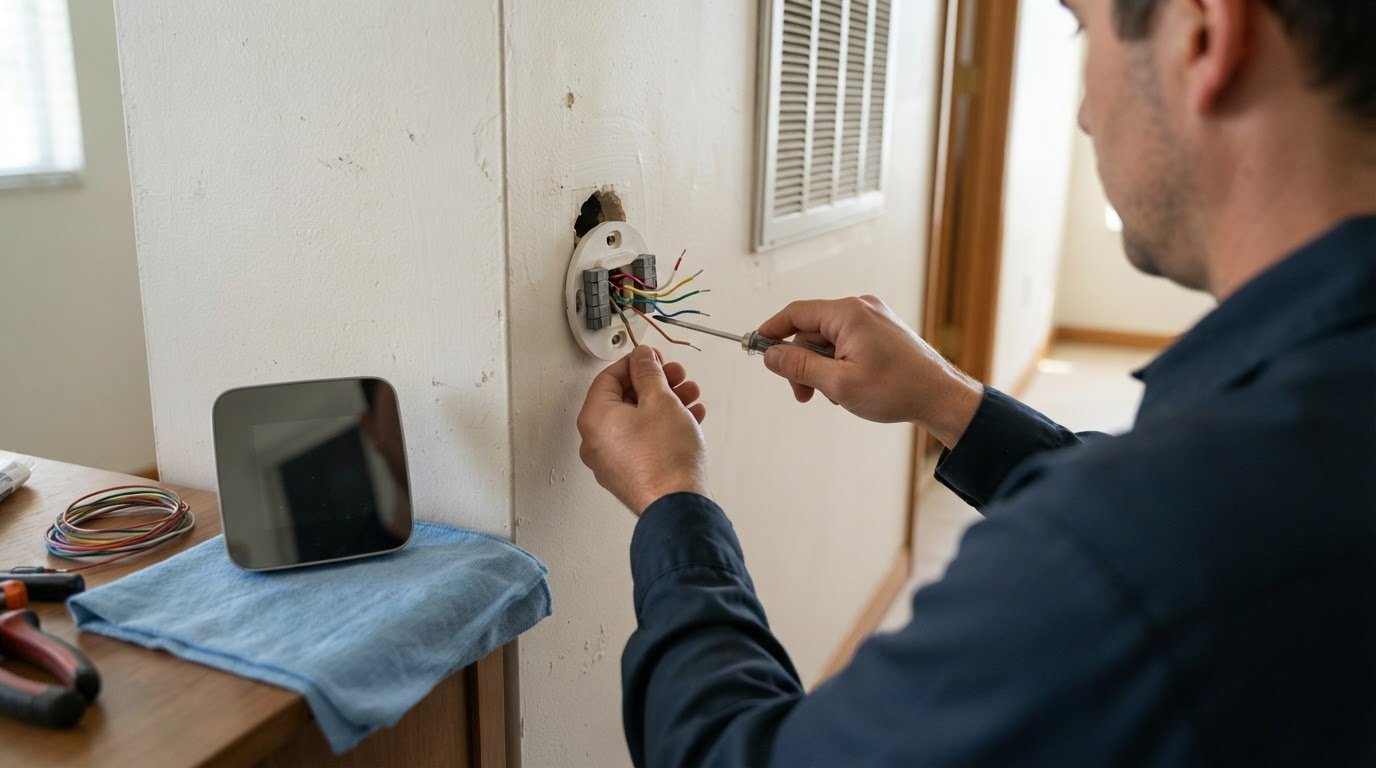
Smart thermostats aren’t compatible with every HVAC system. For a successful smart thermostat installation in Orlando, the thermostat must match your heating and cooling equipment, and the wiring must be configured correctly. Heat pumps, multi-stage systems, and zoned setups each require compatible controls. Heat pumps also need the reversing-valve setting configured properly.
It’s reasonable to wonder whether a new thermostat will work with the system already in your home. Wiring matters, too: many smart thermostats need a C-wire for constant power, while some systems require a different setup. A mismatch or wiring problem can affect how your HVAC system operates.
This guide explains how to assess compatibility, what to know about C-wires and other thermostat wiring, and which features may suit your home. You’ll also learn what professional installation involves and how to find help in Orlando, so you can make an informed choice and keep your home comfortable.
Key Takeaways
- Match a thermostat to your HVAC equipment, including heat pumps, multi-stage systems, and zoned setups.
- Check the existing wiring before choosing a model; a smart thermostat may need a C-wire or another power solution.
- Compare digital, wireless, and smart features to find options that fit how you want to control your home’s comfort.
- A professional installation includes assessing compatibility and wiring, then setting up the thermostat to communicate correctly with your system.
- Learn how installation support in Orlando connects with AC installation and repair when thermostat concerns point to a wider HVAC issue.
Are Smart Thermostats Compatible With Every HVAC System?
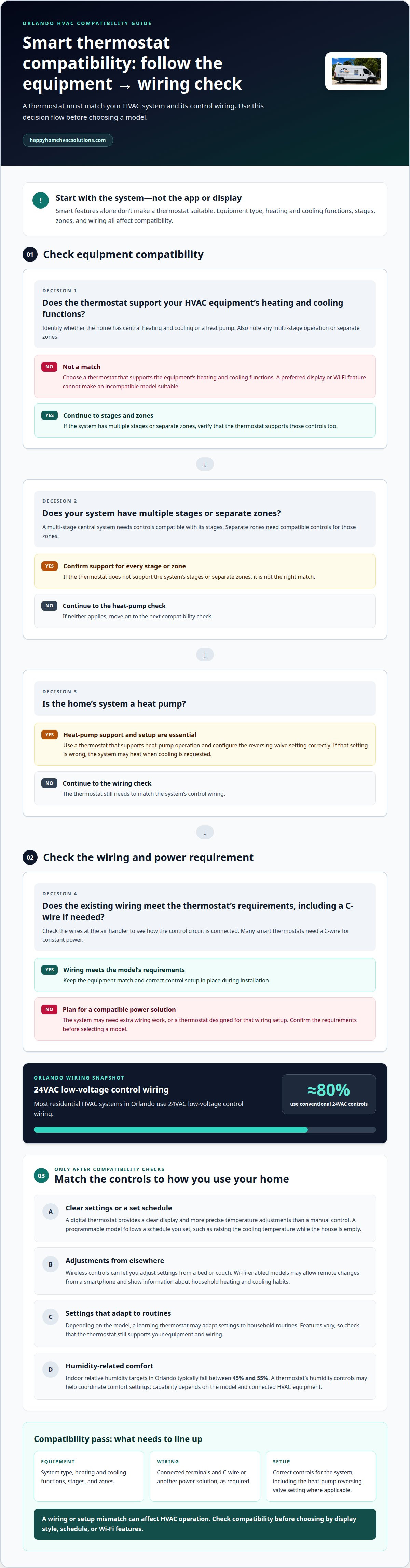
No. The thermostat must match your HVAC equipment and its control wiring. To find a suitable option, compare the system type, heating and cooling stages, and wires connected at the air handler.
HVAC Equipment Compatibility
Central HVAC systems and heat pumps don’t always use the same thermostat settings. A compatible model must support your equipment’s heating and cooling functions, including multi-stage operation or separate zones where present. For a heat pump, the reversing-valve setting must also be configured correctly. If it’s set incorrectly, the system may heat when you request cooling.
Wiring Compatibility
Most residential HVAC systems in Orlando use 24VAC low-voltage control wiring, and approximately 80% use conventional 24VAC controls. Check the wiring at the air handler before selecting a thermostat, since the wires there show how the control circuit is connected. Many smart models need a C-wire for constant power. A system without one may need extra wiring work or a thermostat designed for that setup.
Thermostat types offer different levels of control. A programmable thermostat follows a schedule you set, while a Wi-Fi-enabled model can allow remote adjustments from a phone. Depending on the model, a learning thermostat may adapt settings to household routines. Each type still needs to support your HVAC equipment and wiring. Smart features alone don’t make an incompatible thermostat suitable.
Use these details to narrow the options before installation:
- Equipment: Identify whether the home has central heating and cooling, a heat pump, multiple stages, or separate zones.
- Terminals: Compare the connected wires with the thermostat’s wiring requirements, including whether it needs a C-wire.
- Controls: Make sure the thermostat supports the system’s heating and cooling functions, not just the preferred app or schedule features.
For example, a heat pump needs a thermostat that supports heat-pump operation and the correct reversing-valve configuration. A multi-stage central system needs controls compatible with its stages. In both cases, the equipment and wiring determine compatibility, so choosing based only on display style or Wi-Fi features can overlook an important requirement.
Correct setup matters as much as model selection. Miswired connections can stop an HVAC system from operating correctly and may damage sensitive components. Orlando homeowners can also review the Orlando service area when considering local installation support. Matching the thermostat to the system first helps preserve reliable cooling, heating, and indoor comfort.
Digital, wireless, and smart thermostat options
The right option depends on how you want to manage heating and cooling, as well as what your HVAC system supports. In Orlando, compare each thermostat’s controls, wiring requirements, and humidity features before choosing a model.
A digital thermostat provides a clear display and more precise temperature adjustments than a manual control. A programmable model follows a schedule you set, such as raising the cooling temperature while the house is empty. Wireless controls can let you adjust settings from a bed or couch. Wi-Fi-enabled smart models may also allow remote changes from a smartphone and show information about household heating and cooling habits. Features vary, so match them to the routines you want to manage.
Some smart thermostats need a C-wire for constant power. If your existing wiring lacks one, installation may require additional wiring work or a thermostat designed for that setup. The right choice depends on the wiring path and the system’s control configuration, not simply on whether the thermostat connects to Wi-Fi. A professional assessment can identify a suitable option before installation.
In Orlando, temperature isn’t the only comfort setting to consider. Indoor relative humidity targets typically fall between 45% and 55% in the area’s subtropical climate. A thermostat’s humidity controls may help coordinate comfort settings, but its capabilities depend on the model and connected HVAC equipment. For example, a homeowner who mainly wants to adjust cooling while away may prioritize remote access and schedules; a household focused on comfort may also consider humidity functions.
Installation cost depends on the thermostat type, existing wiring, system compatibility, and any additional wiring work. The price is provided after a quote request. Work may involve replacing a compatible thermostat, adapting wiring, or configuring controls for the HVAC system. These tasks affect the scope, so don’t assume a discount covers every type of installation or wiring adjustment. Compare the written scope and discount terms rather than choosing a model based only on a promotion.
- For basic control: Consider a digital or programmable model if clear settings or a set schedule meet your needs.
- For remote adjustments: Look for a Wi-Fi-enabled option that supports the heating and cooling controls you use.
- For added comfort features: Review humidity functions and confirm they suit your HVAC equipment.
- For power requirements: Include the C-wire and any wiring adaptation in the installation plan.
Choosing a model before assessing the wiring can lead to a mismatch. For help planning thermostat work alongside a broader system upgrade, explore professional HVAC installation support.
Thermostat wiring and missing C-wires
Watch for mismatched wiring, incorrect heat-pump settings, and a thermostat that can’t maintain its displayed temperature. These problems can prevent a central HVAC system from operating correctly, and miswiring can damage its control board.
Thermostat Wiring and Configuration
Configuration starts by matching each existing wire to the correct terminal on the new thermostat and HVAC equipment. In a common setup, terminals marked R, C, Y, G, and W connect power, common, cooling, fan, and heating controls. Wiring varies by system, so use terminal labels and equipment type to guide connections, not wire color alone.
A missing C-wire can affect the choice of smart thermostat because some devices need continuous power. Pre-1990 Orlando homes frequently have two- or three-wire thermostat runs without a C-wire. An installer can assess the air-handler wiring and determine whether the system has an unused conductor, needs additional wiring, or requires a thermostat suited to its existing setup. Don’t assume a wire tucked behind the wall plate connects at the other end.
Installation Problems and Safety Risks
A wiring mistake at the air handler can damage the HVAC system’s control board or interrupt heating and cooling. Heat pumps also need the reversing-valve setting configured correctly; otherwise, the system may heat when cooling is requested. If the system operates unexpectedly after installation, such as producing heat in cooling mode, stop using the new configuration and have the wiring assessed.
After connecting the wires, set up the thermostat to match the system. Select the correct equipment type and heat-pump behavior, then test heating, cooling, and fan operation. If the thermostat displays a temperature but doesn’t maintain it, the issue may involve placement, wiring, or another HVAC component. Calibration can’t fix a loose connection or an incorrectly configured system.
A careful installation follows a practical sequence:
- Identify: Trace the existing thermostat wires to their terminals at the air handler.
- Match: Confirm the new thermostat supports the central system or heat pump and its control functions.
- Configure: Set the equipment type and heat-pump controls to match the installed HVAC system.
- Test: Run heating, cooling, and fan modes, then compare the displayed temperature with the home’s actual comfort.
Placement matters during the final check. A thermostat near a sunny window, supply vent, or other spot that doesn’t reflect room conditions may read inaccurately and affect system operation. If the displayed temperature and room comfort don’t align after setup, check both wiring and placement. A technician can also assess whether another HVAC component is causing the problem.
Finding thermostat installation professionals in Orlando
For Orlando thermostat installation, choose a professional who can assess both the thermostat and the HVAC system. Permit considerations depend on the work: replacing a thermostat differs from adding wiring through a wall or installing a transformer. Those changes may involve applicable electrical or building-code requirements.
A useful installation visit starts with the system, not the device box. The technician identifies whether the home has central air conditioning or a heat pump, reviews the existing controls, and determines how the new thermostat will communicate with the equipment. This helps distinguish a thermostat issue from a problem elsewhere in the HVAC system.
Ask for a clear explanation of what the installation includes. The work may cover removing the old device, connecting the replacement, configuring heating and cooling settings, and testing operation. If wiring changes are needed, the technician should explain how they affect the work before proceeding. A direct replacement and a wiring extension are different tasks.
After installation, the thermostat should be set to match the HVAC equipment. For a heat pump, that includes the reversing-valve setting. The technician should test heating, cooling, and fan operation, then confirm that the displayed temperature is consistent with the room. If the system doesn’t respond correctly, configuration, wiring, placement, or another component may need attention.
Use these service details to understand what the installation covers:
- System assessment: Identify the HVAC type and check how the existing thermostat connects to it.
- Compatibility review: Match the thermostat’s supported functions to the home’s heating and cooling equipment.
- Installation scope: Explain whether the work is a replacement or includes wiring changes.
- Setup and testing: Configure the device, test operating modes, and help with phone setup when applicable.
Some Orlando-area technicians help homeowners set up smart thermostats on their phones after installation. This can include connecting the device to the home network and showing how to adjust temperature settings remotely. A technician can also explain which controls are available on the thermostat and which are managed through its app.
A professional assessment is especially useful when the thermostat shows a temperature that doesn’t match the room or the HVAC system short cycles. These symptoms can result from poor placement, wiring, inaccurate readings, or another system component. A technician can evaluate the possibilities instead of treating every comfort problem as a thermostat replacement.
Before work begins, clarify how the installation will handle existing wiring and any needed configuration. Once the thermostat is installed, review its settings and operation with the technician. This gives Orlando homeowners a practical way to understand the controls and see whether the system responds as expected.
Smart thermostat installation service area
For Orlando homeowners, the service area matters because local support can address thermostat installation alongside HVAC concerns that affect comfort. A thermostat replacement may be straightforward, but uneven temperatures or repeated cycling can point to a system issue that needs diagnosis before a new device is fitted.
Florida’s long cooling season makes thermostat settings especially relevant. Air conditioning runs eight to ten months per year in Florida, so a thermostat’s schedule and cooling settings can affect daily comfort for much of the year. For example, a homeowner away during the day can use programmable settings to adjust cooling while out and restore a preferred temperature before returning.
Location alone doesn’t determine which thermostat will work. The deciding factors are your HVAC equipment, wiring, and the thermostat’s supported functions. An Orlando home with a central system may need a different configuration from one with a heat pump. A service visit should account for those differences, whether you’re replacing a thermostat or investigating why the current one isn’t controlling temperature correctly.
Local service also matters when a thermostat problem may be part of a larger AC concern. If the display changes but the home stays warm, the cause could involve wiring, thermostat placement, or another HVAC component. If cooling stops altogether, AC repair may be needed rather than thermostat replacement alone. Identifying the difference helps direct the work toward the source of the problem.
For an Orlando installation, a useful service plan should cover the full task, not just mounting the device. That means assessing the existing system, connecting and configuring the thermostat, testing heating and cooling modes, and explaining the controls. If the thermostat uses an app, setup support can help you adjust settings remotely. The exact work depends on the system and wiring condition.
Central Florida homes have different HVAC setups and comfort needs. A clear service-area page helps Orlando residents understand where local support is available without assuming every nearby home has the same requirements. Share your location and describe the symptom, such as a blank display, inconsistent temperature, or cooling that won’t start. Those details help distinguish a thermostat installation from a repair concern.
If you’re planning thermostat work in Orlando, review Central Florida service-area details and describe whether you need a replacement, setup, or help with an HVAC system that isn’t responding properly.
Happy Home HVAC Solutions: AC Installation
Happy Home HVAC Solutions can help when a thermostat decision connects to a broader air-conditioning concern. If an older system needs replacement, consider thermostat compatibility as part of the AC installation plan. If cooling is already uneven or unreliable, AC repair can help identify whether the thermostat or another HVAC component is involved.
For an upgrade, share the type of equipment in your home and the comfort issues you’re experiencing. This context helps focus the conversation on the right next step, whether you’re planning AC installation or addressing a system problem.
For guidance on an air-conditioning project, contact Happy Home HVAC Solutions about AC installation.
Take the Next Step Toward Easier Home Comfort
Choose your thermostat with the whole home in mind, not just the display or app. For smart thermostat installation in Orlando, connect your preferred controls with your system’s condition and your comfort goals. If you’re planning an upgrade, coordinate thermostat selection with AC installation. If your system already struggles to maintain comfortable temperatures, AC repair may be the more useful starting point. Heating and furnace services can also address concerns involving home heating.
Before arranging service, consider what you want to improve: simpler scheduling, remote adjustments, or more consistent comfort. Sharing your goal helps focus the conversation on a practical solution for your home.
Contact Happy Home HVAC Solutions to discuss your HVAC needs and take a clear next step toward a more comfortable home.
Frequently Asked Questions
What Are the Benefits of Installing a Smart Thermostat?
A smart thermostat can make everyday temperature control more convenient. Depending on the model, you may be able to adjust heating and cooling remotely, create schedules, and review information about household energy habits. For example, you can change the setting after leaving home rather than returning to adjust the wall control. Some models also offer humidity settings, which can support comfort in Florida’s humid conditions.
Can a New Thermostat Help Reduce My Energy Bills?
Scheduling or away settings can help reduce wasted heating and cooling by avoiding conditioning an empty home. The effect depends on your household’s routines, HVAC system, and how you use the settings. For example, an appropriate schedule can reduce unnecessary cooling during regular work hours. A thermostat alone doesn’t guarantee lower bills, and it won’t resolve energy waste caused by an HVAC problem.
Is it worth getting a professional installation, or can I do it myself?
Professional installation is useful when the system has unfamiliar wiring, a heat pump, or controls that need configuration. A simple replacement may seem manageable, but incorrect connections can affect HVAC operation or damage its control board. A technician can assess the equipment, install and configure the thermostat, then test system modes. This is especially helpful when the old thermostat’s wiring doesn’t clearly match the new device.
Which Orlando HVAC companies install smart thermostats, and what do they charge?
Happy Home HVAC Solutions provides AC installation and repair in Central Florida, which can be relevant when thermostat work connects to an AC project or performance issue. For smart thermostat installation in Orlando, pricing depends on the thermostat, HVAC compatibility, existing wiring, and any additional wiring work. The price is provided after a quote request. Describe your equipment and the issue so the scope reflects the work involved.
Can I install a smart thermostat myself, or should I hire an electrician or HVAC technician?
An HVAC technician is a practical choice for smart thermostat installation in Orlando when the work involves connecting controls to heating and cooling equipment, configuring a heat pump, or diagnosing poor performance. An electrician may be relevant if the project requires electrical work beyond thermostat controls. The right professional depends on the task. Pause if the wiring labels or connections don’t match the installation instructions.
Does my thermostat need a C-wire, and what are the alternatives?
Some smart thermostats need a C-wire for constant power, but requirements vary by model. If your existing wiring lacks one, options may include adding wiring or choosing a thermostat designed for the available setup. The right choice depends on the HVAC controls and wiring path. A wire visible at the thermostat doesn’t prove it’s connected at the air handler, so both ends matter.
What are the steps to install and set up a smart thermostat?
Installation should follow a clear sequence so the thermostat matches the equipment and operates properly:
- Identify the HVAC system and document the existing terminal connections.
- Confirm thermostat compatibility and determine its power requirements.
- Connect the wiring and configure the equipment type and settings.
- Test heating, cooling, and fan operation, then complete any app setup.
If a mode behaves unexpectedly, pause and have the wiring or configuration assessed before continuing to use it.
Are rebates or utility incentives available for smart thermostats in Orlando or through Duke Energy?
Don’t assume a rebate applies to every thermostat purchase or installation. Eligibility depends on an active program’s terms, the selected device, and any enrollment requirements. For utility demand-response enrollment, the thermostat may need to support OpenADR 2.0 or a utility’s proprietary API integration. Review the program conditions before choosing a model, especially if you want it to participate in utility-managed demand response.