
Same-day HVAC service prices, repairs, and installation
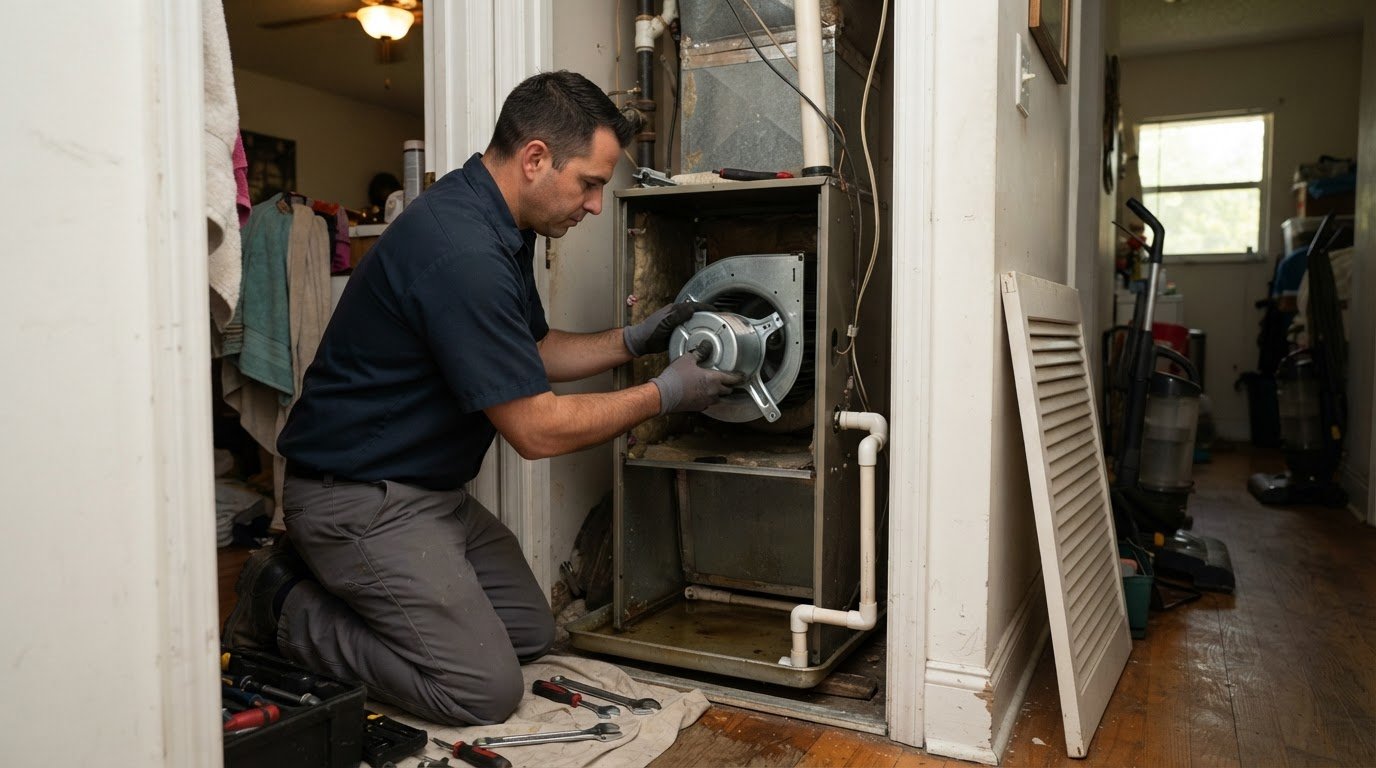
Fast HVAC help from Happy Home HVAC Solutions can restore comfort without leaving you guessing about the work ahead. Right here in the Orlando area, same-day emergency air-conditioning repair is available seven days a week. A visit may focus on diagnosing and repairing an AC problem, while installation depends on the system and the work involved.
It’s understandable to want a clear idea of the cost before repairs begin. Repair pricing depends on the fault, parts, system condition and scope of work, and is provided after a quote request. This guide explains the HVAC services a same-day visit may involve, what affects repair costs, and which warranty and satisfaction commitments to understand before approving work.
You’ll also see how repair differs from installation, what can affect the timing of a job, and how to approach a comfort problem with a clear plan. The aim is to help you understand what to expect and make your next decision with greater confidence.
Key Takeaways
- Identify whether your comfort problem points to an AC repair, a heating-system issue, or a larger installation need.
- Understand which details about the fault and system shape a repair quote before work begins.
- Learn what to clarify about repair coverage and satisfaction commitments so you know what to expect afterward.
- See how furnace and boiler concerns differ, and what an HVAC assessment considers.
- Recognize the types of repairs that may suit a same-day visit and the factors that can affect the work.
Air conditioning installation, repair, and maintenance
Same-day availability depends on local demand, technician schedules, weather, and seasonal cooling needs. When choosing HVAC service in Orlando, Oviedo, Winter Springs, Winter Park, or Altamonte Springs, look for a clear diagnosis, a defined work scope, and written pricing and warranty terms.
Same-Day Air Conditioning Repair
Same-day air-conditioning repair can address problems such as an AC that stops cooling, weak airflow, or unusual operating noises. In the United States, emergency air-conditioning repair is available seven days a week. A same-day HVAC service visit begins with diagnosing the reported symptom and inspecting the system before recommending a repair.
Diagnosis helps distinguish a simple correction from a repair involving a component or a larger system issue. For example, weak airflow may point to an obstruction or another airflow problem, while warm air calls for a different inspection. The technician should explain the cause, proposed work, and quote before repairs begin, giving you a clear basis for approving the next step.
Emergency Air-Conditioning Repairs
Emergency repairs address AC failures that disrupt home comfort and need prompt attention. A technician assesses the system, identifies the fault, and determines which repair can restore operation. Emergency air-conditioning repair is available seven days a week in the United States, though local demand and seasonal conditions affect scheduling. A clear description of the symptoms helps the service team understand the problem.
When reporting an urgent fault, describe what changed, such as the system running without cooling or airflow stopping at the vents. Include when the issue began and whether the unit starts or makes an unusual sound. These details help focus the initial assessment. The repair plan depends on the system’s condition and the cause found during diagnosis.
Installation follows a different process from repair. The right system depends on the home’s layout, existing equipment, cooling needs, and installation requirements. A proposal should identify the equipment and work included, explain how the installation suits the home, and state the project price before work proceeds. Replacing an aging unit may also involve changes to existing connections or other installation details.
Financing is a payment arrangement, not a reduction in the installation’s total cost. Before accepting a plan, review its eligibility requirements, payment schedule, interest or fees, and total repayment. Compare those terms with the installation quote to understand the full financial commitment. Financing availability and terms depend on the specific arrangement, so don’t assume a particular plan or approval outcome.
Maintenance helps identify developing problems before they become a breakdown. A routine visit can include checking system operation, airflow, and accessible components, then explaining any recommended work. For example, a system that cools unevenly may need closer assessment than one that operates consistently. Track recurring symptoms, such as repeated starts or weak airflow, and share them during the visit.
Heating system installation, repair, and maintenance
A heating problem can involve the furnace, thermostat, airflow, or another system component. A useful assessment starts with the symptoms, checks how the equipment operates, and determines whether repair or replacement better suits the system’s condition. Installation requires a separate plan, since the equipment and work must suit the home.
For a furnace that runs but leaves rooms cold, a technician can assess the thermostat setting, airflow, and equipment response. If the system won’t start, the inspection focuses on the controls and components involved in operation. These examples show why a clear symptom report matters, but diagnosis determines the repair scope. The proposed work and quote should be explained before repairs begin.
Installation planning considers the existing heating setup, the home’s layout, and the equipment selected for the project. A proposal should describe the system being installed, the included work, and any changes needed around existing equipment. For example, replacing a furnace may involve more than removing the old unit if connections or the installation area need attention. Understanding the scope helps distinguish equipment costs from related work.
Repair and installation durations vary because each job has a different scope. A focused repair involving an accessible component differs from troubleshooting an intermittent fault. Installation time depends on the equipment, site preparation, removal needs, and adjustments required for the new system. A technician can outline the work sequence after assessing the home and equipment.
Ask for the expected work sequence, not just a time estimate. The plan should explain when diagnosis ends, when repairs or installation begin, and what testing follows. For a furnace replacement, the work may include removing existing equipment, setting the new unit, connecting it, and checking operation. Unanticipated site conditions can add work, so the scope should clearly state what the estimate covers.
Maintenance helps track changes before the heating system stops working. During a visit, an HVAC technician can inspect operation, review airflow, and identify components that need attention. A furnace that cycles repeatedly or heats rooms unevenly provides useful information for the assessment. Share when the symptom occurs, such as during startup or after extended operation, to help focus the inspection.
Heating and furnace services can be planned alongside AC installation when a home needs both systems addressed. A combined project should state whether the work covers one system or both, which equipment is included, and how the installation schedule is organized. This avoids assuming that one proposal covers every part of the home’s heating and cooling setup.
Before approving work, review the diagnosis, scope, quote, and completion checks. For maintenance, keep the findings with your system records. For a repair, make sure the explanation connects the reported symptom to the proposed work. For installation, confirm the equipment and related tasks match the written plan. These steps help keep decisions clear as you address your home’s heating needs.
Repair guarantees and satisfaction commitments
A repair warranty should explain what work is covered, for how long, and what happens if the same fault returns. Written terms are easier to understand than a verbal assurance. Before approving an HVAC repair, review the estimate, invoice, and warranty terms together. Confirm that the documents describe the diagnosed problem and the parts or labor included.
Homeowners insurance and home warranties have different contract terms, so neither automatically covers every urgent HVAC repair. Coverage depends on the policy or service contract, the reported cause, exclusions, and claim requirements. For example, a sudden covered event may be treated differently from equipment failure or wear. Review the applicable terms before assuming a repair or service call will be paid.
A repair warranty should identify the covered labor or parts and explain its limits. Ask how a repeat fault is handled, what documentation is needed, and whether coverage applies only to the original repair. If a technician replaces a failed component, the written terms should clarify whether it has separate coverage. Keep the invoice and diagnosis with your system records.
Replacement warranties need separate attention. Equipment coverage and installation workmanship are distinct commitments, so the paperwork should identify which applies to each concern. Check the named equipment, coverage period, exclusions, and claim process. A warranty’s duration alone doesn’t explain what it covers. Read any conditions tied to maintenance, registration, or service records before relying on coverage.
A same-day appointment is not a guarantee that repairs will be completed that day. Diagnosis may reveal a part requirement, a more extensive fault, or work beyond the initial visit. A clear same-day commitment should specify whether it promises arrival, diagnosis, or completed repairs. Get the exact commitment in writing, including what happens if the stated work cannot be completed.
For emergency heating or air-conditioning needs, clarify what “24/7” refers to in the service terms. It may describe when calls are answered, when dispatch operates, or when technicians can attend. These are different commitments. Ask what the stated emergency response covers, whether repair work has separate terms, and how any after-hours charges are presented before authorizing work.
Use a short review before approving a repair:
- Match the diagnosis to the proposed repair and written estimate.
- Identify whether labor, parts, or both have warranty coverage.
- Read the exclusions and claim instructions in the applicable documents.
- Separate a same-day visit promise from a repair-completion promise.
Clear terms help you understand the work, coverage, and next step if the HVAC problem returns.
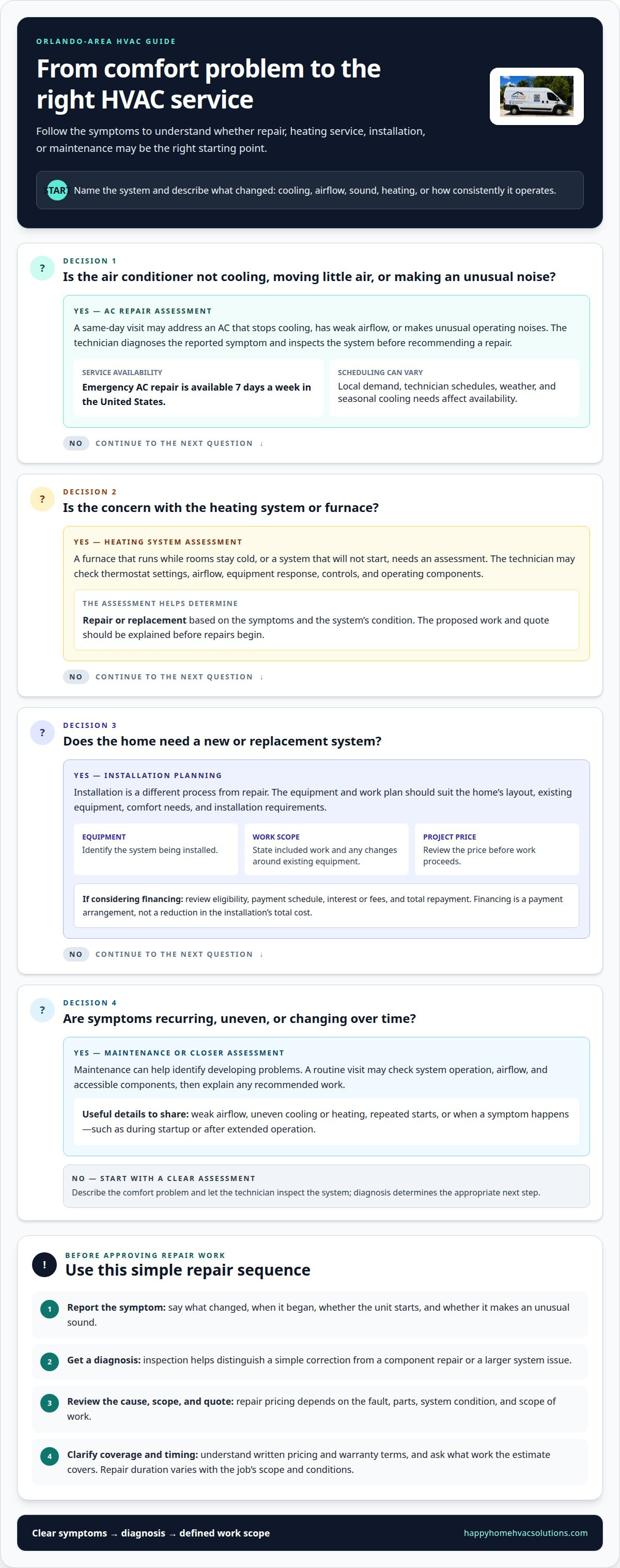
Boiler and furnace services
Boilers and furnaces heat homes differently, so diagnosis starts by identifying the equipment. A furnace warms air and distributes it through ducts. A boiler heats water that circulates through pipes or radiators. If a room stays cold, the system type and pattern of the problem guide the inspection.
For a furnace that runs without warming the home, a technician can assess the thermostat, airflow, and equipment operation. If the furnace won’t start, the inspection focuses on the controls and components involved in startup. A rattling sound, repeated shutdown, or uneven room temperatures offers additional clues. Note when the symptom appears and which rooms are affected, then share those details during service.
Boiler symptoms call for a different assessment. A technician may investigate uneven radiator heat, unusual operating noises, or a boiler that fails to provide heat. The system’s controls, water circulation, and visible connections can all inform the diagnosis. The proposed repair should clearly address the observed issue. A written scope helps distinguish a targeted repair from work involving several components.
Maintenance provides an opportunity to review system operation before a breakdown interrupts heating. For a furnace, a visit can focus on airflow, startup, and consistent heating across rooms. For a boiler, the assessment follows its water-based heating operation. If one radiator stays cool while others heat normally, that detail can help direct attention. Maintenance findings also help identify which concerns need repair and which can be monitored.
Replacement decisions depend on the system’s condition, recurring repair needs, and the work required to fit new equipment. A furnace proposal should identify the equipment and installation tasks. A boiler assessment must account for its existing heating arrangement. These are different projects, even though both aim to restore consistent home heat. Review the quote for the specific system, included work, and changes needed around existing equipment.
Heating and furnace service is relevant when a home’s forced-air system needs diagnosis, repair, maintenance, or replacement. A boiler is a separate system type, so its water-circulation design should not be treated as a furnace setup. Explain the equipment type and symptoms when arranging an assessment. This distinction helps direct the visit toward the right heating components.
- Describe the symptom, such as a furnace that won’t start or one cool radiator.
- Note whether the issue affects one room or several.
- Review the diagnosis and quote before approving repair or replacement work.
Clear observations make a heating assessment more focused. Naming the system, describing the affected rooms, and noting changes in operation give the technician useful starting points. For example, “the furnace runs, but the bedroom stays cold” is more informative than “the heat feels wrong.” A specific description supports a more direct discussion of the next step.
What HVAC repairs qualify for same-day service?
Whether a repair fits a same-day visit depends on the fault, diagnostic findings, parts, and work scope. A technician first identifies the system and symptoms, then determines the repair steps. An AC that runs but blows warm air needs a different assessment from a furnace that won’t start. The appointment addresses the reported problem, while diagnosis sets the repair plan.
Problems with a clear cause and accessible repair needs are easier to assess in one visit. For example, an HVAC technician can investigate weak airflow, unusual equipment noise, or a system that stops operating. The visit starts by checking the symptom and system response. If the fault calls for additional parts or broader work, the repair plan reflects those requirements.
Some cases involve more than one symptom. An AC that runs continuously while rooms remain warm could involve airflow, controls, or another system issue. A furnace that starts and then shuts down needs its own diagnostic process. In both examples, the technician must identify the cause before recommending work. A symptom alone doesn’t establish which repair is appropriate.
Scheduling also depends on local demand and seasonal conditions. During periods of heavy cooling demand, more households may need AC service at once. A clear description helps the service team understand the issue and prepare for the visit. Include the equipment type, symptom, when it began, and whether it affects one room or several. These details help frame the initial assessment.
Same-day availability and same-day completion are different. A visit can begin with diagnosis, but the repair depends on what the technician finds and what the work requires. A straightforward repair differs from a fault requiring a specific component or additional testing. A service commitment should clarify whether it concerns arrival, diagnosis, or completed repairs.
Describe the problem in observable terms rather than guessing which part has failed. “The AC runs, but the living room stays warm” gives a technician more useful context than naming a suspected component. For a heating issue, note whether the furnace starts, how it behaves, and which rooms feel cold. Avoid attempting repairs yourself; system checks and corrective work belong with an HVAC technician.
Repair needs may call for AC Repair or Heating & Furnace Services, depending on the equipment and symptoms. An evaluation can determine whether a repair addresses the issue or the system needs broader attention. The quote should explain the diagnosed fault, proposed work, and any related parts before authorization. This makes the scope clearer, rather than assuming every visit ends with a completed repair.
For an AC problem, request an AC repair assessment and describe the symptoms clearly.
Happy Home HVAC Solutions
Happy Home HVAC Solutions helps homeowners understand the next step when heating or cooling equipment needs attention. If an AC stops cooling or a furnace struggles to heat the home, the team can assess the problem and explain the recommended work. Services include AC Repair, AC Installation, Heating & Furnace Services, and Insulation Services.
A same-day request starts with clear details: describe the equipment, symptoms, and when the issue began. An assessment can clarify whether repair, installation, or another home-comfort improvement fits the situation. Diagnosis and scope guide the quote, so you can understand the proposed work before deciding how to proceed.
For help with an HVAC concern, contact Happy Home HVAC Solutions and describe what’s happening in your home.
Take the Next Step Toward Home Comfort
Use what you’ve learned to make the next conversation focused. Note the system that needs attention, the change you’ve noticed, and how it affects comfort at home. For a same-day HVAC service request, describe the problem clearly without guessing at its cause. This gives the team a useful starting point for discussing the right next step.
Whether the concern involves AC repair, AC installation, or heating and furnace work, Happy Home HVAC Solutions can help you understand the service path. Share the symptoms and questions about the proposed work, then review the diagnosis and scope before deciding how to proceed. A clear plan can make an unexpected HVAC issue feel more manageable.
Contact Happy Home HVAC Solutions today to discuss your home’s heating or cooling needs and take a confident step toward restoring comfort.
Frequently Asked Questions
How quickly can an HVAC technician arrive for same-day service?
Arrival timing varies with the appointment schedule, technician routing, local demand, and reported problem. “Same-day” describes the service day, not a fixed arrival hour or automatic repair completion. For example, a call during a busy cooling period may be scheduled differently from one during a quieter period. Share the system type, symptoms, and location so the visit can be planned with the information available.
Which HVAC problems require emergency service rather than routine repair?
A complete loss of heating or cooling that urgently affects home comfort is a reason to seek prompt service rather than wait for routine maintenance. A system that still operates but has uneven temperatures, recurring noise, or reduced airflow may need a repair assessment without the same urgency. Describe what stopped working, how the system behaves, and which rooms are affected to help communicate the priority.