
Mini Split Cleaning Service in Lake Mary: Time and Pricing
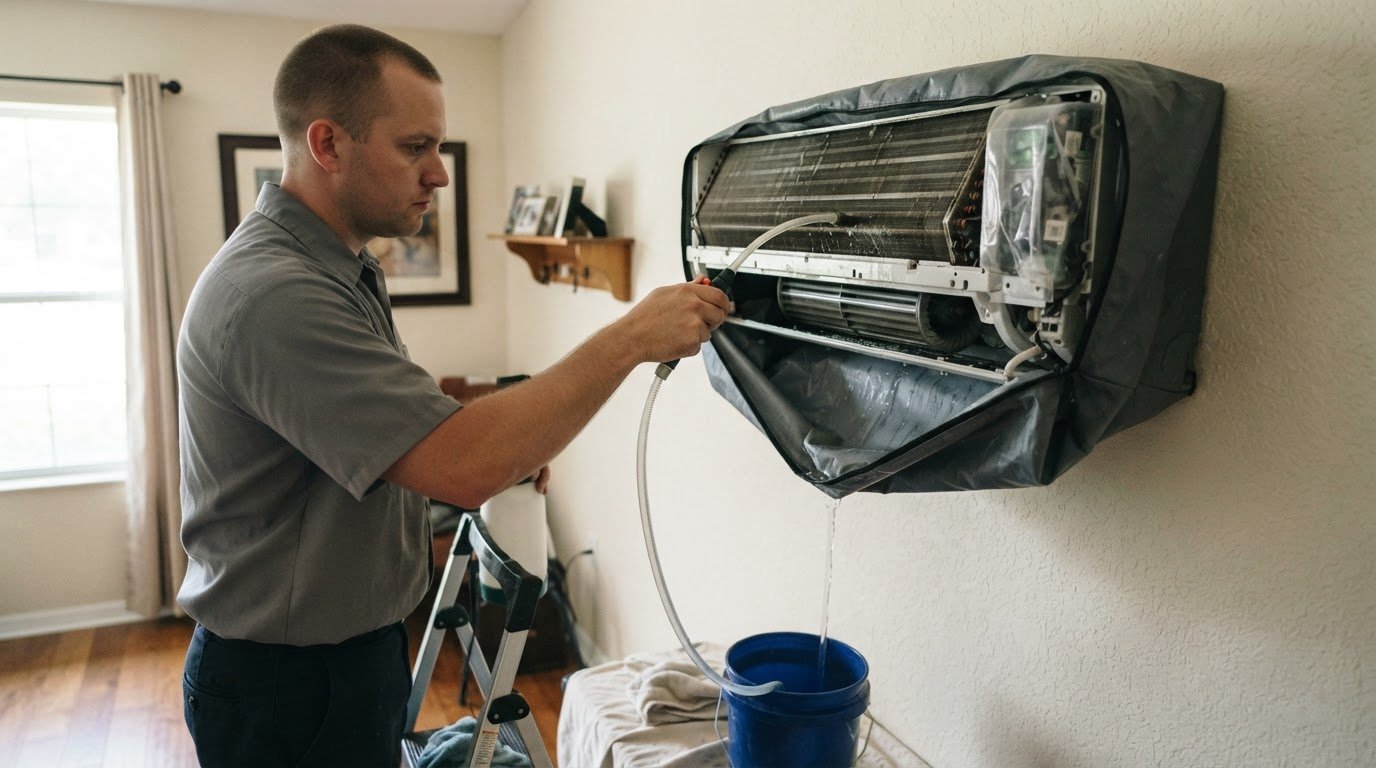
A mini split can look clean from across the room and still need attention inside. When property owners need expert ductless maintenance, the time required depends on how many indoor units need service, their condition, and the cleaning involved. A single-zone system has fewer components to address than a multi-zone system.
It’s reasonable to want a clear idea of the time and cost before scheduling. Happy Home HVAC Solutions helps homeowners understand what a deep cleaning includes, how single-zone pricing is structured, and how regular maintenance supports efficiency and indoor air quality. Industry experts note that regular mini-split cleaning can improve air circulation and enhance energy efficiency.
Pricing depends on the system’s configuration, condition, and cleaning needs, with an exact rate provided after a quote request. The sections ahead cover factors that affect appointment time and when professional cleaning may be useful, so you can plan your maintenance with a clearer picture of the service.
Key Takeaways
- Plan for a deep-clean appointment based on the number of indoor units and how much buildup the system has.
- Regular cleaning is recommended at least once a year, with the system’s use and condition helping shape its maintenance needs.
- A professional deep clean addresses internal components, including areas that routine filter care doesn’t reach.
- Understand how system configuration and cleaning needs affect a single-zone service quote.
- Learn how regular cleaning can support airflow, efficiency, and indoor air quality.
How long does a mini split deep cleaning take?
A deep-cleaning appointment’s duration depends on the indoor head’s condition, access, and condensate drainage. Choose a licensed HVAC company by reviewing its credentials and cleaning scope; compare Lake Mary provider reviews for specific service details, and use the Lake Mary service-area page for location-specific information.
Indoor Head and Filter Inspection
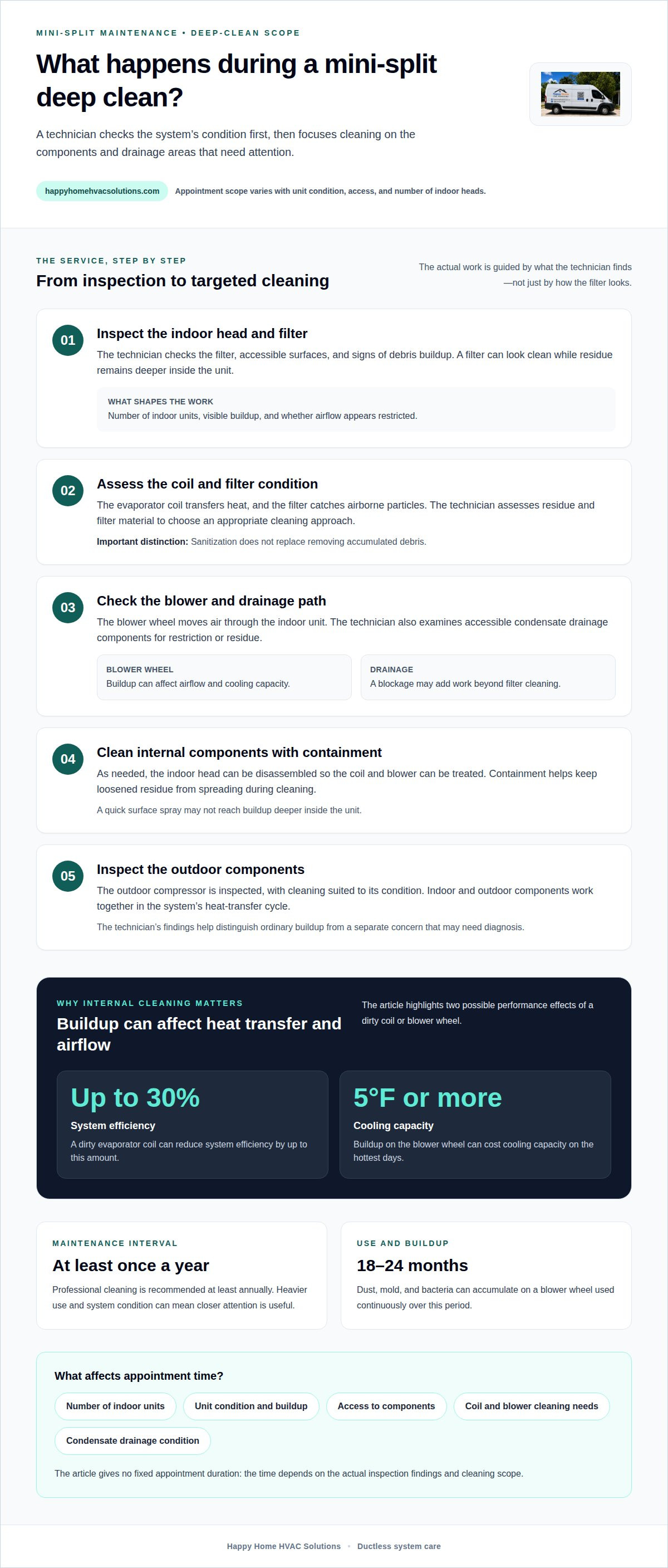
Inspection begins at the indoor head, where the technician examines the filters, accessible surfaces, and signs of debris buildup. The number and condition of the indoor units affect how much cleaning each requires. One lightly soiled head is different from a system with restricted airflow or visible residue.
Filter maintenance is part of regular care, but cleaning the filter alone isn’t a deep clean. A professional checks whether filters are loaded with dust and whether debris has collected beyond them. Professional cleaning is recommended at least once a year, while heavier use can make closer attention useful.
Cleaning spray cans have limits. A surface application won’t remove debris from components it cannot reach, such as buildup deeper inside the indoor unit. Spraying without inspecting the coil, blower, and drainage path can leave the cause of restricted airflow or odor untouched. A technician assesses those areas instead of treating the visible filter as the whole system.
Coil and Filter Sanitization
After inspecting the filter and coil, a professional can clean residue from those surfaces and assess whether sanitization is appropriate. The coil moves heat through the system, while the filter catches airborne particles before they travel farther inside the head. Their condition helps determine what cleaning is needed.
Sanitization is not a replacement for removing accumulated debris. The technician considers the coil’s condition, the filter material, and visible residue before choosing a suitable approach. A clean-looking filter doesn’t establish that the coil or blower is clear.
Drainage also affects the appointment. Condensate must move away from the indoor head, so a technician examines accessible drainage components for signs of restriction or residue. A blockage or other drainage concern may require work beyond filter cleaning, changing the scope and time required.
For mini split cleaning service in Lake Mary, appointment time depends on the actual scope: indoor head condition, number of units, coil and blower buildup, and access to condensate drainage. Reviews are most useful when they describe the work performed, communication, and whether the service included inspection rather than only a quick filter treatment.
Energy efficiency and indoor air quality
Cleaning supports airflow and heat transfer, while inspection helps identify buildup on indoor and outdoor components. The unit’s condition determines which areas need attention.
Indoor and Outdoor Unit Cleaning
For access, a technician can disassemble the indoor head as needed and contain loosened debris during cleaning. This helps keep residue from spreading while the coil and blower are treated. The outdoor compressor also needs inspection and cleaning suited to its condition, since debris around its components can interfere with airflow.
A dirty evaporator coil can reduce system efficiency by up to 30%. Buildup on the blower wheel can cost a mini split 5°F or more of cooling capacity on the hottest days. These figures show why cleaning only visible surfaces may leave important airflow and heat-transfer areas untreated.
Indoor and outdoor components work together during heating and cooling. The indoor air handler moves conditioned air through the home, while the outdoor compressor supports the system’s heat-transfer cycle. A professional considers both sides rather than assuming an indoor cleaning alone addresses every source of reduced performance.
System Components and Air Quality
A mini split has indoor air handlers and an outdoor compressor. Dust, mold, and bacteria can accumulate on a blower wheel used continuously over 18 to 24 months. The condition of those surfaces matters because the indoor unit circulates air through occupied rooms.
Professional cleaning can remove buildup from components that routine filter care doesn’t reach. According to Service Professionals, regular mini-split cleaning can enhance energy efficiency, improve air quality and circulation, and help prevent mold and bacteria growth. Cleaning supports these goals, but it doesn’t replace diagnosing a separate mechanical problem.
During service, the technician assesses the indoor head, coil, blower, and accessible outdoor components, then selects a cleaning approach based on the inspection. This helps distinguish ordinary debris from conditions requiring further attention. Cleaning also provides an opportunity to notice visible issues, such as residue or restricted airflow, without treating every symptom as a cleaning problem.
For systems used for heating and cooling, consider how both operating modes affect indoor comfort and airflow. A professional cleaning can address accumulated dirt, while a separate performance concern may call for repair. Explore AC maintenance services for a broader view of routine system care.
Deep cleaning process and contained coil and blower cleaning
A deep clean addresses buildup inside the indoor head, including the evaporator coil, blower wheel, and drain pan. The technician assesses each component first, then selects cleaning and containment methods suited to its condition.
Evaporator Coil and Blower Wheel Cleaning
The evaporator coil and blower wheel have different roles in cooling. The coil transfers heat, while the blower moves air through the indoor unit. Dust or residue on either component can interfere with airflow or heat transfer, so a deep cleaning focuses on both, not just the surfaces visible through the front grille.
Before cleaning, the technician inspects the coil and blower for buildup and considers access to the components. Containment helps keep loosened debris in the work area instead of allowing it to spread into the room. The cleaning approach accounts for each component’s condition, since compacted buildup differs from a light layer of dust.
Cleaning pressure matters. The goal is to remove residue without treating delicate coil surfaces like sturdy, open panels. A professional selects a suitable method for the component and the observed buildup. This is why a spray can or quick surface wipe doesn’t substitute for deep cleaning inside the unit.
Drain-Pan Cleaning
The drain pan collects condensate from the indoor unit and directs it toward the drainage path. During a deep clean, the technician checks the pan for debris and residue that could affect drainage. Cleaning this area complements coil and blower work because contaminants can collect below the coil, even when the filter looks relatively clear.
Visible standing water, residue, or a musty smell can indicate that the pan and drain path need closer inspection. Cleaning the pan addresses accessible buildup; a drainage restriction or separate component problem may need additional attention. The technician’s inspection helps distinguish these conditions instead of treating every symptom as dirt.
Evaporator and Condenser Coil Treatment
The indoor evaporator coil and outdoor condenser coil serve different roles, so treatment depends on which coil is being cleaned and its condition. The technician inspects each accessible coil, identifies visible debris, and chooses a suitable cleaning method. The outdoor unit also needs attention to debris around the coil that may obstruct airflow.
After coil treatment, the technician checks for remaining visible buildup and considers whether airflow concerns point to an issue beyond cleaning. A mini split that still struggles with cooling may need diagnosis rather than another cleaning pass. This keeps the service focused on the actual condition of the coil, blower, drain pan, and other components.
Single-zone mini-split deep-clean pricing
A single-zone system has one indoor head to assess and clean, while a multi-zone system has several heads with separate maintenance needs. The system layout, condition, and work required shape the quote, so the number of indoor units is an important starting point.
Price depends on the system and is provided after a quote request. Cost factors include the number of indoor heads, buildup, access, and the condition of components requiring attention. A single-head home and a home with several ductless zones involve different amounts of inspection and cleaning. The scope should clarify which indoor units and components are included.
Each indoor head in a multi-zone system has its own filters, airflow path, blower, and drainage concerns. Cleaning one head doesn’t address buildup in another. A technician considers each zone separately, even when all heads connect to the same outdoor system.
For a residential system, describe which rooms have comfort concerns, such as a bedroom that feels warmer than the living area. That example doesn’t establish a cleaning problem by itself, but it helps direct attention to the affected head and its airflow. Temperature differences can have causes beyond dirt, so equipment condition matters when defining the cleaning scope.
Using a ductless system for both heating and cooling can affect how often its components need attention. A home that uses several indoor heads regularly may have a different maintenance profile from one that uses a single head occasionally. Usage and visible buildup help determine the work, not simply the system’s zone label.
Before work begins, a clear quote should identify the system configuration and cleaning scope. For example, it should distinguish one indoor head from multiple heads and explain whether the assessment includes accessible blower and drain areas. This helps homeowners understand what the service covers without assuming every system needs the same treatment.
Cleaning can address debris that affects airflow, but it won’t resolve every zone-specific comfort issue. If one room remains uncomfortable after cleaning, the system may need a separate performance assessment. Keeping cleaning and diagnosis distinct helps match the next step to the actual condition instead of expanding the service without a reason.
For a multi-zone home, the practical comparison is the condition and scope for each head, not just the number of thermostats or rooms. A professional inspection can identify which indoor units need deep cleaning and whether any reported comfort concern points to another issue. Explore ductless mini-split services to learn about support for these systems.
Benefits of regular mini-split cleaning
Routine cleaning helps address buildup before it becomes a comfort concern. Homeowners may notice uneven airflow, a musty smell, or a room that feels less comfortable during heating or cooling. Those signs don’t prove dirt is the cause, but they give a technician useful context for inspection. A licensed HVAC professional can assess the system and distinguish cleaning needs from problems that require repair.
Odor is one practical reason to pay attention to the indoor head. Mold and biofilm on the evaporator coil and blower wheel are identified as the number-one cause of musty mini-split odors. Cleaning those surfaces can address residue associated with the smell. If odor remains, the technician can assess whether another condition needs attention rather than assuming another cleaning pass will solve it.
Use history helps guide maintenance timing. A system that has operated for two or more years without a professional deep clean is a candidate for one. A mini split used for both heating and cooling may also need maintenance after going more than one season without service. Heavy use, pets, or allergy sensitivities can make more frequent professional cleaning beneficial for the home.
Regular care also helps homeowners notice changes earlier. For example, a technician may find buildup on a blower wheel or residue around a drain area during an inspection. Identifying those conditions clarifies what cleaning can address and what may need separate diagnosis. Cleaning supports system care, but it doesn’t replace repair when a component is malfunctioning.
Indoor air quality is another reason to keep the system’s condition in view. The indoor unit circulates air through the rooms it serves, so debris on internal surfaces can contribute to airflow concerns. Cleaning can remove accumulated material from areas beyond routine filter care. It doesn’t guarantee a particular air-quality result, but it addresses contamination on the components included in the cleaning.
For a useful service record, homeowners can note the cleaning date, which indoor heads were included, and any odor or airflow concerns mentioned during the visit. This makes changes easier to discuss at the next inspection. A technician’s license and relevant qualifications are also part of professional service, while clear notes connect the work performed with the system’s condition.
Happy Home HVAC Solutions: Mini-Splits
Happy Home HVAC Solutions provides mini-split service for homeowners who need professional cleaning or help assessing system performance. Turn to the team when buildup, airflow concerns, or a musty odor call for inspection, or when cleaning alone hasn’t resolved a comfort issue.
The technician can assess the mini-split’s condition and clarify whether cleaning or a separate repair is the appropriate next step. For a system that continues to struggle with heating or cooling, AC repair may address issues beyond cleaning. This distinction helps keep the work focused on the equipment’s actual needs.
For mini-split cleaning or service, contact Happy Home HVAC Solutions to discuss your system.
Choose a Clear Next Step for Your Mini Split
Use your system’s condition and the comfort of each room to guide what happens next. If cleaning is the concern, describe the affected indoor unit and any changes you’ve noticed, such as unusual airflow or odor. This gives a technician useful context for assessing the work.
A mini split cleaning service in Lake Mary is one part of caring for your home’s comfort system. If an inspection points to a problem beyond cleaning, Happy Home HVAC Solutions also offers AC repair, AC installation, and heating and furnace services. The right next step depends on whether the issue involves buildup, equipment performance, or a broader home comfort need.
Move forward with a conversation about your system and the comfort concerns you want addressed. Contact Happy Home HVAC Solutions to discuss your mini split and take the next step toward a more comfortable home.
Frequently Asked Questions
How often should you clean it?
Professional mini-split cleaning is recommended at least once a year. Consider how often the system runs and what its condition shows during service. For example, a system used for both heating and cooling throughout the year has ongoing use across seasons. Keeping a record of its last professional cleaning and any comfort changes can help guide future maintenance discussions.
Can cleaning improve indoor air quality?
Yes, cleaning can support indoor air quality by removing accumulated debris from the system’s air path. According to Service Professionals, regular mini-split cleaning can improve air quality and circulation. A mini split isn’t an air purifier, and cleaning it doesn’t identify every source of airborne particles in a home. Persistent indoor air concerns can have causes beyond the equipment.
What is the difference between a deep cleaning and a maintenance visit?
A deep cleaning focuses on removing buildup from internal components, while a maintenance visit can include a broader review of system condition and operation. For example, a technician may find that visible dirt needs cleaning, while a separate performance concern calls for further assessment. The distinction helps homeowners understand whether the immediate need is cleaning, general maintenance, or a repair diagnosis.
Why does my mini-split smell musty?
Mold and biofilm on the evaporator coil and blower wheel are the number-one cause of musty mini-split odors. The indoor head can circulate that smell through the room during operation. Odor is useful to mention during service, but it doesn’t identify every possible cause by itself. If the smell remains after cleaning, further inspection can help identify another source.
Will a deep clean help with allergies or asthma in the room?
A deep clean removes buildup from the components included in the service, but it doesn’t diagnose or treat allergies or asthma. Triggers can also come from elsewhere in the room or home, so cleaning the mini split alone cannot establish what is causing symptoms. Tell a healthcare professional about ongoing symptoms, and describe indoor comfort or odor concerns during HVAC service.
How much does mini-split cleaning cost in Lake Mary, Florida?
For mini-split cleaning service in Lake Mary, the price depends on the system’s configuration, number of indoor heads, condition, and cleaning scope, and is provided after a quote request. Each head in a multi-zone system has its own airflow path, blower, filters, and drainage concerns. Those differences affect the work involved, so a single-head system and multiple heads have different service scopes.
What is included in professional mini-split cleaning?
Professional deep cleaning can include inspection and cleaning of the indoor head, filters, evaporator coil, blower wheel, and drain pan. A technician also assesses accessible outdoor components and the condenser coil. The work depends on the system’s condition and the buildup present. Ask for a clear description of which indoor heads and components the quoted cleaning scope covers.
How often should a mini split be professionally cleaned in Florida?
Plan on professional cleaning at least once a year. Systems used for both heating and cooling, or operated heavily, may need closer attention based on use and condition. Scheduling before a period of heavy cooling or heating use can help prepare the system for that season. Homes with pets or allergy sensitivities may also benefit from more frequent professional cleaning.