
Light Commercial AC Repair in Winter Springs
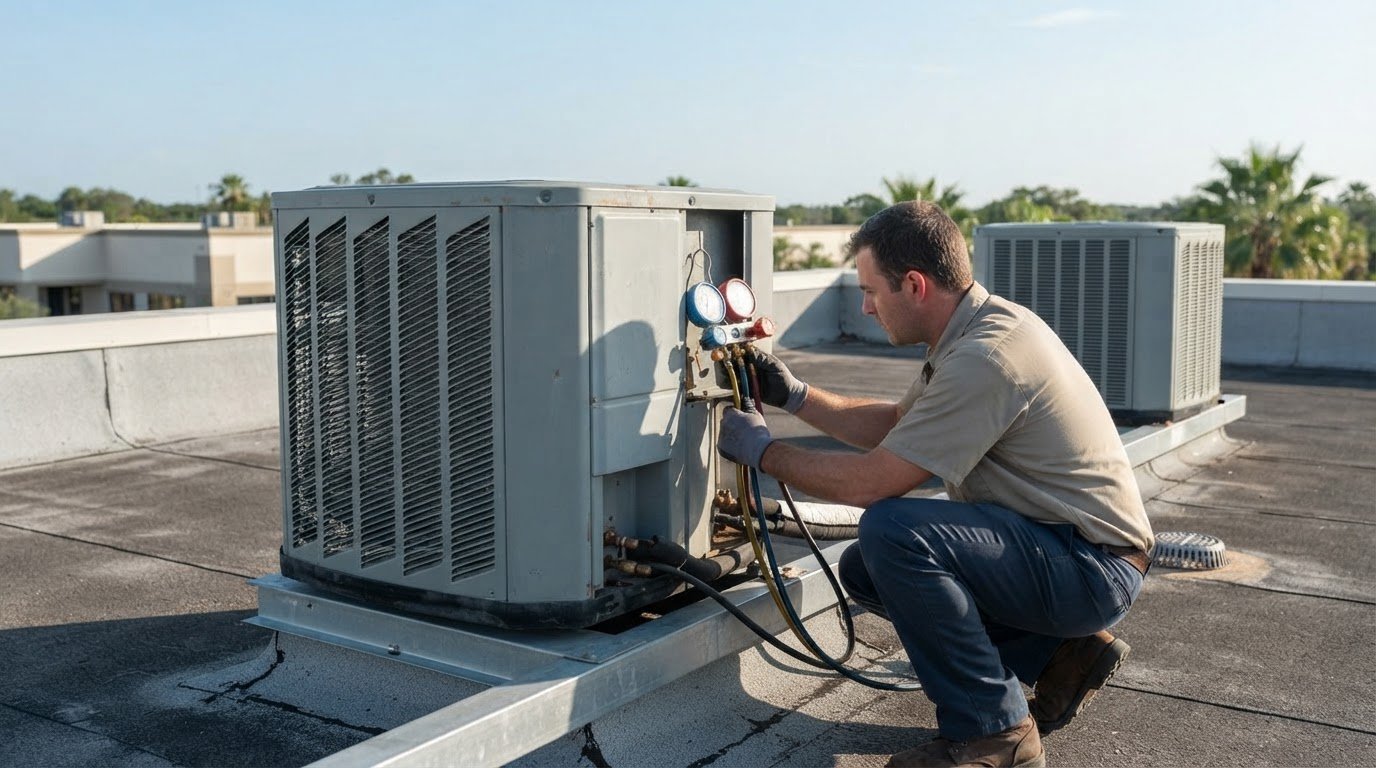
A commercial AC system can keep running while delivering uneven cooling, making a thorough diagnosis more useful than guessing at the cause. Professional light commercial AC repair in Winter Springs can identify whether an electrical fault, refrigerant issue, or restricted airflow is behind the problem.
If your space feels uncomfortable or the equipment isn’t performing as expected, it’s reasonable to want a clear explanation before deciding what to do next. This article explains how technicians assess common AC problems with electrical, refrigerant, and airflow tests, and what the results can reveal. You’ll also learn how diagnosis guides repairs toward the issue affecting your system.
Key Takeaways
- Learn how seasonal conditions in Winter Springs can affect AC equipment, airflow, and system performance.
- See why recurring comfort problems call for a diagnosis that considers the whole system, not just one symptom.
- Understand what electrical, refrigerant, and airflow tests can reveal about an AC unit’s operation.
- Find out how professional repair and preventive maintenance can help address problems before they disrupt your space.
- Discover what to expect when arranging AC service for a commercial property in Winter Springs.
Common air-conditioning problems in Winter Springs
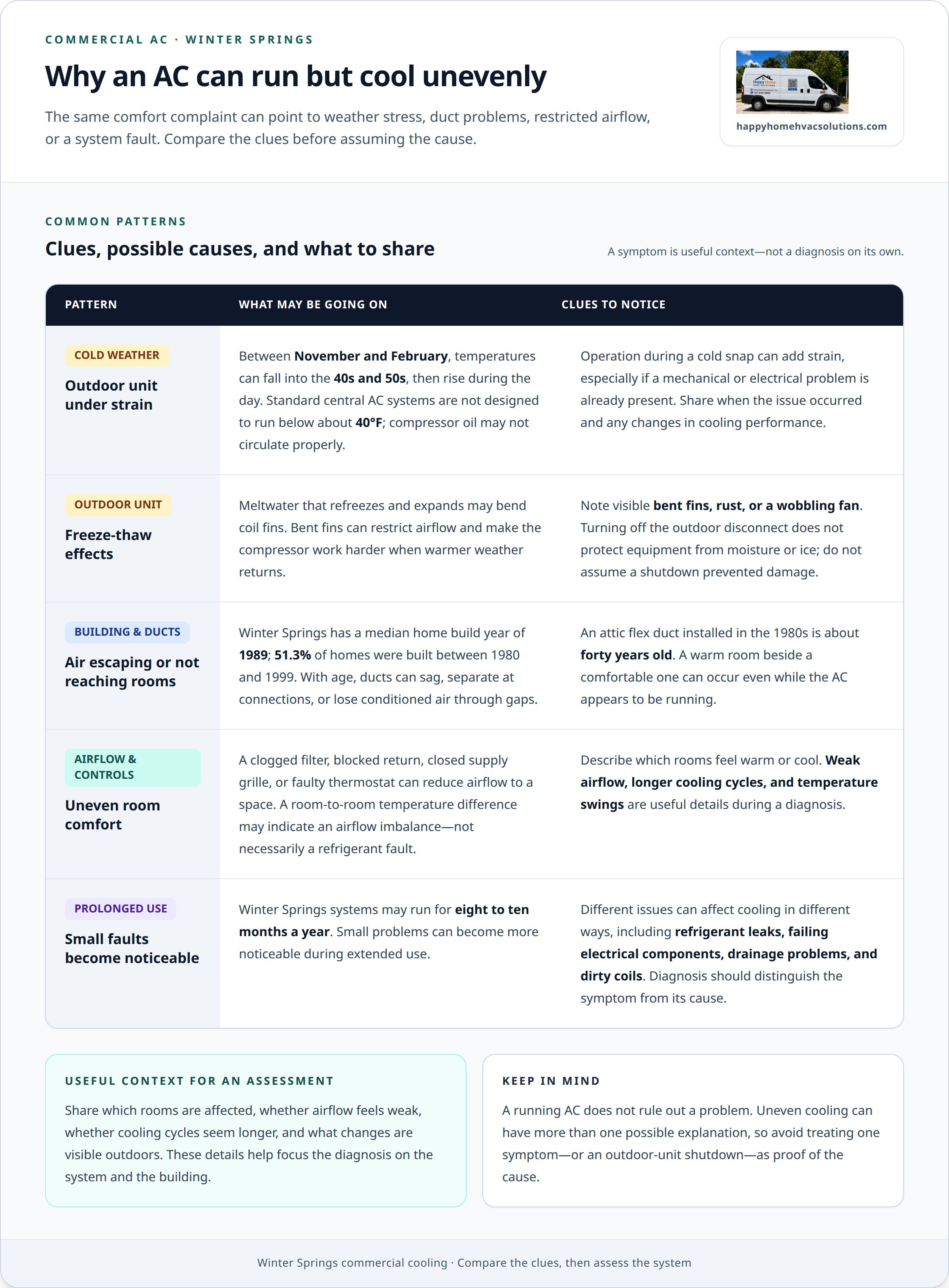
Winter Springs weather can stress air conditioning even when the system runs only for cooling. Between November and February, temperatures can fall into the 40s and 50s, then climb again during the day. Standard central air conditioners aren’t designed to run below about 40°F because compressor oil may not circulate properly. A commercial system that operates during a cold snap can face extra strain, especially if it already has a mechanical or electrical problem.
Repeated freeze-thaw cycles can affect the outdoor unit. Meltwater that refreezes and expands may bend the coil fins, restricting airflow and making the compressor work harder when warmer weather returns. Turning off the outdoor disconnect does not shield the equipment from moisture or ice. Bent fins, visible rust, or a wobbling fan are reasons to arrange a professional inspection, rather than assume the unit simply needs more time to cool.
Older buildings may have duct issues alongside equipment problems. Winter Springs housing has a median build year of 1989, and 51.3% of homes were built between 1980 and 1999. An attic flex duct installed in the 1980s is about forty years old. Over time, ducts can sag, separate at connections, or lose conditioned air through gaps. Those problems can leave one room warm while another feels comfortable, even when the AC appears to be running.
Uneven cooling can point to restricted airflow or a control problem. A clogged filter, blocked return, closed supply grille, or faulty thermostat can reduce airflow to a space. In a small office, for example, a warm meeting room and a cool reception area may indicate an airflow imbalance, not a refrigerant fault. Weak airflow, longer cooling cycles, and temperature swings are useful details to share during a diagnosis.
Winter Springs air conditioning systems may run for eight to ten months a year, so small faults can become more noticeable during prolonged use. Refrigerant leaks, failing electrical components, drainage problems, and dirty coils can each affect cooling in different ways. For businesses seeking light commercial AC repair in Winter Springs, an honest diagnosis should distinguish the symptom from its cause. The Winter Springs service area includes buildings with different layouts and equipment, so the system’s condition and airflow matter more than a one-size-fits-all explanation.
Treat the outdoor disconnect as an operating control, not a weather barrier. Turning off an outdoor AC unit’s disconnect switch does not protect it from moisture or ice. If the equipment has been exposed, note visible changes such as rust, bent fins, or a wobbling fan, and share them with a technician. Do not assume that leaving the system off prevented damage or that restarting it will resolve a problem. When cooling is needed again, describe any weak airflow, longer cycles, or uneven temperatures, along with what you see outside. This context helps focus the assessment on the equipment’s condition, rather than treating the shutdown as proof that the unit is protected.
Need AC or Heating Service in Winter Springs Today?
Commercial HVAC work can include repairs, preventive maintenance, controls, electrical components, or a complete installation. The right scope depends on the equipment, the building, and the comfort problem.
When choosing light commercial AC repair in Winter Springs, look for a clear diagnosis, a defined repair scope, and an explanation of how the proposed work addresses the problem.
A Florida HVAC contractor should provide applicable license details and proof of insurance for the work. This helps a business understand who is responsible for the repair or installation.
Light commercial AC repair in Winter Springs is performed by HVAC contractors who work on commercial cooling systems. The right fit depends on the equipment and the repair needed at the property.
Light commercial systems vary in configuration, controls, and equipment. A technician should assess the system installed at the property rather than assume every commercial unit uses the same setup.
If cooling stops during hot weather, choose a professional who can explain the diagnostic steps, repair options, and expected scope before work begins. Share the system’s symptoms and any changes you have noticed indoors.
Commercial HVAC Installation and Maintenance
Commercial installation starts with the building’s layout, existing equipment, and cooling needs. A full assessment helps determine whether repair, replacement, or system changes make sense. For example, recurring comfort problems may call for checking both equipment operation and how air reaches occupied rooms.
Preventive maintenance involves inspecting and servicing system components before a fault interrupts cooling. Thermostat installation or calibration can also matter when the displayed temperature does not match how a room feels. Electrical repairs should address the specific fault, while a new installation should clearly describe the equipment and work involved.
A free in-home installation estimate is an offer to establish, not an automatic part of every project. A useful estimate describes the proposed work, equipment, and factors affecting the installation, so the business can understand what the price covers.
Light Commercial AC Systems and Urgent Repairs
Light commercial air-conditioning systems differ in equipment arrangement, controls, and how they serve a building. A technician should identify the installed system and inspect the relevant components before recommending repairs. The assessment may include electrical operation, refrigerant performance, airflow, and thermostat response.
If AC stops during hot weather, tell the technician which rooms are affected, when cooling stopped, and whether the system behaved unusually. These details help focus the visit. A practical repair plan explains the diagnosed issue and the work needed to restore operation, rather than treating every loss of cooling as the same fault.
For a cooling problem that needs professional attention, professional AC repair begins with identifying what is affecting the system and matching the repair to that cause.
Benefits of professional AC diagnosis and repair
A structured diagnosis links a cooling complaint to the system fault causing it. This helps a business understand the repair scope before work begins.
Cooling and Humidity Diagnosis
Temperature and humidity problems can occur together without sharing a cause. For example, a room that feels cool but damp may point to an issue beyond the thermostat setting. A technician assesses how the air-conditioning system operates and serves the affected space.
Diagnosis may include checking thermostat response, airflow, coil condition, and refrigerant performance. Each result adds context: restricted airflow may reduce cooling, while a refrigerant problem can affect system operation. These findings help a technician explain which issue needs attention instead of recommending a part based on a symptom alone.
This distinction matters during an emergency, when a warm workspace or lingering indoor humidity can affect daily operations. If the thermostat reading differs from the room’s comfort, the technician can assess its placement and response alongside system operation. The repair plan should connect the observed temperature and humidity concerns to the inspection findings.
System Diagnosis and Troubleshooting
Troubleshooting follows the equipment’s operation from its controls through its electrical and cooling components. A technician can check whether the thermostat is calling for cooling, whether the system starts and runs, and where its operation changes. This sequence helps narrow down the fault before repairs begin.
Electrical testing can identify a failed component or an interruption affecting startup. Refrigerant checks help assess cooling performance, while airflow tests can show whether air is moving properly through the system. These checks matter because weak cooling can have different causes, each requiring a different repair approach.
Professional diagnosis gives a business a clearer basis for deciding what to do next. The contractor should explain the problem in plain language, describe the repair that addresses it, and distinguish necessary work from unrelated recommendations. For example, if a system runs but one area stays uncomfortable, the assessment should consider both equipment operation and air distribution.
After the repair, the technician can confirm whether the affected operation has improved and explain any remaining system concerns. This final review gives the business a practical record of what was found and repaired. Clear findings support informed decisions about future service or maintenance, without treating every cooling complaint as the same problem.
A professional inspection can identify conditions affecting comfort even while the system runs. Mills Air says an oversized air conditioner can short cycle and leave indoor humidity behind. Connecting that pattern to system operation can help explain why a space feels damp despite cooling and what repair or adjustment may be appropriate. A technician can also assess visible issues at the outdoor unit instead of relying on symptoms alone.
Bent fins, visible rust, a wobbling fan, or a breaker that trips when an outdoor AC unit starts are reasons to arrange an inspection. Reporting these observations helps direct attention to the equipment and supports a more informed diagnosis. The technician can explain the findings and whether a repair is needed.
Electrical, refrigerant, and airflow testing
Cooling complaints can stem from electrical faults, refrigerant problems, or restricted airflow. Testing each area shows how the system is performing and where repair attention is needed.
For commercial refrigerant work in Florida, the contractor should follow the requirements that apply to the refrigerant and repair being performed. A business can request a plain-language explanation of the handling steps included in the proposed work.
Electrical and Airflow Testing
Electrical testing checks whether the system receives power and its components operate as intended. A technician can inspect connections, test controls, and assess motors or other electrical parts when equipment will not start, stops unexpectedly, or trips a breaker. These checks help distinguish a control problem from a failed component.
Airflow testing examines how air moves through the system and reaches occupied areas. A technician may compare airflow at supply registers, inspect the filter and coil, and assess return-air paths. For example, weak airflow to one office but normal delivery elsewhere may point to a local restriction or duct issue.
In Florida, cooling systems may also provide heat as the weather changes, so technicians need to evaluate the operating mode involved in the complaint. A system that runs without delivering enough cooling can have different causes from one that will not start. Connecting electrical findings with airflow observations helps explain the symptom without assuming the compressor is at fault.
Refrigerant Leak Detection and Recharging
Refrigerant testing assesses whether the system has the charge and pressures needed for cooling. Low refrigerant can result from a leak, not simply normal use. Outdoor refrigerant-line connections can loosen and develop leaks.
Leak detection should identify the suspected leak location before recharging is considered. A technician can inspect line connections and system components, then explain whether a repair is needed before refrigerant is restored. Adding refrigerant without addressing a leak can leave the underlying fault unresolved.
Once a leak is repaired, the technician can evaluate system operation and determine whether recharging is appropriate. The business should receive a clear account of the findings, the repair performed, and how the equipment responds afterward. This sequence addresses the cause rather than treating low cooling as a standalone symptom.
Considering electrical, refrigerant, and airflow results together gives a more useful picture of system performance. For example, weak cooling with normal airflow calls for a different investigation than weak cooling paired with restricted air delivery. A documented diagnosis helps the business understand the repair scope and make an informed decision about what to do next.
AC repair in Winter Springs
For a Winter Springs business, a useful repair visit links the reported problem to tested system performance. Technicians can explain whether repair, continued maintenance, or equipment replacement best fits the diagnosed condition.
Start with the operating symptoms: when cooling changed, which spaces are affected, and whether the system still runs. For example, an office that stays warm while nearby rooms cool calls for a different investigation than a unit that will not start. These details help technicians focus testing on controls, electrical parts, refrigerant, and air distribution instead of guessing from one symptom.
After testing, ask for a clear explanation of the fault and proposed repair. The work plan should identify the affected component, explain how the repair addresses the cause, and clarify what operation will be checked afterward. If the technician finds an electrical issue, for instance, the explanation should connect it to the unit’s startup or shutdown behavior. Clear findings make it easier to decide which work is relevant.
Replacement is a separate decision from repair. The equipment’s condition, recurring faults, and ability to cool the occupied space all help determine whether continued repairs make sense. A technician should explain the reason for recommending replacement and describe the installation scope. In Winter Springs, replacing or modifying air-conditioning equipment requires a mechanical permit, and the city files HVAC mechanical permits through its eSuitePermits portal.
Energy use can factor into the decision, but it should not replace diagnosis. A system that runs for long periods may have an equipment fault, airflow restriction, or another performance issue. Testing helps distinguish these possibilities and gives the business a better basis for choosing between repair and replacement. A recommendation should address the actual findings, not assume higher energy use alone means the equipment must be replaced.
Homeowners and business operators share a practical concern: restoring dependable cooling without unnecessary work. For a light commercial property, technicians should consider how the system serves the whole space, including areas with different occupancy or cooling demands. A repair that restores operation in one room may not resolve uneven delivery elsewhere, so the final assessment should account for all affected zones.
Annual AC maintenance can help identify developing problems before a breakdown interrupts normal use. It also gives technicians a chance to assess the equipment’s condition and note changes in operation. If the system has a recurring fault or no longer maintains comfort, arrange professional HVAC service to discuss the findings and the appropriate next step.
Happy Home HVAC Solutions: AC Repair
Happy Home HVAC Solutions provides AC repair for businesses experiencing inconsistent cooling, unusual system operation, or equipment that will not start. A professional assessment can identify whether the issue involves electrical components, refrigerant performance, airflow, or another system fault.
Arrange AC repair when a recurring problem disrupts comfort or system performance changes. If testing shows repair is not the right option, AC installation may be worth considering. Clear findings help you understand the recommended work and why it addresses the problem.
Share what the system is doing, which areas are affected, and when the issue began. That context helps focus the diagnosis. For professional help with your AC concerns, contact Happy Home HVAC Solutions.
Take the Next Step Toward Reliable Cooling
Choose a repair path based on what your system needs now and how you want the space to function. If the diagnosis supports repair, fixing the fault can help restore dependable operation. If replacement makes more sense, AC installation provides a path to planning a new system. Happy Home HVAC Solutions also provides Heating & Furnace Services when the building needs heating support.
For light commercial AC repair in Winter Springs, share the symptoms affecting your space and any questions about the recommended work. A clear conversation can help you understand the next step without pressure or unnecessary complexity.
Contact Happy Home HVAC Solutions today to discuss your AC needs and move toward a more comfortable workspace.
Frequently Asked Questions
Do Winter Springs commercial HVAC companies offer emergency or same-day AC repair?
Some HVAC companies may offer urgent or same-day appointments, but availability varies by provider and schedule. Emergency service isn’t a standard promise across Winter Springs contractors. Happy Home HVAC Solutions provides AC repair, but doesn’t offer 24/7 emergency service. If cooling fails during business hours, share the affected areas, equipment symptoms, and how long the system has been down when arranging service. That information helps describe the issue clearly.
What are common causes of light commercial AC failures in Central Florida?
Common causes include worn electrical components, blocked airflow, thermostat problems, refrigerant leaks, and condensate drainage issues. In Central Florida, long cooling periods can make an existing fault more noticeable. For example, a clogged drain may cause water to collect near indoor equipment, while a failing capacitor can prevent a unit from starting. A technician’s diagnosis helps distinguish these causes because similar symptoms, such as weak cooling, can stem from different faults.
What professional maintenance can help prevent commercial AC breakdowns in Winter Springs?
Annual professional maintenance can help identify developing problems before they disrupt business operations. A technician can inspect the system, clean components that affect heat transfer, assess the condensate drain, and review controls and electrical connections. For example, a partially blocked drain or loose connection may be easier to address during scheduled service than after cooling stops. Maintenance findings also give the business a clearer picture of equipment condition and any follow-up needs.