
Insulation Upgrade in Orlando, FL: How to Know When Your Home Needs One
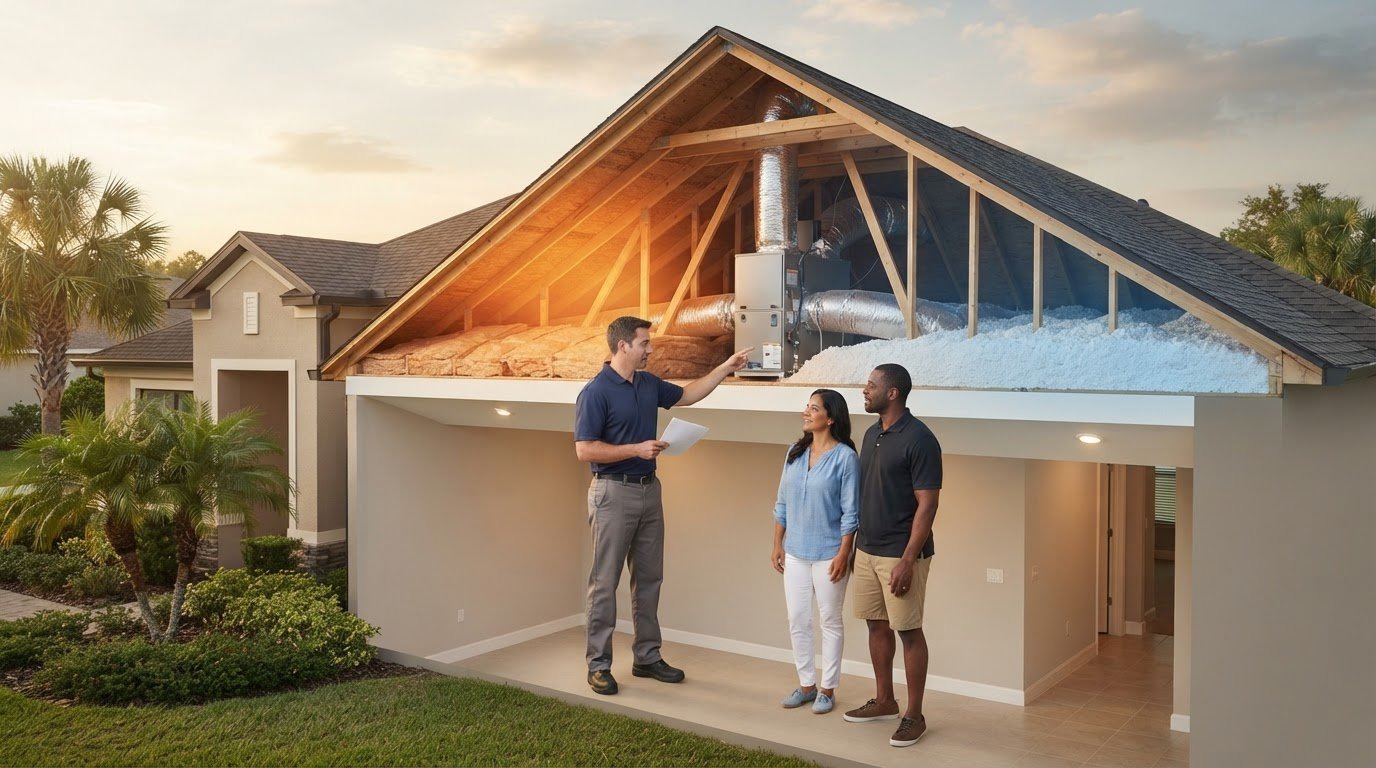
What if the hottest room in your Orlando home doesn’t need more insulation? A stubborn temperature difference can point to thin or uneven insulation, air leakage, or an HVAC issue, and each calls for a different response. An insulation upgrade Orlando FL homeowners consider should start with what’s making the room uncomfortable, not the assumption that adding insulation will fix everything.
If you’re running the air conditioning and still avoiding certain rooms, it’s reasonable to wonder whether insulation is part of the problem. Insulation slows heat moving into your home, while your HVAC system cools and circulates the air. When either isn’t performing as expected, comfort can suffer. Looking at the room-by-room pattern can help identify what deserves attention.
This guide covers signs that call for a closer look at insulation, what to assess before planning an upgrade, and how insulation and HVAC performance relate. You’ll also learn what to expect as you consider next steps for a home in the Orlando area. Happy Home HVAC Solutions provides insulation services alongside heating and cooling work, bringing a home-comfort perspective to the project.
Key Takeaways
- Uneven temperatures and persistent heat near the ceiling are reasons to investigate, not proof that insulation is the cause.
- Insulation, air leakage, and HVAC performance affect cooling-season comfort in different ways.
- Keep a simple record of which rooms feel uncomfortable, when it happens, and whether outdoor conditions affect it.
- An insulation upgrade Orlando FL homeowners consider should reflect the home’s specific comfort concerns and existing conditions.
- Happy Home HVAC Solutions provides insulation services alongside heating and cooling work.
When an Insulation Upgrade in Orlando Could Improve Home Comfort
A bedroom that stays warm while the rest of the house feels comfortable can make Central Florida’s cooling season frustrating. You may notice heat lingering near the ceiling or feel that the air conditioning runs often without making every room comfortable. These patterns are worth investigating, but they don’t prove that insulation is the cause. Air leakage, HVAC performance, room layout, and other home-specific factors can also affect comfort.
Think of an insulation upgrade as a home-specific improvement, not a universal fix. The goal is to address what the home actually needs, rather than assume that adding insulation will resolve every warm spot. Homeowners considering an insulation upgrade in Orlando can start by tracking where and when discomfort occurs.
Which comfort problems may point to insulation concerns?
Notice whether a room repeatedly feels hotter than nearby rooms during the cooling season, particularly at similar times of day. For example, compare a warm second-floor bedroom with a more comfortable first-floor room. The contrast helps identify where to focus, but it isn’t a diagnosis on its own.
A noticeable temperature difference between occupied rooms and the attic is another reason to examine the home’s thermal boundary. The attic is a different space from the living area, so some difference is expected. The useful questions are whether heat from above appears to affect the rooms below and whether insulation is continuous and appropriate for the home’s conditions.
Pay attention to how the cooling system operates, too. If it seems to work hard while certain rooms remain uncomfortable, insulation may deserve a closer look. Longer or more frequent cooling cycles can also have other explanations, including air escaping through gaps or an HVAC system that isn’t distributing air as expected. Treat the pattern as a clue to investigate, not proof that insulation has failed.
Why does Orlando’s heat make attic conditions worth assessing?
During hot weather, an attic can create heat pressure above the living space. Heat moves from warmer areas toward cooler ones, and a ceiling assembly with inadequate or uneven insulation may allow more heat to pass into rooms. The Insulation overview explains the general principle: insulation resists heat flow. It can slow heat transfer, but it doesn’t produce cool air or replace an air-conditioning system.
That distinction matters when considering an insulation upgrade Orlando FL homeowners may need. If comfort concerns occur throughout the home or change with system operation, HVAC performance may also need attention. If the problem is concentrated near the ceiling or in particular rooms, attic conditions may be relevant. Gaps that let outside air move through the home point to a separate concern. These clues can overlap, so assess them in context rather than assuming one cause.
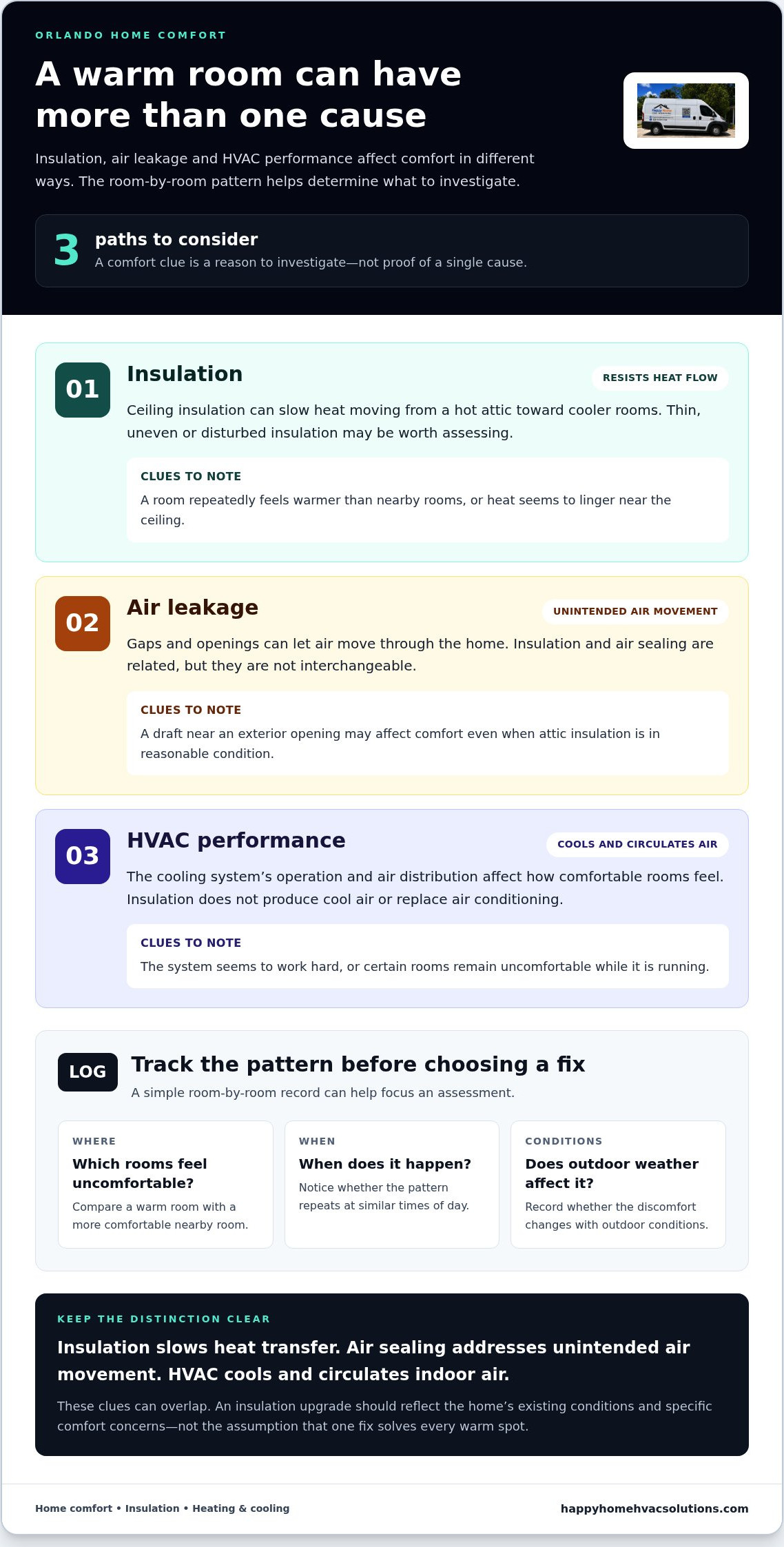
Start with the pattern instead of choosing a fix in advance. Note which rooms feel uncomfortable, when the issue occurs, and whether it changes with outdoor conditions. Those observations provide a practical starting point for deciding whether insulation should be part of the solution.
How Attic Insulation and HVAC Performance Interact in Central Florida
Insulation resists heat flow through parts of a home, such as the ceiling below an attic. In Central Florida’s cooling season, it can slow heat moving from a hot attic toward cooler rooms. That can reduce heat entering through insulated areas, but insulation doesn’t generate cool air or control every source of heat inside the house.
Insulation slows heat transfer; your HVAC system cools and circulates indoor air. The two affect comfort in different ways, even when their effects appear together. A room may feel warm because heat passes through an inadequately insulated area, air moves through gaps, or the cooling system isn’t delivering air as expected.
What insulation can and cannot do for an Orlando home
Think of insulation as one part of the home’s thermal boundary. If an attic ceiling has thin, uneven, or disturbed insulation, heat may pass through more readily than it would through a well-insulated area. Whether an insulation upgrade Orlando FL homeowners are considering makes sense depends on the home’s existing conditions and the work included in the project. Results can vary from one home to another.
Insulation also doesn’t remove moisture from indoor air. In a humid climate, moisture management and cooling depend on factors beyond insulation alone, including how the air-conditioning system operates. An upgrade isn’t a replacement for functioning air conditioning or a stand-alone solution for every comfort or humidity concern.
How air leakage and cooling problems can complicate the picture
Insulation and air sealing are related, but they aren’t interchangeable. Insulation resists heat flow through building areas; air sealing addresses unintended air movement through gaps and openings. A home can have insulation and still have air leakage. Sealing a gap, in turn, doesn’t add insulation where it’s needed.
Uncontrolled air movement can affect comfort independently of insulation levels. A draft near an exterior opening, for example, may make a room feel uncomfortable even if attic insulation is in reasonable condition. HVAC equipment or airflow issues can also leave some rooms less comfortable than others, regardless of what’s above the ceiling.
These observations can suggest several possible investigation paths rather than a single answer. A warm room, frequent cooling, or uneven airflow doesn’t identify the cause on its own. Consider insulation, air movement, and HVAC performance together before settling on a next step.
If cooling concerns seem connected to system operation, AC maintenance services can be part of the broader home-comfort picture. Keeping insulation and HVAC roles distinct sets practical expectations: an insulation upgrade may address heat transfer, while the cooling system remains responsible for cooling and circulating air.
Insulation Upgrade or Another Fix? Compare the Signs Before Deciding
A hot room can make insulation seem like the obvious answer, but one symptom rarely tells the whole story. Insulation may be part of the solution, especially when discomfort is concentrated near the ceiling, yet it won’t correct every issue involving air movement or cooling performance. Use the clues below to decide what deserves a closer look, not to diagnose the cause on your own.
| Investigation path | Clues to notice, not diagnoses |
|---|---|
| Insulation | Persistent heat near the ceiling, uneven comfort in rooms below the attic, or visible areas where attic insulation appears thin or disturbed. |
| Air leakage | A draft near an exterior opening, or a room that feels affected by air moving through gaps. These clues can occur alongside insulation concerns. |
| HVAC performance | Inconsistent airflow from room to room or cooling that seems uneven across the home. These observations don’t establish that equipment is at fault. |
Clues can overlap. An upstairs room may be warm because of heat transfer through the ceiling, air leakage, airflow distribution, or a combination of factors. Use this comparison to focus an assessment, not as a substitute for one.
When should a homeowner investigate insulation first?
Take a closer look at attic conditions if heat repeatedly gathers near the ceiling or certain rooms remain uncomfortable during the cooling season. Before planning an insulation upgrade Orlando FL homeowners can benefit from recording which rooms are affected, when the discomfort appears, and whether it changes with outdoor conditions. That record helps connect the concern to the home’s existing conditions.
Specific notes make the discussion more useful. “The back bedroom feels warm in the afternoon” gives a clearer pattern to explore than “the house is hot.” If the concern is limited to one area, mention nearby rooms that feel more comfortable for context. No pattern proves insulation is the cause, but it helps focus attention on the relevant parts of the home.
When might air leakage or HVAC performance also matter?
Drafts may point toward unintended air movement, while inconsistent airflow may raise questions about how cooling reaches different rooms. Either clue can have more than one explanation, and neither confirms an insulation gap or equipment problem. Consider how these factors interact instead of treating one symptom as a verdict.
Quick comparison: ceiling-level heat makes attic insulation worth assessing; drafts make air movement worth considering; uneven airflow makes HVAC performance worth reviewing. If clues overlap, describe the full pattern so the next step can address the home as a whole.
How to Prepare for an Orlando Insulation Upgrade Assessment
A little preparation can make an insulation assessment more focused. You don’t need to identify the cause or inspect hard-to-reach areas yourself. Instead, gather clear observations about where comfort falls short and what seems to affect it. That information helps shape a practical discussion about whether insulation belongs in the plan.
For homeowners considering an insulation upgrade Orlando FL, a short record of everyday conditions is often more useful than a guess about what the attic needs. Use this checklist before discussing the project:
- List the rooms affected. Note where discomfort is strongest and whether nearby rooms feel different.
- Record approximate timing. Include the time of day and whether the concern happens consistently or only under certain conditions.
- Describe the concern. Note whether a room feels warm near the ceiling, has a draft, or seems to receive inconsistent airflow.
- Include relevant history. If you know about prior insulation work or recent HVAC changes, write down what changed and when.
- Observe outdoor conditions. Record whether the issue seems to shift with sunny, hot, or milder weather.
Photos can help illustrate visible conditions, but take them only from safe, readily accessible areas. An attic can contain hazards or have surfaces that aren’t safe to walk on. Don’t enter an unsafe space or step onto areas that may not support your weight. If you can’t view the attic safely, leave the inspection to a professional.
Which project details shape an insulation plan?
The home’s existing conditions and layout help determine what an appropriate project should address. An assessment can consider where insulation is present, whether coverage appears consistent in accessible areas, and how the affected rooms relate to the attic and the rest of the home. Your notes help connect those observations to the comfort concerns you’ve experienced.
Material, scope, and specifications depend on the individual home. They shouldn’t be assumed from a symptom or a generic recommendation. A plan should reflect the home’s conditions rather than promise a particular result before its needs are understood. This keeps the discussion practical and specific to your property.
Happy Home HVAC Solutions serves Orlando as part of its Central Florida coverage. The Orlando service area page provides local context, while your observations help make an insulation discussion more useful.
Explore Happy Home HVAC Solutions’ insulation services to plan around your home’s comfort needs.
Planning an Insulation Upgrade with Happy Home HVAC Solutions
Choosing an insulation project is easier when the decision follows a clear understanding of the home, rather than a generic promise about what an upgrade will do. Happy Home HVAC Solutions is a family-owned, licensed Central Florida HVAC company that provides insulation services alongside air-conditioning and heating work. That broader home-comfort perspective helps keep insulation in context: it can address heat transfer through insulated areas, but it may not resolve concerns with air movement or HVAC performance by itself.
What to expect when discussing an insulation project
Bring your observations, including which rooms feel uncomfortable, when the issue tends to occur, and whether it changes with outdoor conditions. The discussion can connect those experiences with the home’s existing insulation and layout. You don’t need to arrive with a diagnosis or preferred material. The goal is to understand what the home needs before settling on the project scope.
Recommendations should reflect the conditions in your home. The areas addressed, materials, and specifications depend on the individual project, so they shouldn’t be assumed from a single symptom or standard template. An insulation upgrade may be relevant to the comfort concern, but its scope and role should be explained in relation to your home, not presented as a universal fix.
If you want more detail on the installation side, the attic insulation installation guide offers a related overview. Use it as background, while keeping the final plan tied to your home’s conditions and needs.
A clear next step toward a more comfortable home
The best first step isn’t automatically adding insulation. It’s connecting the comfort problem you’ve noticed with what’s happening in the home. A focused assessment can help determine whether insulation belongs in the solution and how it relates to other factors that may affect comfort. That approach gives you a clearer basis for deciding what to do next.
When you’re ready, share your observations with Happy Home HVAC Solutions. Describe the rooms, timing, and conditions you’ve noticed, then discuss an insulation project suited to your property.
Request insulation service information to discuss an insulation upgrade for your home.
Make Your Next Comfort Decision With Confidence
You don’t have to commit to a project just because one room feels warmer than the others. Turn your observations into a focused conversation about what your home needs. That keeps the decision grounded in your actual comfort concerns, rather than assumptions about what an insulation upgrade Orlando FL should include.
Bring notes about the rooms affected and when the discomfort occurs. Then discuss whether insulation is a suitable part of the plan and what scope makes sense for your home. The right choice fits the conditions, not a one-size-fits-all promise.
Happy Home HVAC Solutions provides insulation services for homeowners in Orlando, Oviedo, Winter Springs, Winter Park, Altamonte Springs, and nearby Central Florida communities. Request insulation service information to discuss an upgrade for your home.
Frequently Asked Questions
These answers are relevant to homeowners considering an insulation upgrade in Orlando and nearby Central Florida communities, including Oviedo, Winter Springs, Winter Park, and Altamonte Springs.
What R-value is recommended for attic insulation in Orlando?
For a vented attic ceiling, the Florida Building Code’s prescriptive minimum for Orlando is R-38; the U.S. Department of Energy recommends R-49 to R-60 for attics in Florida’s climate zone. A code minimum and an energy-efficiency recommendation aren’t the same thing, and neither automatically defines the right retrofit for every existing home. The appropriate target depends on the home’s construction and current insulation conditions.
Can new insulation be added over existing attic insulation?
Often, additional insulation can be installed over existing material if the existing layer is dry and in suitable condition. Moisture damage, contamination, compressed areas, or blocked attic ventilation may affect the plan. Before adding a layer, the attic should be assessed so the work accounts for existing conditions and doesn’t obstruct vents or access to equipment. Don’t enter an unsafe attic to inspect it yourself.
Does attic insulation help with Florida humidity?
Attic insulation doesn’t dehumidify indoor air. It can slow heat transfer through insulated areas, but humidity control depends mainly on air-conditioning performance and moisture management. If the home feels muggy even when the temperature seems comfortable, adding insulation alone may not address the cause. Consider the home’s cooling and humidity concerns together rather than expecting insulation to remove moisture.
How long does an insulation upgrade take?
The time required depends on the project scope and the home’s existing conditions, so there isn’t one reliable duration for every insulation upgrade Orlando FL homeowners consider. The amount of area involved, attic access, and whether existing insulation needs attention can all affect the work plan. A home-specific assessment helps establish the expected schedule for a particular project.
Can insulation improve sound between rooms or from outside?
Insulation may help reduce some sound transmission, but it won’t soundproof a home. Results depend on the building assembly and how sound travels through walls, ceilings, windows, doors, and gaps. Noise entering through a window, for instance, may not change much after attic insulation is added. If sound control is a priority, include the source and location of the noise when discussing the project.
Are insulation upgrades eligible for Florida rebates or tax credits?
As of October 2026, the federal Energy Efficient Home Improvement Tax Credit has expired for work completed in 2026, and Florida’s HEAR and HOMES rebate programs haven’t launched. Orlando Utilities Commission lists a ceiling-insulation rebate of $0.10 per square foot when the final level is at least R-30; homes already above R-19 are ineligible. Utility territory and current program terms affect eligibility, so review OUC’s requirements.