
HVAC UV Light Benefits for Air Filtration and Energy Use
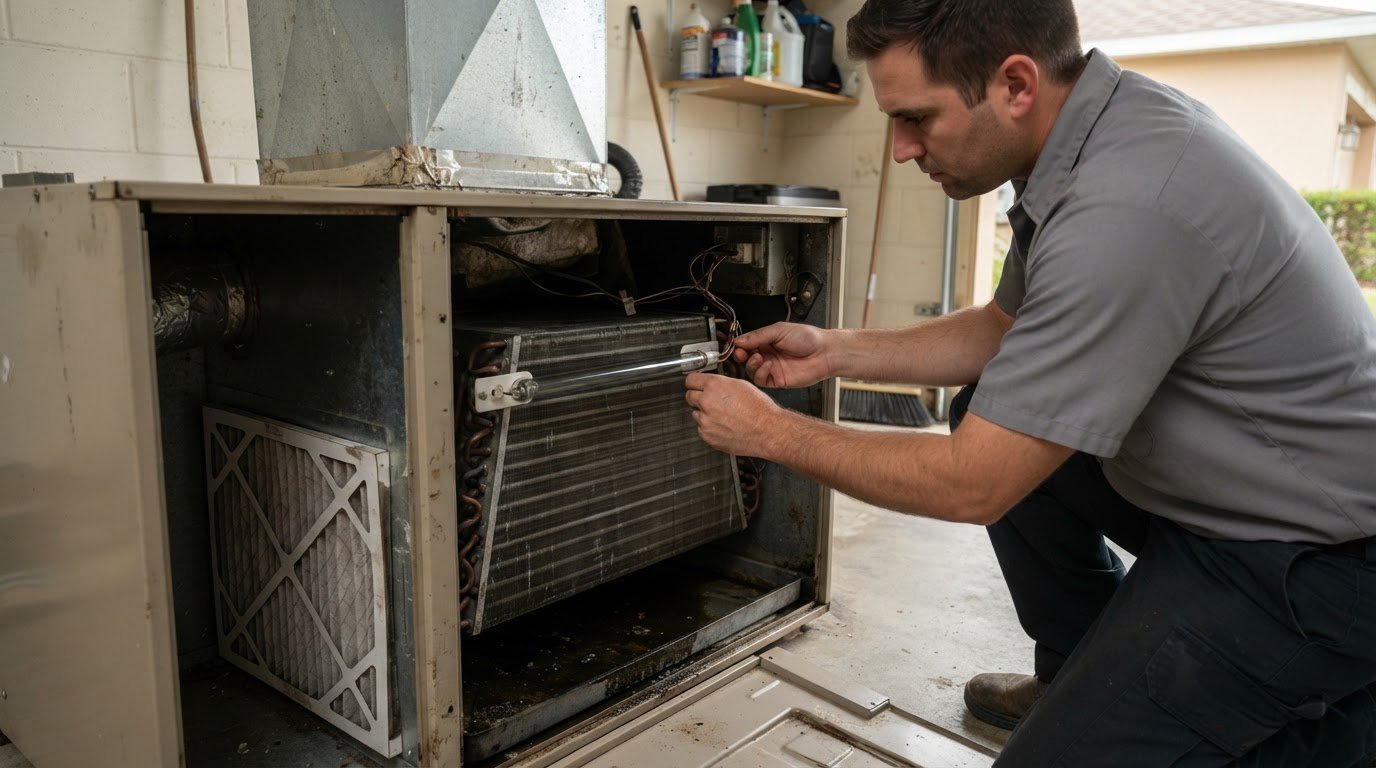
UV-C light can help sanitize parts of your HVAC system, but it doesn’t replace an air filter. The benefits of UV light for an HVAC system depend on lamp placement: a coil-sanitizing light targets microorganisms near the evaporator coil, while an air-sanitizing light treats air moving through a duct.
It’s reasonable to want cleaner indoor air without unnecessary energy use or maintenance. UV-C damages microorganisms’ genetic material, which can stop them from reproducing. Its effects are limited to organisms exposed to the light, so it doesn’t capture dust, pet dander, or other particles as a filter does.
This guide explains what HVAC UV lights can sanitize, why you still need a suitable air filter, and how bulb care and electricity use factor in. You’ll also learn how a cleaner coil may support system efficiency, and why proper placement and safe installation matter at home.
Key Takeaways
- UV lights target microorganisms either near the evaporator coil or in the air moving through HVAC ducts.
- Keep an air filter in place: UV light doesn’t capture dust, dander, and other particles.
- Bulb care and replacement timing depend on the lamp, so follow its manufacturer guidance.
- UV lights use electricity, while a cleaner coil may help the HVAC system run more efficiently.
- Safe placement matters because direct exposure to UV-C can harm skin and eyes.
What Are HVAC UV Lights?
HVAC UV lights use short-wave UV-C radiation to target microorganisms exposed to the lamp. Their effect depends on placement: some treat air in a duct, while others focus on the cooling coil.
Coil-sanitizing lights are installed beside or above the indoor evaporator coil, where cooling creates a cool, moist surface. The lamp shines on the coil area rather than filtering air throughout the home. This placement targets microorganisms on nearby surfaces, including mold that can grow in damp conditions. Positioning the lamp for its intended target matters: a light directed elsewhere won’t sanitize the coil as designed.
Air-Sanitizing Installations
An air-sanitizing installation places a UV-C lamp inside a return or supply duct to expose moving air. As air passes the lamp, UV-C can inactivate exposed mold spores, bacteria, and viruses. For example, a return-duct installation treats air entering the HVAC system before it circulates through the home. Placement and shielding help contain UV-C in the duct, supporting indoor air quality without shining into a room.
Coil sterilization and air sterilization describe different targets, not two names for the same setup. A coil lamp concentrates exposure on the evaporator coil; a duct lamp treats air passing through its path. Neither should be assumed to capture dust or other particles. In Orlando homes, system layout and the intended target inform where a lamp is installed. The local climate’s cooling demands also make the indoor coil a relevant location to assess. An Orlando HVAC service area includes homes with varied equipment layouts, so installation needs to suit the specific system.
Mold Prevention and Coil Sterilization
Coil-sanitizing UV lights expose the evaporator coil to UV-C, which can deactivate mold and bacteria reached by the light. This may help limit microbial growth on the coil, but it won’t remove existing dirt or resolve moisture problems that cause mold. Proper coil cleaning and drainage still matter. The lamp supports coil hygiene; it doesn’t replace addressing a wet or dirty system.
UV-C damages microorganisms by affecting their genetic material, so exposed bacteria, viruses, and mold may be inactivated. It doesn’t reliably address odors on its own, because smells can come from sources the lamp doesn’t reach, such as debris or moisture. A U.S. code or product certification shouldn’t be treated as a universal requirement for every setup: installation rules and product evaluations serve different purposes. The equipment and installation location determine which requirements apply.
UV-C can also affect materials that receive direct exposure. Improperly aimed light may degrade an HVAC air filter, so lamp location and the exposure path matter. Installation should prevent UV-C from reaching occupants’ eyes or skin and limit unnecessary exposure to nearby components. That’s why coil and duct lamps need placement suited to their targets, rather than being installed wherever there’s space.
Does a UV Light Mean I Can Ditch My Air Filter?
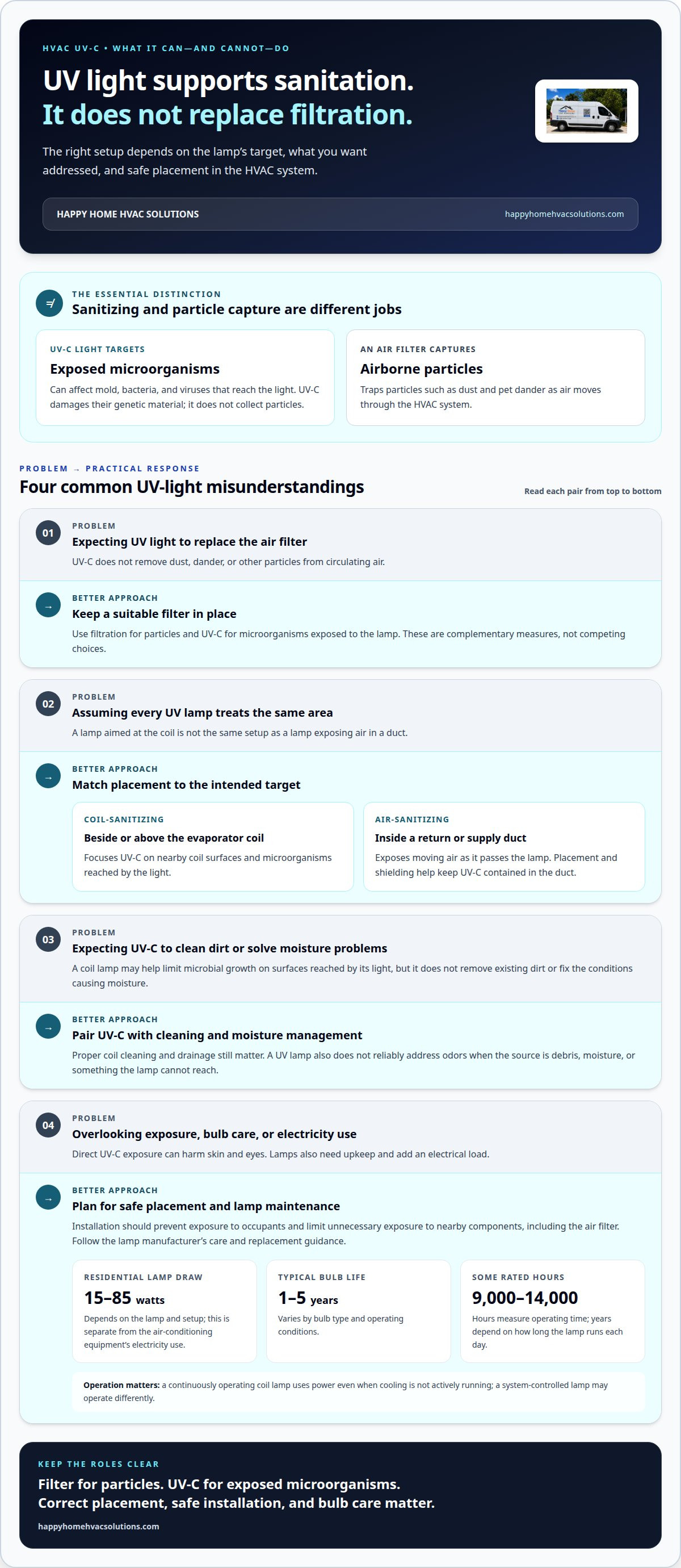
No. UV lights and air filters address different aspects of indoor air quality. Keep the filter in place to capture particles that ultraviolet light doesn’t remove.
A filter traps particles such as dust and pet dander as air moves through the HVAC system. UV-C sanitizing lights target microorganisms exposed to their light, but they don’t collect those particles. For example, a home with a UV lamp still needs filtration to catch dust circulating through return vents. The CDC describes UV germicidal irradiation as an added air-cleaning measure, not a replacement for HEPA filtration.
Indoor Air Quality and Microorganisms
Indoor air quality depends on several factors, including particles, moisture, and microorganisms in the air or on HVAC surfaces. UV-C can help address exposed mold, bacteria, and viruses, while filters capture airborne particles. The difference matters in everyday rooms: a lamp may target microorganisms, but it won’t remove dust from a shelf or pet dander moving through the return grille.
Humidity also affects comfort and conditions inside a home. The U.S. Environmental Protection Agency recommends keeping home humidity between 30% and 50% for optimal comfort. In a humid room, moisture can contribute to conditions that support mold growth; a UV lamp doesn’t control humidity or fix a moisture source. Ventilation, appropriate filtration, and moisture management each address a different part of indoor air quality.
Potential Air-Quality Benefits
HVAC UV lights may reduce some microorganisms passing through the treated area, supporting an overall air-cleaning approach. The benefit depends on which organisms reach the lamp and how air moves through the system. For instance, a duct-mounted UV light treats air passing that location, while a coil-focused light targets the coil area instead.
Filters also affect airflow. A clogged filter can restrict circulation, so replacing it with the correct type helps the system move air as intended during cooling and heating. UV light won’t clean a dirty filter or remove particles trapped in it. Treat filtration and sanitizing as complementary tasks, not competing choices.
For a broader view of how HVAC support fits your home’s comfort needs, explore HVAC services.
UV-C electricity use and bulb replacement
HVAC UV-C lamps add an electrical load, and their upkeep includes cleaning and eventual replacement. Most residential systems use between 15 and 85 watts, depending on the lamp and setup. That draw is separate from the electricity used by the air-conditioning equipment itself. A continuously operating coil lamp uses power even when cooling isn’t actively running, while a lamp controlled by the system may operate differently.
Bulb life varies by type and operating conditions. HVAC UV bulbs typically last 1-5 years, and some are rated for about 9,000 to 14,000 hours. Those figures describe different measures: hours reflect operating time, while years depend on how long the lamp runs each day. A lamp that stays on continuously reaches its rated hours sooner than one that operates only with the system.
For replacement, follow the lamp manufacturer’s instructions. A common recommendation is every 12-24 months, though bulb life varies by model. Don’t rely only on whether the lamp still glows; a visible light doesn’t show how much germicidal output remains. Keep the replacement interval with the HVAC maintenance records so the next service visit can account for the lamp’s age.
Dust can block some UV-C output, so cleaning is part of routine care. Turn off power to the lamp before cleaning, then follow the manufacturer’s handling instructions. A practical schedule is to clean the bulb every couple of months, adjusting to the instructions for that model. Keep hands and cleaning materials away from energized components, and avoid touching the bulb if its instructions advise against it.
Installation and replacement costs depend on the lamp, its location, access to the unit or ductwork, and the work involved. The price varies by case and is provided after a quote request; factors include equipment choice, installation complexity, and whether replacement parts or labor are needed. Replacing a bulb differs from installing a complete sanitizing system, so the scope affects the quote. There’s no single cost for every air-conditioning system.
For practical record-keeping, note the installation date, lamp model, and replacement guidance together. For example, a continuously running coil lamp may need attention sooner by calendar time than an intermittently operated lamp. Regular cleaning also helps prevent contaminants from accumulating on the bulb and keeps the sanitizing light unobstructed. These small maintenance steps support reliable operation, but a glowing bulb doesn’t necessarily mean it’s still fully effective.
Potential HVAC efficiency and energy savings
UV-C uses electricity, but keeping an evaporator coil cleaner may support HVAC efficiency. The energy effect depends on the lamp’s power draw and the system’s condition.
Potential Energy Savings
Estimates suggest HVAC UV lights may reduce energy consumption by 10-25%, with annual savings of $100-$250 for a typical home. These estimates connect savings to cleaner coils and ducts, not to UV light acting as an air purifier. Homeowners should consider the lamp’s added electricity use alongside any reduced strain from cleaner equipment.
Coil sanitizing may help limit microorganism buildup on the evaporator coil. A cleaner coil can support heat transfer, while a dirty or obstructed coil can make cooling less effective. The lamp alone won’t remove dust, fix airflow problems, or address other causes of poor performance. Energy savings depend on the system’s overall condition, not just the presence of UV-C.
Maintenance and System Efficiency
HVAC maintenance helps preserve efficiency by addressing issues that restrict airflow or heat transfer. For example, a clogged filter or dirty coil can interfere with normal system operation, even with a UV lamp installed. A professional inspection can assess the coil, ductwork, and other equipment together. Regular HVAC maintenance supports a fuller view than treating UV-C as a stand-alone fix.
UV lamps also need attention. Dust on a bulb can reduce its germ-killing effectiveness, while an aging lamp may continue glowing after its useful output declines. Cleaning the bulb and replacing it according to the manufacturer’s schedule helps the sanitizing component work as intended. These tasks support maintenance, but they don’t replace cleaning or repairs when the system has another problem.
Efficiency and System Lifespan
Efficient operation can reduce unnecessary strain on HVAC components, which may support a longer service life. A UV light doesn’t guarantee longer equipment life: it targets microorganisms and may help keep selected surfaces cleaner. The system’s operating condition, maintenance, and airflow also affect how hard it works.
Some estimates suggest UV lights may pay for themselves within 2-4 years for many homeowners. That estimate depends on energy use, the lamp’s own consumption, and the system’s response to cleaner coils. Compare those factors rather than assuming every installation produces the same result. A UV light is one part of an efficiency plan, not a substitute for addressing the underlying cause of high energy use.
How UV-C light sanitizes HVAC systems
UV-C sanitizes by exposing microorganisms to short-wave ultraviolet radiation. In an HVAC system, placement determines whether the light targets surfaces or moving air.
UV-C is a form of short-wave ultraviolet radiation. At 253.7 nm, DNA absorbs UV light strongly, making this wavelength useful for germicidal applications. Exposure can damage microorganisms’ genetic material, including bacteria, viruses, and mold, and prevent them from reproducing. The effect applies only to organisms that receive enough light exposure.
That limitation makes installation geometry important. A coil lamp shines on the evaporator coil, while a duct lamp exposes air moving through its path. A surface hidden behind a panel or a particle passing outside the beam won’t receive the same treatment. For example, dust coating a coil can shield microorganisms beneath it, so UV-C doesn’t replace physical cleaning.
Airflow also affects exposure. Air moves through ductwork rather than staying beside the lamp, so its path and the lamp’s position influence how much UV-C it receives. A lamp in a return duct treats air passing that point; it doesn’t sanitize every room surface. Likewise, a coil-focused installation targets its immediate area, not all indoor air at once. These distinctions help set realistic expectations for air conditioning and indoor air quality.
UV-C can reduce microbial growth on exposed surfaces and in treated air, but it doesn’t remove the source of moisture. If condensation keeps an area damp, mold may continue growing where the light doesn’t reach. A functioning drain and clean coil remain important parts of system care. UV-C is one control measure, not a substitute for fixing a moisture problem.
Direct exposure to HVAC UV-C light can harm skin and eyes. Proper placement keeps the light inside the equipment or duct and prevents it from shining into occupied spaces. Installation should also limit unnecessary exposure to nearby materials, including filters that can degrade under direct UV-C.
UV-C is not a respiratory treatment, and an HVAC lamp shouldn’t be presented as preventing illness. Its role is to inactivate microorganisms exposed to the light within the system. For a useful assessment of lamp placement, equipment condition, and UV-C safety, request an HVAC system evaluation.
Happy Home HVAC Solutions
Happy Home HVAC Solutions can help assess how your HVAC system is operating and address related comfort or equipment concerns. If airflow, cooling, or heating problems accompany your questions about UV-C, AC Repair, AC Installation, and Heating & Furnace Services can address the system’s broader needs.
UV-C is one part of an indoor air-quality approach, not a replacement for filtration or moisture control. Understanding your equipment, its condition, and the issue you want to solve can help guide the next step. Contact Happy Home HVAC Solutions to discuss your HVAC concerns.
Choose the Next Step for Your Home
Deciding whether to add UV-C is easier when you start with a specific goal for your home. You may be addressing a persistent comfort concern, planning an equipment update, or looking for ways to support your existing system. Understanding the benefits of UV light for an HVAC system means weighing how the equipment fits that goal alongside your home’s filtration and maintenance needs.
A conversation about your HVAC system can connect those priorities to practical next steps. Happy Home HVAC Solutions can help with the heating and cooling concerns that shape your decision, without treating a UV lamp as a cure-all. Share what you’d like to improve and what you’ve noticed at home.
Contact Happy Home HVAC Solutions to discuss your HVAC questions and move forward with a clearer plan for home comfort.
Frequently Asked Questions
Can a UV Light Help With Funky Smells?
UV-C may help with odors linked to microorganisms exposed to the lamp, but it won’t address every source of smells. A musty odor, for example, can point to moisture or debris that needs attention beyond UV treatment. The smell’s location and when it occurs can help narrow down the cause. If an odor returns after the system runs, consider the drain, coil, filter, and nearby ductwork as possible sources.
How Effective Are UV Lights?
Effectiveness depends on the lamp’s output, placement, cleanliness, and how long microorganisms are exposed. A lamp only acts on organisms reached by its light, so hidden surfaces and fast-moving air may receive less exposure. Dust on the lamp can also interfere with its output. Think of UV-C as one part of an air-quality plan, alongside filtration and moisture control, rather than a whole-home solution on its own.
How Long Do the UV Bulbs Actually Last?
HVAC UV bulbs can last about 1-5 years, depending on the bulb and system. Operating hours matter: a lamp that runs continuously uses its rated life faster than one that operates only with the HVAC equipment. A bulb may still glow as its germicidal output declines, so visible light isn’t a dependable sign of remaining effectiveness. Follow the manufacturer’s replacement schedule and record the installation date.
How much electricity do UV lights use?
Most residential HVAC UV systems use between 15 and 85 watts, depending on the equipment. Actual electricity use also depends on how many hours the lamp runs. A continuously operating unit draws power whether the air conditioner is actively cooling or not. For a useful household comparison, consider the lamp’s wattage and operating schedule together, rather than treating every UV system as having the same energy use.
Is UV Light Worth the Investment?
UV-C may be worthwhile if your main goal is targeting microorganisms on an HVAC coil or in treated air. It’s less suited to concerns involving dust, dander, or a moisture source, which require other measures. Consider the lamp’s intended location, upkeep, power use, and the issue you want to address. For homeowners in Orlando, Oviedo, Winter Springs, Winter Park, and Altamonte Springs, system condition and household priorities can help shape that decision.
What Is UV Radiation?
Ultraviolet radiation lies beyond the range of light visible to the human eye. HVAC germicidal lamps use UV-C, the short-wave portion associated with sanitizing applications. UV-C isn’t visible as ordinary light, so a lamp’s glow doesn’t show the full extent of its radiation. Keep the distinction in mind: the equipment uses a specific type of ultraviolet energy, not a standard room light.
How does UV-C light work in an HVAC system?
UV-C exposes microorganisms to radiation that can damage their genetic material and disrupt reproduction. In an HVAC system, the lamp’s position determines what receives exposure. A lamp aimed at a coil treats that surface area, while a duct-mounted lamp exposes air passing its location. The system doesn’t carry UV-C through every room: treatment occurs only where the light reaches air or surfaces inside the equipment.
What are the benefits of UV lights for HVAC systems?
Potential benefits include targeting microorganisms in treated air or around an evaporator coil, and helping limit microbial growth on exposed surfaces. A cleaner coil may also support efficient system operation. UV lights don’t replace air filters, remove dust, fix moisture problems, or guarantee odor removal. Their value comes from matching lamp placement and maintenance to a specific goal, while keeping filtration and routine HVAC care in the overall plan.