
HVAC system diagnostics for spotting problems early
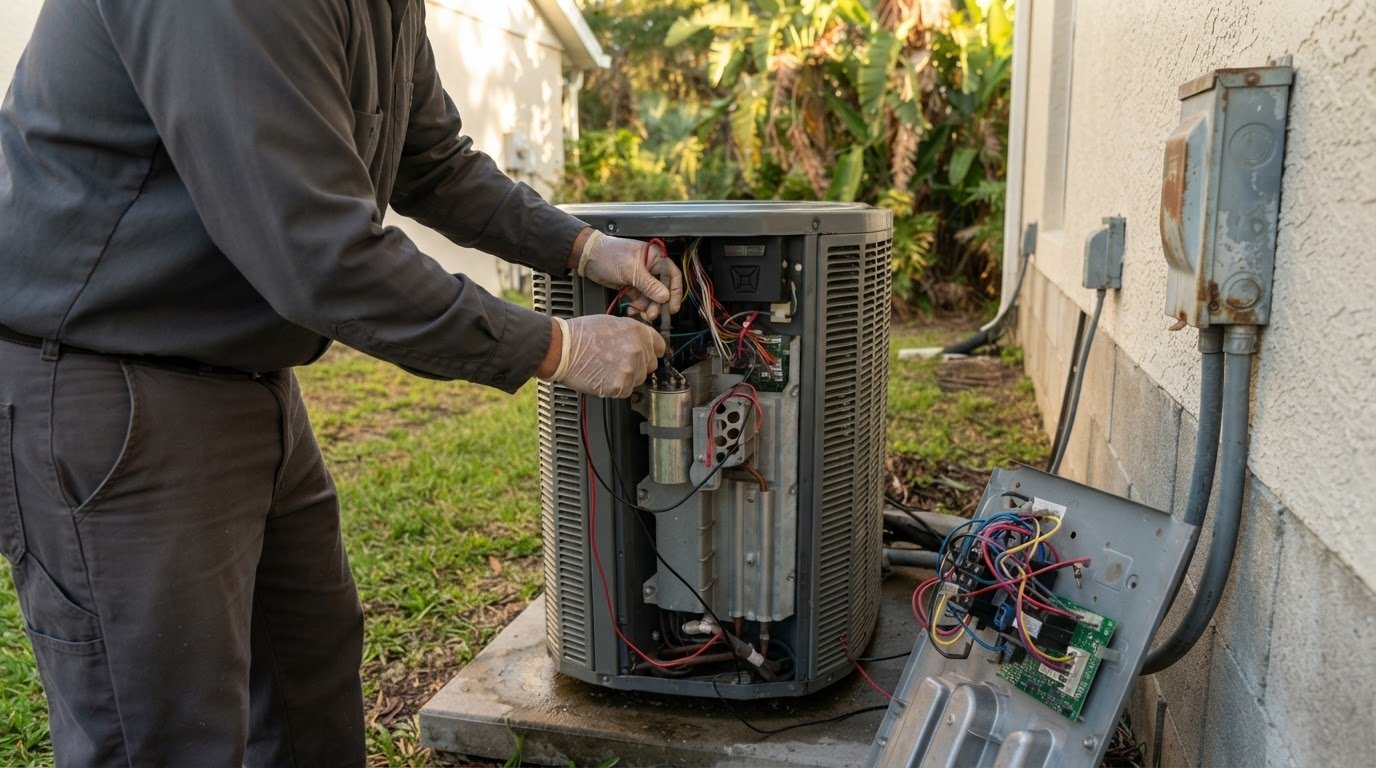
An HVAC diagnostic chart is a starting point, not a final diagnosis. During HVAC system diagnostics, technicians compare system measurements with chart patterns to identify possible causes of poor cooling, such as low suction pressure or high superheat. These readings guide further checks, but they don’t confirm a fault or determine the repair on their own.
When a room won’t cool evenly, airflow feels weak, or the system makes unfamiliar sounds, it’s natural to want a clear answer. A chart can make readings easier to interpret, but a useful diagnosis combines those readings with a careful inspection of the system and its operating conditions.
Learn what diagnostic charts show, which checks and measurements can help uncover problems, and what to expect from a diagnostic report. A structured evaluation can distinguish a likely cause from a symptom, helping you understand what needs attention and what to do next.
Key Takeaways
- Read diagnostic charts as clues that guide further testing, not as a stand-alone diagnosis or repair plan.
- See how thermostat, airflow, electrical, safety, and refrigerant checks help narrow down possible causes.
- Recognize warning signs such as uneven temperatures, weak airflow, unusual sounds, or frequent cycling.
- Learn what a clear diagnostic checklist or report can tell you about findings and recommended next steps.
- Understand how gauges, psychrometers, and electrical meters contribute different measurements to troubleshooting.
Testing electrical connections, airflow, thermostats, safety controls, and refrigerant
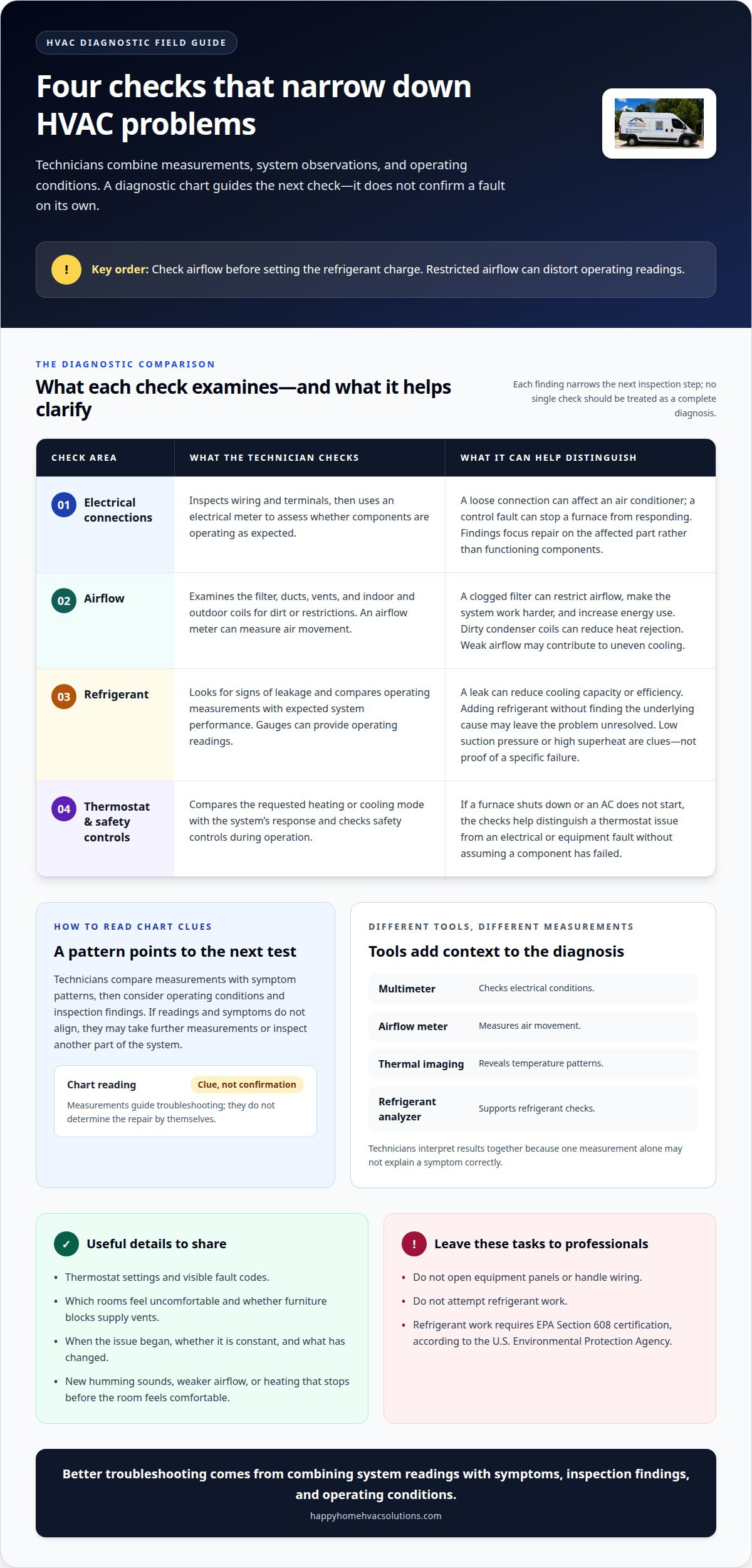
Technicians combine electrical, airflow, control, and refrigerant checks to narrow down why heating or cooling has changed. The order matters: airflow should be checked before refrigerant is charged.
Electrical Connection Testing
Electrical testing checks connections and components for faults that can interrupt power or prevent equipment from starting. A technician inspects wiring and terminals, then uses an electrical meter to assess whether components are operating as expected. A loose connection, for example, can affect an air conditioner, while a control fault can stop a furnace from responding. Identifying the fault helps focus repairs on the affected part instead of replacing functioning components.
Airflow Checks and Hidden Inefficiencies
Airflow checks assess whether air can move through the system and reach the rooms it serves. A technician examines the filter, ducts, vents, and indoor and outdoor coils for dirt or restrictions. A clogged filter can restrict airflow, make the system work harder, and increase energy use. Dirty condenser coils can also reduce heat rejection. Weak airflow may contribute to uneven cooling, while a restricted return can affect heating and heat pump performance.
Refrigerant Leak and Charge Checks
Refrigerant checks look for signs of leakage and compare operating measurements with the system’s expected performance. A leak can reduce cooling capacity or efficiency, so adding refrigerant without finding the underlying cause may leave the problem unresolved. Technicians check airflow before setting the refrigerant charge because restricted airflow can distort operating readings. Refrigerant work requires EPA 608 certification, according to the U.S. Environmental Protection Agency. Correct diagnosis helps avoid treating a symptom as the cause.
Thermostat and Safety Control Testing
Thermostat testing checks whether the control setting and system response match. A technician can compare the requested heating or cooling mode with how the furnace, air conditioner, or heat pump responds. Safety controls are also checked during operation. If a furnace shuts down or an AC does not start, these tests help distinguish a thermostat issue from an electrical or equipment fault. This narrows the next inspection step without assuming a component has failed.
These checks can connect symptoms that may seem unrelated. Weak airflow and poor cooling, for example, may point to a restriction before refrigerant becomes the focus. A heat pump that struggles to maintain comfort may need both airflow and control checks. If a furnace cycles off, technicians consider the thermostat, electrical connections, and safety controls together. Combining measurements with observations gives a clearer picture of system performance and helps identify which component needs attention.
What Is an HVAC Diagnostic Chart?
An HVAC diagnostic chart pairs system measurements with symptom patterns to guide troubleshooting. It helps technicians decide what to investigate next, but it isn’t a complete diagnosis or repair plan.
Comparing Measurements with Chart Symptoms
Technicians compare operating readings with chart patterns to identify possible causes of a heating or cooling problem. Low suction pressure or high superheat, for example, can point to possible causes of insufficient cooling. These readings are clues, not proof of a specific failure. The technician considers operating conditions and other inspection findings before deciding what to test next.
Diagnostic Tools and Techniques
Tools add context to chart readings by measuring different aspects of system operation. A multimeter checks electrical conditions, while an airflow meter measures air movement. Thermal imaging can reveal temperature patterns, and a refrigerant analyzer can support refrigerant checks. Technicians interpret the results together because one measurement alone may not explain a symptom correctly.
For refrigerant work, EPA Section 608 certification is required, according to the U.S. Environmental Protection Agency. The work being performed determines which technical skills are relevant; refrigerant handling calls for this specific certification.
Before a visit, homeowners can safely note thermostat settings, visible fault codes, and which rooms feel uncomfortable. Check that furniture isn’t blocking supply vents, too. Don’t open equipment panels, handle wiring, or attempt refrigerant work. These tasks involve components that require professional testing.
Give the technician a clear timeline: when the issue began, whether it is constant, and what has changed. Mention a new humming sound, weaker airflow, or heating that stops before the room feels comfortable. Share any checks already completed, such as confirming the thermostat is set to heating. These details help connect chart patterns with the actual symptom.
A chart points toward a troubleshooting direction, not a guaranteed answer. If readings and symptoms don’t align, the technician may take further measurements or inspect another part of the system. For persistent furnace concerns, heating and furnace services can address problems that need hands-on diagnosis and repair.
Early detection of HVAC problems
Early evaluation can reveal developing faults before they disrupt heating and cooling. Uneven temperatures, weak airflow, frequent cycling, or new operating sounds give technicians specific symptoms to investigate. A system may still run while a restriction, control issue, or failing component affects its performance.
Schedule periodic system evaluations, even when the equipment appears to work properly. Arrange an earlier evaluation when comfort changes, energy bills rise without an obvious reason, or the equipment starts behaving differently. No single symptom identifies the cause, so technicians assess the pattern alongside operating conditions.
Pay attention to changes inside the home. A bedroom that stays warm while the living room cools may point to uneven airflow or a distribution problem. Poor airflow across several rooms can also signal an issue. A technician can investigate the system instead of assuming one blocked vent explains every symptom.
- Uneven heating or cooling: Note which rooms feel different and whether the pattern occurs during heating, cooling, or both.
- Frequent on-and-off cycling: Repeated starts and stops can indicate a system problem that needs diagnostic attention.
- New sounds: Banging or humming during operation can help identify when equipment behavior changed.
- Airflow or air-quality changes: Weak delivery or declining indoor air quality can point to system trouble.
An unexplained increase in energy bills is another reason to look for a developing issue. Dirty coils or weak airflow can reduce efficiency, while a refrigerant leak can reduce cooling capacity. A diagnostic visit connects the symptom with measurements and inspection findings, helping identify whether a small repair may address the underlying problem.
Timing matters because an unresolved fault can affect other parts of the system. Continued operation with an undiagnosed problem may allow damage to accumulate, potentially making replacement necessary. Early diagnosis helps distinguish a minor repair need from a more serious equipment concern.
Keep a short record before the evaluation: affected rooms, unusual sounds, thermostat settings, and when the issue appears. Note whether a heat pump struggles during heating or cooling weakens after the system has run for a while. These observations give the technician concrete details to compare with test results.
Even without an obvious symptom, periodic diagnosis can reveal issues that comfort alone doesn’t make apparent. If a new pattern appears, such as short cycling alongside weak airflow, don’t treat each sign as an unrelated nuisance. A focused assessment can help locate the cause while the system is operating.
HVAC diagnostic checklists and reports
A diagnostic checklist keeps an evaluation focused on why a heating or cooling system isn’t working as expected. The report records findings and explains how they relate to the problem, rather than treating a symptom as the cause.
A structured evaluation can cover the complaint, equipment operation, visible conditions, and test results. If a home feels warm despite a cooling call, for example, the technician can document the thermostat setting, airflow observations, electrical findings, and relevant operating measurements. These details show how the diagnosis was reached and what should happen next.
- Reported symptoms: Note the affected rooms, when the issue occurs, and any sounds or changes in operation.
- System checks: Record relevant observations about airflow, controls, electrical connections, and equipment condition.
- Measurements: Include test results that help explain the system’s performance.
- Findings and next steps: Connect the evidence to the suspected cause and identify any repair or follow-up needed.
These details help you understand what was examined and why. If the complaint is uneven cooling, for example, a report should distinguish an airflow concern from a thermostat or equipment issue. It should explain the finding in plain language, not simply list technical readings without context. The goal is to identify the cause and guide an appropriate response.
A diagnostic visit differs from routine HVAC maintenance. Maintenance focuses on planned system care, while diagnosis investigates a specific problem, such as a furnace that stops heating or an air conditioner that runs without cooling adequately. A checklist keeps these goals distinct, so routine tasks don’t replace investigation of the fault.
Safety findings need clear attention in the report. A furnace heat exchanger fault can create a risk of carbon monoxide leaks. If an inspection identifies a concern, the report should state what was observed and what action is recommended, rather than burying the finding among routine notes.
Good documentation can also help prevent an incorrect repair. If a part is replaced without finding the underlying problem, the system may continue to malfunction, wasting time and money. A report that connects symptoms to test results clarifies why a component needs attention and which functioning parts can remain untouched.
For follow-up, the record can help show whether the original symptom changed after the work. If the same room remains uncomfortable, earlier notes give the technician a starting point for the next evaluation. That history supports focused troubleshooting instead of repeating checks without knowing what was found before.
A checklist won’t make every fault simple, but it makes the reasoning visible. Use the report to understand the identified cause, the evidence behind it, and the recommended next step. That clarity helps distinguish a diagnostic evaluation from HVAC maintenance and supports an informed decision about system care.
Using gauges, psychrometers, and electrical meters for troubleshooting
Each instrument measures a different aspect of system performance. Technicians interpret readings together to understand symptoms and choose the next test.
Using Gauges for Troubleshooting
HVAC gauges measure pressure in a refrigerant circuit, giving technicians information about system operation. Pressure readings can help explain weak cooling, but they don’t identify a fault by themselves. A technician interprets them alongside operating conditions and other measurements. If readings suggest a charge concern, airflow should be assessed before refrigerant is added, since restricted airflow can affect the results.
Using Psychrometers for Troubleshooting
A psychrometer measures air temperature and humidity, helping technicians assess indoor conditions and system performance. Comparing air conditions at different points can show how the system affects the air moving through it. A comfort complaint, for example, may involve humidity as well as temperature. These measurements add context, especially when a thermostat setting seems appropriate but rooms still feel uncomfortable.
Using Electrical Meters for Troubleshooting
Electrical meters measure circuit conditions and help technicians assess connections and electrical components. A multimeter can check voltage or continuity, depending on the test. These checks matter when equipment fails to start, stops unexpectedly, or behaves inconsistently. Measured results can help a technician narrow down whether a power or control issue needs attention instead of assuming a major component has failed.
Tool choice follows the symptom. For weak cooling, gauges can provide refrigerant-circuit data, while a psychrometer describes air conditions. An electrical meter offers a different view if the equipment doesn’t respond to a cooling call. This approach grounds the investigation in evidence from more than one part of the system.
Readings need context. A pressure value without information about airflow or operating conditions can suggest the wrong explanation. Likewise, an electrical result describes only the circuit or component tested. Technicians compare observations, instrument readings, and the reported symptom before deciding whether another check is needed. This makes measurements useful evidence rather than isolated numbers.
These instruments aren’t a safe homeowner test kit. Refrigerant circuit and electrical testing involve equipment and components that require professional handling. If an air conditioner has weak cooling or won’t start, arrange AC repair service so a technician can assess the system and its readings together.
Happy Home HVAC Solutions
Happy Home HVAC Solutions helps homeowners address heating and cooling problems when symptoms persist or system performance changes. If weak cooling, uneven temperatures, or a furnace that won’t heat suggests a fault, a professional evaluation can help identify an appropriate repair.
Depending on your system’s needs, support may include AC Repair, Heating & Furnace Services, AC Installation, or Insulation Services. Share what changed, which rooms are affected, and any sounds or system behavior you’ve noticed. Those details provide a useful starting point and help connect the problem with the next step.
If your system isn’t working as it should, contact Happy Home HVAC Solutions to discuss the problem.
Take the Next Step Toward Reliable Comfort
A useful diagnosis gives you a clearer basis for deciding what to do next. Instead of treating every symptom as a separate problem, use the findings to discuss the system’s condition and the repair or other response that fits. That’s where HVAC system diagnostics become practical: they connect observed performance with a focused decision about your home’s comfort.
When findings point to equipment trouble, Happy Home HVAC Solutions offers AC Repair, AC Installation, and Heating & Furnace Services. The right path depends on what the system needs, whether that means addressing a fault or considering an installation. Share the symptoms and diagnostic findings to give the next conversation useful context.
Contact Happy Home HVAC Solutions to discuss your heating or cooling concern and take a considered next step toward a more comfortable home.
Frequently Asked Questions
Does It Need a Repair?
Not every unusual reading means a part needs repair. A technician may find a correctable issue, such as a control setting, or identify a component fault that needs attention. If a system runs but comfort remains uneven, for example, the diagnosis should connect the finding to the symptom before recommending a repair. Ask what the test results show and how the proposed work addresses the cause.
How much does a diagnostic visit cost?
The price depends on the case and is provided after a quote request. Factors include the equipment being assessed, the reported symptoms, and the testing needed to locate the cause. A cooling complaint that calls for further refrigerant-circuit investigation may involve different diagnostic work from a system that won’t respond to its controls. Describe the issue and equipment so the quote can reflect the work involved.
What Are the Most Common HVAC System Issues?
Common problems include restricted filters, thermostat or electrical faults, airflow limitations, refrigerant leaks, and worn mechanical components. Symptoms can overlap: a home may feel warm because air isn’t moving well, cooling capacity has fallen, or a control isn’t calling for cooling correctly. For homeowners in Orlando, Oviedo, Winter Springs, Winter Park, and Altamonte Springs, noting when and where comfort changes can help narrow the investigation.
What does HVAC system diagnostics include?
A diagnostic evaluation examines the reported problem and gathers evidence about how the equipment operates. Depending on the symptom, this can include reviewing controls, inspecting components, checking airflow, and taking electrical or operating measurements. A furnace that stops heating, for instance, may require different checks from an air conditioner that runs without cooling. The findings help distinguish a likely cause from a symptom before repair decisions are made.
What are common signs an HVAC system needs diagnostics?
Consider an evaluation if rooms develop uneven temperatures, airflow weakens, the system cycles repeatedly, or operation brings new banging or humming sounds. A sudden, unexplained rise in energy use can also be a warning sign. One symptom alone doesn’t identify the fault, but a pattern can guide testing. Note when it occurs, which rooms are affected, and whether it happens during heating or cooling.
How do HVAC technicians diagnose heating and cooling problems?
Technicians start with the reported symptom, then inspect and test relevant system functions. They compare observations with measurements and consider how the equipment responds to a heating or cooling call. If a heat pump doesn’t maintain comfort, for example, testing may focus on its operating response and the conditions affecting performance. The goal is to locate the cause before selecting a repair, rather than replacing a part based only on a symptom.
What tools are used for HVAC system diagnostics?
Tool selection depends on the issue. Technicians may use multimeters for electrical checks, airflow meters to assess air movement, gauges for refrigerant-circuit readings, and psychrometers to measure air temperature and humidity. Thermal imaging cameras or refrigerant analyzers can support other investigations. Each tool measures a different aspect of system performance, so technicians interpret readings alongside the symptom rather than treating one instrument’s result as a complete diagnosis.
How much does HVAC diagnostic service cost in the United States?
There isn’t one diagnostic price for every system or problem. The price depends on the case and is provided after a quote request. Relevant factors include the equipment, symptoms, and testing required. A system that won’t start may need different checks from one with declining cooling. Share what the system is doing and when the problem occurs to help define the diagnostic work involved.