
Heat Pump vs Furnace in Central Florida: Which Should You Choose
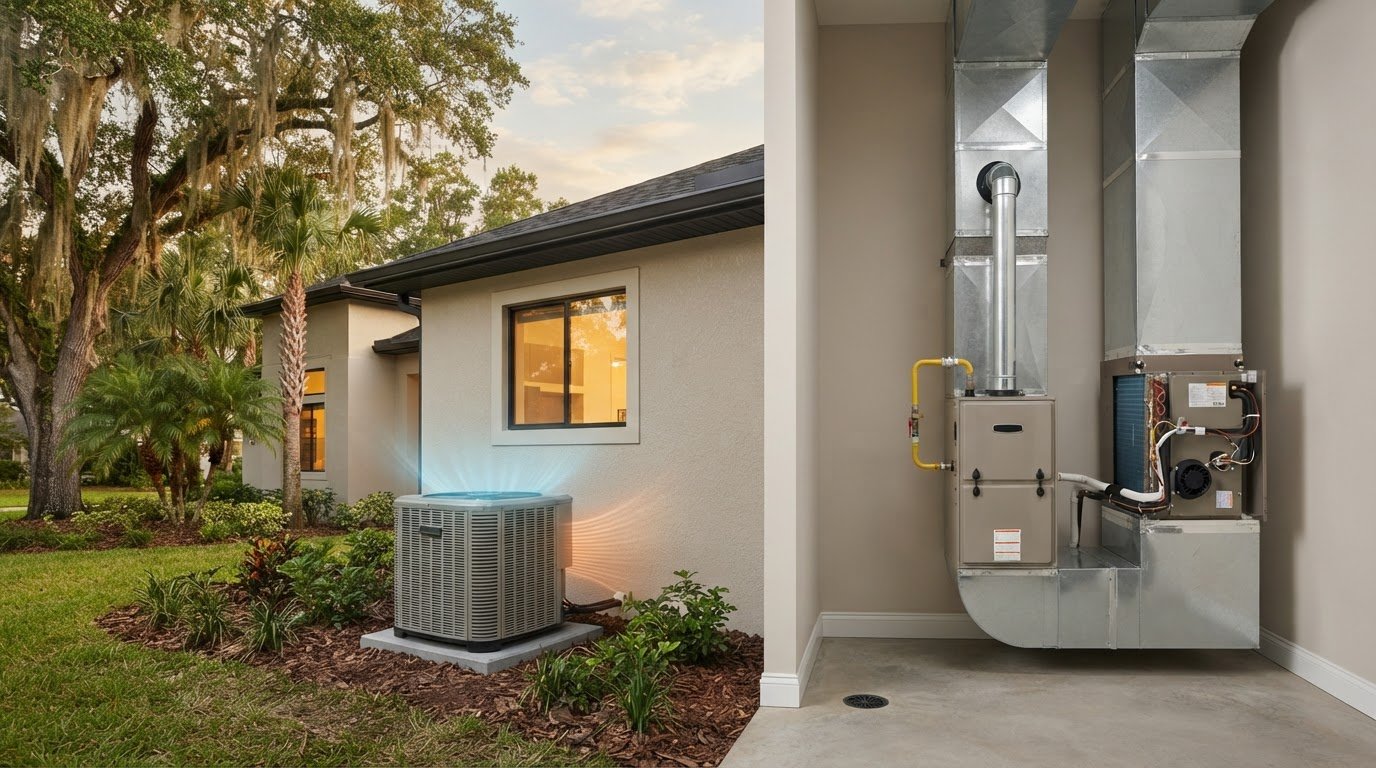
For most Central Florida homes, a heat pump is the practical starting point: it provides both heating and cooling, matching the region’s mild winters and long cooling season. A furnace can suit a home with gas service or owners who prefer gas heat, but it needs a separate air-conditioning system. For the heat pump-versus-furnace decision in Central Florida, lifespan is another key difference: heat pumps typically last 10 to 15 years, while gas furnaces typically last 15 to 20 years.
When comparing a heat pump vs furnace in Central Florida, look beyond the upfront choice: efficiency, maintenance needs, and how you use heating and cooling all matter. The best fit depends on your existing equipment, available fuel, and which ongoing trade-offs suit your household.
This comparison explains how each system works in Central Florida, where efficiency and maintenance differ, and what to consider when weighing lifespan. You’ll also find a straightforward decision guide to help narrow down the option that best fits your home and comfort priorities.
Key Takeaways
- Weigh a heat pump’s combined heating and cooling against a furnace’s heating role and the need for separate cooling equipment.
- Compare operating efficiency in Central Florida’s mild winters, and consider the fuel available in your home.
- Learn how regular maintenance supports reliable operation and what can affect a system’s useful life.
- Use your home’s comfort needs, existing equipment, and long-term priorities to narrow your choice.
- See how the federal 25C heat-pump tax credit affects the comparison, and which system details matter most before deciding.
Should I Get a Heat Pump in Central Florida?
A heat pump may suit an Oviedo home, but compare its installation needs and operating costs with a furnace. The better fit depends on your existing equipment, available fuel, and whether your cooling system also needs replacement.
Heat Pump Installation and Operating Costs
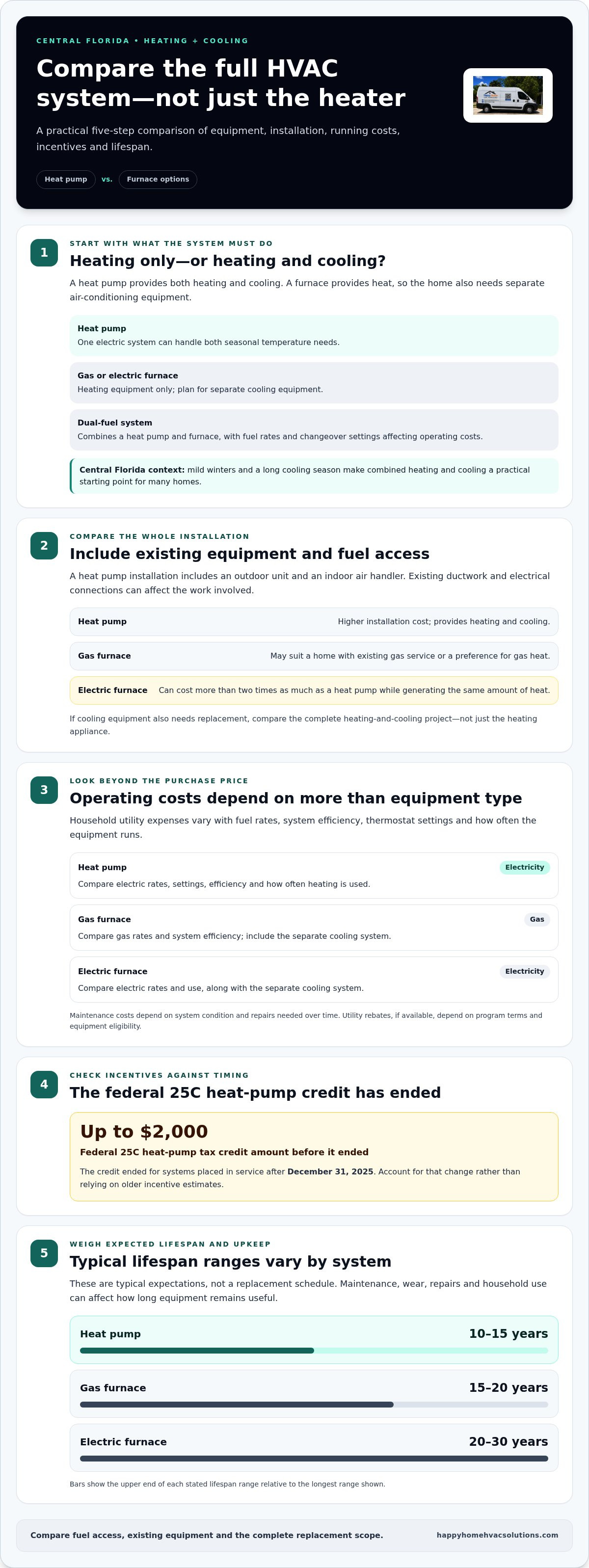
A heat pump installation includes an outdoor unit and an indoor air handler. Existing ductwork and electrical connections can affect the work involved. Household operating costs depend on electricity rates, thermostat settings, equipment efficiency, and how often you use heating.
The federal 25C heat-pump tax credit was up to $2,000 before it ended, according to the Internal Revenue Service. It ended for systems placed in service after December 31, 2025. Factor that change into a current replacement decision, rather than relying on older estimates of incentives.
Upfront Costs and Long-Term Utility Costs
A gas furnace may fit a home with existing gas service or owners who prefer gas heat. Because a furnace provides heating only, also consider the age and condition of separate cooling equipment. Electric furnaces can cost more than two times as much as a heat pump while generating the same amount of heat.
Compare the full project, not just the heating appliance. If cooling equipment also needs replacement, the combined scope may change which option makes financial sense. Long-term utility expenses depend on fuel rates, system efficiency, household settings, and how often the equipment operates. Maintenance costs depend on the system’s condition and any repairs needed over time.
| Option | Upfront comparison | Heating and cooling | Operating-cost factors |
|---|---|---|---|
| Heat pump | Higher installation cost | Provides both | Electric rates and use |
| Gas furnace | May suit existing gas service | Heating; separate AC needed | Gas rates and efficiency |
| Electric furnace | Heating equipment only | Heating; separate AC needed | Electric rates and use |
| Dual-fuel system | Combines heat pump and furnace | Uses both heating options | Fuel rates and changeover settings |
For installation, local code and permit requirements depend on the project and jurisdiction; utility rebates depend on program terms and equipment eligibility. Choose by weighing fuel access, current equipment, and the complete replacement scope. For an Oviedo HVAC installation, the home’s existing setup helps determine what the project involves.
Reasons heat pumps are commonly recommended in Florida
A heat pump suits many Florida homes because one electric system provides both heating and cooling. That matters in a state where cooling use can dominate household comfort needs. One Florida resident estimated that homeowners use the cooling cycle at least 200 days per year. A furnace provides heat only, so the home also needs separate air-conditioning equipment.
In heating mode, an air-source heat pump draws heat from outside air and transfers it indoors. In cooling mode, it reverses direction and moves indoor heat outside. A central air conditioner uses the same basic cooling process, but a heat pump can reverse the cycle for heating. That gives homeowners one system for seasonal temperature changes.
Cooling and humidity control go together. As warm indoor air passes over a cooling coil, moisture condenses and drains away. A heat pump and a central air conditioner both remove humidity while cooling because they use the same basic process. A furnace does not cool or dehumidify, so a separate air conditioner handles those jobs. Comfort also depends on proper system sizing and airflow, not just the equipment category.
Heat pumps differ by where they collect or release heat. Air-source models exchange heat with outdoor air and are common for whole-home heating and cooling. Water-source systems transfer heat through a water loop, so the design depends on suitable water access and system configuration. Geothermal models exchange heat with the ground. Geothermal heat pumps can reduce heating and cooling energy consumption by up to 60%, though their installation requires ground-loop work.
For homeowners choosing between a heat pump and separate central air conditioning, the key difference is heating. Both can cool and manage indoor humidity, but only a heat pump reverses its operation to heat the home. A furnace-and-AC setup separates those functions, which may suit a home with existing gas equipment or a preference for gas heating. The best match depends on current equipment, fuel access, and how the household uses each mode.
For example, if cooling equipment also needs replacement, consider how central air-conditioning installation fits into the choice. Compare the complete heating-and-cooling setup, rather than judging equipment by its heating function alone.
System lifespan and maintenance
In Central Florida’s mild climate, heat pumps suit homes that need both heating and cooling, while gas and electric furnaces provide heat only. Heat pumps typically last 10 to 15 years, gas furnaces typically last 15 to 20 years, and electric furnaces typically last 20 to 30 years. The right comparison includes equipment age, existing fuel service, and how each system supports your home.
Those lifespan ranges describe typical expectations, not a replacement schedule. A well-maintained furnace might last 20 years or more, while a heat pump’s heating and cooling duties place year-round demands on one system. Maintenance helps keep components operating properly, but wear, repairs, and the home’s usage also affect how long equipment remains useful. A system’s actual condition matters more than age alone.
Existing equipment can make the choice clearer. If a home already has gas service and a functioning furnace, keeping gas heat may avoid changing the fuel setup. If the furnace is nearing replacement and cooling equipment also needs attention, compare complete heating-and-cooling configurations. Electric furnaces also need separate cooling equipment, so assess the air conditioner’s age alongside the heating system.
Florida’s mild winters mean a home may need heating less often than cooling. A heat pump provides both modes, while a furnace pairs with a separate central air conditioner. This affects how many major systems need upkeep. For example, a household replacing an older furnace and air conditioner can compare a heat pump with keeping separate heating and cooling equipment.
Maintenance needs depend on system design. Heat pumps need attention to components used for both cooling and heating, including airflow and the outdoor unit. A furnace-and-AC setup has separate heating and cooling equipment, each with its own components to maintain. Keep filters clear, leave outdoor equipment unobstructed, and address unusual noises or uneven room temperatures before they become bigger comfort problems.
- Heat pump: Typical lifespan is 10 to 15 years; one system handles heating and cooling.
- Gas furnace: Typical lifespan is 15 to 20 years; existing gas service can make it a practical fit.
- Electric furnace: Typical lifespan is 20 to 30 years; separate cooling equipment is still needed.
For an Oviedo home, compare the condition of current equipment, access to gas, and expected cooling use. These factors help show whether one combined system or separate heating and cooling equipment better fits the home.
Heat pump operation and efficiency in Orlando's mild winters
Orlando averages about 200 heating hours per year, so winter efficiency can influence seasonal energy use. Winter lows average 48-55°F, conditions that generally suit heat-pump operation.
Heat Pump Energy Efficiency
A heat pump moves heat indoors instead of generating heat through combustion or electric resistance. In Florida’s mild winters, a modern heat pump can achieve a COP of 3.0 or higher. That means it can deliver multiple units of heat energy for each unit of electricity used. Its efficiency advantage depends on operating conditions and how often supplemental heating runs.
Modern heat pumps can extract usable heat from outdoor air down to about 25-30°F. Orlando’s average winter lows are warmer, so a heat pump can handle much of the heating season without relying heavily on backup heat. If electric heat strips run frequently, they can reduce the system’s efficiency advantage.
AFUE and HSPF Efficiency Ratings
AFUE measures how much fuel a furnace converts into heat over a heating season. Modern gas furnaces have ratings from 80% to 97% AFUE. HSPF is one measure used to compare a heat pump’s seasonal heating efficiency. Compare each system using its relevant rating, rather than treating AFUE and HSPF as interchangeable.
Fuel type matters, too. A gas furnace burns natural gas to generate heat, while a heat pump uses electricity to transfer heat from outside. A higher AFUE means a greater share of the gas becomes usable heat. A heat pump’s COP describes the heat delivered relative to electricity consumed, so its performance changes with outdoor temperatures.
Cooling capability further distinguishes these systems. A gas furnace heats the home but cannot cool it, so a separate central air conditioner is needed. A heat pump reverses its operation for cooling, then switches back to heating. In a Florida home that relies on cooling for much of the year, this combined function can simplify the equipment comparison.
Supplemental heat can support a heat pump on colder days, but frequent use may offset efficiency gains. Check whether the thermostat displays auxiliary heat during ordinary Orlando weather, and note how often it runs. Repeated use can point to an issue with the heat pump, thermostat, airflow, or controls.
Natural gas availability and household priorities also shape the choice. A home already configured for gas may favor keeping furnace heat, while an electric home may find a heat pump fits its existing setup. System lifespans differ, too, so weigh these efficiency measures alongside the replacement considerations discussed above.
Heat pump and furnace lifespans
Expected service life is a key part of the heat pump versus furnace decision, especially when replacement costs are near. Some estimates place heat pump lifespan at 15-20 years and gas furnace lifespan at 15-25 years. Central air conditioners typically last 15 years, so a heat pump’s combined heating and cooling role can make its age relevant in both seasons.
Florida weather shapes how homeowners experience system lifespan. A heat pump handles summer cooling as well as winter heating, while a furnace works alongside a separate air conditioner. That means the systems have different patterns of use. In an Oviedo home, consider the heat pump’s cooling performance during summer as well as its heating performance during mild winters.
Age alone doesn’t determine whether to repair or replace. Track repair frequency, changes in comfort, and performance over time. For example, a heat pump that struggles to cool in summer and heat in winter may need closer assessment than a unit with one isolated issue. A furnace problem can affect heating while the separate air conditioner continues to work normally.
Efficiency can change with age, too. Heat pumps can start to become less efficient after 10 years, making energy use and performance worth monitoring as equipment gets older. Compare current operation with earlier seasons: note whether rooms reach the thermostat setting, whether airflow feels consistent, and whether repairs are becoming more frequent. Those observations help distinguish routine upkeep from declining system performance.
Maintenance supports a longer service life, but it cannot prevent every component from wearing out. Keep the outdoor heat-pump unit clear, replace or clean filters as needed, and arrange service if unusual sounds or weak airflow appear. For a furnace and air conditioner, keep records for both systems. Repair history can show whether one unit needs attention or the whole setup is nearing replacement.
- Heat pump: Compare heating and cooling performance, since one system serves both seasons.
- Gas furnace: Review furnace condition separately from the air conditioner’s age and repair record.
- Central air conditioner: Consider its typical 15-year lifespan when evaluating a furnace-and-AC combination.
For an Oviedo homeowner, the useful takeaway is to compare remaining service life across the full setup, not just one appliance. If repair needs are mounting, plan routine HVAC maintenance to help track system condition and address developing issues.
Happy Home HVAC Solutions: AC Repair
Happy Home HVAC Solutions helps Oviedo homeowners address cooling problems, consider replacement options, and maintain indoor comfort. If an air conditioner struggles during summer or a heating system needs attention before cooler weather, AC Repair and Heating & Furnace Services can help. When equipment is nearing replacement, AC Installation can support planning for a system that fits the home’s heating and cooling needs.
Home comfort also depends on more than equipment. Insulation Services can help address heat transfer through the home, which can affect how consistently rooms stay comfortable.
For help with an HVAC repair or replacement decision in Oviedo, contact Happy Home HVAC Solutions or visit happyhomehvacsolutions.com.
Choose the System That Fits Your Home
Choosing between a heat pump and a furnace in Central Florida is a chance to plan for your home’s comfort, not just replace equipment. Before deciding, consider what you want from the next system: combined heating and cooling, continued use of existing equipment, or a setup that suits your home’s fuel and layout. Clear priorities make the options easier to compare.
It also helps to note the comfort issues you want addressed, such as uneven temperatures, unusual system sounds, or cooling that no longer meets your needs. Share those details when discussing your next step, so the conversation starts with your home’s actual needs. Happy Home HVAC Solutions offers AC Repair, AC Installation, and Heating & Furnace Services to help homeowners assess their HVAC options.
For help deciding what makes sense for your home, contact Happy Home HVAC Solutions. A thoughtful next step can bring you closer to dependable comfort in every season.
Frequently Asked Questions
What’s a furnace and how does it work?
A furnace starts a heating cycle in response to a thermostat signal. In a gas model, a burner heats an internal heat exchanger, then a blower circulates warmed air through the ducts. Electric models use heating elements instead. If the furnace runs but rooms stay cool, note whether the blower starts and whether the thermostat is set to heat. Those details can help describe the problem during service.
Do you even need a furnace in Orlando?
No. Orlando homeowners can choose among different ways to heat their homes, and a furnace isn’t required for comfortable winter conditions. Consider how warm you want rooms to feel on cool evenings and whether you prefer a familiar fuel source or an electric system. Your comfort preferences and existing setup help determine whether a furnace belongs in your plans.
Is a heat pump cheaper to run than electric heat?
In mild weather, a heat pump often uses electricity more efficiently than electric resistance heating. To assess your home, compare bills from similar weather periods and keep thermostat settings consistent. Note whether auxiliary heat appears on the thermostat, since that mode can affect energy use. This comparison helps distinguish equipment performance from changes in weather or household routines.
What is a dual fuel system?
A dual-fuel system combines a heat pump and a gas furnace under shared controls. The trade-off is maintaining two heating components and their related controls. Before choosing one, consider whether the home has gas service and whether its existing thermostat supports the system’s controls. This arrangement may suit households that want different heat sources available as conditions change.
What should I ask before replacing heat in a Florida home?
Before settling on equipment, note which rooms feel uncomfortable, when the issue occurs, and any recent thermostat changes. Check that supply vents and return grilles aren’t blocked by furniture or rugs. Gather recent utility bills and the system’s repair history, too. These details clarify household comfort patterns and help focus a replacement discussion on actual concerns.
What’s the Downside of Having a Heat Pump?
A heat pump relies on an outdoor unit, so its location and exposure to leaves, grass, and other debris matter. Restricted airflow around the unit can interfere with operation. Keep the surrounding area clear and watch for changes in sound or performance after yard work or storms. Because the same equipment supports comfort in different seasons, a significant breakdown can affect more than one season.
When does a furnace still make sense in Florida?
A furnace may be worth considering for an exceptionally large home of 4,000 or more square feet, particularly if the owners prefer gas heat. Existing gas service can also make furnace heating a reasonable fit. Weigh that option against the home’s full equipment plan and the household’s comfort priorities, rather than choosing based on climate alone.
What are typical installed prices for a heat pump versus a furnace in Central Florida?
Price depends on the project and is provided after a quote request. Key cost factors include equipment type and capacity, the home’s layout, existing system condition, ductwork, and any changes needed to electrical or gas connections. A comparison is most useful when both options cover the same project scope. Include associated cooling equipment if it’s part of the planned replacement.