
Happy Home 365: Year-Round Orlando HVAC Care
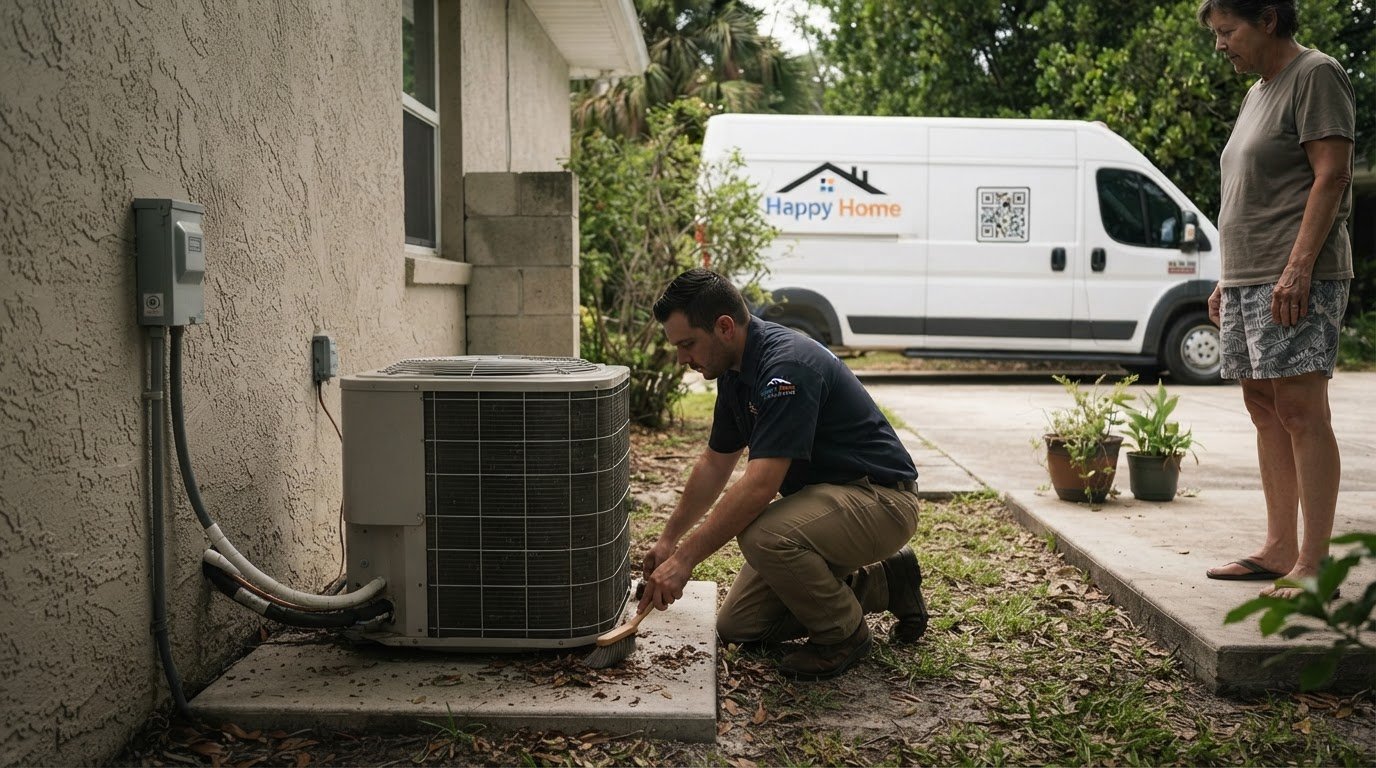
Year-round HVAC care is easier to manage when maintenance and repairs follow a clear process. Happy Home 365 coordinates those service needs, explains what appears on invoices, and helps you understand how the service timeline unfolds in Orlando.
It’s reasonable to want more than a repair visit: you also want to know what work is included, how maintenance fits in, and what to expect as service moves forward. Clear communication can make decisions easier and help you plan for work in your home.
This article explains how maintenance and repair coordination works, what invoice transparency means, and how scheduling and service steps fit together. You’ll also learn what to expect from a year-round care program and how Happy Home HVAC Solutions can support your home’s heating and cooling needs through maintenance, AC repair, and other HVAC services.
Key Takeaways
- Understand how maintenance coordination and repair invoices can make service steps and charges easier to follow.
- See which routine home maintenance services the program includes and how they fit into year-round care.
- Learn what determines maintenance visit timing and what to expect from the scheduling process.
- Get a clearer picture of eligibility and exclusions before deciding whether the program suits your home.
- Find out how member repair benefits can help you plan for heating and cooling needs.
Maintenance coordination and repair invoice transparency
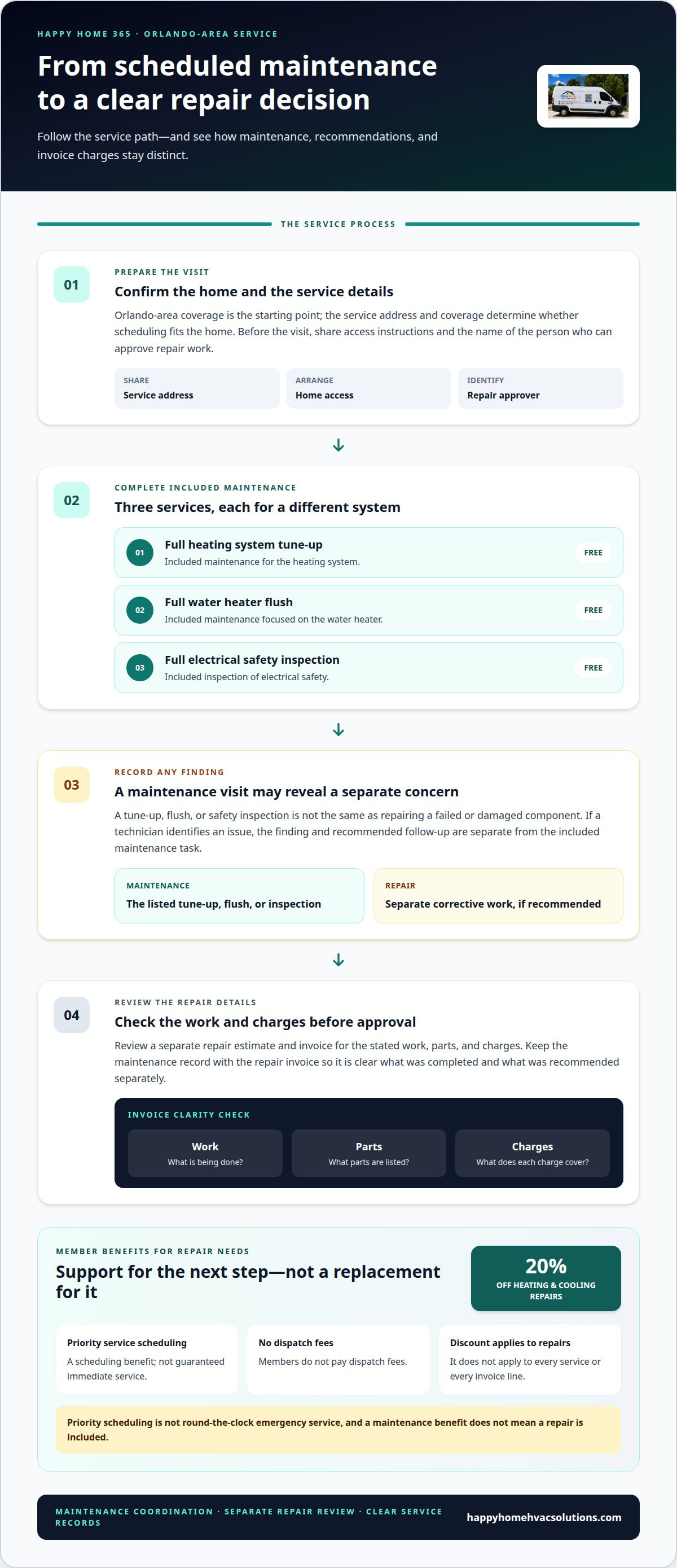
A clear service process separates scheduled maintenance from repair decisions. Members can also review how coordination, invoices, and scheduling affect a visit.
Included Maintenance Services
The plan includes a full heating system tune-up and a full water heater flush. These tasks address different systems, so note which equipment needs attention when arranging service. A heating tune-up is not the same as repairing a failed component. Likewise, a water heater flush is maintenance, not a promise that every repair is covered.
Service Exclusions and Limitations
Membership benefits have limits: a maintenance visit and a repair are distinct services. A technician may identify a concern during maintenance, but that finding does not make corrective work part of the tune-up. Review the proposed repair and its invoice separately before authorizing work. Priority scheduling also doesn't mean round-the-clock emergency service or guaranteed immediate repairs.
Members receive 20% off heating and cooling repairs, plus priority service scheduling. Those benefits can help when a repair is needed, but the discount applies to repairs, not every service or invoice line. Priority affects scheduling; it shouldn't be read as emergency coverage. For a repair estimate, review the stated work, parts, and charges before approving it.
Maintenance coordination should make the next step clear: identify the system, schedule the relevant service, then review any separate repair recommendation. Members don't pay dispatch fees, and maintenance coordination fees or hidden maintenance markups aren't charged. This distinction helps explain an invoice: a scheduled maintenance task differs from a repair performed after a separate finding. Ask for the purpose of each charge before authorizing additional work.
Lease coordination and move-in planning require clear communication among the resident, property owner, and service team. Before a scheduled visit, share the service address, access instructions, and the name of the person approving repair work. For example, a new tenant can coordinate access with the property manager, while the owner handles repair approval. Membership doesn’t replace lease terms or property access arrangements.
For the service-area question, Orlando-area coverage is the relevant starting point, not an assumption of statewide availability. The Orlando service area page identifies the local service context. The address and service coverage determine whether scheduling fits the home.
Distinguish routine care from repairs, and maintenance from emergency response. A tune-up may reveal a problem that needs separate work, while a plan benefit doesn’t mean that repair is included. Keep the maintenance record and invoice together to track completed service and understand later recommendations.
Which home maintenance services are included in Happy Home 365?
The membership includes specific maintenance services for heating, water heating, and electrical safety. Knowing what each visit covers helps you distinguish routine maintenance from separate repair work. Happy Home HVAC Solutions brings these different tasks together, but each still focuses on its own system. A heating tune-up, water heater flush, and electrical safety inspection aren’t interchangeable services.
Members receive a free full heating system tune-up. This service is maintenance for heating equipment, not a repair to every component that may need attention. If a technician identifies a separate issue, the recommended work is distinct from the tune-up. For example, a tune-up can be completed while a repair need is recorded separately. That distinction helps you review the service record and decide what to address next.
A free full water heater flush is also included. It focuses on the water heater, while a repair addresses a fault or damaged component. A flush and repair recommendation could arise during the same visit, but they describe different work. Keep the service summary with any related invoice. This makes it easier to tell which maintenance task was performed and which additional work was discussed.
The program also includes a free full electrical safety inspection. An inspection reviews electrical safety; it isn’t the same as electrical repair or installation. If the inspection identifies a concern, the finding and any recommended follow-up are separate from the inspection itself. This difference matters when reviewing the visit record or considering what work to authorize.
These services address different systems, so consider what your household uses. A home with a heating system may benefit from its tune-up. A household with a water heater can use the flush. The electrical safety inspection covers another area. Happy Home 365 combines these distinct maintenance items, rather than one general appointment covering every repair or system in the home.
To keep service records clear, note which system received attention during each visit. Retain the service summary with any later repair invoice. This creates a useful history of the system serviced, the maintenance completed, and any separate recommendation. It can also help household members or property managers understand what work has already taken place.
For a closer look at the maintenance offering, review the HVAC maintenance details. Match the included heating, water heater, and electrical services to the systems in your home. That gives you a practical way to understand the program’s scope and distinguish included maintenance from additional work.
You can easily apply these services to the systems you want reviewed, and keep the appointment record for reference. Happy Home HVAC Solutions members receive a free full water heater flush. Because a flush is maintenance rather than a promise to repair every water heater fault, check the visit summary to see what was completed and whether any separate work was recommended. The same distinction applies across the membership: an included service describes a maintenance task, while a repair or installation is different work. Clear records help you understand the scope of a visit and avoid treating an inspection or tune-up as a repair.
How often are Happy Home 365 maintenance visits scheduled?
The included services identify which systems receive maintenance, but they don’t establish one interval for every task. A heating tune-up, water heater flush, and electrical safety inspection address different equipment. Plan appointments around the specific service rather than assuming all tasks happen together.
Start with the system each appointment concerns. A heating tune-up focuses on heating equipment. A water heater flush focuses on the water heater. The electrical safety inspection covers a different part of the home. Since these tasks differ, schedule each appointment for its specific service.
Use a simple record to organize upcoming visits:
- Note whether the service concerns heating, the water heater, or electrical safety.
- Record the completed task and its appointment date.
- Use that record when planning the next visit for that system.
Records can help when residents or owners change. For example, a new homeowner can review whether the heating system received a tune-up. A property manager can track a water heater flush separately. This history helps distinguish completed maintenance from a repair recommendation made during another visit.
Household logistics also shape appointment planning. A tenant may need to arrange entry, while a property owner handles repair approvals. In an owner-occupied home, one person may coordinate both. Happy Home 365 covers distinct service tasks, so organizing access and approvals around each appointment can keep the process clear.
Seasonal planning can provide a convenient reminder without creating a fixed schedule. A homeowner might consider heating maintenance before using the system more often, then track water heater and electrical inspection visits separately. That’s a planning example, not a set appointment interval. Happy Home 365 should be scheduled around the service involved and the home’s records.
Keep maintenance summaries with related invoices. If a visit identifies a repair need, record it separately from the maintenance performed. That keeps the service history useful and makes outstanding work easier to identify. A maintenance visit doesn’t mean every system in the home was inspected.
Plan each appointment around its task, equipment history, and access needs. Don’t infer a yearly or seasonal interval from the plan name or its included services. Keeping separate records for heating, water heating, and electrical safety gives you a clearer basis for organizing future maintenance.
Which homes or customers are eligible for Happy Home 365?
Start by considering the home’s systems, service address, and maintenance needs. Happy Home 365 includes maintenance tasks for heating, water heating, and electrical safety. A household with relevant equipment can decide whether those services fit its priorities. The service address also matters because appointments are arranged within the company’s local coverage area.
Homeowners and property managers may both need to coordinate service details. In a rental, the tenant may arrange access while the owner or manager approves additional repair work. In an owner-occupied home, one person may manage both steps. Agreeing on access and approval beforehand helps prevent confusion during a scheduled visit.
Consider which systems the property has. A home with heating equipment can make use of the heating maintenance visit. A home with a water heater may benefit from its separate maintenance task. The electrical safety inspection addresses another part of the property. Happy Home 365 brings these services together, but each applies to its own system.
For a rental property, organize these details before scheduling:
- Identify the service address and the person who can provide access.
- Decide who can approve separate repair work if needed.
- Share relevant equipment details, including heating and water heating systems.
These arrangements clarify service logistics; they don’t replace the plan’s terms. A tenant might report a concern, while the owner makes decisions about repair work. Keeping responsibilities clear helps maintain accurate property records and gives everyone a shared understanding of the scheduled work and who authorized any follow-up.
Households should consider how long they expect to remain at the property. A move may require transferring maintenance records to a new owner or coordinating access with incoming residents. A manager overseeing multiple addresses should keep each property’s records separate. One home’s service history doesn’t establish another home’s maintenance needs.
Compare the plan’s purpose with the property’s needs. The included tasks address specific systems, rather than every repair or general home project. For example, a household seeking routine attention for its heating system may find the tune-up relevant, while a property needing unrelated work has different needs. Consider the address, equipment, access plan, and approval process when organizing service.
What services are excluded from Happy Home 365
The included maintenance tasks have a defined scope. A heating tune-up, water heater flush, and electrical safety inspection are maintenance services. They don’t mean every repair or home service is included. Separating routine care from corrective work helps clarify what the plan covers.
A repair is different from a maintenance task. If a visit identifies a heating or cooling problem, the repair remains separate work. Members receive 20% off heating and cooling repairs, but that discount doesn’t make the repair part of the included maintenance visit. Review the recommendation and invoice as separate items before approving additional work.
The electrical safety inspection also has a specific purpose. It isn’t an electrical repair or installation. Members receive 10% off electrical repairs and installations, but those services aren’t the same as the included inspection. The inspection can identify a concern; the corrective work is a separate decision and charge.
Priority scheduling is a membership benefit, not emergency coverage. It doesn’t establish 24/7 emergency service or promise an immediate appointment. A homeowner with an urgent system failure should understand that priority scheduling and emergency response are different service expectations. The company doesn’t offer 24/7 emergency service.
Also distinguish a maintenance visit from unrelated home projects. A heating tune-up doesn’t include insulation work, and a water heater flush isn’t general plumbing service. The plan’s listed tasks aren’t a blanket home-repair plan. For example, a household needing insulation work should arrange that separately from its heating maintenance.
Before accepting recommended work, use this simple review:
- Identify the included maintenance task completed during the visit.
- Separate any repair or installation recommendation from that task.
- Review the applicable discount and the invoice line for additional work.
This distinction also matters for property managers and tenants. A scheduled inspection may identify work that needs owner approval. Keep the inspection summary, repair recommendation, and approval record together. That creates a clear account of what maintenance covered and what additional service addressed.
For planning, treat the program as maintenance plus specified member benefits, not unlimited repairs. Review the maintenance program details to understand the stated scope before arranging service.
Happy Home HVAC Solutions
Happy Home HVAC Solutions can help turn maintenance findings into clear next steps for your home. If an inspection points to a heating issue, the team provides heating and furnace services; if cooling equipment needs attention, AC repair is available. AC installation and insulation services can address broader comfort needs when they’re the right fit.
Share which system was serviced and what the maintenance record says. That context helps clarify whether you’re discussing routine care, a repair recommendation, or a larger project. Review the proposed work and invoice details so you understand what each service covers before moving forward.
For help understanding your HVAC needs or planning the next service step, contact Happy Home HVAC Solutions.
Make Your Next HVAC Step Count
Good home care starts with a plan that fits the way you use your space. Consider which comfort concerns matter most, who should coordinate service, and how you want to keep future decisions organized. That gives you a practical starting point when you’re weighing Happy Home 365 against handling each maintenance need separately.
A maintenance program is most useful when its scope matches your priorities. Think about the systems you want to keep in view and the kind of service process that helps you make informed choices. Clear expectations can make it easier to decide what belongs in your household’s ongoing care plan.
Happy Home HVAC Solutions can help you discuss the right next step for your home. Contact Happy Home HVAC Solutions to talk through your HVAC needs and move forward with a clear plan for comfort.
Frequently Asked Questions
What is the Happy Home 365 maintenance program?
Happy Home 365 is an annual home maintenance plan for participating customers. Along with scheduled maintenance, it offers member benefits for eligible repair work and service scheduling. For example, a homeowner can use the plan to organize ongoing care and keep service records together. The program is separate from a repair or installation project, so consider your home’s maintenance needs when deciding whether it fits.
How much does Happy Home 365 cost, and what payment options are available?
The annual plan cost is separate from any repair or installation work. Payment methods are handled during enrollment; contact Happy Home HVAC Solutions for details before signing up. If you’re budgeting for additional HVAC work, treat that separately from the annual membership price and review any repair recommendation before authorizing it.