
Furnace Inspection in Lake Mary: Report Timing and Validity
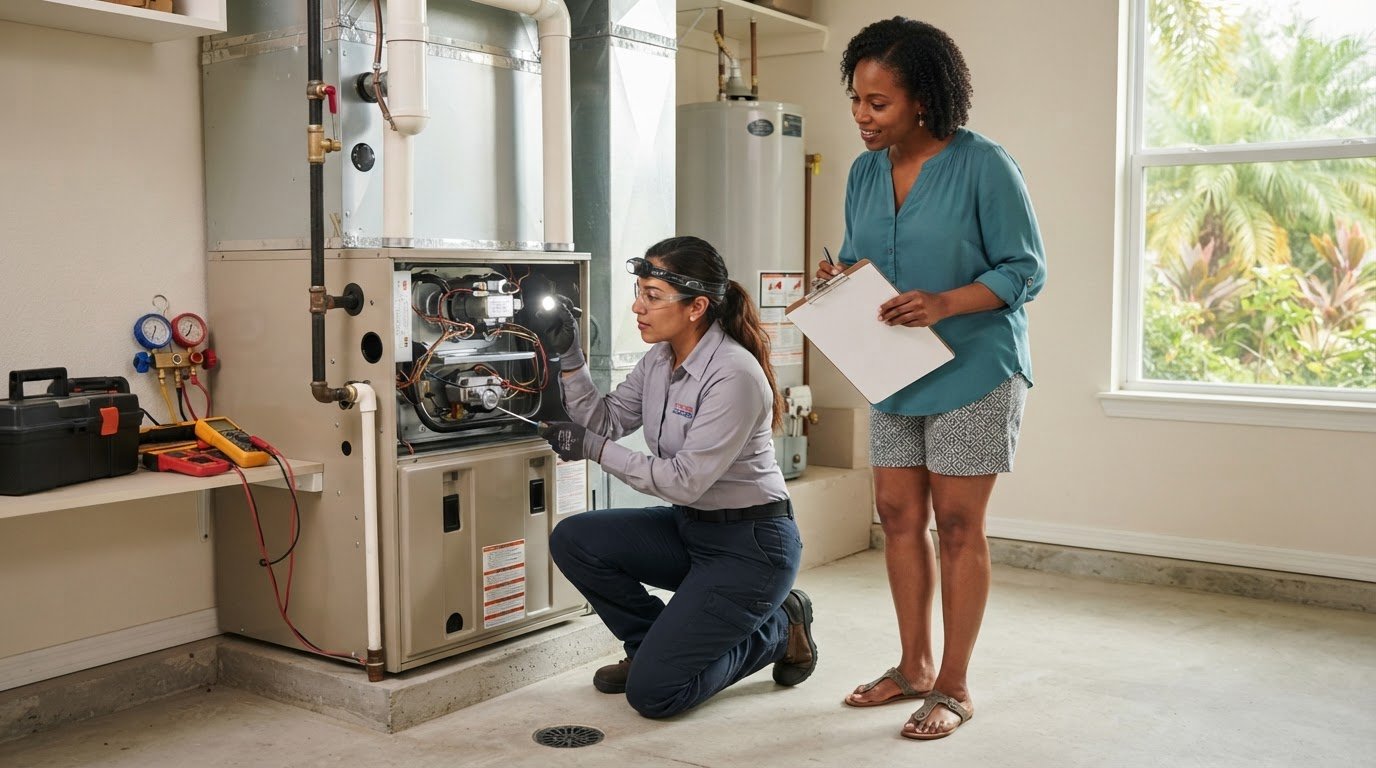
A furnace inspection report and an insurance inspection report aren’t interchangeable. When scheduling a comprehensive system evaluation, report timing depends on the inspection and the documentation it requires; a Florida 4-point report is a separate form that must be dated within 12 months of a new-business insurance application. According to the U.S. Consumer Product Safety Commission, a qualified heating contractor should inspect a home heating system annually.
It’s reasonable to want a clear record of your system’s condition without wondering whether it will meet an insurance deadline. Knowing which inspection you need helps set expectations: a standard service report documents furnace findings, while a 4-point form evaluates the home’s roof, electrical, plumbing, and HVAC systems.
This guide explains what a heating check covers, what can affect report timing, and how the 12-month validity period applies to a 4-point inspection for a new insurance application. You’ll also learn what to expect from Happy Home HVAC Solutions and our professional heating services, so you can plan the next step with greater peace of mind.
Key Takeaways
- Understand what a furnace service report documents and why it isn’t a substitute for a Florida 4-point inspection form.
- Learn what can affect when inspection findings are ready, so you can plan around your home and documentation needs.
- Keep insurance paperwork current: a 4-point report for a new-business application must be dated within 12 months of the application.
- Use annual heating-system inspections to identify performance concerns and help keep your home comfortable.
- Explore how heating and furnace services can address inspection findings, maintenance needs, and repair concerns.
Heating and cooling service in Lake Mary
In Florida, heating and cooling equipment may share components, so a furnace inspection in Lake Mary can help identify faults affecting comfort across the home. The U.S. Consumer Product Safety Commission recommends having a qualified heating contractor inspect the home heating system annually.
Furnace Faults and Uneven Heating
Uneven warmth can point to a furnace fault, restricted airflow, or a problem distributing heat. Compare rooms: if one bedroom stays cool while nearby spaces warm normally, note when the difference occurs and whether airflow feels weak at the vent. A dirty filter can reduce heating performance and increase energy bills. Record unusual noises or smells, and note when the system stops or restarts. These details can help identify which components need attention.
Check whether the filter looks clogged or has visible dust. Replacing it with the correct size may restore airflow, but persistent cold spots still warrant a system evaluation.
Heating and Air System Evaluation
An evaluation considers how the heating and cooling equipment work together, including the thermostat, airflow, accessible components, and reported comfort concerns. In a home with a heat pump, the same system provides heating and cooling, so explain whether symptoms occur in one mode or both. An AC system’s refrigerant circuit serves cooling; it does not replace an assessment of heat delivery. Ask for findings that distinguish an equipment fault from airflow or control issues.
For local context, homeowners can view the Lake Mary service area while considering their home’s heating and cooling needs.
Inspection, Tune-Up, and Maintenance Differences
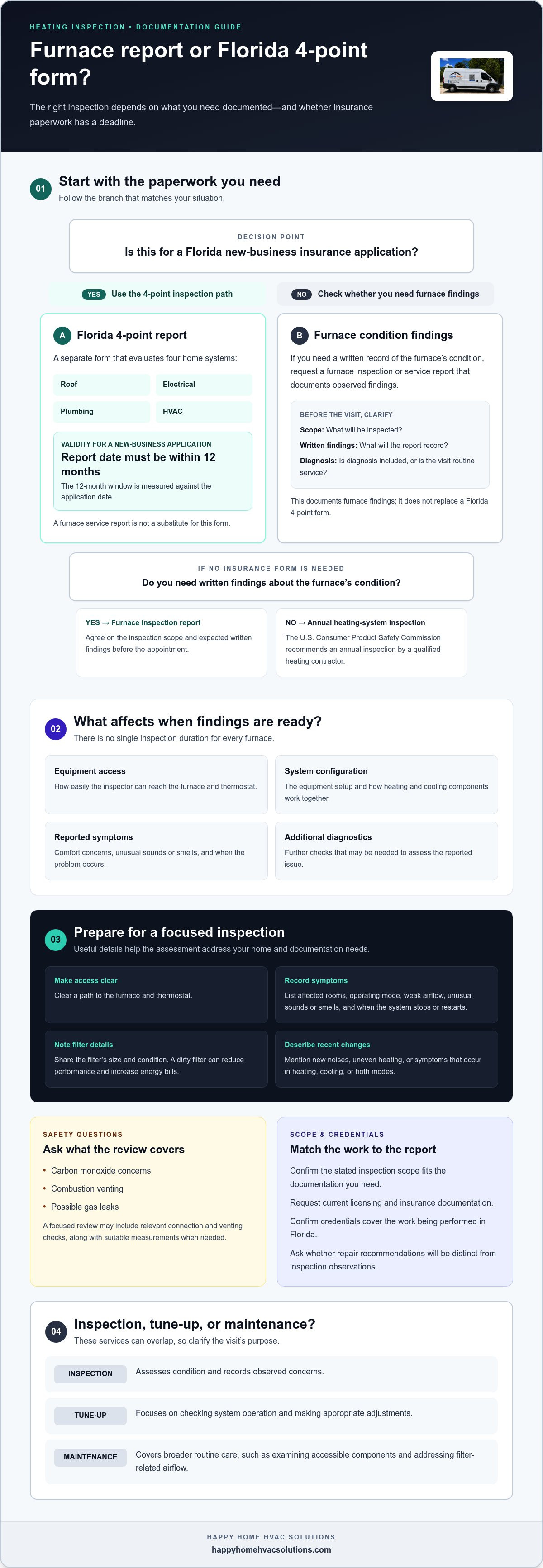
An inspection assesses condition and records observed concerns; a tune-up focuses on checking system operation and making appropriate adjustments. A maintenance visit is broader, covering routine care such as examining accessible components and addressing filter-related airflow. The terms can overlap, so agree on the visit’s scope and expected written findings. Ask whether the work includes diagnosis or routine service, and whether repair recommendations will be separated from inspection observations.
These distinctions matter when you need documentation rather than a repair. A maintenance visit can identify issues, but the report’s usefulness depends on what it records.
Inspection Timing and Preparation
No single inspection duration applies to every furnace. Access to the equipment, system configuration, reported symptoms, and any additional diagnostic steps affect how long a visit takes. Before the appointment, clear a path to the furnace and thermostat, and note the filter’s size and condition. List symptoms by room and operating mode, and share recent changes, such as a new noise or uneven heating, to help focus the assessment.
For safety, ask how the inspection addresses carbon monoxide concerns, combustion venting, and possible gas leaks. A focused review can include checking relevant connections and venting, along with suitable measurements when needed. To find a licensed and insured inspector, request current documentation and confirm that the credentials cover the work being performed in Florida. Compare the stated inspection scope with your need for a furnace condition report.
Furnace installation, maintenance, and repair
In Florida homes, heating equipment may run less often than cooling equipment, but it still needs attention. Humidity, dust, and limited use can affect filters, electrical connections, and other components. The U.S. Consumer Product Safety Commission recommends that a qualified heating contractor inspect a home heating system annually. A visit can reveal developing concerns before cool weather makes reliable heat more important.
For an existing furnace, describe the symptoms before deciding whether the system needs maintenance or repair. Repeated cycling, inconsistent warmth, or a new sound calls for a closer assessment. Note when the problem occurs and whether it affects the whole home or specific rooms. These observations help distinguish routine upkeep from a fault that needs diagnosis and repair.
Installation decisions should start with the property, not simply the old unit’s size. Room layout, insulation, air leakage, and existing ductwork affect how heated air reaches living spaces. Ask how the proposed equipment matches the home’s heating needs and connects to existing components. Clear operating instructions after installation help homeowners understand thermostat settings and routine filter care.
A heat pump provides both heating and cooling in one system. Its outdoor equipment and indoor components work together, so an evaluation should consider airflow and performance in both modes. In Florida, an AC system may do much of the year-round work, while a heat pump provides heat when needed. If comfort changes between modes, note the conditions and share them during service.
Maintenance can also support indoor air quality by addressing the filter and airflow path. A dirty heating-system filter can reduce performance and increase energy bills. Check the filter regularly, follow its replacement guidance, and use the correct size. If a new filter does not resolve weak airflow, the cause may involve ductwork, the blower, or another component. Do not assume every airflow concern is a filter problem.
- Before installation, identify rooms with poor airflow and discuss insulation or duct concerns.
- For repair, list symptoms, sounds, and the operating mode when they occur.
- During maintenance, ask which components were inspected and what needs follow-up.
These steps make service more focused and keep the work tied to the property’s actual needs. For a practical starting point, explore home system maintenance and note which concerns apply to your equipment.
The U.S. Consumer Product Safety Commission says furnaces should be serviced at least annually. Preventive AC maintenance can identify minor issues before they escalate and check that system parts are working properly.
Professional heater diagnosis and repair
A useful diagnosis connects a symptom to its cause before repairs begin. For example, a thermostat reading that differs from the room’s actual comfort may point to a control issue, while weak airflow can involve a filter, blower, or duct. Describe what the system does, when the problem starts, and which rooms are affected. A technician can then test relevant components instead of treating every symptom as the same fault.
Diagnosis generally moves from observation to testing, then to repair options. The technician reviews the reported problem, examines the equipment, and tests components related to the symptoms. If a furnace shuts off before warming the home, the assessment should determine whether controls, airflow, or another component is involved. A clear explanation separates the diagnosed fault from any additional damage and describes what each proposed repair addresses.
The cost of AC diagnosis and repair depends on the issue and the work required. Key factors include the fault, diagnostic work, parts, accessibility, and whether repair or replacement is appropriate. A thermostat issue and a damaged component can involve different work, so a useful estimate identifies the recommended task and its scope. Ask for the diagnosis and proposed work in writing before authorizing repairs.
Whether a repair can be completed the same day depends on more than the symptom. Appointment availability, diagnostic time, equipment access, and parts requirements all affect whether repairs can be finished during the initial visit. A straightforward thermostat correction differs from a repair requiring a specific component. If further testing or a part is needed, completion depends on that additional work. The service record should distinguish completed repairs from outstanding recommendations.
Before work starts, note the system’s make and model if available, thermostat settings, and the conditions that trigger the problem. Clear access to the indoor equipment and outdoor unit helps the technician examine the system. After diagnosis, compare the repair recommendation with the identified fault, proposed work, and any replacement option. If replacement is recommended, ask why repair is not the advised path; equipment age alone is not a diagnosis.
- Record the symptom and the conditions when it appears.
- Request a written explanation of the fault and proposed repairs.
- Keep the service report showing which work was completed.
Water heater diagnosis may also involve comparing equipment types and efficiency. High-efficiency water heaters can reduce water heating costs by 20-50% compared with older units. Traditional tank water heaters in Lake Mary homes typically hold a capacity range bounded by 40 and 80 gallons of heated water. Tankless water heater installations in Florida have increased by approximately 7% annually, while hybrid heat pump water heaters can reduce energy consumption by up to 60% compared with standard electric models.
When evaluating a water heater, consider its type and applicable efficiency information alongside the diagnosed fault. Modern water heaters must meet federal efficiency standards implemented in 2015. For maintenance, water heater anode rods should be inspected every 2-3 years. These details can help frame a discussion of repair or replacement options, while the technician’s assessment should identify the specific problem and work required.
Inspection report validity period
A report’s validity depends on its purpose, not simply on the word “inspection.” For a new-business insurance application, a Florida 4-point inspection report must be dated within 12 months of the application. That deadline applies to the 4-point report, not automatically to every furnace service record. Homeowners in Central Florida should identify which document their application needs before scheduling an inspection.
A 4-point inspection evaluates four areas: the roof, electrical system, plumbing, and HVAC system. Its form is different from a furnace inspection record, which describes the heating equipment and the service performed. A furnace report may help document equipment condition, but it doesn’t replace the Florida 4-point form. Keep the report type clear when organizing indoor system records and insurance paperwork.
The Florida 4-point form must be completed and signed by a Florida-licensed 4-point inspector. An HVAC technician’s service report does not replace that form, even if it includes heating-system findings. This distinction matters when a homeowner has scheduled furnace service but needs insurance documentation. Check the document title, inspection date, and signature before treating paperwork as a completed 4-point report.
A report is also a record of the home’s condition at a particular time, not a permanent guarantee. A furnace can develop a new fault after a service visit, and the report reflects findings from the inspection date. If the system changes or develops symptoms, keep the newer service record with earlier documents. This timeline gives homeowners a clearer picture of what was observed and when.
- Match the report type to the purpose: furnace service documentation or a 4-point inspection.
- For a new-business application, compare the 4-point report date with the application date and the 12-month window.
- Keep signed forms and HVAC service records in separate, clearly labeled files.
For services in Lake Mary, ask for documentation that identifies the work performed and the system reviewed. If insurance paperwork is the goal, confirm that the completed form is the Florida 4-point inspection form, rather than assuming a furnace service report will serve the same purpose. A contractor’s license and insurance relate to the service provider; the required 4-point form still needs the proper inspector’s signature.
These distinctions help prevent a simple paperwork mismatch. A furnace inspection in Lake Mary can document heating equipment, while the 4-point report addresses four home systems and has a defined date window for a new-business application. Keep both records when they serve different needs, and use each document for its stated purpose.
How often should homeowners schedule a furnace inspection?
Schedule a professional furnace inspection annually. The U.S. Consumer Product Safety Commission recommends that a qualified heating contractor inspect a home heating system every year. In Lake Mary, an annual appointment gives homeowners a regular opportunity to discuss system performance, visible concerns, and changes since the previous visit. Keep the service record so each inspection builds on the last.
Choose a consistent time in your household’s routine, such as before you begin using the furnace regularly. This makes it easier to notice changes from one heating season to the next. If your home has a heat pump, include concerns about both heating and cooling. A technician can use those observations to focus the inspection on the equipment and symptoms you have actually experienced.
Do not wait for the next scheduled visit if the furnace develops a new problem. A sudden change in sound, repeated shutdowns, weak airflow, or rooms that no longer warm as expected are good reasons to arrange an assessment sooner. Note when the issue occurs and whether it affects one room or the whole home. These details help distinguish a new fault from routine seasonal upkeep.
Between annual visits, monitor the filter and note changes in comfort. A dirty filter can reduce heating performance and increase energy bills. Check it as part of regular household care, and use the correct replacement size. If airflow remains weak after you change the filter, record that observation rather than assuming the filter was the only cause.
- Keep the date and findings from each annual inspection together.
- Write down unusual sounds, shutdowns, or uneven warmth as they happen.
- Track filter changes and note whether airflow or comfort changes afterward.
These simple records give the inspection a useful timeline. For example, note whether a room became cooler after a filter change or a sound began after the system sat unused. Share the timeline at the appointment, along with any recent repair notes. Clear details help the heating contractor evaluate current performance and explain which observations need attention.
An annual schedule is a baseline, not a reason to ignore a developing concern. An inspection report also records conditions at the time of service, while new symptoms can arise afterward. Keep maintenance notes separate from insurance forms, since each document serves a different purpose. To plan routine care, schedule a maintenance visit and have your system’s current symptoms ready to discuss.
Happy Home HVAC Solutions: AC Repair
Happy Home HVAC Solutions helps homeowners address heating and cooling concerns through Heating & Furnace Services and AC Repair. Turn to the team when an inspection identifies a furnace issue, heating performance changes, or an AC system needs diagnosis. If comfort problems relate to heat loss, Insulation Services may also help. These services connect inspection findings with practical next steps for heating equipment, cooling, and indoor comfort.
Share the symptoms you’ve noticed and any inspection or service notes, so the issue has useful context from the start. Contact Happy Home HVAC Solutions to discuss your home’s heating or cooling needs, or visit the company online.
Plan the next step for your home
Use your inspection findings to decide what needs attention first. If the report points to a heating concern, discuss the system and the work it may need. A furnace inspection in Lake Mary can be a starting point for planning; the next step depends on the documented issue and your home’s comfort needs.
Happy Home HVAC Solutions provides Heating & Furnace Services for heating concerns, along with AC Repair and AC Installation for cooling systems. Considering these needs together can help you plan care for your home rather than treating each comfort issue in isolation.
Bring your inspection report and notes about any symptoms to the conversation. Contact Happy Home HVAC Solutions to discuss the right next step for your home, and move forward with a clearer plan for comfortable indoor living.
Frequently Asked Questions
How soon will I get my inspection report?
Report timing follows the inspection scope and the documentation required. A straightforward equipment review involves recording the findings, while added diagnostics or insurance paperwork require additional documentation steps. Before the visit, clarify whether you need a furnace service report or a Florida 4-point form, then agree on when the completed document will be delivered. This helps you plan around application deadlines and keep the correct paperwork together.
What does a furnace inspection in Lake Mary, FL include?
A furnace inspection reviews the heating equipment’s condition, operation, thermostat response, airflow, filter, and relevant components. The technician records observed concerns and explains which findings relate to the reported symptom. For example, if a thermostat calls for heat but the home stays cool, share that detail so the controls and heating operation receive focused attention. A furnace service report documents equipment findings; it is distinct from a Florida 4-point inspection form.
What are signs a furnace needs an inspection or repair?
Arrange an inspection if the furnace will not start, shuts off unexpectedly, makes a new noise, or leaves some rooms noticeably colder than others. A thermostat set to heat with no response is another useful symptom to report. Note where and when the issue occurs, whether it repeats, and whether changing the thermostat affects it. These details help distinguish a control concern from an airflow or equipment problem.