
Electric Heat Strip Repair in Orlando With Written Estimates
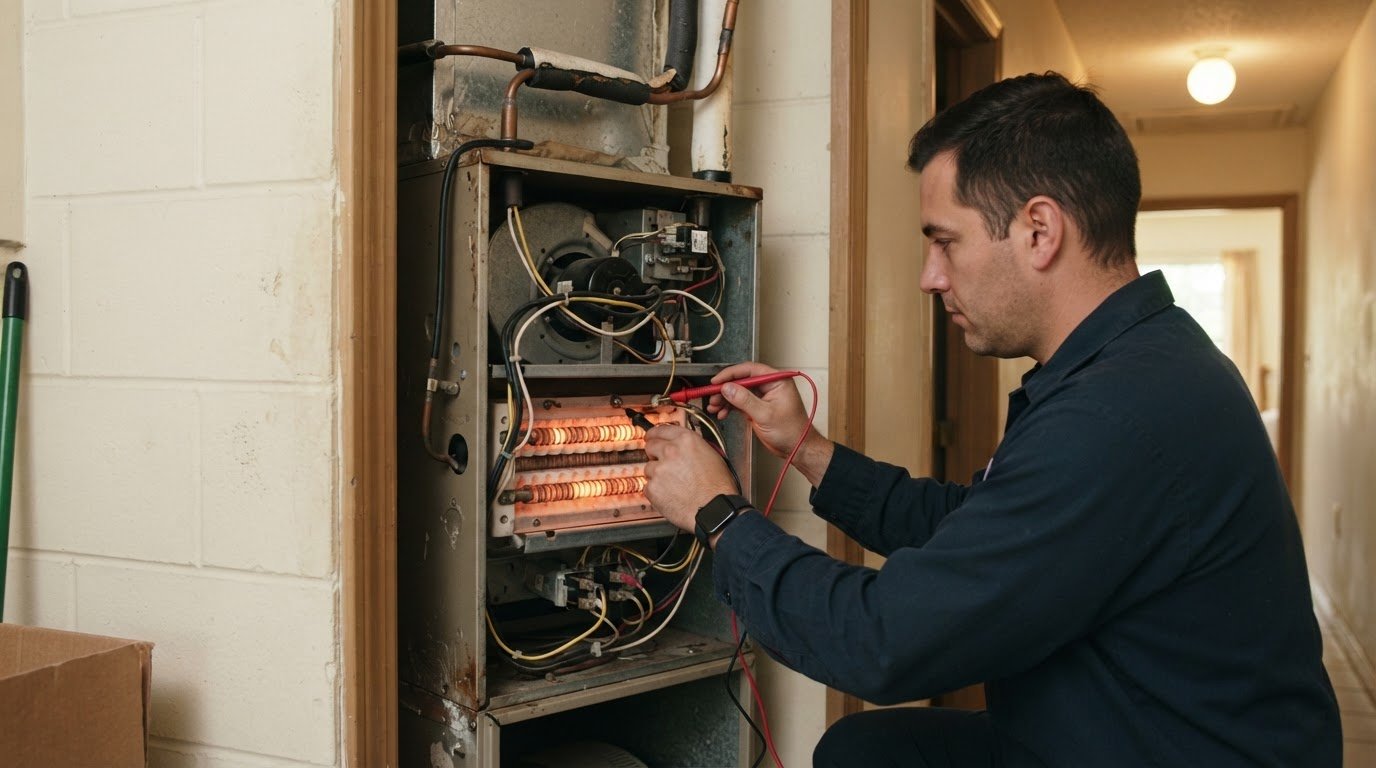
An AUX light doesn’t prove that your heat strips have failed. Electric heat strip repair in Orlando starts with testing the backup heat and related controls to find the actual cause of the problem. How soon the system can be repaired depends on what the diagnosis finds and whether the fault involves the strips, wiring, controls, or another heat-pump component.
It’s understandable to want a clear arrival and repair timeline when your home isn’t warming up. This article explains common heat-pump and auxiliary-heat symptoms, what a thorough diagnosis can involve, and how written estimates and diagnostic fees fit into the service process. You’ll also learn what information helps clarify the recommended repair, so you can make the next decision with a better understanding of what’s happening.
Key Takeaways
- Notice whether the problem occurs in regular heat-pump operation or when Emergency Heat is selected; that distinction can help narrow the diagnostic path.
- Furnace and heat-pump symptoms can look similar, so diagnosis should account for the type of system installed.
- Heat strip testing can help identify whether the fault lies with the heating elements, electrical supply, or controls.
- A written estimate helps clarify the recommended repair and its cost factors before you decide how to proceed.
- Learn what a diagnostic fee covers and how the findings guide the next repair decision.
Heat pump and auxiliary heat troubleshooting
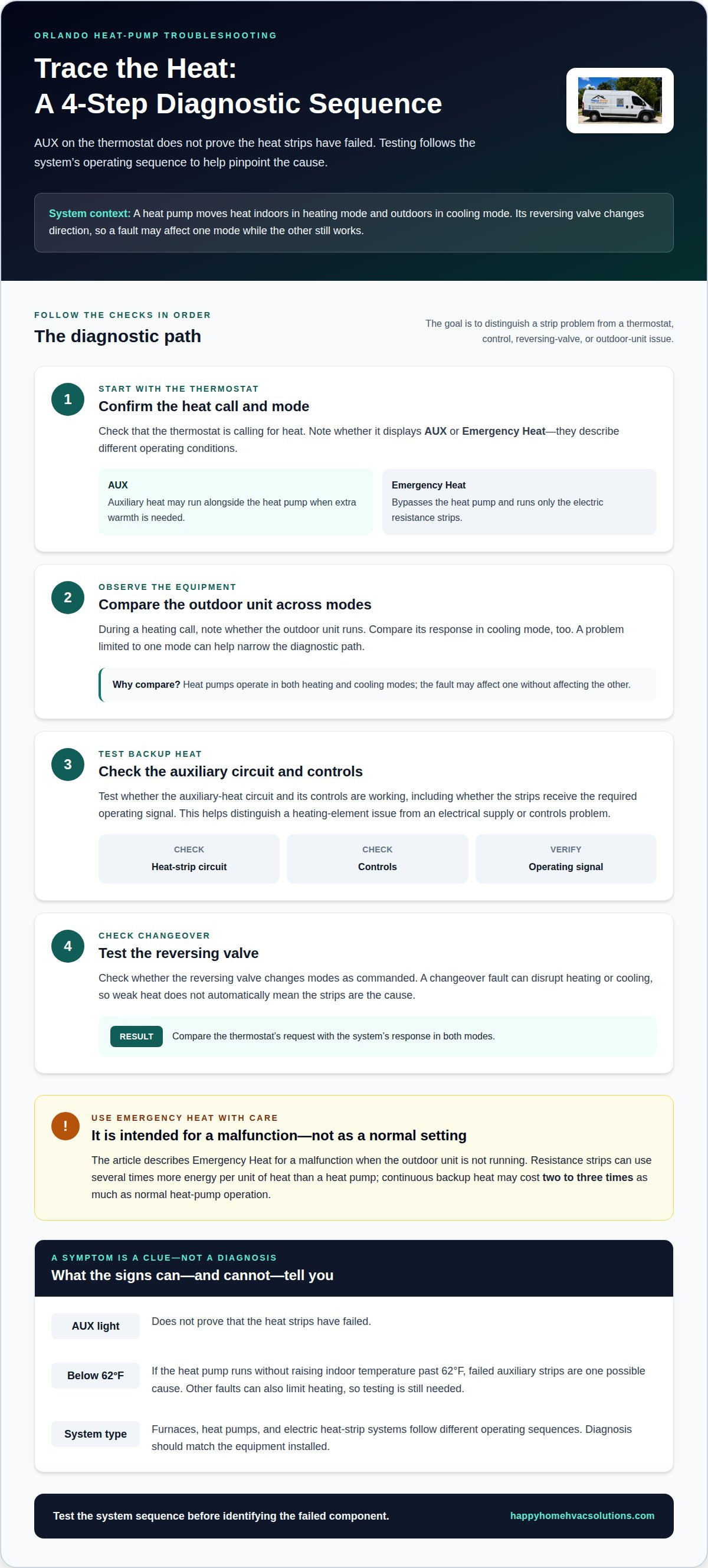
A heat pump moves heat indoors during heating and outdoors during cooling. The reversing valve changes the direction of that process, so a fault can affect one mode while the other still works. In Orlando, a cold front can bring temperatures into the 40s, making weak heating more noticeable even when the system runs.
An AUX light alone doesn’t prove that electric heat strips have failed. Auxiliary heat may run alongside the heat pump when extra warmth is needed, while Emergency Heat bypasses the heat pump and runs only the electric resistance strips. Emergency Heat is intended for a malfunction when the outdoor unit isn’t running, not as a normal setting. Resistance strips can use several times more energy per unit of heat than a heat pump.
During diagnosis, a technician can distinguish a strip problem from an issue with the thermostat, controls, reversing valve, or outdoor unit. The checks follow the system’s operating sequence:
- Confirm the thermostat is calling for heating and note whether it shows AUX or Emergency Heat.
- Observe whether the outdoor unit runs during a heating call, then compare its response in cooling mode.
- Test the auxiliary heat circuit and its controls to identify whether the strips receive the required operating signal.
- Check whether the reversing valve changes modes as commanded, since a changeover fault can disrupt heating or cooling.
A heat pump that runs without raising the indoor temperature past 62°F may have failed auxiliary strip heat. That symptom still needs testing, because other faults can also limit heating. If the system stays in Emergency Heat, electricity use can rise sharply; continuous backup heat may cost two to three times as much as normal heat-pump operation.
Heat pumps in Central Florida run in heating and cooling modes throughout the year, accumulating roughly twice the runtime of cooling-only systems. Seasonal changeover testing checks that both modes respond properly. Professional service before the cooling season and before the heating season can help identify performance problems before demand changes.
Heat-pump lifespan depends on operating condition and maintenance. In Central Florida, a typical range is 10 to 15 years; well-maintained systems commonly last 12 to 15 years. For Orlando service, the Orlando service area page provides local context. Replacing or modifying heat-pump equipment requires a mechanical permit. Permit requirements for strip work follow the scope of the equipment replacement or modification.
Do you service heat pumps and furnaces?
Heating diagnostics vary by equipment: furnaces, heat pumps, and electric heat-strip systems each follow a different operating sequence. In Orlando, identifying the system and its symptoms helps narrow down the necessary checks.
Heating System Diagnostics
For a furnace, diagnostics trace the call for heat through its controls and heating components. For a heat pump, the technician checks heating operation, the outdoor unit, and the changeover between heating and cooling. Electric heat-strip checks focus on the backup heating circuit and its controls. A licensed HVAC technician can explain which component failed and how the test results support the recommended repair.
Heat Pumps Running Without Heat
A running heat pump that doesn’t warm the home needs more than a thermostat glance. Diagnostics compare the thermostat’s call with the indoor and outdoor equipment response, then check whether auxiliary heat engages when needed. If the heat pump runs but indoor temperatures don’t rise past 62°F, failed auxiliary strips are one possible cause. A reversing-valve or control fault can also disrupt heating, so testing helps distinguish among them.
Orlando heating repair can involve different equipment and symptoms, from a furnace that won’t start to heat strips that don’t warm the air. Describe what the system does: whether it runs, whether the air feels warm, and whether the thermostat displays AUX or Emergency Heat. These details help frame the diagnostic visit, but they don’t replace testing the equipment.
Coverage across Central Florida includes communities around Orlando, such as Winter Park, Ocoee, and Kissimmee. Heat-pump repair diagnostics account for the unit’s year-round heating and cooling operation. A fault may show up only during one season or changeover, so the technician evaluates the mode that isn’t working instead of assuming the entire system has failed.
- Furnace: Trace the heat call through the furnace’s controls and heating sequence.
- Heat pump: Compare the thermostat request with the unit’s response in heating mode.
- Electric heat strips: Test the auxiliary-heat circuit and its controls.
- System-wide symptoms: Consider whether the fault affects heating, cooling, or both.
Once diagnostics identify the source, the next step may be a component repair or further assessment of the heating system. Clear findings help explain why a pump repair is recommended and which symptoms it addresses. For related heating and furnace services, the work should match the equipment and the diagnosed fault.
Electric furnace and heat strip service
Electric furnace and heat-strip problems can affect comfort and airflow, but symptoms alone don’t identify the failed part. For Orlando-area homeowners, a useful service visit connects your observations with tests of the air handler, electrical controls, and heating response.
An electric furnace produces heat with resistance elements, while a heat pump may use electric strips as backup. A technician can identify which setup you have, whether the thermostat is calling for heat, and how the equipment responds. Refrigerant is part of the heat-pump circuit, not the resistance strips themselves, so a refrigerant concern points to a different part of the system.
Before service, note the thermostat setting, any AUX or Emergency Heat message, and whether the indoor fan runs. Check that supply vents aren’t blocked and that the air filter isn’t visibly clogged. Don’t remove an air-handler panel or handle wiring. If you see damage or smell something burning, turn off the system and describe the symptom when arranging service.
- Dust at startup: Dust burning off after a heater is first switched on can be normal for 30 minutes.
- Weak airflow: Record whether air reaches the rooms, even if it doesn’t feel warm.
- No heat: Note whether the indoor fan or outdoor heat-pump unit operates.
- Repeated shutdowns: Describe when the system stops, rather than repeatedly restarting it.
Service coverage in Central Florida is relevant for Orlando homeowners and nearby communities. A repair assessment should distinguish a failed heat strip from an airflow restriction, control issue, or heat-pump fault. That distinction matters because replacing a strip won’t address a separate problem elsewhere in the heating system.
After-hours problems can feel like emergencies, especially when a home has no working heat. An urgent symptom doesn’t establish whether the strips, air handler, or another component failed. Emergency service hours and arrival times shouldn’t be assumed; the service arrangement determines when a technician can attend. A written diagnosis can still clarify what failed and which repair addresses it.
For a clearer assessment, share the equipment type, thermostat display, and changes you’ve noticed. For example, reporting that the fan runs but the air stays cool gives the technician a useful starting point. Keep clear of electrical components; testing and repair require access to the system’s internal circuits.
Written repair estimates and diagnostic fees
A diagnostic visit identifies why the heating system isn’t keeping your home comfortable. The written estimate connects the test findings to the proposed repair, replacement part, and related work. Diagnosis and repair are separate parts of the service, so review the estimate to understand the proposed work before approving it.
Common signs of faulty electric heat strips include weak heat, cool air during a heating call, or auxiliary heat that doesn’t warm the home. A thermostat showing AUX is useful information, but it doesn’t prove the strips have failed. Testing the auxiliary circuit helps distinguish a strip problem from a control, wiring, or airflow issue.
Heat strips can stop working because of a failed element, electrical connection, or control component. A breaker that trips may indicate an electrical fault or overloaded circuit, so repeated trips call for diagnosis rather than repeated resets. A technician can inspect the circuit and identify the cause before recommending a repair.
A clear estimate should describe the diagnosed problem and the proposed work. For example, it might distinguish thermostat replacement from heat-strip repair instead of grouping both under a vague “heating issue.” It should also identify relevant parts and explain whether the recommended work addresses the original symptom.
The price depends on the diagnosed fault and is provided after a quote request; cost factors include the failed component, parts required, and repair scope. Ask for the diagnostic fee and repair estimate to be shown distinctly, so you can understand which charge covers evaluation and which covers the approved work.
Thermostat diagnostics compare the temperature setting and call for heat with the system’s response. If the thermostat signals correctly but the heating system doesn’t respond, the fault may lie elsewhere. Replacement makes sense when testing shows the thermostat itself isn’t working properly, not simply because the home feels cool.
Heat-pump heating or cooling problems can involve refrigerant charge, a leak, or defrost operation. Refrigerant diagnosis should establish whether a leak is present before additional refrigerant is considered. A defrost issue can affect heat-pump performance, while low airflow may point to a blower motor or control problem instead.
A written estimate helps you make an informed repair decision before work begins. Check whether it names the tested component, recommended repair, and any proposed replacement. For an electric heat-strip problem, those details show how the diagnosis supports the solution and what the proposed work covers.
Electric heat strip testing and repair
Reliable heat-strip repair starts with testing, not replacing parts based on symptoms alone. A technician traces the heating call through the controls and electrical components before recommending work.
Heat Strip Testing
Testing begins by confirming that the thermostat calls for auxiliary heat and the air handler responds. The technician can inspect electrical connections, test the strip elements, and check whether the controls deliver power as intended. If the strips operate but the home still receives weak heat, diagnosis also considers airflow and blower operation.
Each test result narrows down the cause. For example, a failed element and a control that never signals the element require different repairs. A technician can explain which test identified the fault, whether repair or replacement is recommended, and how the proposed work should restore normal operation.
Heat Strip Repair or Replacement Timing
There isn’t one reliable duration for every heat-strip repair or replacement. Timing depends on the diagnosed fault, access to the component, and whether the repair involves related wiring or controls. Orlando heat-pump repairs provide context: simple repairs can take 30 minutes to one hour, moderate repairs one to three hours, and complex work three to six hours, sometimes requiring a return visit.
Those ranges describe heat-pump repairs generally, not a guaranteed duration for every heat-strip job. A technician can give a more useful estimate after identifying the fault and repair scope.
During a winter heating call, a failed strip can leave a heat pump unable to provide enough warmth. Other faults can cause similar symptoms. The reversing valve, thermostat, capacitors, and outdoor unit affect heat-pump operation, so a sound diagnosis checks the full sequence instead of assuming the strip is responsible.
Repair or replacement should follow the test results. If an element has failed, the technician can explain whether replacing that component will address the issue. If the strip tests properly, the next checks may involve its power supply, controls, or another system component. This helps avoid replacing a working part while leaving the actual fault unresolved.
After the work, the system should be tested through a heating call to confirm that the strips respond and warm air reaches the home. If the heat pump uses staged auxiliary heat, the technician can check that the controls bring on backup heat as designed. The results give you a clear picture of the repair and system operation.
For a focused assessment, arrange heating system service and describe the symptoms, thermostat display, and any recent breaker trips.
Happy Home HVAC Solutions: AC Repair
Happy Home HVAC Solutions provides Heating & Furnace Services for heating concerns, including heat-strip, furnace, and heat-pump repairs. AC Repair addresses cooling problems. If testing shows the equipment needs replacement rather than repair, AC Installation may be the right next step.
Share the thermostat display, whether the indoor unit runs, and what the written estimate recommends. These details help connect the reported symptoms to the diagnosis and proposed work. For a heating or cooling concern in Orlando, contact Happy Home HVAC Solutions to arrange service.
Contact Happy Home HVAC Solutions to discuss your HVAC repair needs.
Move Toward a More Reliable Heating Season
For electric heat strip repair in Orlando, act on the diagnosis rather than guessing at the cause. Keep the written findings with your home maintenance records. They can make future conversations about system performance and repair decisions more straightforward.
Happy Home HVAC Solutions provides Heating & Furnace Services for heating concerns, AC Repair for cooling issues, and AC Installation when a new system is the right direction. Matching the service to the diagnosed need keeps the decision focused on your home and equipment.
If you’re ready to discuss the next step for your system, start a conversation with Happy Home HVAC Solutions. A clear understanding of the problem can make it easier to move forward and restore comfort at home.
Frequently Asked Questions
How fast can you get to me?
Arrival timing depends on the service schedule, technician availability, and your location. For electric heat strip repair in Orlando, describe whether the system has stopped completely or still runs without warming the home. Mention any breaker trips or unusual sounds when arranging service. Those details help communicate the urgency and prepare for a focused diagnostic visit, but they don’t establish a specific arrival time.
Do you work on furnaces in Florida?
Yes. Furnace repair is part of heating service in Florida, where homes may use furnaces or heat pumps. A furnace that won’t start, shuts off, or delivers uneven warmth needs diagnosis based on its own controls and components. Describe the symptom and equipment type when arranging service. Heat-pump checks differ from furnace checks, even when both systems produce warm air.
What are electric heat strips in an HVAC system, and how do they work?
Electric heat strips are resistance-heating elements installed in an air handler or electric furnace. Electricity passing through the elements produces heat, and the system’s blower moves warmed air through the home’s ducts. In a heat-pump system, strips can provide auxiliary heat. For example, the thermostat may call for backup heat when the heat pump needs additional support.
How much does electric heat strip repair in Orlando cost?
There isn’t one fixed repair price because the cost depends on what testing finds and what work is needed. A failed strip element, damaged wiring, or a control fault can require different parts and labor. For electric heat strip repair in Orlando, ask for the diagnostic charge and proposed repair to be explained separately, so you can understand what the evaluation covers and what the written estimate includes before approving the work.
Do Orlando HVAC companies offer emergency electric heat strip repair?
Emergency and after-hours availability differs among HVAC companies in Orlando. A heating problem may feel urgent if the system stops during a cold front, but not every company schedules service around the clock. Ask about the company’s actual service hours when arranging help, and describe whether the system has stopped, is blowing cool air, or has tripped a breaker.
Can electric heat strip problems be safely diagnosed or repaired by a homeowner?
You can note the thermostat display, check whether vents are blocked, and look for a visibly dirty air filter. Don’t remove the air-handler panel, handle wiring, or test energized components. Heat strips use electrical circuits that require proper diagnostic tools and training. If a breaker trips repeatedly or you notice a burning smell, stop operating the heater and arrange professional assessment.
Is it more cost-effective to repair heat strips or replace the HVAC system?
A repair is often worth evaluating when the heat pump is under 10 years old and the fault is limited. Age and repair scope matter: a system approaching 10-12 years needs a careful repair-versus-replacement assessment, while a 12-to-15-year-old system may make major repairs less attractive. A written diagnosis helps compare the failed component’s repair with the condition of the wider system.
Are there Florida permits or code requirements for replacing electric heat strips?
Replacing or modifying heat-pump equipment requires a mechanical permit. Permit requirements for electric heat-strip work depend on the scope of the replacement or modification.