
Benefits of Radiant Barrier in Florida Attics and Potential Cooling Savings
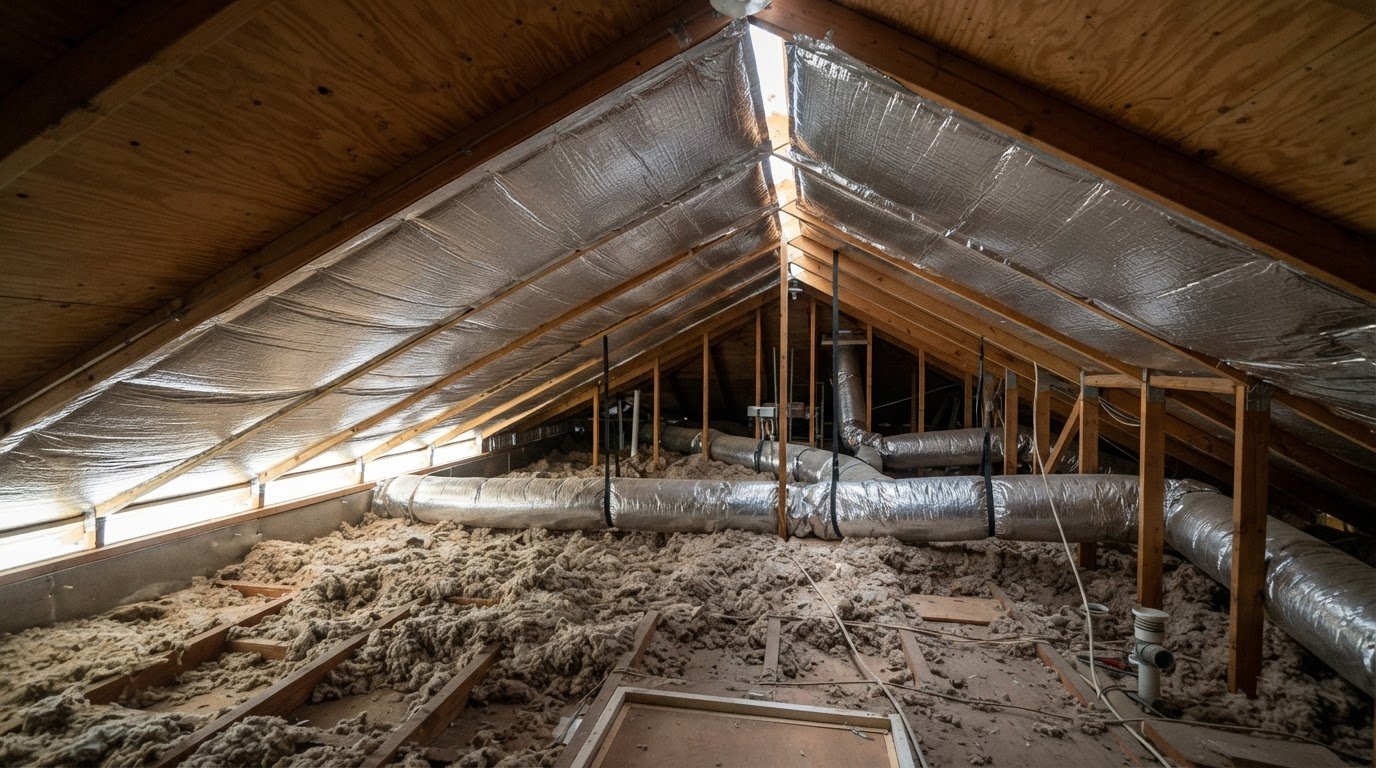
A radiant barrier can help keep roof heat from building up in your attic. In Central Florida, a correctly installed barrier may reduce cooling costs by 5-10% during hot months. The benefits of a radiant barrier in a Florida attic come from limiting radiant heat gain, not replacing conventional insulation.
If your air conditioner runs through the summer, it makes sense to look for ways to reduce heat in the attic. A radiant barrier can help, but its value depends on how it works with insulation, attic ventilation, and ductwork. This article explains how it reflects heat, what potential cooling savings mean, and why it supplements insulation rather than replacing it.
Key Takeaways
- A radiant barrier reflects some of the sun’s heat away from the attic, but its performance depends on proper installation and an open air space.
- In Central Florida, a correctly installed barrier may reduce cooling costs by 5-10% during hot months; the potential benefit depends on the home and attic conditions.
- Reducing attic heat can also limit heat reaching ductwork, which may help cooled air stay cooler on its way to the vents.
- Keep conventional insulation in the picture: radiant barriers address radiant heat transfer, while insulation helps slow other forms of heat flow.
- Before weighing installation costs, consider the attic’s layout, existing insulation, ventilation, and the work needed to install the barrier correctly.
What Are the Upsides of a Radiant Barrier?
A radiant barrier’s main benefit is reducing the sun’s radiant heat reaching the attic through the roof. Its reflective surface sends some incoming heat away instead of absorbing and re-emitting it toward attic materials. The benefits of a radiant barrier in a Florida attic come from limiting one type of heat transfer, not blocking every route heat takes through a home.
The reflective layer needs an air space to work as intended. With that space, the low-emittance surface can reflect radiant heat instead of exchanging it directly with nearby materials. OSB radiant barrier sheathing can reflect up to 97% of solar radiation, while radiant barriers can block about 90-97% of radiant heat striking their reflective surface. These figures describe reflection at the surface, not a whole-home cooling reduction.
Placement matters. Radiant barriers are commonly installed beneath the roof deck, along rafters, or above attic insulation. The roof’s construction and the barrier’s orientation affect how heat interacts with the reflective surface. In a Florida Solar Energy Center study, a black-shingled roof with 1:300 venting and a radiant barrier had an attic temperature 6.1° lower at design-maximum summer conditions than the same roof without one. That result applies to the tested setup, not every attic.
Reflective products beneath concrete slabs work differently. Without an air space, the reflective surface cannot reflect heat, so foil placed directly beneath a slab does not provide the same radiant-barrier function. A barrier also needs an open air space beside its reflective surface. When it touches another material, heat can conduct through that contact.
Dust is a maintenance concern because it can reduce the foil’s efficiency. A dusty surface reflects less effectively, so keeping the reflective face clear helps preserve its function. Installation must also leave attic ventilation unobstructed. Poor ventilation or installation can trap moisture against the barrier, contributing to corrosion or material degradation.
Utility rebates and tax credits are not automatic benefits of installing reflective foil. Eligibility depends on a specific program’s terms and the work it covers, so don’t assume a radiant barrier alone qualifies.
Florida homeowners should also consider moisture and attic airflow when assessing safety. If installation blocks ventilation or traps moisture, materials can deteriorate; proper placement preserves the intended air space and airflow. In Winter Springs, roofing, vent layout, and attic construction shape how a barrier fits the home; see the Winter Springs service-area page for local context.
Potential cooling-cost savings in Central Florida
In Central Florida, a correctly installed radiant barrier may reduce cooling costs by 5-10% during hot months. It can be worthwhile in a sunny, hot climate, especially when attic heat adds to cooling demand.
Cooling and HVAC Benefits
A radiant barrier limits radiant heat transfer from the hot roof into the attic, reducing some of the heat that reaches the home. Lower attic temperatures can ease the cooling load during hot weather, when air conditioning runs frequently. The barrier works alongside the existing system; it does not replace cooling equipment or fix unrelated causes of high energy use.
Potential savings depend on how much roof heat enters the attic and how the home handles that heat. A warmer climate can make the summer benefit more relevant; radiant barriers may reduce cooling costs by up to 17% in warmer climates. That upper figure isn’t a Central Florida guarantee or a prediction for every household.
Attic ductwork also matters. When ducts run through a hot attic, surrounding heat can affect the air moving through them. A cooler attic may reduce heat affecting the ducts, so air may be cooler when it reaches a vent. This can support comfort, though ducts, airflow, and the cooling system also affect how air is delivered.
Installation Cost and Climate Value
Installation cost and climate value describe the project’s expense alongside its potential cooling benefit. The balance matters because savings accrue mainly during the cooling season, while radiant barriers do not significantly affect winter heating.
Project costs depend on attic size, roof construction, installation location, and access. Existing insulation, ventilation layout, and preparation needs also affect the work involved. Installing a barrier above attic insulation has different considerations from attaching one beneath the roof deck. These details matter when weighing upfront expense against potential savings in hot months.
For a useful household comparison, review cooling bills from similar hot-weather periods before and after installation. Keep thermostat settings and occupancy patterns in mind, since changes can affect energy use independently. Seasonal utility costs also reflect the cooling system’s condition and the home’s insulation. This context helps distinguish the barrier’s contribution from other changes.
Central Florida’s humid summers do not change a radiant barrier’s basic role: it addresses radiant heat, not every source of indoor warmth. Its value is greatest when roof heat contributes meaningfully to attic temperatures and cooling demand. Limited roof exposure or other dominant heat sources can reduce its practical impact. Homes in Winter Springs vary in roofing and attic construction, which also affects potential value.
How radiant barriers reduce attic heat gain
The Florida Building Code 5th Edition (2014) guidance says radiant barrier installation should conform to ASTM C 1313 or ASTM C 1321. It also calls for a ceiling insulated to at least R-19 with conventional insulation beneath the barrier.
A radiant barrier changes radiant heat transfer, not every kind of heat movement. Sun-warmed roofing transfers heat toward the roof deck and attic; the barrier’s low-emittance surface reflects some radiant energy. Heat can still move through materials by conduction and through air by convection, so the barrier works alongside other parts of the attic assembly.
A Florida Solar Energy Center study found a 26.4° reduction in maximum ceiling heat flux with a radiant barrier. The tested black-shingled roof had 1:300 venting and R-19 insulation. This result shows how a barrier can affect heat reaching the ceiling under a specific setup, rather than predicting the same change for every home.
For an existing attic, common installation locations include beneath the roof deck, along rafters, or above attic insulation. The reflective surface needs an air space to function; foil touching another material conducts heat directly at that contact. When draped over rafters or trusses, the installation described in the Florida guidance allows the barrier to hang 1½ to 3 inches between each rafter.
Attic ventilation must remain open during installation. Blocking vents can interfere with airflow, while improper installation or inadequate ventilation can trap moisture against the barrier. In Central Florida, summer dew points can often reach the mid-70s, making moisture management an important part of attic construction and roof-deck planning.
Can radiant barriers cause moisture or mold problems in Florida attics? Yes. Persistently moist attic conditions can support fungal matter and lead to mildew or mold-like growth. Blocked airflow or trapped moisture can also contribute to material degradation.
How is a radiant barrier installed in an existing Florida attic? It can be placed beneath the roof deck, along rafters, or above insulation, while preserving ventilation and the required air space. The reflective surface’s orientation and the roof’s construction affect the installation approach.
Florida building-code guidance also specifies that, for a barrier with one low-emittance surface, that surface faces the ceiling insulation. Keeping this orientation, ventilation, and air space in view helps the assembly manage summer radiant heat without treating foil as a replacement for thermal insulation.
Radiant barriers and conventional insulation
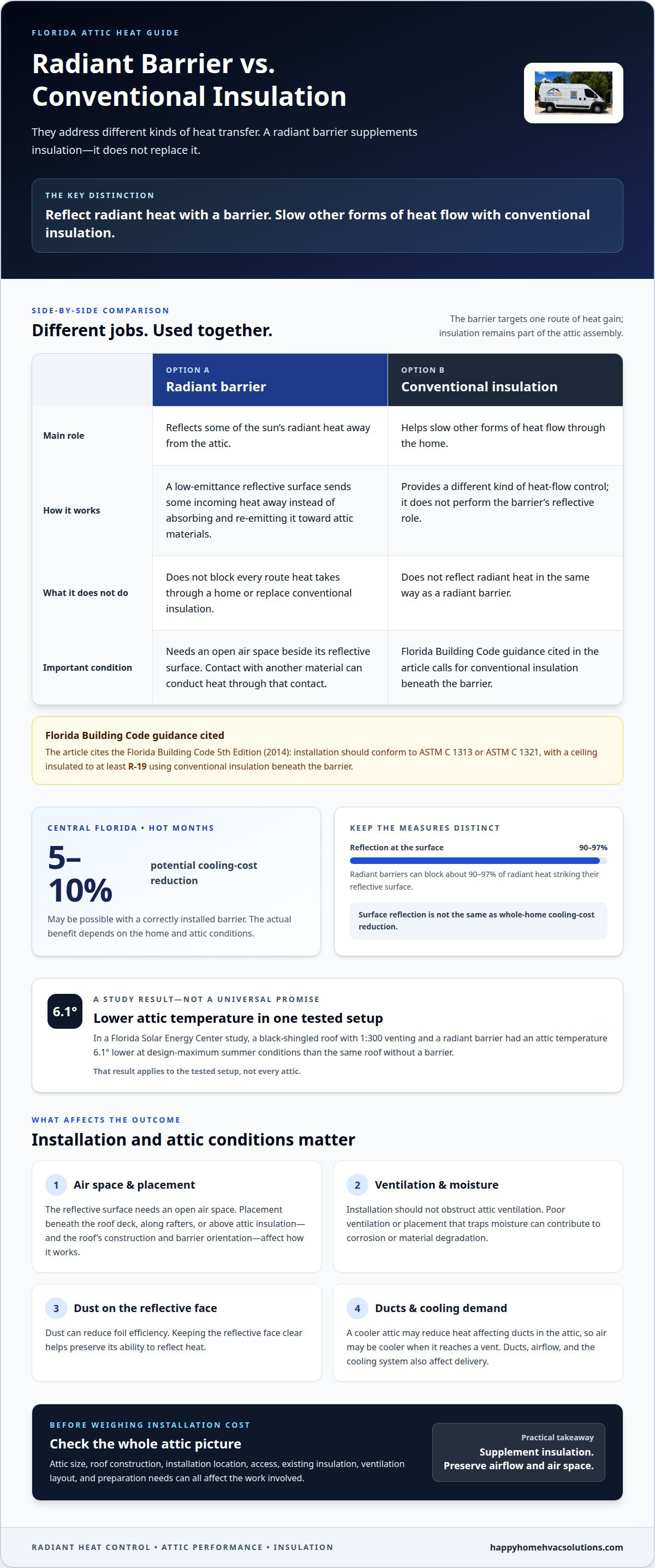
Radiant barriers and conventional insulation address different parts of attic heat flow. A radiant barrier reflects radiant heat, while insulation slows heat transfer through materials. That distinction matters in a Florida attic: reflective foil can complement insulation, but it doesn’t replace the thermal resistance that insulation provides.
Picture an attic floor covered with conventional insulation and a reflective barrier near the roof. Insulation helps limit heat moving between the attic and living space; the barrier reduces radiant energy from the roof. Together, they address separate pathways. If either layer is poorly installed, the assembly may not perform as intended.
Existing insulation also affects the potential added value. Installing a radiant barrier in an attic with R-30 or more insulation would result in much lower energy savings than in an attic with R-11 or less. That comparison doesn’t mean insulation should be removed. It shows why the current insulation level matters when considering another layer.
Air space is essential to a radiant barrier’s reflective function. The foil should have at least a ¾-inch air space between it and other materials, including insulation. If the reflective surface touches insulation or another material, heat can conduct through the contact instead of being reflected across an air gap. Installation location and clearance therefore matter as much as the material itself.
In Florida, the 2014 building-code guidance calls for a radiant barrier over a ceiling insulated to at least R-19 with conventional insulation. This illustrates the complementary roles: the barrier adds radiant control, while the ceiling insulation remains part of the assembly. A radiant barrier doesn’t provide the same function as an insulation layer rated by R-value.
Extra foil isn’t automatically a substitute for conventional insulation, either. Adding a second double-bubble foil layer in contact with the first adds about R-1 of thermal value. That small stated contribution is different from maintaining or improving the attic’s established insulation layer. Evaluate the existing insulation and the barrier as separate components.
Moisture and airflow also belong in the installation plan. Keep attic ventilation open and preserve the barrier’s required air space. In Central Florida, humid attic conditions can contribute to condensation on cool surfaces, so trapped moisture or blocked airflow can create problems. The right combination is reflective material, conventional insulation, clear ventilation, and careful placement, not foil alone.
What is the typical cost to install a radiant barrier in a Florida attic?
There is no single installed price that fits every Florida attic. The price depends on the project, and attic size, access, roof construction, installation location, and preparation needs affect the estimate. A Winter Springs attic with clear access and an open roof deck may require different work from one with tight access or obstructions.
Material expense and installation work are separate parts of the project. The amount of foil needed depends on the area being covered, while roof geometry affects how the barrier can be placed. An attic with multiple roof slopes, rafters, or obstructions requires a different approach from a simple, open space. Those conditions matter more than a single material-only figure.
Existing insulation and ventilation also influence the scope. If the barrier is installed above insulation, its placement must preserve the intended air space. If it goes beneath the roof deck, the roof framing and vent paths shape the work. In a Florida attic, the estimate should account for keeping ventilation open and avoiding installation details that trap moisture.
Ask what the quoted work includes: barrier material, preparation, installation, and attention to attic airflow. These details clarify what the total covers and help avoid comparing material-only prices with completed work. A roll of foil, for example, does not account for fitting it around roof framing or keeping vents clear.
Cost is only one factor in deciding whether installation makes sense. Central Florida’s cooling season can make limiting roof heat worthwhile, but savings depend on the home’s conditions and existing insulation. A radiant barrier does not replace conventional insulation, so an attic with a different insulation need may call for another improvement to take priority.
For a practical estimate, useful details include the attic’s dimensions, roof layout, access, existing insulation, and planned barrier location. Photos or an attic assessment can help describe these conditions accurately. A clear scope makes it easier to understand the installation and how it fits the home, rather than relying on a generic per-area price that may leave out important work.
That is a quoted price, not a universal Florida rate, and it should not be confused with material-only costs.
These figures describe different kinds of costs, so they do not establish the price of a complete attic project. The useful comparison is whether a quote covers only the material or includes installation and the attic-specific work described above. A low material figure alone does not show what a homeowner will pay for a finished installation.
Happy Home HVAC Solutions: AC Repair
Happy Home HVAC Solutions provides AC Repair when an air conditioner struggles to keep your home comfortable despite efforts to manage attic heat. A radiant barrier addresses heat entering through the roof, while an AC system may need attention for separate performance problems. Repair addresses issues with the cooling equipment itself; AC Installation is another option when replacing the system is the right next step.
If attic insulation is also part of your comfort concern, Happy Home HVAC Solutions provides Insulation Services to address that part of the home’s thermal envelope. Keeping these needs distinct makes it easier to consider the right improvement, rather than expecting a radiant barrier to solve every cooling issue.
For help with an air-conditioning concern, explore AC repair options or contact Happy Home HVAC Solutions.
Choose the Next Comfort Improvement with Confidence
The best next step is to connect attic conditions with the comfort problems you notice at home. A radiant barrier may be part of the picture, but its benefits in a Florida attic matter most when they fit the home’s broader heating and cooling needs. Focus on the issue you want to solve, whether it is uneven cooling, an aging system, or comfort concerns across seasons.
Happy Home HVAC Solutions offers AC Repair for cooling-system problems, AC Installation when a replacement is needed, and Heating & Furnace Services for home heating concerns. These services address equipment needs rather than substitute for a radiant barrier. If you are weighing possible improvements, start with the comfort issue affecting your household most, then consider the next step that addresses it directly.
Contact Happy Home HVAC Solutions to discuss your home comfort needs. A thoughtful next step can make your home feel more comfortable and manageable.
Frequently Asked Questions
What about claims of exaggerated savings on your energy bill?
Claims can be exaggerated when an upper estimate is presented as a guaranteed reduction on every household’s bill. In Central Florida, a correctly installed radiant barrier may reduce cooling costs by 5-10% during hot months; the higher figure of up to 17% applies to warmer climates generally. Roof exposure, existing insulation, attic layout, and cooling habits all affect how much a home benefits.
How does a radiant barrier reduce attic heat in Florida?
A radiant barrier reflects some solar heat before it moves from the roofing toward the attic. Its reflective surface works across an air space, reducing radiant heat transfer; it does not stop heat moving through direct contact or air movement. For example, a barrier facing an open attic space works differently from foil pressed directly against another material, where heat can conduct through the contact.
How much can a radiant barrier lower attic temperatures in Florida?
A Florida Solar Energy Center study found an attic temperature 6.1° lower at design-maximum summer conditions with a radiant barrier. The comparison used a black-shingled roof with 1:300 venting and compared it with the same roof without a barrier. Treat that as a result for the tested roof assembly, not a temperature reduction that applies automatically to every Florida attic.
How much can a radiant barrier save on Florida cooling bills?
In Central Florida, a correctly installed radiant barrier may reduce cooling costs by 5-10% during hot months. That estimate concerns cooling, not a matching reduction in the total annual energy bill. Radiant barriers don’t significantly affect winter heating. A useful comparison looks at cooling bills during similar hot-weather periods and considers changes in thermostat use, occupancy, and cooling-system operation.
Radiant barrier vs attic insulation: which works better in Florida?
Neither replaces the other: conventional insulation slows heat transfer through materials, while a radiant barrier addresses radiant heat. In practice, keep existing insulation in place and consider how its level affects the added value of a barrier. An attic with R-30 or more insulation would see much lower energy savings from adding a radiant barrier than an attic with R-11 or less.