
Attic Insulation Installation in Winter Park: Adding Over Existing Insulation
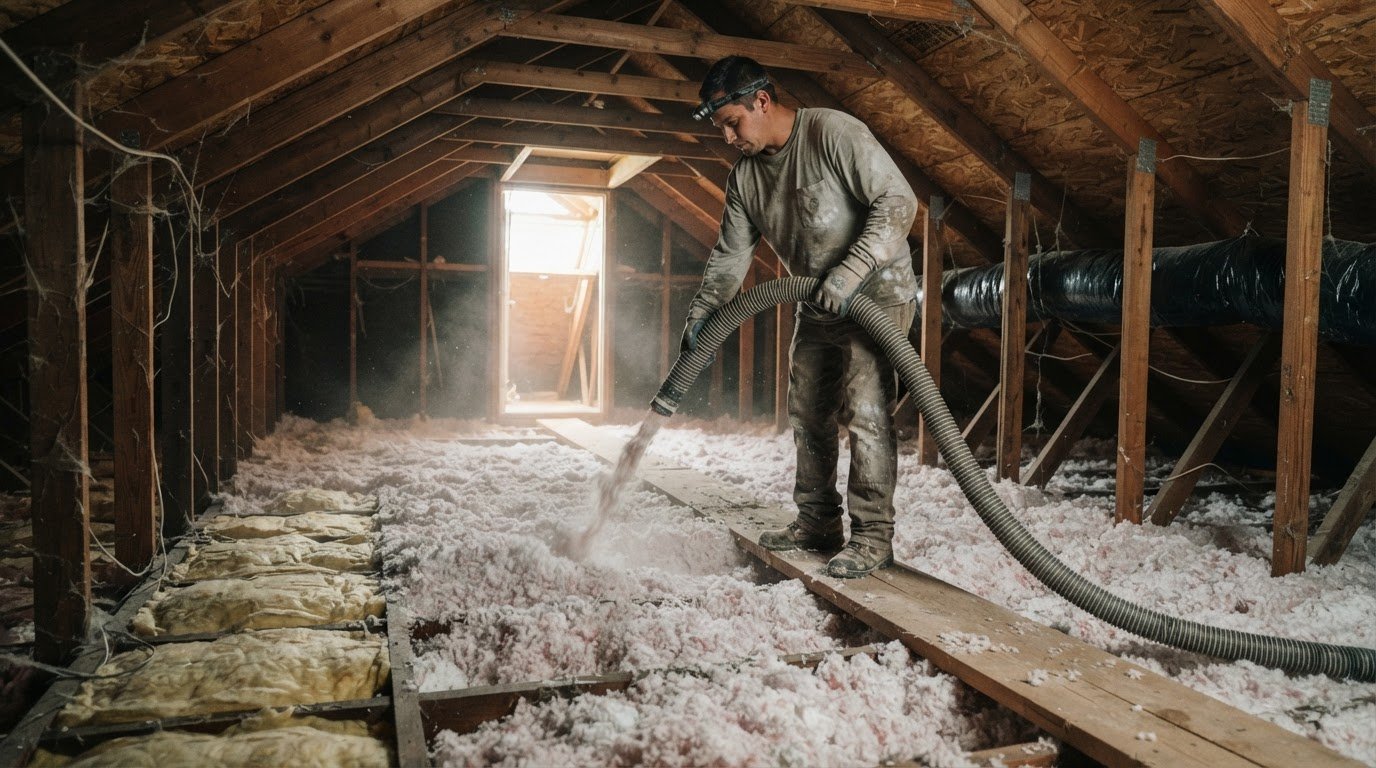
You can often add attic insulation over existing material when it is dry and in acceptable condition. For attic insulation installation in Winter Park, assess what is already there before deciding whether to add a layer or address damaged, damp, or deteriorating insulation first.
If your attic insulation looks thin or compressed, adding another layer may seem like a simple way to improve comfort. But the condition and coverage of the existing material matter, and air leaks can still let conditioned air escape even after insulation is added.
This guide explains when new insulation can go over existing material, what moisture or compression may signal, and why air sealing is part of an effective upgrade. You’ll also learn how insulation and air sealing work together to support more consistent indoor temperatures, and what a professional considers when planning the work.
Key Takeaways
- Adding insulation over existing material can be suitable when the old layer is in acceptable condition; damp or deteriorating areas need attention first.
- Blown-in fiberglass can fill around pipes, wiring, and complex framing in open attic spaces.
- Thin or compressed insulation may leave your home less comfortable, so its condition and coverage matter when planning an upgrade.
- Insulation works best as part of a broader attic assessment that considers air leaks, duct gaps, and ventilation.
- The right insulation approach depends on your attic’s existing material, layout, and moisture conditions.
Can You Add Insulation Without Removing the Existing Insulation?
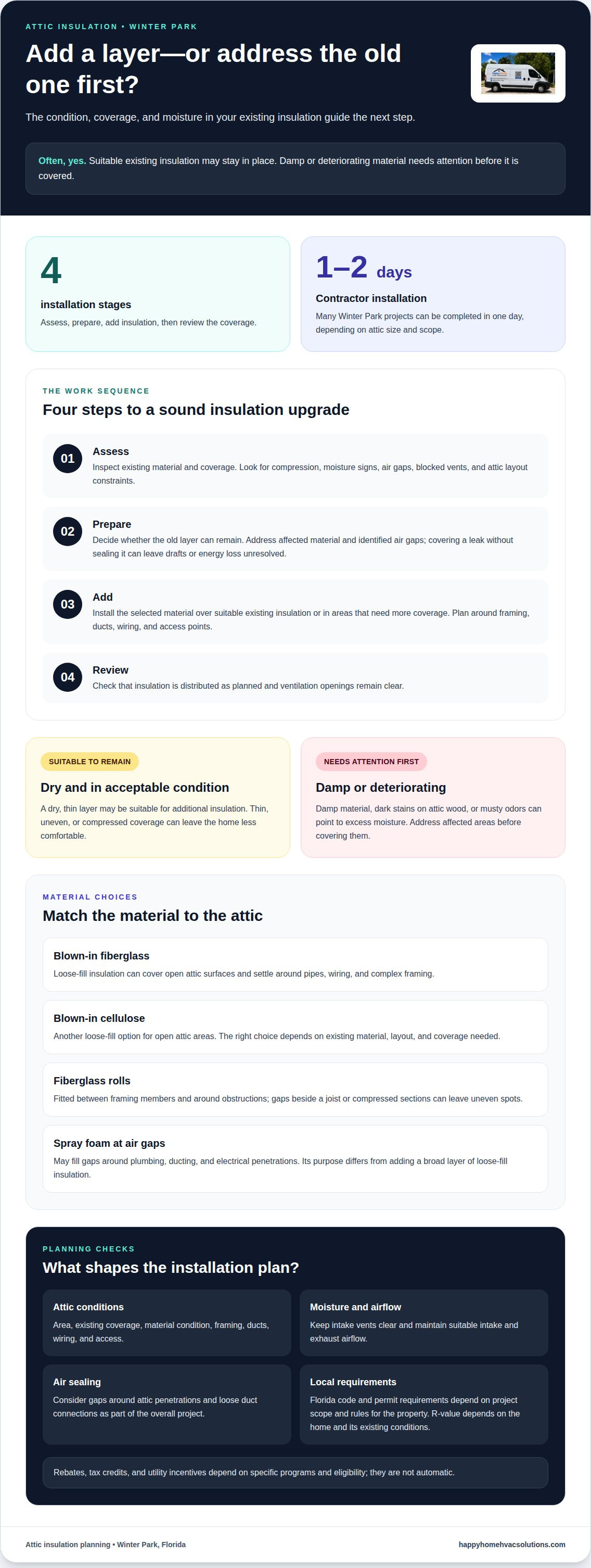
Often, yes. A professional assesses the existing material first, then decides whether new insulation can go over it or whether damaged areas need attention.
Blown-In Fiberglass for Existing Attics
Blown-in fiberglass is a loose-fill material spread across open attic surfaces. It can settle around pipes, wires, and complex framing, helping cover spaces that are awkward to reach with batts or rolls. Before adding a layer, a professional evaluates the existing insulation’s condition, coverage, and moisture.
For example, a dry, thin layer may be suitable for additional insulation, while damp or deteriorating material needs attention first. The assessment can also identify gaps around framing and penetrations. Consistent coverage helps minimize uneven heat transfer through the attic floor.
Fiberglass and Cellulose Options
Blown-in fiberglass and cellulose can both cover open attic areas. Loose-fill fiberglass is useful where framing and wiring interrupt a continuous surface. The right choice depends on the existing material, attic layout, and coverage needed. A professional also checks that new material can be spread evenly without burying access points or blocking ventilation.
Fiberglass rolls are fitted between framing members and around obstructions. Their performance depends on close coverage, so gaps beside a joist or compressed sections can leave uneven spots. Spray foam may fill air gaps around plumbing, ducting, and electrical wiring penetrations, but its purpose differs from adding a broad layer of loose-fill insulation.
Climate, Code, and Permit Considerations
Winter Park’s hot, humid climate makes moisture and attic ventilation important parts of the installation plan. Insulation should not block intake vents, and the attic needs a suitable balance between intake and exhaust airflow. Damp material, dark stains on attic wood, or musty odors can point to excess moisture that should be addressed before the area is covered.
Florida building-code and permit requirements depend on the work’s scope and the rules that apply to the property. Establish those requirements before installation, rather than assuming a permit is always required or never required. The appropriate R-value for a Winter Park attic depends on the home’s existing insulation and building conditions, not on recommendations for another region.
Rebates, tax credits, and utility incentives depend on specific programs. Eligibility can vary with the property, the insulation work, and current program terms, so don’t treat an incentive as automatic when planning the project.
Adding insulation does not replace correcting damaged material or air leaks. A professional can assess gaps around attic penetrations and loose duct connections as part of the overall project. The work also needs to preserve access to relevant equipment and keep ventilation openings clear.
For homeowners planning insulation work in Winter Park, the key decision is whether the existing layer is sound, dry, and suitable to remain. That assessment guides the choice between blown-in coverage, fitted fiberglass rolls, or removing affected material before new insulation is installed.
Adding insulation over existing insulation
Adding insulation can improve coverage when existing material is thin, uneven, or compressed. For attic insulation installation in Winter Park, a professional first evaluates the material and attic layout, then plans around moisture, air leaks, and ventilation.
Estimating Attic Amounts and Costs
The amount of insulation depends on the attic area, existing coverage, material condition, and desired final coverage. A professional measures the space and checks how the current insulation is distributed, rather than estimating from the home’s floor plan alone. An attic with bare patches, for example, needs a different approach from one with thin, even coverage.
Moisture also affects the plan. Damp or deteriorating insulation may need attention before new material is added, while sound insulation may remain in place. The installer considers attic access, framing, ducts, wiring, and ventilation openings when calculating the amount of material required.
The price depends on attic size, existing insulation, material choice, and project scope, and is given after a quote request. Those factors help explain why two Winter Park homes with similar layouts may need different amounts of work.
Contractor installation typically takes 1-2 days, while many Winter Park projects can be completed in one day, depending on attic size and scope. The estimate reflects the planned work, including preparation needed before adding insulation.
Professional Installation Steps
A professional installation protects suitable existing coverage and addresses conditions that could affect the new layer. First, the installer assesses the attic, noting thin or compressed areas and identifying moisture, air gaps, blocked vents, or access constraints.
Next, the installer determines whether existing insulation can stay or whether affected material needs attention. The work plan accounts for gaps and penetrations before new insulation goes in. Covering an air leak without sealing it can leave drafts or energy loss unresolved.
- Assess: Inspect existing material, coverage, moisture signs, and attic layout.
- Prepare: Address identified air gaps and plan coverage around attic features.
- Add: Install selected material over suitable insulation or in areas needing coverage.
- Review: Check distribution and keep ventilation openings clear.
During installation, the method depends on the attic’s structure. Blown-in insulation can cover irregular open areas, while fitted insulation suits spaces between framing. The installer also accounts for heating ducts and wiring so the new layer does not conceal uneven coverage.
For attic insulation installation in Winter Park, a home with compressed insulation and uncovered sections may need targeted additions rather than a uniform layer everywhere. Another attic may need moisture or deteriorating material addressed first. This makes the installation plan specific to the home instead of treating every attic the same.
What Problems Can Old or Compressed Attic Insulation Cause?
Compressed attic insulation can provide less coverage than it did at its original depth, weakening the barrier between indoor rooms and the attic. In a Winter Park home, this can make temperatures less consistent: rooms below poorly covered areas may feel warmer in hot weather or cooler when outdoor temperatures drop. An insulation project should account for both comfort and material condition.
Uneven coverage creates another problem. A bare strip above a hallway, for example, can behave differently from a fully covered bedroom ceiling in the same house. Gaps let heat move more readily through the attic floor, while compressed material provides less effective coverage than a properly distributed layer. This can make it harder for heating and cooling equipment to maintain a comfortable indoor temperature.
Moisture changes the decision from adding insulation to addressing the affected area. Damp insulation, dark stains on attic wood, and musty odors can indicate excess moisture. Covering these signs with fresh material can hide the condition instead of resolving it. A professional evaluates the source and extent of dampness before deciding what can remain in place.
Damaged insulation should be removed, and affected areas treated to help prevent mold from spreading. Address these issues before new material covers the attic floor. If moisture has also affected nearby wood, the professional considers those visible conditions in the project plan. New insulation belongs in a dry, suitable area, not over material that is already damaged.
Suitable attic insulation supports comfort in both seasons. It can reduce heat loss in cooler weather and limit summer heat radiating down into living spaces. For Winter Park households, the attic barrier matters even where cooling dominates much of the year. Insulation’s value depends on continuous coverage, sound material, and attention to air leaks.
Air sealing strengthens that benefit because insulation alone does not close every gap. Openings around plumbing, wiring, or ductwork can let conditioned air escape and allow drafts or moisture to enter. Sealing these paths while improving attic coverage helps reduce unwanted air movement. This is more complete than simply adding material over compressed areas.
The U.S. Department of Energy estimates that properly insulating and air sealing an attic can reduce heating and cooling costs by up to 20 percent. That estimate describes the combined work, not insulation alone. The actual benefit depends on the home’s existing conditions, including coverage, air leakage, and the attic’s overall layout.
During an insulation project, a professional can distinguish between thin material that may benefit from added coverage and damaged material that needs removal. This helps prevent new insulation from hiding moisture problems or leaving uneven areas untreated. A careful assessment keeps the goal clear: a dry, consistent attic layer that supports comfortable indoor temperatures.
Attic insulation and home energy efficiency
Attic energy efficiency depends on both insulation and limiting unwanted air movement. Insulation slows heat transfer, while air sealing closes openings between living spaces and the attic. A covered attic floor, for example, can still lose conditioned air through a gap around plumbing. Addressing both factors gives the project a more complete purpose.
In Winter Park, summer heat can radiate from the attic toward rooms below. A continuous insulation layer slows that transfer and helps indoor spaces stay closer to the thermostat setting. During cooler weather, attic insulation also reduces heat loss. These effects can support comfort across seasons without replacing the home’s heating or cooling equipment.
Air leaks can reduce insulation’s benefit. Openings around plumbing, ducting, or electrical wiring can let conditioned air escape and allow drafts or moisture to enter. A professional identifies these locations and selects a suitable way to seal them. Depending on the opening and surrounding materials, expanding spray foam can fill some gaps around attic penetrations.
Ductwork needs separate attention. A loose attic duct connection can release conditioned air before it reaches a room. Installers seal loose connections and gaps with mastic or metal-backed tape before insulating ducts. For homeowners planning attic insulation installation in Winter Park, this sequence distinguishes duct repairs from the insulation layer, so one is not mistaken for a substitute for the other.
Ventilation also affects attic performance. Insulation should not cover intake vents, and intake and exhaust openings need an appropriate balance. Inadequate airflow can trap warm, moist air, contributing to condensation or mold growth. Additional vents or an attic fan may be considered if ventilation is insufficient, as part of the overall attic plan.
These details matter when considering energy bills. Uneven coverage above a room and an unsealed duct joint nearby create different paths for heat transfer and air loss. Addressing insulation alone leaves a duct leak unresolved. A professional assessment considers attic coverage, penetrations, duct connections, and ventilation together, rather than treating one visible issue as the whole problem.
The U.S. Department of Energy estimates that properly insulating and air sealing an attic can reduce heating and cooling costs by up to 20 percent. That estimate describes combined work, not insulation alone. The outcome depends on existing coverage, air leakage, and attic conditions. It provides context for why sealing and insulation are considered together in an energy-efficiency plan.
Attic insulation installation in Winter Park is most useful when the plan accounts for the home’s specific airflow and coverage issues. A practical sequence is to assess the attic, address air leaks and duct gaps, preserve ventilation openings, and then install material suited to the space. This helps avoid hiding gaps beneath new material and connects the work to the home’s comfort and energy goals.
Which attic insulation types work best in Winter Park’s hot, humid climate?
No single insulation type suits every Winter Park attic. The right choice depends on the existing material, roof framing, access, and moisture conditions. A professional weighs those factors before recommending blown-in fiberglass, cellulose, fiberglass rolls, or spray foam. The material should suit the attic while preserving ventilation and covering the intended areas evenly.
Blown-in fiberglass is loose-fill insulation that can cover open attic floors and settle around pipes, wires, and complex framing. This makes it useful where joists and obstructions interrupt a broad surface. Cellulose is another blown-in option. The installer considers the attic’s shape and existing coverage to determine which material can be placed consistently without leaving gaps or covering ventilation openings.
Loose-fill fiberglass also works in open spaces where framing creates irregular areas. Fiberglass rolls or batts fit between framing members, making them a different choice for accessible, regularly spaced sections. An attic with clear joist bays, for example, may suit fitted pieces, while a space crossed by wiring and pipes may call for loose-fill coverage. Choose material based on the actual layout, not climate alone.
Spray foam is applied to open surfaces such as attics, unlike injection foam, which is designed for enclosed cavities such as existing exterior walls. Its role differs from loose-fill insulation and fitted rolls. A professional considers the surface, penetrations, and project scope before selecting a method. No material fixes a roof leak or moisture source, so address those conditions before covering affected areas with new insulation.
Humidity makes moisture management and ventilation essential to the decision. Damp insulation, dark stains on wood, and musty odors can signal excess moisture. Insulation must not block intake vents, and attic airflow needs an appropriate balance between intake and exhaust. If warm, moist air remains trapped, condensation and mold growth can become concerns. The material choice should fit a sound attic plan.
- Blown-in fiberglass: Suits open areas with pipes, wires, or irregular framing.
- Cellulose: Another loose-fill option for open attic coverage.
- Fiberglass rolls: Fit accessible spaces between framing members.
- Spray foam: Applies to open surfaces and serves a different role from loose-fill materials.
For a Winter Park home, compare material fit, attic condition, coverage, and ventilation together. That keeps the decision focused on the space rather than a one-size-fits-all claim about hot, humid weather. Explore professional insulation options for an attic-specific plan.
Happy Home HVAC Solutions: AC Installation
Happy Home HVAC Solutions provides insulation services for homeowners in Winter Park. If your attic has thin coverage, compressed material, or moisture concerns, a professional assessment can clarify the next step. If your cooling system also needs attention, consider AC installation alongside improvements to your home’s thermal performance.
Insulation and air sealing support indoor comfort, while properly selected cooling equipment helps manage your home’s temperature. Considering both can help you plan improvements around your comfort needs rather than treating each concern in isolation.
For help planning your attic project or discussing AC installation, contact Happy Home HVAC Solutions.
Plan the Next Step for a More Comfortable Home
Planning attic insulation installation in Winter Park can be a useful opportunity to consider how your home’s comfort systems work together. If you are already addressing temperature concerns, consider whether the attic project fits into broader home improvements. Happy Home HVAC Solutions offers AC Repair, AC Installation, and Heating & Furnace Services alongside insulation work, so you can discuss related comfort needs in one place.
Start by describing what you have noticed, such as rooms that feel uncomfortable or insulation that appears compressed. This gives the conversation a practical starting point without requiring you to diagnose the attic yourself. From there, you can decide what work makes sense for your home and priorities.
When you’re ready to discuss your project, contact Happy Home HVAC Solutions. A clear conversation can help you move toward a more comfortable home with confidence.
Frequently Asked Questions
How do I know if my attic is properly insulated?
A consistent layer without bare patches or obvious compression is a useful starting point, but appearance alone cannot confirm performance. Compare rooms beneath different attic areas: a persistently uncomfortable room may point to uneven coverage or another issue. A professional assessment can evaluate insulation condition alongside air leakage and attic layout. In Winter Park homes, moisture signs matter too, because damp or damaged insulation cannot perform as intended.
How long does the installation process take for whole-home insulation upgrades?
Contractor attic insulation work typically takes 1-2 days, while the exact schedule depends on the home and project scope. A whole-home upgrade may involve more than the attic, so its timeline depends on which areas are included and what preparation they need. For example, addressing damaged material or several insulated spaces can add work compared with upgrading an accessible attic alone.
Should I do the project myself or hire a contractor?
A professional is helpful when the project involves evaluating old material, moisture concerns, air leaks, or hard-to-reach areas. Installation also requires consistent coverage around attic features and care to preserve ventilation openings. A professional can assess and install the insulation, rather than leaving you to decide whether existing material should stay. This is especially practical when you want an attic upgrade as part of broader home insulation work.
Should old attic insulation be removed before adding new insulation in Florida?
No, removal is not always necessary. Existing material can remain when it is dry and in acceptable condition, but damp, damaged, or deteriorating insulation should be addressed before new material covers it. A dry layer with thin spots, for example, may suit an upgrade, while musty odors or dark stains call for investigating moisture first. The material’s condition, not its age alone, guides the decision.
What moisture, mold, ventilation, and pest risks should be addressed before insulating an attic?
Resolve moisture sources and visible damage before covering attic areas, and keep ventilation openings clear. Damp insulation, dark stains on wood, or musty odors need attention before installation. Also look for signs of pest activity, such as droppings, nesting, or chewed material. These can indicate that the attic needs attention before insulation hides the evidence. An installer can account for these conditions when planning coverage and access.