
Attic insulation in Oviedo: compare costs and materials
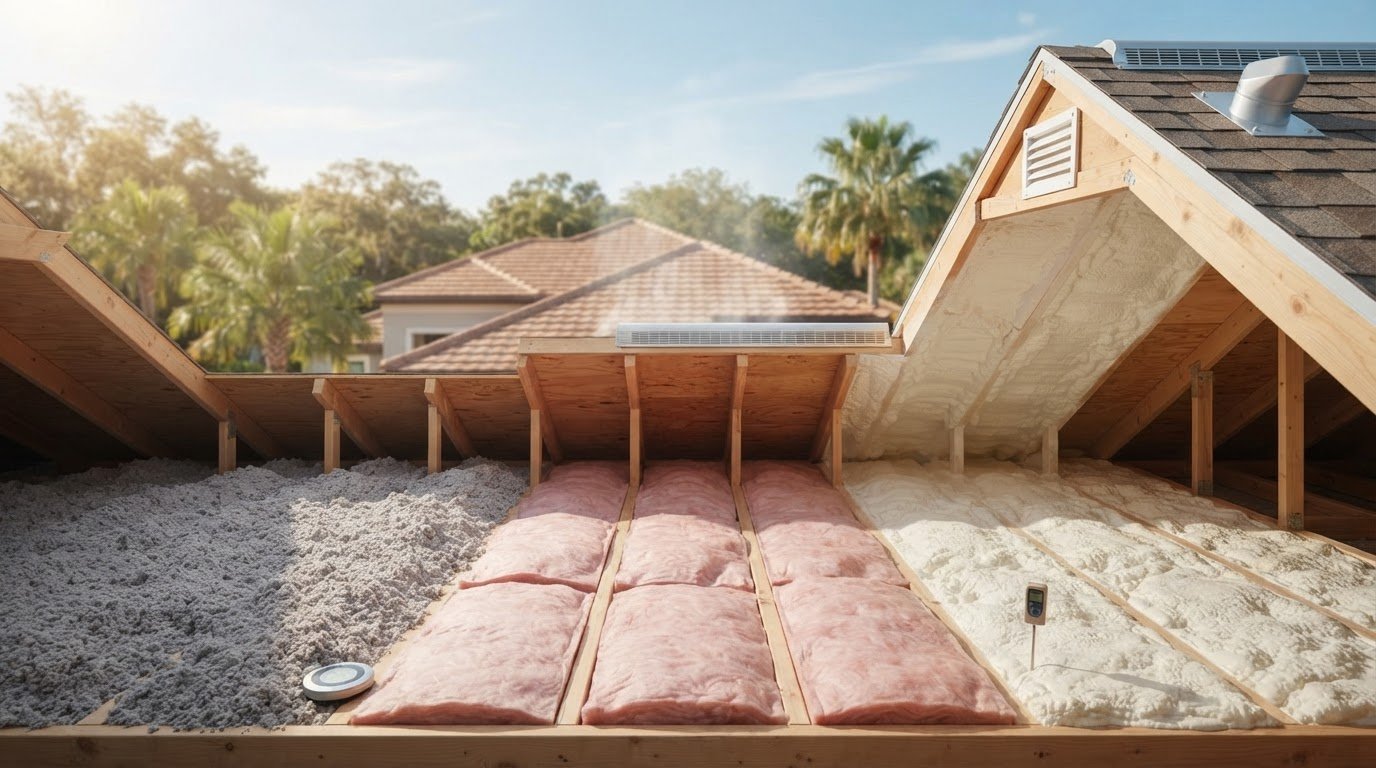
The best R-value for attic insulation in Oviedo is generally R-49 to R-60, but a higher rating alone doesn’t tell you whether your existing insulation is doing its job. Attic insulation can last 20-80 years, depending on the material and its condition. The key is to assess what’s already there, not assume every attic needs a full replacement.
It’s reasonable to focus on how long insulation lasts when it’s out of sight, especially if rooms feel uncomfortable or energy use seems high. This guide explains how material, R-value, and attic conditions affect insulation performance and project costs in Oviedo, helping you understand the best R-value for attic insulation in Oviedo.
You’ll also learn how to compare common insulation options, spot signs that existing insulation may need attention, and understand why ventilation, moisture, and installation quality matter. With those details in view, you can make an informed decision about the right next step for your home.
Key Takeaways
- Understand how Florida climate zones affect attic insulation targets and minimum requirements.
- Compare insulation materials by R-value per inch, installation considerations, and how they fit different attic conditions.
- Learn how the 2021 IECC informs insulation guidance and what that means when evaluating your home.
- Spot attic conditions that can affect insulation performance, including uneven coverage, moisture, and ventilation.
- Explore what influences cooling savings and when insulation improvements may help your home feel more comfortable.
How much does attic insulation cost in Oviedo?
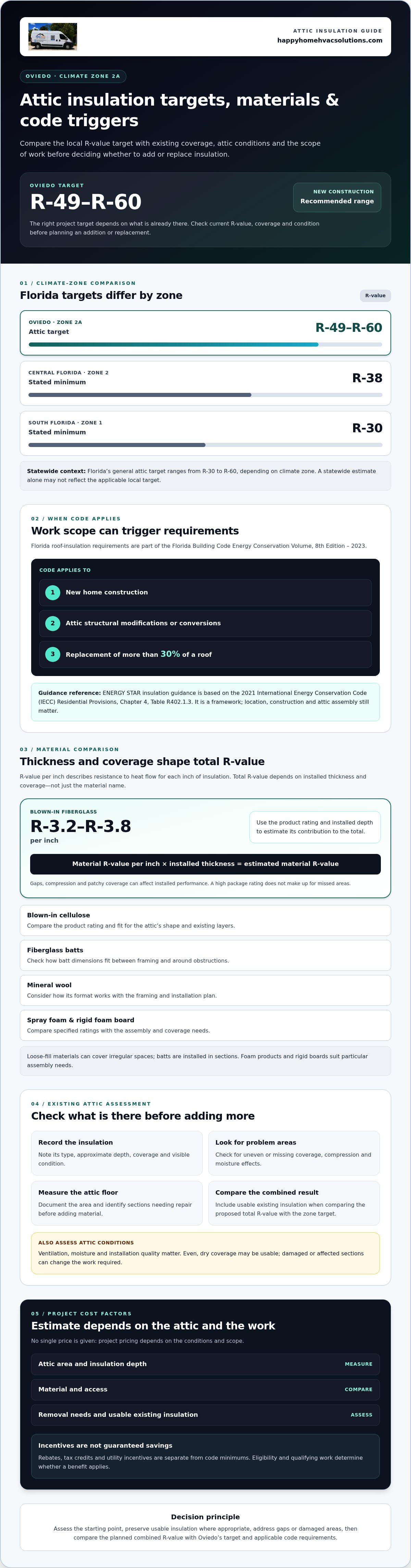
For new construction in Oviedo, the recommended target is R-49 to R-60, while Central Florida’s stated minimum is R-38. Existing insulation should be assessed by its current R-value, coverage, and condition before deciding whether to add or replace it. An attic-floor upgrade can build on usable insulation, with the goal of bringing the combined effective R-value toward the Oviedo target. The best R-value for attic insulation in Oviedo depends on that starting point and the project’s scope.
Rebates, tax credits, and utility incentives are separate from code minimums. In Oviedo and Seminole County, eligibility and qualifying work determine whether a program benefit applies, so don’t count an incentive as a guaranteed reduction in project cost.
Florida’s general attic target ranges from R-30 to R-60, depending on climate zone. Oviedo is in climate zone 2A, with an attic target of R-49 to R-60. Central Florida is in Zone 2, where the stated minimum under the Florida Building Code is R-38. South Florida is in Zone 1, where the stated minimum is R-30. These figures show why a statewide estimate alone can mislead: the applicable zone changes the target.
Florida’s roof-insulation requirements are part of the Florida Building Code Energy Conservation Volume, 8th Edition - 2023, and remain active and enforceable in 2026. They apply to new home construction and attic structural modifications or conversions. They also apply when more than 30% of a roof is being replaced. Those triggers matter when planning work; they are different from simply comparing the insulation currently in place with a recommended target.
R-49 or higher is rarely necessary in Florida, but Oviedo’s stated target reaches R-49 to R-60. That distinction makes the attic’s existing insulation important. For example, if coverage is even and dry, an upgrade may add to what remains effective. If insulation is compressed, missing, or affected by moisture, those conditions can change the work required. Homes in the Oviedo service area still need recommendations based on their climate zone and attic conditions.
Project pricing depends on the attic and the work required. Attic area, insulation depth, material, access, removal needs, and usable existing insulation all affect the estimate. A practical comparison starts by measuring the attic floor, documenting existing coverage, and identifying areas that need repair before adding material. Then compare the proposed total R-value with the climate-zone target and applicable code requirements. This helps distinguish a targeted upgrade from a full replacement and keeps the decision tied to your home’s needs.
Insulation materials and R-values per inch
Material choice affects the depth needed to reach a target R-value. R-value per inch measures resistance to heat flow for each inch of insulation. Blown-in fiberglass provides R-3.2 to R-3.8 per inch. That range helps compare its performance with an attic’s available depth. The total rating depends on installed thickness and coverage, not the material name alone. A thin layer cannot deliver the same total R-value as a deeper layer. Compare both the product’s stated rating and the space available in your attic.
Common attic options include blown-in fiberglass, cellulose, fiberglass batts, mineral wool, spray foam, and rigid foam board. Each has different installation requirements alongside its R-value. Loose-fill materials can cover irregular spaces, while batts are installed in sections. Foam products and rigid boards suit particular assembly needs. Start your comparison with the attic layout, existing insulation, and target total R-value.
- Blown-in fiberglass: Its R-3.2 to R-3.8 per inch rating helps estimate how much installed depth contributes to the total.
- Blown-in cellulose: Compare its product rating and suitability for the attic’s shape and existing layers.
- Fiberglass batts: Check how the batt dimensions fit between framing and around obstructions.
- Mineral wool: Consider how its format works with the attic’s framing and installation plan.
- Spray foam and rigid foam board: Compare their specified ratings with the assembly and coverage needs.
Use product data to compare materials and estimate the total R-value. Multiply the material’s R-value per inch by its installed thickness. With blown-in fiberglass, a thicker, evenly distributed layer provides more total resistance than a shallow or patchy layer. This calculation describes the material, but gaps and compression can affect installed performance. Look for consistent coverage around attic-floor edges, access openings, and framing. A high rating on the package won’t make up for missed areas.
Before choosing, record the existing insulation type, approximate depth, and visible condition. Then compare the material’s rating per inch with the depth needed for the planned total. Keep dissimilar layers in mind: adding insulation does not erase gaps or correct damaged sections below. A clear plan identifies what remains, what needs filling, and how the new layer will cover transitions. For a broader look at home insulation service options, consider how an attic assessment fits into the work. This comparison helps connect material selection with the actual assembly, rather than choosing by label alone.
2021 IECC basis for insulation guidance
ENERGY STAR insulation guidance is based on the 2021 International Energy Conservation Code (IECC) Residential Provisions, Chapter 4, Table R402.1.3. That reference gives homeowners a framework for understanding recommended insulation levels. It doesn’t replace the need to consider a home’s location, construction, and attic assembly. For an Oviedo home, use the guidance as a reference point, then compare it with Florida’s applicable requirements and the attic’s existing condition.
Climate and building components both shape insulation recommendations. Attic insulation is only one part of a home’s thermal boundary: the ceiling, walls, and other parts of the enclosure also affect heat transfer. A table-based recommendation can help organize these factors, but it isn’t a material brand or installation prescription. R-value measures resistance to heat flow, with a higher rating indicating greater resistance.
Use the reference in a practical sequence:
- Identify the building context. Note whether the work concerns a new home, an existing attic, or a planned insulation upgrade.
- Record the current assembly. Document insulation type, coverage, depth, and any visible compression or gaps.
- Compare the target. Review the appropriate recommendation for the home’s climate and attic location.
- Plan the installation. Match the proposed material and installed depth to the target, while addressing coverage issues.
When comparing an existing attic with a table-based target, first establish how much insulation is already there. An added layer contributes to the total only where it covers the surface effectively. A bare strip near an edge or access opening can leave that part of the ceiling less protected than the main attic area. That’s why one package rating can’t describe the whole installation.
Keep guidance, code, and project assessment distinct. The 2021 IECC table is the basis identified for ENERGY STAR’s insulation guidance. Florida’s building requirements are a separate consideration, especially for new construction or certain structural work. The home’s present insulation condition also affects the upgrade plan. Using all three lenses helps homeowners avoid treating a general recommendation as a one-size-fits-all answer.
When comparing proposals, look for a clear description of the existing insulation, intended material, coverage plan, and resulting R-value. Ask how the work accounts for uneven areas, attic access, and the ceiling boundary. Those details make the recommendation easier to assess than a target number alone. For an Oviedo attic, the useful takeaway from the 2021 IECC basis is the method: start with a recognized reference, then apply it to the home’s actual assembly and local requirements.
Assessing existing insulation and attic conditions
Start with a visual survey before planning an attic insulation upgrade. Note the material, approximate depth, and whether coverage looks even across the attic floor. Check for bare patches, compressed areas, dampness, staining, or debris. These observations can help distinguish a simple coverage gap from a condition that needs attention before adding material.
Before adding insulation, seal gaps between the living space and attic, then keep ventilation paths clear. Check around ceiling penetrations and access openings, and confirm attic vents remain unobstructed; the general ventilation target is one square foot of net free vent area per 300 square feet of attic floor.
Inspect the attic in sections rather than judging it from the hatch. Look near eaves, around framing, and beside access points, where coverage can vary. Record any thin or disturbed areas. If the attic has several layers, note each material and whether the top layer may hide gaps below. Even-looking insulation can still conceal uneven coverage underneath.
Florida attic conditions can make the assessment more important. Attics can reach 130-150°F on a July afternoon. Heat, moisture, pests, and blocked airflow can affect how insulation performs and how long it remains useful. Attic insulation’s estimated service life ranges from 20-80 years, depending on material; blown-in fiberglass is estimated at 20-30 years. Those ranges make condition and material identification useful parts of an inspection.
- Moisture: Look for damp insulation, water marks, or musty odors. Find and address the moisture source before covering affected areas.
- Mold: Discolored or damp surfaces can signal a moisture problem. Adding insulation over affected material can conceal the condition.
- Pests: Droppings, nesting debris, or disturbed insulation may indicate pest activity. Clear the underlying issue before restoring coverage.
- Blocked ventilation: Insulation covering an eave vent can restrict airflow. Keep vent openings clear while improving coverage.
Keep a simple record to guide your decision: mark uneven sections, note visible damage, and photograph conditions from safe access points. Compare existing insulation with the target R-value, but don’t rely on one depth reading alone. Material type affects its contribution, while gaps and compression make average depth a less reliable measure.
Finally, separate work that can proceed from issues that need attention first. A clean, dry attic with intact coverage may call for a different plan than one with staining, pest evidence, or blocked vents. Address those conditions, preserve ventilation paths, and then determine how to improve the insulation layer.
How much can upgrading attic insulation reduce cooling costs in Oviedo’s hot, humid climate?
Typical Florida homeowners see summer cooling costs decrease by 15-25% after upgrading attic insulation. That range offers context, not a bill estimate for every Oviedo home. The result depends on the attic’s starting condition, the coverage added, and how the home uses its cooling system. A house with thin, uneven insulation has a different starting point from one with consistent coverage.
Insulation slows heat moving between the attic and living space. When less heat passes through the ceiling, the air conditioner may need to do less cooling work to maintain indoor comfort. Performance depends on the whole installation, not just the R-value printed on one package. Gaps, compressed material, and uncovered areas can limit how well the insulation performs.
To understand the likely impact in your home, compare these conditions:
- Existing coverage: Record thin spots, bare areas, and material that has shifted or compressed.
- Added insulation: Compare the proposed total R-value with the attic’s current level and local target.
- Air leakage: Look for openings between the living space and attic that allow conditioned air to escape.
- Ventilation: Keep attic airflow paths open while improving insulation coverage.
- Cooling patterns: Consider rooms that stay uncomfortable during Oviedo’s summer cooling season.
Adding insulation over an evenly covered attic can have a different effect from correcting bare patches first. If air leaks remain, cooled indoor air can still move into the attic. Blocked vents create a separate airflow problem. Addressing these details connects the insulation work to the home’s actual heat-flow paths.
Cooling bills also reflect factors beyond the attic, including thermostat settings, household schedules, air leakage, and cooling-system operation. An insulation upgrade is therefore one part of a home’s overall energy use. Compare bills from similar summer periods and note changes in occupancy or cooling habits. This helps show whether household patterns changed alongside the insulation.
Use the 15-25% range as a broad Florida reference, then focus on the conditions that shape an Oviedo project. Document existing coverage, identify leakage and ventilation concerns, and compare the planned insulation level with the attic’s current condition. A clear assessment explains what the upgrade is meant to improve, rather than treating a percentage as a guaranteed result for every household.
Happy Home HVAC Solutions: AC Repair
Happy Home HVAC Solutions offers Insulation Services for homeowners planning an attic insulation upgrade. If the assessment points to uneven coverage, aging material, or a need to improve the attic’s insulation, this is the natural next step. Insulation choices should reflect the existing attic, not just a target R-value.
If cooling problems continue after insulation work, AC repair may address a separate issue with the cooling system. The two concerns affect comfort in different ways, so identifying whether the problem lies in the attic or the AC helps guide the next step.
For an attic insulation assessment or AC repair, contact Happy Home HVAC Solutions about service in Oviedo.
Make Your Attic Plan Work for Your Home
Turn your attic observations into a practical plan. Look beyond a target rating: consider how the insulation will fit the space, preserve airflow, and work alongside your cooling system. This whole-home view can help you choose the best R-value for attic insulation in Oviedo based on your home’s actual conditions.
Happy Home HVAC Solutions offers AC Repair, AC Installation, and Heating & Furnace Services, alongside insulation support. If you’re weighing attic improvements or addressing comfort concerns, the team can help you consider the right service for your home. A clear conversation can help you move from uncertainty to a thoughtful next step, without rushing the decision.
Contact Happy Home HVAC Solutions to discuss your home’s needs and take the next step toward dependable comfort.
Frequently Asked Questions
How long does attic insulation last?
Attic insulation can remain effective for many years, but its lifespan depends on the material and its condition. Calendar age alone doesn’t show whether it still performs well. Compressed, displaced, damp, or pest-disturbed material may need attention sooner than intact insulation. Check visible coverage and material condition, then compare its contribution with your planned attic target before deciding whether to keep, supplement, or replace it.
Is R-30 enough for Florida roofs?
R-30 is the stated minimum for South Florida’s Zone 1, but it isn’t the stated Central Florida minimum. Central Florida is Zone 2, where the Florida Building Code minimum is R-38; Oviedo’s attic target is higher. The useful comparison is your home’s location and project requirements, not a statewide figure alone. For an Oviedo attic, consider the current insulation and the intended total R-value.
What if the attic is too shallow?
A shallow attic can still be insulated, but limited depth restricts how much material fits. Compare the target total R-value with each product’s R-value per inch, then calculate the required depth before choosing. Don’t compress insulation to force it into a tight space, because compression changes its installed performance. Preserve ventilation paths and account for framing, wiring, and access points when planning continuous coverage.
What R-value will I get?
Your installed R-value depends on the material, its depth, and whether coverage is continuous. A product’s labeled R-value per inch helps estimate its contribution at a given thickness. Existing insulation may also contribute if it remains usable. Ask for an installation plan that identifies the material, depth, areas to be covered, and expected total, so you can compare the finished work with your attic’s target.
What attic insulation R-value is recommended for Oviedo, Florida, and which IECC climate zone applies?
Oviedo is in climate zone 2A, and its recommended attic target is R-49 to R-60. The best R-value for attic insulation in Oviedo should also account for the existing layer and attic conditions. According to ENERGY STAR, its insulation guidance is based on the 2021 International Energy Conservation Code Residential Provisions, Chapter 4, Table R402.1.3. Use that guidance as a reference alongside local requirements.
What attic insulation R-value does Florida building code require for homes in Oviedo?
The stated Central Florida minimum is R-38 for Zone 2 under the Florida Building Code. Oviedo is identified as climate zone 2A, with an attic target of R-49 to R-60. Florida roof-insulation requirements apply to new construction and attic structural modifications or conversions, and when more than 30% of a roof is being replaced. The project type affects which requirement applies.
What insulation types are best for Oviedo attics, and how much R-value does each provide per inch?
Suitable options to compare include blown-in fiberglass or cellulose, fiberglass batts, mineral wool, spray foam, rigid foam board, and radiant barrier. Blown-in fiberglass provides R-3.2 to R-3.8 per inch. For other materials, use the product’s stated rating rather than assuming one value applies to every version. Compare the rating with usable attic depth, the assembly, and the coverage the installation needs.
What is the average cost to insulate an attic to R-38 or R-49 in Oviedo, Florida?
The price depends on the project and is given after a quote request. The main cost factors include attic area, the amount of insulation needed to reach the target, material choice, access, and whether existing insulation needs removal. A home starting below R-38 will have a different scope from one already near R-49. Compare estimates by the work and coverage included, not just the target rating.