
AC Refrigerant Leak Repair Cost in Sanford, Florida
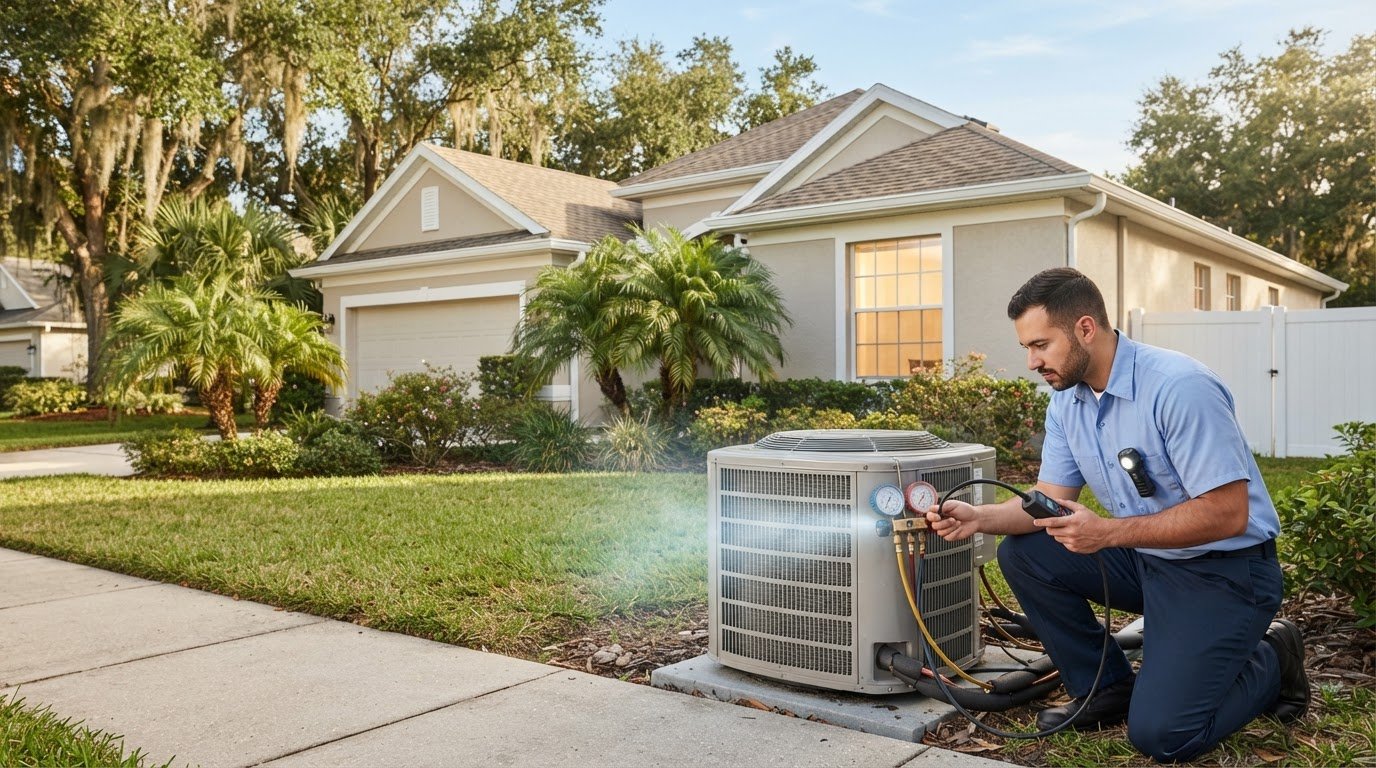
A refrigerant leak’s location can matter as much as the amount of refrigerant needed. AC refrigerant leak repair cost in Sanford depends on where the leak is, how difficult it is to find and repair, and which refrigerant the system uses. The price depends on the specific problem and is provided after a quote request.
If your AC is cooling poorly, running longer than usual, or showing signs of a leak, it’s natural to want to know what comes next. This guide explains how technicians trace refrigerant leaks, which factors affect repair pricing, and what to expect from an estimate in Sanford.
You’ll also learn which warning signs to watch for and how refrigerant type can affect the repair. This can help you understand the diagnosis, proposed work, and steps to restore comfort at home.
Key Takeaways
- Refrigerant type and the amount needed can affect recharge costs, so identifying your system’s refrigerant is an important part of understanding an estimate.
- Technicians can use electronic detection, dye tracing, pressure testing, or a combination of methods to pinpoint a leak.
- Weak cooling and longer run times can signal a problem; noticing changes early can help you describe the issue clearly during service.
- Repair pricing depends on the leak’s location, the damage, and the work needed to restore the system. An upfront estimate should explain the proposed work and its cost factors.
- In Sanford, professional AC repair can help identify the cause of cooling trouble and determine whether repair or another solution makes sense.
How does the type of refrigerant affect the cost of repair?
The total cost depends on the leak’s location, repair difficulty, refrigerant type, and the amount needed for recharge. These factors shape the work and materials included in an estimate.
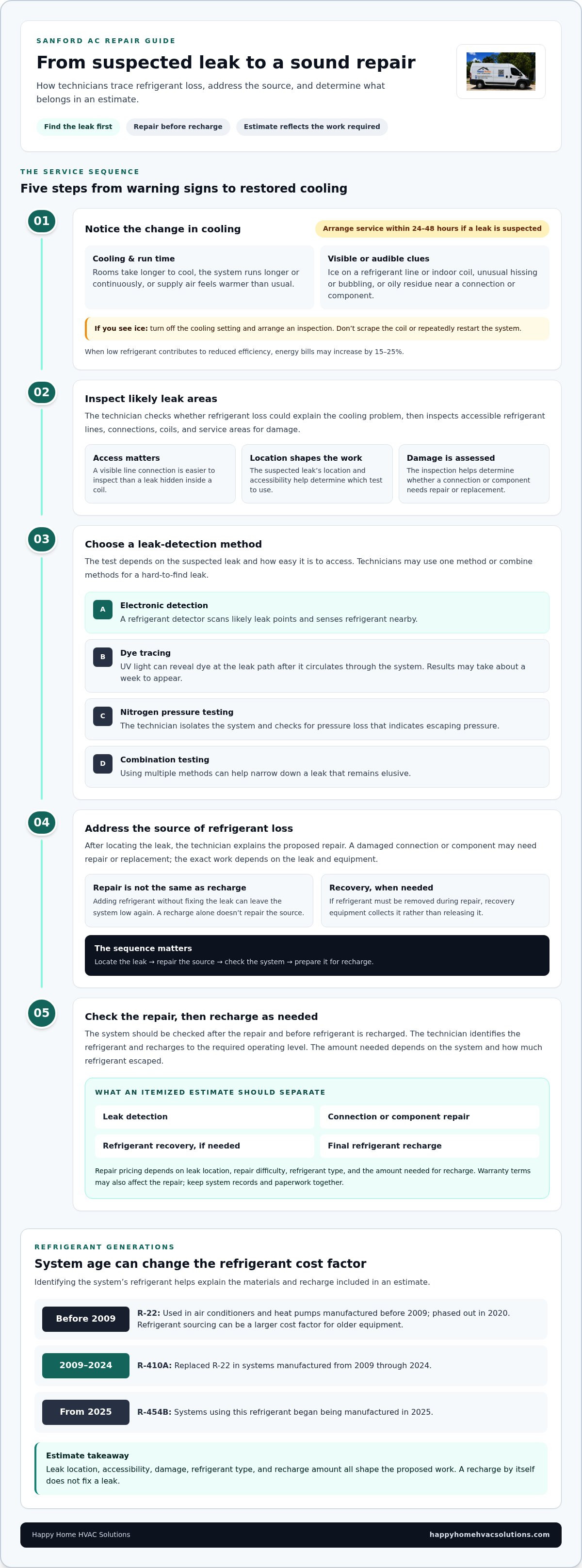
Refrigerant type matters because older and newer systems use different materials. R-22 was used in air conditioners and heat pumps manufactured before 2009, and it was phased out in 2020. R-410A replaced R-22 in systems manufactured from 2009 through 2024. R-454B systems began being manufactured in 2025.
To see how diagnosis and repair choices fit together, watch this homeowner-focused video:
Recharging should follow leak detection and repair, not replace them. Adding refrigerant without fixing the source can leave the system low again. The technician identifies the refrigerant, locates the leak, and determines whether a component or connection needs repair. After the repair, the system is recharged to its required operating level.
Refrigerant recovery is a separate part of responsible service. If refrigerant must be removed during a repair, a technician uses recovery equipment to collect it rather than release it. Once the leak is addressed, the system can be prepared for recharge. The amount needed depends on the system and how much refrigerant escaped.
- System age: Older equipment may use R-22, which can make refrigerant sourcing a larger cost factor.
- Leak location: An accessible connection differs from a leak in a coil or another difficult-to-reach component.
- Recharge amount: The quantity required depends on the system’s condition and refrigerant loss.
A recharge estimate should account for both the refrigerant and the work needed to restore cooling. A recharge alone doesn’t fix a leak, and continued refrigerant loss can contribute to poor performance or equipment failure. Warranty terms may also affect the repair, so keep system records and paperwork together.
For Sanford homeowners, an AC repair service in Sanford can assess the equipment, identify its refrigerant, and explain which repair steps shape the estimate. An itemized explanation helps distinguish leak detection, component repair, refrigerant recovery, and recharge, so you can understand what the proposed work addresses.
Refrigerant leak detection and repair
Professional leak detection starts by checking whether refrigerant loss could explain the cooling problem. Technicians inspect accessible refrigerant lines, connections, coils, and service areas for damage. They then choose a test based on the suspected leak’s location and accessibility.
A refrigerant leak can reduce cooling and make an air conditioner run longer as it struggles to reach the thermostat setting. Continued operation with low refrigerant can put added strain on system components. If you suspect a leak, schedule professional service within 24-48 hours rather than treating a recharge as the repair.
Technicians use several methods to detect leaks. An electronic detector can sense refrigerant near a suspected leak. UV dye can help reveal a leak’s path, though results may take about a week to appear. Nitrogen pressure testing can identify escaping pressure, while combination testing uses multiple methods for hard-to-find leaks.
- Electronic detection: The technician scans likely leak points with a refrigerant detector.
- Dye tracing: UV light can reveal dye at a leak location after circulation through the system.
- Pressure testing: A technician isolates the system and checks for pressure loss.
- Combination testing: Multiple methods can help narrow down a leak that remains elusive.
The detection method affects the time and equipment involved. Access matters too: a visible line connection is easier to inspect than a leak hidden inside a coil. The estimate should distinguish leak detection from the repair, any component replacement, and the final recharge. Manufacturer guidance can help determine suitable parts and procedures.
After locating the leak, the technician explains the repair and whether a damaged connection or component needs replacement. The system should be checked after repair and before refrigerant is recharged. This addresses the cause instead of repeatedly adding refrigerant while the leak remains.
Homeowner insurance coverage depends on the policy’s covered causes and exclusions. HVAC warranty coverage follows the manufacturer’s written terms and eligible-part conditions. A leak alone doesn’t establish coverage, so review the relevant policy or warranty documents for the cause and component involved.
For Sanford residents, professional AC repair can help identify the leak, explain the repair steps, and separate detection from replacement and recharge in an estimate.
What are some signs that my AC or heat pump system has a refrigerant leak?
A refrigerant leak can show up as a change in cooling before you see visible damage. Notice whether your air conditioner takes longer to cool a room, runs continuously, or blows air that feels warmer than usual. Refrigerant loss can reduce cooling efficiency, and energy bills may increase by 15-25% when low refrigerant contributes to that reduced efficiency.
Ice on a refrigerant line or around the indoor evaporator coil is another warning sign. Low refrigerant can interfere with heat transfer, making the coil too cold and causing frost to form. If you see ice, turn off the cooling setting and arrange an inspection. Don’t scrape the coil or repeatedly restart the system.
Listen near the indoor and outdoor equipment for unusual hissing or bubbling. A leak may also leave oily residue around a refrigerant connection or component. These clues can guide an inspection, but they don’t pinpoint the leak. Refrigerant circulates in a sealed system, so persistent cooling problems call for testing, not a visual guess.
- Reduced cooling: Compare how the air conditioner cools rooms under similar thermostat settings.
- Longer run times: Note whether the system keeps running without reaching the selected temperature.
- Frost or ice: Look for buildup near the indoor evaporator or refrigerant lines.
- Unusual sounds or residue: Record where hissing, bubbling, or oily marks appear.
Refrigerant leaks become more common as HVAC systems age. Vibration can gradually stress joints and connections, while corrosion or physical damage can weaken tubing or a coil. A leak at an accessible connection differs from one inside an evaporator coil, so a technician’s inspection should cover both visible lines and system components.
Check around the outdoor unit for bent fins, damaged tubing, or signs of impact. Keep the area clear of stored items, but don’t open panels or handle refrigerant lines. The compressor and electrical components need a qualified inspection, especially if the system makes unfamiliar noises or repeatedly loses cooling.
Write down when symptoms began, which rooms feel warm, and whether ice returns after shutdown. Note the thermostat setting and any recent changes around the unit. A clear record helps the technician compare symptoms with inspection findings and assess whether a leak, airflow issue, or another fault is affecting performance.
Change the HVAC air filter every 30 to 90 days. A clogged filter can restrict airflow and contribute to cooling problems, so checking it helps distinguish a basic maintenance issue from symptoms that warrant refrigerant leak testing.
Repair pricing and upfront estimates
The price depends on the specific problem and is provided after a quote request. Key cost factors include the leak’s location, detection difficulty, damaged components, refrigerant type, and recharge amount. For AC refrigerant leak repair cost in Sanford, an estimate should explain which work fixes the leak and which restores cooling.
A useful estimate separates diagnosis from repair. For example, an indoor evaporator leak can require different parts and labor than a damaged refrigerant line near the outdoor condenser. Access, component condition, and repair method also affect the scope. A recharge alone won’t fix the source, so the estimate should show that the leak will be repaired before refrigerant is added.
Ask for an itemized written estimate before authorizing work. It should identify the suspected leak location, proposed repair or replacement, and whether refrigerant recovery and recharge are included. If testing is needed to locate the leak, the estimate should distinguish diagnosis from subsequent repair work.
- Diagnosis: The estimate describes the inspection or leak detection method.
- Repair: It identifies the connection, line, coil, or other component involved.
- Refrigerant: It names the refrigerant type and the planned recharge work.
- Follow-up: It explains how the completed repair will be checked.
“Free estimate” can mean different things. A preliminary quote based on symptoms isn’t the same as an on-site diagnosis involving tests. Review the stated scope to understand whether the estimate covers inspection, leak detection, repair, or all three. Don’t assume a diagnostic visit or testing is included just because an estimate is discussed.
Compare the proposed work with the symptoms and inspection findings. If a technician identifies a condenser coil leak, the estimate should name that component, rather than refer only to a general refrigerant problem. If the leak is difficult to reach, the explanation should connect that access issue to the labor or testing involved.
A major component failure may also raise the question of repair versus replacement. The system’s age, overall condition, refrigerant type, and extent of the damage help determine whether repairing the existing equipment is practical. A clear estimate explains the repair scope and doesn’t present a recharge as a lasting fix for an unresolved leak.
Before approving work, check that the estimate lists parts, labor, detection, recovery, and recharge as applicable. Keep a copy with the equipment’s manufacturer and warranty documents. This record helps you understand what was repaired and provides useful details if similar symptoms return.
AC repair services in Sanford, Florida
Sanford homeowners can approach an AC problem systematically: record what the system is doing, note when symptoms occur, and arrange an inspection. For example, weak airflow from one vent points to a different diagnostic path than warm air throughout the home. A clear description helps a technician assess the system without assuming every cooling fault is a refrigerant leak.
Compare licensed AC refrigerant leak repair companies in Sanford by their diagnostic process, written repair scope, and explanation of refrigerant handling. A useful estimate distinguishes leak detection from component repair and recharge, and describes how the technician will check the system afterward.
During a service visit, a technician can review thermostat settings, airflow, indoor equipment, and the outdoor unit before narrowing down the cause. A clogged filter or blocked return can affect airflow even without a refrigerant leak. If the inspection points to refrigerant loss, targeted leak detection can help locate the source before repair begins.
Sanford’s afternoon thunderstorm season runs from June through September. After a storm, note any visible damage around the outdoor unit, such as displaced panels or nearby debris, but don’t open equipment or handle refrigerant lines. Moisture around an indoor unit can have several causes, so record where it appears and whether cooling changed at the same time.
- Before the visit: Write down the thermostat setting, affected rooms, and when cooling changed.
- At the unit: Note unusual sounds, visible ice, or damage without removing panels.
- During diagnosis: Ask how airflow checks and leak testing relate to the reported symptoms.
- Before approving work: Review the proposed repair, any component replacement, and the final system check.
Good service communication connects each step to a finding. For example, if a technician finds a leak at a line connection, the repair explanation should identify that connection and describe the work needed. If testing instead points to restricted airflow, the recommendation should address that finding rather than default to a refrigerant recharge.
Keep the equipment model information and prior service records together. These details can help identify the refrigerant type and relevant manufacturer guidance. After the repair, note whether the system cools evenly and airflow feels consistent in rooms that were previously affected.
If your Sanford AC system is cooling poorly or showing signs of a leak, schedule AC repair for a focused inspection and a clear explanation of the next steps.
Happy Home HVAC Solutions: AC Repair
Happy Home HVAC Solutions provides AC Repair for homeowners dealing with weak cooling, suspected refrigerant leaks, or other system problems. Turn to the team for professional diagnosis, leak repair, or a clear explanation of the work needed to restore your air conditioner.
A technician can assess the reported symptoms and explain the recommended next steps, helping you understand the difference between detecting a leak, repairing its source, and recharging the system. If the equipment’s condition points toward a larger decision, AC Installation is also available. Happy Home HVAC Solutions is LG certified and offers up to a 12-year warranty on many installations.
For help with an AC concern, contact Happy Home HVAC Solutions or visit happyhomehvacsolutions.com.
Take the Next Step Toward Reliable Cooling
Understanding AC refrigerant leak repair costs in Sanford can help you approach the next decision with greater clarity. Act on what your system is showing and get a repair plan based on the actual problem. The right solution depends on the equipment’s condition and the cause of the cooling issue.
Happy Home HVAC Solutions provides AC Repair for cooling concerns and AC Installation when replacing equipment is the right path. The team also offers Heating & Furnace Services to support comfort beyond the cooling season. If your AC isn’t performing as expected, share the symptoms and discuss a practical next step.
Contact Happy Home HVAC Solutions to talk about your AC concerns. A clear conversation can help you take the next step toward a comfortable home.
Frequently Asked Questions
How do you locate the source of a refrigerant leak?
A technician traces a leak by testing likely points and narrowing down where refrigerant escapes. They may scan joints and coils with an electronic detector, use UV dye, or pressurize an isolated section with nitrogen. For example, if a detector signals near a line connection, the technician can inspect the area more closely before recommending a repair. The method depends on access, system design, and whether initial tests locate the leak.
Refrigerant Leak Repair: Is It Worth the Money?
Repair can be worthwhile when the leak is isolated and the rest of the system remains in usable condition. A major coil or compressor-related failure in older equipment may shift the decision toward replacement. One market guideline recommends considering replacement when the system’s age multiplied by the repair cost exceeds $5,000. Treat that calculation as a comparison tool alongside equipment condition, refrigerant type, and expected repair scope.
What is the average AC refrigerant leak repair cost in Sanford, Florida?
There isn’t one useful average for every Sanford home because a connection leak and a damaged coil require different work. The price depends on the specific problem and is provided after a quote request. Key factors include detection difficulty, leak location, parts, labor, refrigerant type, and recharge amount. An estimate is more useful when it separates diagnosis, repair, and recharge instead of presenting one unexplained total.
How much does an HVAC technician charge to find an AC refrigerant leak in Sanford?
The diagnostic charge depends on the testing required and how accessible the suspected leak is. An electronic scan of exposed connections differs from combination testing for a concealed leak. A clear estimate should state whether it covers the diagnostic visit, a specific leak-detection method, or repair work as well. This helps you compare the scope of estimates without mistaking diagnosis for a completed repair.
What are typical AC refrigerant leak repair costs by leak location and repair type?
The work varies by component: a valve or connection usually involves a different job than an evaporator coil, condenser coil, refrigerant line, or compressor seal. Access and whether a part can be repaired or must be replaced also affect labor and materials. Ask for the affected component and proposed work to be named in the estimate. That makes it easier to understand why leak repairs differ.
How much does R-410A refrigerant recharge cost per pound in Sanford, Florida?
The charge per pound depends on the refrigerant price and the amount the system needs, so there isn’t one fixed figure for Sanford. A recharge should follow leak repair, not replace it. An estimate can separate refrigerant quantity from leak detection and component work, showing what the recharge covers. The system’s refrigerant type should be identified before planning a recharge.
How much does R-22 refrigerant recharge cost, and is it available in Sanford?
R-22 was phased out in 2020, and reclaimed R-22 may still be available. Its local availability depends on reclaimed supply, while recharge expense depends on the amount required and the system’s condition. Before deciding on a recharge, identify the equipment’s refrigerant and consider whether the system has an active leak. Repeatedly adding refrigerant without addressing the leak won’t resolve the underlying problem.
Do Sanford HVAC companies charge diagnostic or service-call fees for refrigerant leaks?
Diagnostic visits may be billed separately, while some estimates combine diagnosis with other work. The charge structure depends on what the visit includes, such as inspection, leak testing, or troubleshooting another cooling fault. Review the estimate’s line items to see whether diagnostic work is separate from repair and recharge. This helps you understand what you’re authorizing before work begins.