
AC Not Blowing Cold Air? Causes and What to Check First
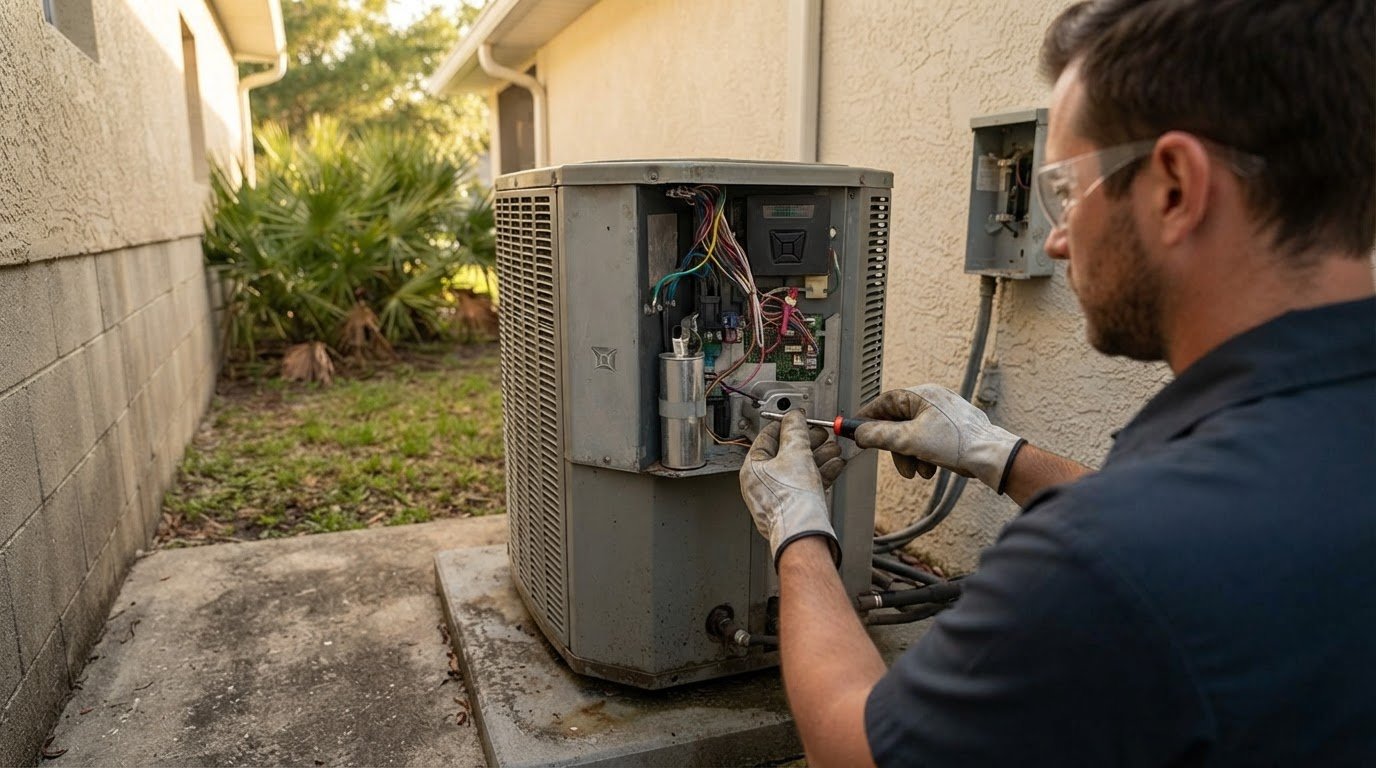
When an AC is not blowing cold air, routine maintenance can help prevent some common causes. A technician typically starts by checking the thermostat setting and airflow, then investigates issues such as dirty coils, a refrigerant leak, compressor trouble, or an electrical fault.
It’s frustrating when your home won’t cool properly, especially when the cause isn’t obvious. This guide explains common reasons an AC may stop cooling and how they affect the system, so you can understand what a professional inspection involves. You’ll also see why a clogged filter, blocked outdoor unit, or recurring problem deserves attention before it puts more strain on the equipment.
Key Takeaways
- Check whether airflow restrictions or debris around the outdoor unit could be contributing to weak cooling.
- Low refrigerant usually points to a leak, so the underlying problem needs attention rather than a simple top-up.
- A humming or clicking outdoor unit that struggles to start can be a sign of compressor trouble.
- If an AC breaker trips again after being reset once, contact a qualified HVAC professional instead of resetting it repeatedly.
- The U.S. Environmental Protection Agency recommends considering replacement when heating and cooling equipment is more than 10 years old.
Dirty or blocked outdoor condenser coils
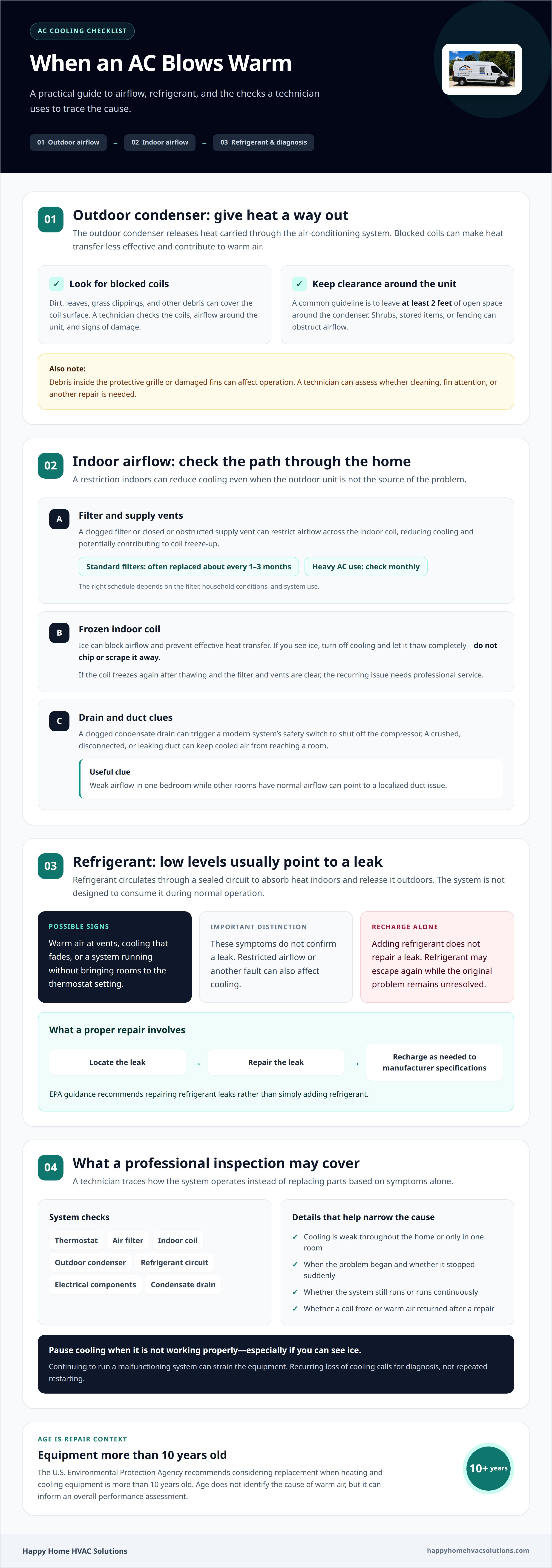
The outdoor condenser releases heat carried through the air-conditioning system. When dirt, leaves, grass clippings, or other debris cover its coils, heat transfer becomes less effective and the system may blow warm air. A technician checks the coil surface, airflow around the unit, and signs of damage. Restricted airflow can make the equipment work harder without restoring comfortable cooling.
Clearance matters, too. A common guideline is to keep at least two feet of open space around the outdoor condenser, so shrubs, stored items, or fencing don’t obstruct airflow. Debris inside the protective grille or damaged fins can also affect operation. A technician can assess whether the unit needs cleaning, whether the fins need attention, and whether damage is interfering with condenser performance.
Can a dirty air filter or blocked vents cause AC to blow warm air? Yes. A clogged filter or closed or obstructed supply vents can restrict airflow across the indoor coil, reducing cooling and potentially contributing to coil freeze-up. Standard filters are often replaced about every 1 to 3 months, while heavy AC use calls for monthly checks. The right schedule depends on the filter, household conditions, and system use.
Can frozen evaporator coils or a clogged condensate drain stop an AC from cooling? Yes. Ice on the indoor coil can block airflow and prevent effective heat transfer. Turn off cooling and let the ice thaw completely; don’t chip or scrape it away. A clogged drain can also trigger a modern system’s safety switch to shut off the compressor, interrupting cooling until the drain issue is addressed.
Leaky or blocked ducts can cause a separate airflow problem. A crushed, disconnected, or leaking duct may keep cooled air from reaching a room even while the system runs. For example, weak airflow in one bedroom but normal airflow elsewhere can point to a localized duct issue. A technician can inspect duct connections and airflow along with both coils, rather than assuming the condenser is the only cause.
Is it safe to run an AC that isn’t cooling or has frozen coils? Turn off cooling if the system isn’t working properly, especially when you can see ice. Continuing to run it can strain the equipment. If the coil freezes again after thawing and the filter and vents are clear, the recurring problem needs professional service.
Age can also shape the repair decision. The U.S. Environmental Protection Agency recommends considering replacement when heating and cooling equipment is more than 10 years old. That doesn't identify the cause of warm air, but it gives useful context when a technician assesses coil condition, duct airflow, and the system’s overall performance.
Low refrigerant and system leaks
Refrigerant moves heat through a home air-conditioning system. It circulates through a sealed circuit, absorbing heat indoors and releasing it outdoors as it changes state. The system isn’t designed to consume refrigerant during normal operation. If the level is low, the drop usually points to a leak that needs to be located and addressed.
Low refrigerant can leave the system unable to remove enough heat from indoor air. You may notice warm air at the vents, cooling that fades, or a system that runs without bringing rooms to the thermostat setting. These symptoms don’t confirm a leak on their own. Restricted airflow or another fault can also affect cooling, so a technician evaluates the system rather than assuming refrigerant is the cause.
A refrigerant recharge adds refrigerant to the system, but it doesn’t repair a leak. Topping up a leaking system can allow the refrigerant to escape again, leaving the original problem unresolved. EPA guidance recommends repairing refrigerant leaks rather than simply adding refrigerant. A proper repair involves locating and fixing the leak, then recharging the system as needed to the manufacturer’s specifications.
Finding the leak matters because it may be at a connection, coil, or another part of the sealed circuit. The technician’s inspection helps identify where refrigerant is escaping and whether the leak has affected other components. After repairs, the system can be recharged to the manufacturer’s specifications and assessed for cooling performance. The leak location and equipment condition guide the repair approach.
Running an AC that isn’t cooling can put extra strain on the system, particularly when refrigerant is low. Turning off cooling while the issue is addressed can help limit that strain and possible damage. Don’t treat recurring warm air as a reason to keep restarting the unit. A repeated loss of cooling calls for diagnosis, not recharging without a repair.
Keep track of useful symptoms for the service visit: when cooling weakened, whether it affects the whole home, and whether the system runs continuously. Those details can help distinguish refrigerant loss from airflow or electrical issues. A technician can inspect the sealed circuit, locate and repair a leak, and determine whether the system needs a recharge.
If refrigerant loss is suspected, a focused refrigerant leak assessment can help clarify the cause before more refrigerant is added. Restoring cooling depends on addressing the leak itself, not just replacing what escaped.
A refrigerant leak needs professional AC service: the leak must be located and repaired, and the system recharged as needed to the manufacturer’s specifications. Low refrigerant needs attention.
Professional A/C inspection and diagnosis
A technician diagnoses cooling problems by tracing how the system operates, rather than replacing parts based on symptoms alone. Warm air at every vent can point to a system-wide fault, while one warm room may suggest an airflow or duct issue. The technician considers when the problem began, whether cooling stopped suddenly, and whether the system still runs. These details help narrow the inspection.
The assessment may include the thermostat, air filter, indoor coil, outdoor condenser, refrigerant circuit, electrical components, and condensate drain. Each affects cooling differently. Restricted airflow over the indoor coil, for example, can reduce heat transfer, while a leak can lower refrigerant levels. The U.S. Environmental Protection Agency states that proper airflow over the indoor coil is necessary for efficient air-conditioner operation and reliability.
Diagnosis distinguishes a symptom from its underlying cause. A frozen coil, for instance, can result from restricted airflow or another system fault. If it freezes again after thawing and the filter and vents are clear, service is needed. A technician checks the system’s operation and related components to find why the ice returns, not just confirm that ice is present.
A clogged condensate drain can also interrupt cooling. Some modern systems have a safety switch that shuts off the compressor to help prevent water damage when the drain is blocked. During an inspection, a technician can assess the drain and determine whether that shutdown explains the loss of cooling. This helps distinguish a drain-related interruption from refrigerant, compressor, or electrical trouble.
How can you tell whether to repair or replace an air conditioner that won’t cool? A technician considers the equipment’s age and condition, the cause of the fault, its operating performance, and whether similar problems keep returning. A repair may resolve an isolated component issue, while extensive deterioration or recurring failures can make replacement worth considering. The diagnosis gives you a clearer basis for the decision.
Maintenance findings can reveal issues before they become a full cooling failure. During a system assessment, a technician can identify dirty coils, restricted airflow, drain concerns, or early signs of component wear. The right response depends on the inspection: cleaning a coil won’t resolve a refrigerant leak, and adding refrigerant won’t clear a blocked drain.
After diagnosing the fault, the technician can explain which part is affecting cooling, what repair addresses it, and how the system performs afterward. Clear findings help when you’re deciding between a targeted repair and replacement. They can also connect recurring symptoms, such as warm air after a recent repair, to a specific cause instead of repeating the same fix.
Defective A/C compressor
The compressor helps move refrigerant through the air-conditioning system. If it fails, refrigerant may not circulate properly to carry heat outdoors. The indoor unit can still push air through the vents, but that air may feel warm instead of cool. Compressor trouble is one possible cause when the system runs without cooling the home.
Listen for changes at the outdoor unit when cooling starts. A hum or click as the unit tries to start can indicate compressor trouble. Those sounds don’t prove the compressor has failed; they’re clues for a technician to investigate. Note whether the unit starts, stops, or continues making the sound while the thermostat calls for cooling.
Compressor symptoms can resemble other AC faults. Warm air, for example, may also result from low refrigerant, an electrical problem, or restricted airflow. A technician evaluates the compressor alongside the rest of the system to identify the source. That distinction matters: replacing a component without confirming the fault may leave the cooling problem unresolved.
A professional inspection can determine whether the compressor is operating and whether another issue is preventing it from starting or working properly. The technician considers startup behavior, sounds, and cooling performance, then checks related components. If the compressor isn’t moving refrigerant effectively, the inspection can connect that mechanical fault with the warm air at the vents.
Keep a clear account of what happens. For instance, note whether the outdoor unit clicks once, hums repeatedly, or runs while indoor air stays warm. Record whether the problem began suddenly or alongside a change in cooling performance. These observations give the technician useful context without relying on sound alone to identify a failed part.
A compressor fault needs professional attention because it affects refrigerant circulation. Avoid repeatedly restarting an AC that struggles to start or keeps blowing warm air. Turning off cooling while arranging an inspection can help prevent additional strain, particularly if another problem is affecting the system.
After diagnosis, the repair decision depends on the confirmed fault and the equipment’s overall condition. A technician can explain whether the compressor itself needs attention or whether a related system issue caused the symptoms. If the compressor has failed, that finding helps clarify the repair scope and whether the equipment’s broader condition should factor into the decision.
A failing A/C compressor may prevent refrigerant from circulating through the system and leave the air warm. This symptom can fit compressor trouble, though warm air alone doesn’t establish that the compressor has failed.
Electrical faults and tripped breakers
An air conditioner needs functioning electrical components to start and maintain a cooling cycle. A tripped breaker can interrupt power, while faulty wiring, a blown fuse, or a malfunctioning sensor can prevent cooling. The unit may not start, may stop unexpectedly, or may run without producing cold air. These symptoms make an electrical issue one possibility, not a definite diagnosis.
Pay attention to what happens when the system tries to run. The indoor fan may operate while the outdoor unit stays silent, for example, or the AC may stop shortly after starting. Different faults can cause similar symptoms, so a technician checks the electrical operation along with other system components. This helps distinguish a power interruption from a compressor, refrigerant, or airflow problem.
If a central AC breaker trips, it may be reset once. To reset a central AC system, switch its breaker off for 1-2 minutes, then switch it back on. If the breaker trips again, stop resetting it and contact a qualified HVAC professional. A repeated trip signals that the system needs diagnosis, rather than another attempt to restore power.
A technician can inspect wiring, fuses, sensors, and other electrical components to find why the system stopped cooling. A faulty sensor may interfere with the cooling cycle, while damaged wiring can disrupt power to a component. The inspection also considers whether a tripped breaker is related to another system fault. Identifying the cause guides the repair and avoids treating only the visible symptom.
Note the sequence of events for the technician: whether the breaker tripped before cooling stopped, whether the outdoor unit clicked, and whether the system restarted. These details can help narrow the diagnosis. Don’t keep operating an AC that repeatedly loses power or trips its breaker; recurring interruptions need professional assessment.
Once the fault is identified, the repair should address the component or connection causing the interruption. A reset can restore power temporarily, but it won’t correct faulty wiring, a damaged fuse, or a failing sensor. For a persistent cooling issue, arrange a professional AC inspection and repair so the electrical cause can be diagnosed and addressed.
Happy Home HVAC Solutions
Happy Home HVAC Solutions can help when basic checks haven’t restored cooling or the same fault keeps returning. A professional assessment can identify whether the cause involves airflow, refrigerant, the compressor, or an electrical component, then explain the repair options. If the system’s condition makes replacement a better fit, the company also provides AC installation.
Share what you’ve noticed, such as when cooling stopped, whether the outdoor unit starts, and whether a breaker tripped. Those details give the technician a useful starting point for diagnosis and restoring comfort. For help with a cooling issue, contact Happy Home HVAC Solutions.
Take the Next Step Toward Reliable Cooling
If your AC is still not blowing cold air, use the symptoms you’ve noticed to start a focused conversation about the system’s condition. Knowing when cooling changed, what the equipment did, and whether the problem returned can help frame the diagnosis and repair decision. A clear explanation of the fault also helps you understand whether a targeted repair or a broader equipment decision makes sense for your home.
Happy Home HVAC Solutions provides AC repair and AC installation for homeowners with cooling concerns. The company also offers heating and furnace services for comfort beyond the cooling season. A professional assessment is a practical next step when the cause remains unclear or the problem keeps returning.
Contact Happy Home HVAC Solutions today to discuss your cooling issue and the next step for your home. A clear plan can help you move forward with greater confidence and work toward a more comfortable space.
Frequently Asked Questions
What can help prevent AC issues from happening?
Consistent maintenance, clear airflow, and prompt attention to unusual operation can help prevent avoidable AC problems. Watch for uneven cooling, drainage changes, or unfamiliar sounds. During heavy AC use, check the air filter monthly and replace it when dirty. A maintenance visit can also identify wear or developing issues before they interrupt cooling, especially before hot weather increases system demand.
Why is my AC running but not blowing cold air?
An AC not blowing cold air may still move air through the vents while a cooling component has a fault. Possible causes include a dirty indoor coil, a blocked outdoor unit, low refrigerant, or compressor trouble. Notice whether the air feels warm throughout the home or only in certain rooms. That pattern helps distinguish a system-wide cooling problem from one affecting a specific area.
How does an HVAC technician troubleshoot an air conditioner that isn’t cooling?
A technician compares the system’s operation with the symptoms you describe, then checks components that could explain them. Warm air throughout the home suggests a different pattern than a single uncomfortable room. The inspection may include airflow, coils, refrigerant, the condensate drain, electrical parts, and compressor operation. This helps identify the underlying cause before a repair is recommended.
How does an HVAC technician check the thermostat and AC settings?
A technician confirms the thermostat is set to COOL and the target temperature is below the room temperature. The fan setting matters, too: AUTO runs the fan during a cooling cycle, while ON keeps it running continuously. With ON selected, air may keep moving after cooling stops. The technician checks whether the thermostat’s call for cooling matches the air conditioner’s response.
What are signs of low refrigerant or a refrigerant leak, and how can an HVAC technician address it?
Weak cooling or warm air can accompany low refrigerant, but those symptoms alone don’t confirm a leak. Refrigerant isn’t meant to be used up during normal operation, so a low level points to a system problem. A technician locates and repairs the leak, then recharges the system as needed to the manufacturer’s specifications. Adding refrigerant without fixing the leak leaves its cause unresolved.
When should I call an HVAC technician for an AC that isn’t cooling?
If your AC is not blowing cold air, call a technician when cooling doesn’t return, a frozen coil freezes again, the outdoor unit struggles to start, or a breaker trips again after one reset. These signs can point to faults that need professional diagnosis. Homeowners in Orlando, Oviedo, Winter Park, Winter Springs, and Altamonte Springs can arrange AC repair when the cause is unclear or the problem returns.