
AC Diagnostic Service in Orlando for System and Leak Issues
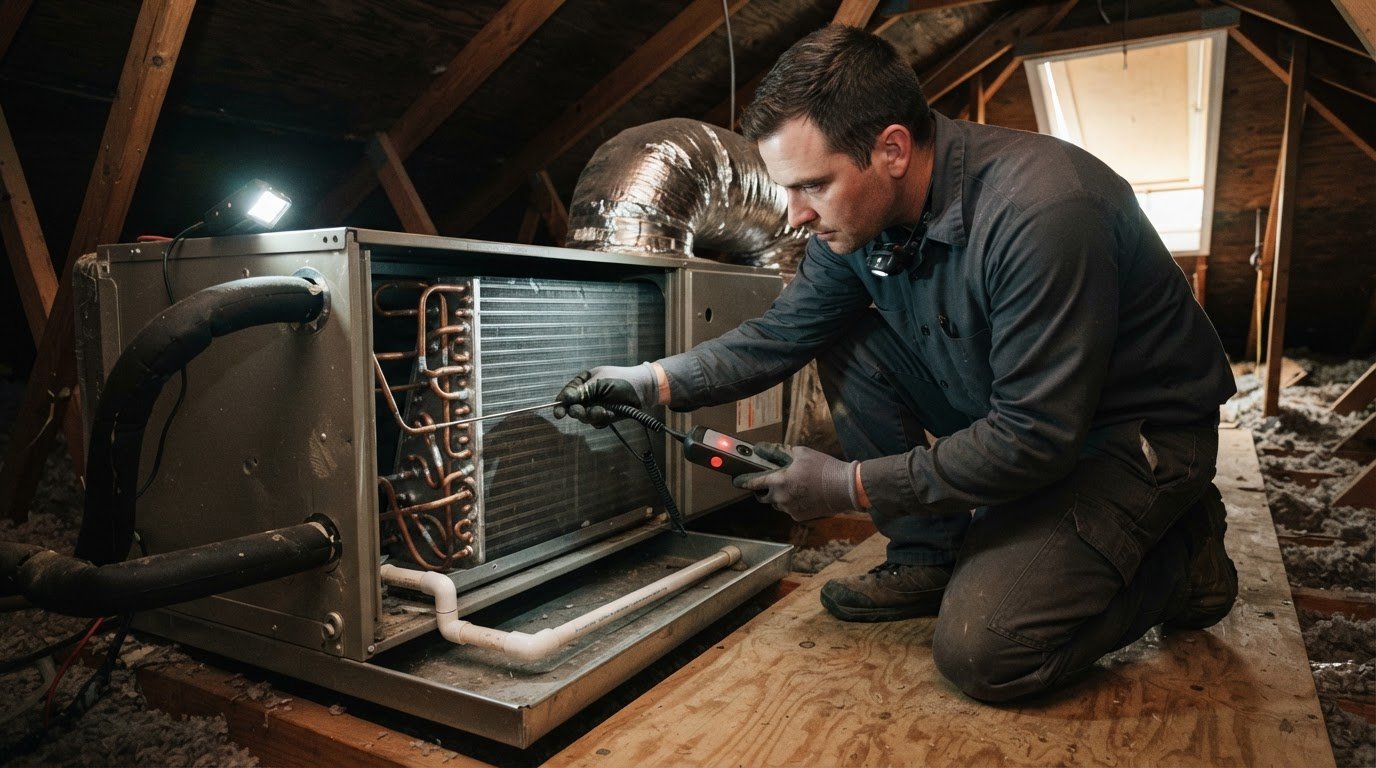
A cooling problem is a symptom, not a diagnosis. An AC diagnostic service in Orlando assesses how your system is operating, checks key components, investigates possible refrigerant leaks, and looks for electrical issues that may affect comfort. The goal is to identify the cause before deciding what repair is appropriate.
If your home isn’t cooling evenly, the system is running differently than usual, or the thermostat isn’t maintaining comfort as expected, you’ll want a clear explanation. A thorough diagnosis looks beyond the first obvious symptom and considers how the system’s components work together.
This article explains what technicians assess, how instrument-based checks help narrow down a cause, and what leak detection and electrical troubleshooting can reveal. You’ll also learn how the findings inform repair decisions, helping you understand what’s happening and choose a practical next step.
Key Takeaways
- A cooling problem can involve the compressor, condenser, evaporator, or more than one part, so a thorough inspection looks at how the components work together.
- System readings help narrow down performance issues, but pressure alone can’t confirm or locate a refrigerant leak.
- Electrical checks can help identify why a thermostat or other climate-control component isn’t responding as expected.
- Instrument readings are most useful when interpreted alongside operating conditions and equipment instructions, not a one-size-fits-all target.
- A clear diagnosis connects the observed symptoms to the likely cause and helps guide the next repair decision.
Inspection of compressors, condensers, and evaporators
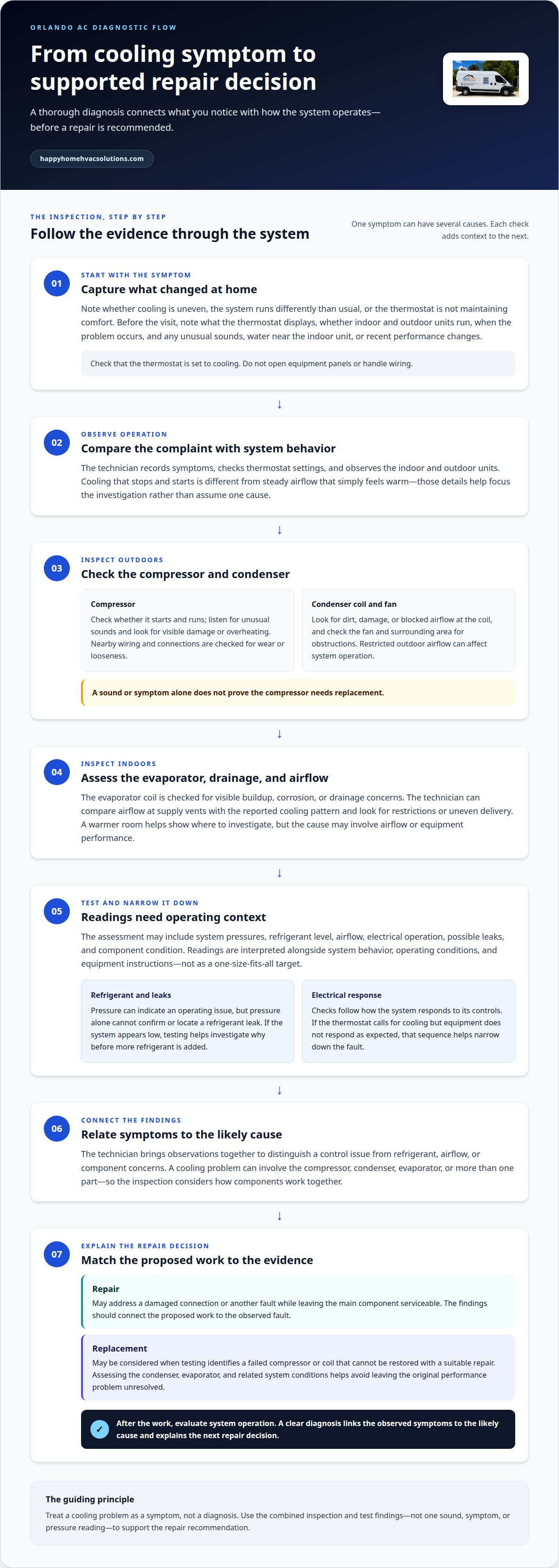
An Orlando AC diagnostic visit examines how the compressor, condenser, and evaporator work together. These components move heat out of your home and help deliver cooled air indoors. The technician considers your reported symptoms alongside system operation instead of assuming one part is faulty. For example, warm air may point to a compressor issue, restricted heat transfer, or another problem that needs further testing.
The inspection starts at the outdoor unit and compressor. The technician checks whether the compressor starts and runs, listens for unusual sounds, and looks for visible damage or signs of overheating. They also inspect nearby wiring and connections for wear or looseness. These observations help distinguish a compressor fault from a problem elsewhere. A sound or symptom alone doesn’t prove the compressor needs replacement.
Next, the technician checks the condenser coil for dirt, damage, or blocked airflow. Because the condenser releases heat outdoors, restricted airflow can affect system operation. The fan and surrounding area are checked for obstructions, too. Indoors, the evaporator coil is assessed for visible buildup, corrosion, or drainage concerns. A dirty evaporator can interfere with heat transfer, while a drainage issue may require a separate repair.
Repair and replacement are different decisions. A repair may address a damaged connection or another fault while leaving the main component serviceable. Replacement may be considered if testing identifies a failed compressor or coil that can’t be restored with a suitable repair. The technician should explain which findings support the recommendation. Replacing a compressor without assessing the condenser, evaporator, and related system conditions may leave the original performance problem unresolved.
For a compressor or component replacement, the diagnosis should identify the failed part and explain how it affects cooling. For a repair, the findings should connect the proposed work to the observed fault. After the work, the system should be evaluated to assess its operation. An AC diagnostic service in Orlando connects those findings with the cooling concern before repair decisions are made.
When choosing an AC technician in Orlando, look for clear proof of licensing and insurance. Happy Home HVAC Solutions is licensed and insured, and is an LG Certified Dealer. The company serves Orlando, Oviedo, Winter Springs, Winter Park, and Altamonte Springs.
Before calling for AC repair, note what the thermostat displays, whether the indoor and outdoor units run, and when the cooling problem occurs. Check that the thermostat is set to cooling and that its setting matches your comfort needs. Mention unusual sounds, water near the indoor unit, or recent changes in performance. Don’t open equipment panels or handle wiring.
For local service information, see the Orlando service area page. An AC diagnostic service in Orlando can use clear observations about the compressor, condenser, and evaporator to direct the investigation toward the cause of the cooling issue.
A/C system diagnosis
A home cooling diagnosis connects what you notice with how the system operates. The technician records symptoms, checks the thermostat settings, and observes the indoor and outdoor units. For example, cooling that stops and starts differs from steady airflow that simply feels warm. Those details help focus the inspection on relevant system checks instead of an assumption based on one symptom.
The diagnostic process considers system pressures, refrigerant level, airflow, electrical operation, possible leaks, and component condition. Each finding adds context. A pressure reading, for instance, may indicate an operating issue, but it doesn’t explain the cause on its own. The technician compares readings with system behavior and checks whether separate findings point to the same underlying problem.
Airflow is another important part of the assessment. The technician can compare airflow at supply vents with the reported cooling pattern, then look for restrictions or uneven delivery. If one room feels warmer than others, that helps show where to investigate. The cause may involve airflow or equipment performance, so the symptom needs to be considered alongside other observations.
Refrigerant checks need context, too. The technician assesses system pressures and refrigerant level alongside other operating conditions, then considers whether leak testing is needed. A pressure reading alone doesn’t locate or prove a leak. If the system appears low on refrigerant, adding more without identifying the reason may leave the original issue unresolved.
Electrical operation can affect the thermostat’s call for cooling and the equipment’s response. During diagnosis, the technician checks how the system responds to its controls and assesses relevant electrical components. If the thermostat calls for cooling but the equipment doesn’t respond as expected, that sequence helps narrow down the fault. The diagnosis should distinguish a control issue from a refrigerant, airflow, or component concern.
Whether a Florida home warranty covers an AC diagnostic fee depends on the contract’s coverage and exclusions. Review the plan wording for diagnostic or service-call coverage and any conditions tied to the covered failure.
There’s no single appointment length that fits every diagnosis. The time depends on the reported symptoms, access to the system, and which checks the findings call for. A straightforward inspection may need fewer investigative steps than a problem involving intermittent operation, airflow, refrigerant, and electrical testing. The technician’s process follows the evidence gathered during the visit.
Before concluding, the technician brings the observations together and explains which findings support the likely cause. For example, weak airflow should be connected to system checks rather than treated as proof that one part has failed. A clear diagnosis gives you a practical basis for understanding the next step and deciding how to address the cooling problem.
AC system diagnosis and leak detection
Leak detection starts with the system’s symptoms and operating condition. The technician notes whether cooling is weak throughout the home or varies between rooms. They then consider airflow, thermostat operation, system pressures, refrigerant level, and component condition. Poor cooling in one area, for example, may point to airflow concerns, while weak cooling throughout the home calls for broader system testing.
A pressure reading provides useful information, but it has limits. It doesn’t locate or prove a refrigerant leak by itself. The technician interprets it alongside operating conditions and other inspection findings. If readings suggest refrigerant loss, leak testing helps investigate the cause instead of treating the reading as proof. This matters because adding refrigerant without finding the source can leave the original problem unresolved.
During leak detection, the technician examines accessible refrigerant lines, fittings, and system components for clues that help narrow the search. The inspection follows the equipment and symptom pattern. A suspected leak needs focused testing at potential leak points; a general pressure reading can’t identify its exact location. Findings from each check guide the next step instead of relying on one indicator.
Airflow belongs in the same diagnosis, even when a refrigerant leak is suspected. Restricted airflow can affect system performance and complicate symptoms. The technician checks whether air moves through the system as expected, then compares that observation with pressure and cooling behavior. In a Florida home, this combined assessment helps distinguish a refrigerant concern from an airflow restriction or another component issue.
Testing also considers whether multiple symptoms share a cause. Weak cooling and changing system behavior, for instance, should be evaluated together rather than treated as unrelated complaints. The technician relates observations from the thermostat, indoor airflow, outdoor equipment, and refrigerant circuit. If one check points toward a leak but another suggests a separate restriction, both findings belong in the diagnosis.
DIY vehicle AC recharge kits are made for automotive systems, not home air conditioners. In a vehicle, a recharge kit can mask an underlying leak or component failure without identifying the cause. Residential equipment needs diagnosis suited to its own system. Adding refrigerant without leak testing can conceal a continuing problem instead of resolving it.
A useful diagnosis explains what was tested, what the results indicate, and how they relate to the cooling issue. An AC diagnostic service in Orlando should distinguish evidence of refrigerant loss from other causes, such as restricted airflow or a component fault. That connection helps determine whether further leak testing is needed and what repair step follows.
A broken vehicle AC system does not damage the engine or drivetrain, though driving without AC in Orlando heat may raise safety concerns. These vehicle issues are separate from diagnosing a home air conditioner.
Climate-control electrical diagnosis
An electrical fault can interrupt cooling even when the air-conditioning components appear intact. Diagnosis follows the control path from the thermostat’s request to the equipment’s response. The technician checks whether the thermostat signals for cooling and whether the indoor and outdoor units respond. If the indoor fan runs but the outdoor unit stays idle, that sequence helps narrow the investigation.
The thermostat is an important starting point, not an automatic explanation. The technician checks its settings, display, and response when cooling is selected, then traces whether the control signal reaches the equipment. A blank display and a working display with no cooling call, for example, suggest different diagnostic paths. This helps distinguish a thermostat issue from a wiring or equipment-control fault.
At the air handler and outdoor unit, the technician inspects electrical connections and components involved in starting or controlling operation. A loose connection, damaged wire, or failed control component can interrupt the sequence. The technician checks relevant parts and compares their behavior with the system’s response. If the thermostat calls for cooling but a component doesn’t engage, the circuit or control path may be involved.
Electrical diagnosis can also involve the control board, relays, contactors, and capacitors. These parts have different roles, so a symptom alone doesn’t identify which one has failed. A unit that hums but doesn’t start, for instance, needs investigation beyond the thermostat. Testing helps determine whether the control signal arrives and whether the component responds as expected.
Intermittent operation requires attention to timing. A system that starts, stops, and later restarts may have a different electrical cause from one that never responds. The technician observes the sequence and checks relevant connections and controls. A note of when the cooling stops, such as during a thermostat call or after the outdoor unit starts, can help reproduce the issue during diagnosis.
Electrical checks should be left to a trained technician because equipment contains energized components. You can report visible symptoms, such as a blank thermostat display or a repeatedly interrupted cooling cycle, without opening panels or touching wiring. The technician uses those details to guide testing and isolate the fault safely.
After identifying an electrical problem, the technician explains which test results support the finding and how it affects cooling. A failed control part, damaged connection, or thermostat issue may require different repair steps. The diagnosis should connect the observed fault to the system’s behavior, then assess operation after repair. This helps explain why climate control stopped working and what the next step addresses.
Instrument-based HVAC diagnosis
Instrument readings turn a cooling complaint into evidence the technician can interpret. For an AC diagnostic service in Orlando, measurements should be considered alongside system operation, equipment instructions, and the conditions during testing. A single reading rarely explains the whole issue. Warm air at a vent, for example, can prompt checks of airflow, refrigerant conditions, and equipment response.
A thermometer helps assess the air temperatures entering and leaving the system. The technician records readings while the equipment runs under observed conditions, then compares them with the manufacturer’s instructions. No single temperature difference proves that every system is working correctly. Outdoor conditions, airflow, and equipment operation all affect how readings should be interpreted.
Pressure gauges provide information about refrigerant circuit conditions, but they don’t locate or prove a leak on their own. The technician interprets pressure readings alongside the system’s operating state and other test results. If readings and symptoms suggest refrigerant loss, separate leak detection is needed. This helps prevent an unsupported recharge from masking an unresolved problem.
Airflow instruments can help assess how air moves through the equipment and into the home. The technician may compare airflow at different supply vents when rooms cool unevenly. If one room receives noticeably less air, that observation can be considered alongside filter condition, duct delivery, and system operation. The measurement helps distinguish an airflow concern from a cooling problem elsewhere.
Electrical meters also support instrument-based diagnosis. The technician can use measurements to assess whether control signals and electrical components respond as expected. If the thermostat calls for cooling but the outdoor unit doesn’t start, for example, electrical testing helps trace the operating sequence. Readings guide further checks instead of relying on a sound or symptom alone.
After a repair, temperature readings can help assess system operation again. The technician evaluates the results against equipment instructions and the conditions present during testing, not a universal temperature target. If a post-repair reading differs from expected operation, the technician can review airflow, controls, and equipment performance before explaining the result.
Orlando HVAC companies set their own diagnostic-fee terms. Approval of a repair alone doesn’t establish whether a diagnostic fee is waived; the applicable service terms determine that. Same-day and emergency appointments also depend on each company’s scheduling policy and operating hours. A same-day diagnostic visit doesn’t necessarily mean a repair can be completed that day.
Ask for a diagnosis that connects each measurement to the system’s symptoms and proposed repair. If testing identifies a fault that needs repair, explore AC repair service for the next step.
Happy Home HVAC Solutions
Happy Home HVAC Solutions helps homeowners move from diagnostic findings to a practical next step for home comfort. If testing identifies a repairable fault, AC Repair can address the diagnosed issue; if the system needs replacement, AC Installation may be the appropriate option. The recommendation depends on what the inspection and measurements reveal.
Clear information about symptoms, test results, and repair options can make decisions easier. Happy Home HVAC Solutions also provides Heating & Furnace Services and Insulation Services when those needs affect home comfort. For help understanding an AC concern and the available next step, contact Happy Home HVAC Solutions.
Make a Clear Plan for Home Comfort
Use the diagnosis as a starting point for deciding what your home needs next. A clear explanation can help you understand whether a repair addresses the issue or whether a broader change deserves consideration. When choosing an AC diagnostic service in Orlando, focus on how the technician connects evidence to recommended work, so you can make an informed choice without guessing at the cause.
Happy Home HVAC Solutions can help you take that next step with AC Repair, AC Installation, or Heating & Furnace Services when those needs fit your home. Discuss the diagnostic findings and the available path forward with the team. Contact Happy Home HVAC Solutions to talk through your home comfort needs and move ahead with greater clarity.
Frequently Asked Questions
What does an AC diagnostic service in Orlando include?
A diagnostic visit focuses on your home’s cooling problem and the equipment’s response. The technician uses your description to guide the inspection, then explains which findings relate to the symptoms and what they mean. If cooling changes at certain times, for example, share when it happens. That context can help distinguish a recurring pattern from a one-time interruption.
What are common signs that an Orlando home's air conditioner needs diagnostics?
Consider arranging diagnostics if your air conditioner runs longer than usual without reaching the thermostat setting, indoor humidity feels unusually high, or a new musty odor persists. A sudden change in how often the system runs may also merit attention. Note when the change began and whether it affects the whole home or particular rooms. Those observations give the technician a clearer starting point.
What questions should I ask before booking an AC diagnostic in Orlando?
Ask what the diagnostic visit covers, whether testing will follow the symptoms you report, and how the findings will be explained. If you suspect a leak or electrical issue, ask whether those checks can be part of the assessment. Clarify whether diagnostic charges are separate from repair work and whether repairs begin only after you approve the proposed work. Clear terms help you understand the visit.
Which Orlando HVAC companies offer same-day or emergency AC diagnostics?
Same-day AC repair scheduling is offered during business hours when scheduling and parts availability allow, but a same-day visit does not guarantee completion. The material does not identify emergency diagnostic services.